Jump to Section:
TL;DR:
- A resort certificate is a prepaid voucher that offers a discounted stay at selected resorts, typically for seven nights. It provides significant savings but limits flexibility, as booking must occur within a 12-month window and additional fees are paid separately. These certificates are ideal for flexible travelers, corporate gifts, personal celebrations, and fundraising, provided buyers understand the terms and availability restrictions.
A resort certificate is a prepaid travel voucher that grants a fixed-duration stay at selected resorts at significantly reduced rates. Typically covering 7 nights, these certificates are priced between $299 and $349 and deliver savings of 50–70% compared to booking the same property directly. They function as a recognized travel industry product, sometimes called a “vacation certificate” or “resort stay voucher,” and they serve consumers, corporate gifting programs, and fundraising organizers equally well. Giftatrip offers a wide catalog of these certificates, making them accessible for personal gifts, employee rewards, and charitable auctions.
What is a resort certificate and how does it differ from a timeshare?
A resort certificate is a prepaid voucher for a fixed stay at a participating resort property. It is not a form of ownership, and it carries no long-term financial obligation. That distinction matters because many consumers confuse resort certificates with timeshares, which require ownership contracts and often come with mandatory sales presentations.

No timeshare presentation is required with a resort certificate. You book your stay, show up, and enjoy the property without sitting through a sales pitch. That alone separates resort certificates from the traditional timeshare model, which has long frustrated travelers who felt pressured during their vacations.
Resort certificates also differ from standard hotel gift cards. A hotel gift card applies a dollar credit toward any booking. A resort certificate grants access to a specific inventory of properties for a set duration, usually at a deeply discounted rate that a gift card cannot match. The trade-off is less flexibility in destination choice, but the value per dollar spent is considerably higher.
How do resort certificates work?
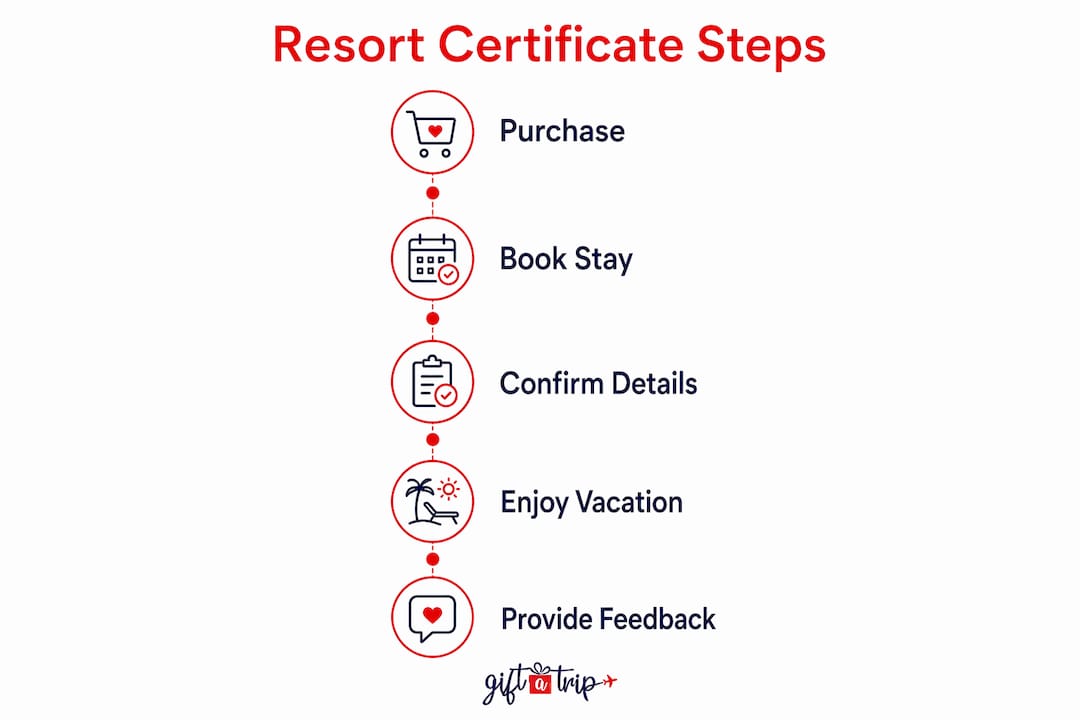
The purchase process is straightforward. You buy the certificate online, typically for $299–$349, and receive a digital voucher with a unique redemption code. From that point, you have a 12-month window to book your travel dates through the certificate provider’s reservation portal.
The booking process works like this:
- Purchase the certificate and receive your redemption code by email or digital delivery.
- Log into the reservation portal and search available properties and dates.
- Select your destination from the participating resort inventory.
- Confirm your reservation and pay any applicable resort fees or taxes separately.
- Travel on your chosen dates, which can begin after the certificate’s purchase date as long as the booking was made within the 12-month window.
Travel must be booked within 365 days of purchase. That rule is firm. Missing the booking deadline means forfeiting the certificate’s value, so marking the expiration date on your calendar the day you buy is a practical habit.
One cost reality that catches many buyers off guard: the certificate price does not cover everything. Nightly resort fees, taxes, and service charges are paid separately at booking or upon arrival. Budget an additional $20–$50 per night for these fees depending on the property and location.
Pro Tip: Before purchasing, log into the provider’s reservation portal as a guest or contact customer support to confirm that your preferred destination and approximate travel dates have availability. This 10-minute check prevents the most common source of buyer disappointment.
What are the benefits and limitations of using resort certificates?
Resort certificates deliver genuine value when used correctly. The core benefit is cost. A 50–70% savings compared to direct booking rates means a stay that would cost $1,400 at the front desk can be secured for under $350. That gap is real and consistent across the major certificate programs.
Beyond price, the quality of accommodations surprises many first-time users. High-end condo-style suites at large chain resorts are standard in most certificate programs. You get full kitchens, separate living areas, and resort amenities, not a standard hotel room. For families or couples celebrating a milestone, that upgrade in space and comfort is a meaningful part of the value.
The limitations are real and worth understanding clearly:
- Peak season availability is rare. Certificates fill lower-demand inventory, so holiday weeks and summer peak periods are typically blacked out or unavailable.
- Destination choice is limited. You choose from a participating property list, not any resort in the world.
- Hidden fees add up. Mandatory resort fees, local taxes, and parking charges are not included in the certificate price.
- Booking windows are strict. Miss the 12-month booking deadline and the certificate expires with no refund.
“The resort certificate model is designed to fill lower-demand inventory with discounted stays. That means the deal is real, but only for travelers who can be flexible about when and where they go. Treat it like a standby upgrade, not a guaranteed reservation at your first-choice destination on your first-choice date.”
Misunderstandings about blackout dates and hidden fees are the leading cause of negative reviews. The certificate itself is not the problem. The problem is buying without reading the terms.
Who should consider using resort certificates?
Resort certificates work best for a specific type of traveler or buyer. Understanding whether a certificate fits your situation before purchasing saves frustration later.
-
Flexible leisure travelers. If you can travel during shoulder seasons (spring and fall) and your destination list is broad, a resort certificate delivers outstanding value. Travelers locked into specific dates or locations will struggle with availability.
-
Corporate gifting teams. HR managers and sales leaders use resort certificates as employee rewards because they feel premium without requiring a large budget. A $349 certificate signals genuine appreciation in a way that a cash bonus or gift card rarely does.
-
Personal gift givers. Birthdays, anniversaries, honeymoons, and retirement celebrations are natural fits. A resort stay is a memorable, tangible experience rather than a forgettable physical item. Giftatrip’s digital delivery makes sending one as easy as sending an email.
-
Fundraising organizers. Nonprofits and event planners use resort certificates as auction items because they photograph well, carry a high perceived value, and cost far less than their face value suggests. Resort certificates as gifting tools for fundraising have grown in popularity precisely because donors respond to experiential prizes.
-
Wedding planners and hospitality coordinators. Properties like those featured through Dragonfly Dream Weddings show how resort-style stays integrate naturally into event planning and honeymoon gifting, where a certificate can cover the accommodation portion of a larger travel package.
Pro Tip: If you are buying a resort certificate as a gift, choose a provider that offers a 12-month booking window rather than a shorter one. The recipient needs time to plan, and a tight redemption window turns a generous gift into a stressful obligation.
How to maximize value when redeeming a resort certificate
Getting full value from a resort certificate requires preparation before you buy, not after. The travelers who walk away satisfied are the ones who treated the purchase like a research project, not an impulse buy.
Check availability before you commit
Savvy travelers research availability before purchase to confirm that their preferred destinations and approximate dates are bookable. Most providers allow you to browse the reservation portal without completing a purchase. Use that access to verify that at least three or four destination options work for your schedule.
Plan for the full cost
Mandatory fees at booking or arrival are not optional. Budget for resort fees, local taxes, and any parking or amenity charges. A realistic total cost estimate for a 7-night stay might look like this:
| Cost Component | Typical Range |
|---|---|
| Certificate purchase price | $299–$349 |
| Nightly resort fees (7 nights) | $140–$350 |
| Local taxes | $50–$120 |
| Optional upgrades or services | $0–$200 |
| Estimated total | $489–$1,019 |
Even at the high end of that range, the total cost compares favorably to booking the same property at rack rates, which often exceed $250 per night before fees.
Book during shoulder seasons
Certificates mostly restrict travel to shoulder or off-season periods. March, April, September, and October are typically the most available months across major certificate programs. Targeting these windows gives you the widest property selection and the smoothest booking experience.
- Avoid holiday weekends and school vacation weeks entirely.
- Book as early as possible once your dates are set. Popular properties fill quickly even in off-peak months.
- Keep two or three backup destinations in mind in case your first choice is unavailable.
- Read the full terms before confirming. Cancellation policies vary by property and provider.
The redemption process itself is straightforward once you understand the booking rules. Log in, enter your code, select your property and dates, and confirm. The complexity is not in the portal. It is in the planning that happens before you open it.
Key Takeaways
A resort certificate delivers genuine 50–70% savings on resort stays, but only for buyers who verify availability, budget for mandatory fees, and travel with flexible dates.
| Point | Details |
|---|---|
| Core definition | A resort certificate is a prepaid voucher for a fixed resort stay, typically 7 nights. |
| Pricing and savings | Certificates cost $299–$349 and save 50–70% compared to direct booking rates. |
| Booking window | Travel must be booked within 12 months of purchase or the certificate expires. |
| Hidden costs | Resort fees, taxes, and service charges are not included and must be budgeted separately. |
| Best use cases | Flexible leisure travel, corporate gifting, personal gifts, and fundraising auctions. |
Resort certificates: what 15 years of travel writing taught me
I have covered travel deals for a long time, and resort certificates occupy a genuinely unusual space in the market. They are not scams, and they are not magic. They are inventory management tools that happen to benefit the buyer when used correctly.
The travelers I have seen get burned by resort certificates share one trait: they bought first and read the terms second. The blackout dates are real. The resort fees are real. The 12-month booking window is non-negotiable. None of that is hidden, but it is easy to overlook when the headline price of $349 for a week at a resort feels too good to question.
The travelers who love these certificates share a different trait: flexibility. They treat the certificate as an invitation to travel somewhere good rather than a ticket to a specific place on a specific date. That mental shift changes everything.
My honest advice is this. If you are buying a resort certificate as a gift, choose a provider like Giftatrip that covers taxes and resort fees and offers minimal blackout dates. The recipient should not have to budget for surprise charges on top of a gift. If you are buying for yourself, check the travel certificates guide before committing, and treat the availability research as a required step, not an optional one.
Resort certificates are worth it. They are just worth it for the right buyer.
— Donovan
Giftatrip makes resort certificate gifting simple
Giftatrip’s catalog of digital travel certificates covers resorts, hotels, cruise lines, and vacation packages from major brands. Every certificate ships digitally, so delivery takes minutes rather than days.

For HR teams and event planners, Giftatrip offers bulk ordering with customizable gift boxes and personalized messaging. For individual buyers, the platform keeps the process simple: choose a certificate, add a message, and send. The travel certificate distribution guide covers everything corporate buyers need to set up a gifting program from scratch. Whether you are rewarding a top performer, celebrating a milestone, or running a charity auction, Giftatrip has a certificate that fits the occasion and the budget.
FAQ
What is a resort certificate used for?
A resort certificate is used to book a prepaid stay at a participating resort, typically for 7 nights. It serves personal gifting, corporate rewards, and fundraising auction purposes equally well.
Are resort certificates worth it?
Resort certificates deliver 50–70% savings compared to direct booking rates, making them genuinely valuable for flexible travelers. The key is budgeting for additional resort fees and taxes not included in the certificate price.
How do resort certificates work for gifting?
The buyer purchases a digital certificate and sends it to the recipient, who then books their stay through the provider’s reservation portal within the 12-month validity window.
What is the difference between a resort certificate and a timeshare?
A resort certificate requires no ownership, no long-term contract, and no timeshare sales presentation. It is a one-time prepaid voucher for a fixed stay with no ongoing financial obligation.
What fees are not covered by a resort certificate?
Nightly resort fees, local taxes, service charges, and parking costs are typically excluded from the certificate price and must be paid separately at booking or upon arrival.