Jump to Section:
TL;DR:
- Effective sales team rewards combine monetary incentives with experiential perks tuned to individual preferences. Blending bonuses, travel, and recognition programs motivate diverse personalities and improve retention. Transparency and personalization are key to creating engaging, scalable reward systems.
The best ideas for sales team rewards combine financial incentives with experiential perks tailored to what your reps actually value. Research shows 44% of employees are more likely to stay when rewarded with financial incentives, while 41% respond strongly to non-monetary rewards. That split matters. A reward program built on cash alone leaves nearly half your team underserved. The most effective sales incentive programs, formally called sales compensation and recognition programs, mix bonuses, experiential rewards, and professional development into a structure that motivates every personality type on your team.
1. What are the best ideas for sales team rewards in 2026?
The strongest reward programs do not rely on a single category. They pull from financial, experiential, and recognition-based options and match each to the right rep at the right time. The 12 ideas below cover the full spectrum, with budget guidance and real examples for each.
2. Base commission accelerators
Commission accelerators are the most direct financial motivator in sales. A standard commission rate applies up to quota, then jumps to a higher rate once a rep exceeds it. For example, a rep earning 8% on deals up to quota might earn 12% on every dollar closed above it. That structure rewards overperformance without changing base pay.

Typical base commissions run 5–20% depending on deal size and industry. Accelerators work because they create a clear financial reason to keep selling after quota is hit, which is exactly when most reps slow down.
3. Quota bonuses
Quota bonuses are lump-sum payments tied to hitting a defined sales target. They differ from commissions because they pay out at a threshold, not on every deal. Quota bonuses typically range from $2,000 to $25,000 depending on role and company size.
The most effective quota bonus structures use tiered payouts: 80% of quota earns a partial bonus, 100% earns the full amount, and 120%+ triggers a stretch bonus. Tiering keeps reps who are behind quota still engaged rather than giving up for the quarter.
Pro Tip: Set your quota bonus payout date within 30 days of the period close. Delayed payouts reduce the psychological connection between the achievement and the reward.
4. SPIFs (Sales Performance Incentive Funds)
SPIFs are short-term cash or gift rewards tied to a specific product, behavior, or time window. A manager might run a two-week SPIF paying $500 for every enterprise deal closed, or $100 per demo booked in a slow month. SPIFs typically range from $100 to $5,000 per qualifying event.
SPIFs work because they create urgency. They are best used to shift rep behavior quickly, such as pushing a new product launch or recovering a slow quarter. Overusing them dilutes the effect, so limit SPIFs to three or four campaigns per year.
5. President’s Club and elite recognition trips
President’s Club is the industry term for an annual trip awarded to top performers, typically the top 5–10% of the sales team. President’s Club trips are valued at $3,000 to $15,000 per person and often include a guest. Destinations like Cancun, Napa Valley, or European cities are common.
The social currency of President’s Club is as powerful as the trip itself. Reps who earn it display it on LinkedIn and in conversations for years. That visibility creates peer motivation across the entire team, not just among the winners.
6. Travel vouchers and experiential rewards
Travel vouchers give reps the freedom to choose their own experience, which dramatically increases perceived value. Experiential rewards boost lasting motivation through social currency and personal growth in ways that cash rarely achieves. A $1,500 resort certificate feels more memorable than a $1,500 check deposited and forgotten.
Travel incentives work especially well for mid-tier performers who would never qualify for President’s Club but still deserve recognition. Giftatrip offers digital travel certificates redeemable at major resorts, hotels, and cruise lines, with taxes and resort fees covered and minimal blackout dates. That removes the administrative friction that makes most travel rewards feel like a hassle.
Pro Tip: When offering travel certificates, let reps choose from a curated set of options rather than assigning a single destination. Customizing rewards to what reps value increases engagement and avoids incentive mismatch.
7. Professional development and training rewards
Paying for a rep’s professional growth is a reward that compounds over time. Options include covering the cost of a sales certification, sending a rep to a conference like Salesforce Dreamforce, or funding a coaching program with a sales trainer. These rewards signal that the company invests in the person, not just the number.
Budget tiers for development rewards typically fall in the mid range of $500 to $2,500. A well-chosen training program can increase a rep’s earning potential, which makes it one of the most valued non-monetary rewards among ambitious sellers.
8. Wellness and lifestyle perks
Wellness rewards address the physical and mental demands of a high-pressure sales role. Options include gym memberships, spa treatment credits, meal delivery subscriptions, or mental health app access through platforms like Calm or Headspace. These perks signal that leadership cares about the whole person.
Effective programs mix monetary and experiential rewards, and wellness perks fit naturally into that mix. They work best as ongoing recognition rather than one-time prizes, keeping reps engaged between major incentive cycles.
9. Flexible schedule privileges
Flexible schedule rewards are underused and highly effective. Examples include a “work from anywhere” week for the top closer of the month, an extra Friday off for hitting a quarterly milestone, or the ability to set your own hours for a defined period. These cost the company almost nothing in cash.
Flexible time rewards resonate most with reps who are parents, caregivers, or remote workers who already manage complex schedules. Offering schedule control as a reward treats reps as adults, which builds loyalty faster than most cash bonuses.
10. Peer-nominated recognition awards
Peer-nominated awards put recognition in the hands of the team rather than management. Each month, reps vote for a colleague who demonstrated a specific value: best collaboration, most creative pitch, or strongest customer relationship. The winner receives a gift card, a trophy, or a public shout-out in an all-hands meeting.
Peer recognition builds team culture in a way that top-down awards cannot. Reps who feel seen by their colleagues, not just their managers, report higher job satisfaction and are less likely to leave. The administrative cost is minimal and the cultural return is significant.
11. Gamified leaderboards and SPIF campaigns
Gamification turns the sales floor into a competition with visible stakes. A real-time leaderboard showing deal counts, revenue, or activity metrics creates healthy competition and gives every rep a clear picture of where they stand. Pair a leaderboard with a SPIF and the combination drives short-term performance spikes.
Team-based rewards like profit-sharing and group incentives enhance collaboration and collective achievement. A leaderboard that tracks team totals alongside individual scores encourages reps to help each other close rather than hoard leads.
12. Team trips and group experiences
Group rewards build camaraderie in a way that individual prizes cannot. A team dinner at a high-end restaurant, a group escape room, a cooking class, or a weekend trip for hitting a collective goal all create shared memories that strengthen team identity. Team-based incentives complement individual rewards and boost collaboration.
Group experiences work best when the team sets the goal together and earns the reward together. That shared ownership increases buy-in and makes the celebration feel earned rather than given.
13. How to design a scalable sales reward program
A well-designed sales team reward process starts with budget clarity and goal alignment. Use a tiered structure to match reward value to performance level and budget.
| Budget Tier | Range | Example Rewards |
|---|---|---|
| Low | $0–$500 | Gift cards, branded merchandise, extra PTO |
| Mid | $500–$2,500 | Training programs, travel vouchers, tech gear |
| High | $2,500+ | President’s Club trips, equity grants, resort stays |
Real-time dashboards showing progress and exact payout calculations help reps self-correct and stay engaged throughout the period. Transparency is not optional. Reps who cannot see how their reward is calculated disengage quickly.
Clawback policies alienate top talent when not communicated clearly. Tie every payout to a defined revenue recognition event and put the rules in writing before the program launches. Ambiguity in payout terms is one of the fastest ways to lose a top performer.
Pro Tip: Ask your sales team which rewards they actually want before you finalize the program. Asking reps for their preferences fosters better alignment and program success, and it costs nothing to survey.
Key takeaways
The most effective sales reward programs blend financial incentives with experiential and recognition-based rewards, scaled to budget and aligned to what individual reps value most.
| Point | Details |
|---|---|
| Mix reward types | Combine cash, travel, and recognition to motivate every personality on your team. |
| Use budget tiers | Scale rewards from $0–$500 gift cards up to $2,500+ travel experiences based on performance level. |
| Prioritize transparency | Publish payout criteria and use real-time dashboards so reps always know where they stand. |
| Personalize the program | Survey your team before launching to match rewards to what reps actually value. |
| Add team-based rewards | Group incentives build collaboration and culture alongside individual competition. |
What I’ve learned about sales rewards after years of watching programs fail
Most sales reward programs fail for the same reason: they were designed by finance, not by the people earning the rewards. I have watched companies spend six figures on President’s Club trips that top performers barely mentioned, while a simple peer recognition program with a $50 gift card created more buzz than anything else that year.
The uncomfortable truth is that cash is the laziest reward. It works, but it disappears. A rep who earns a $2,000 bonus in march has forgotten it by june. A rep who spent a weekend at a Hard Rock resort with their partner talks about it for two years. That is the difference between a transactional reward and a memorable one.
Transparency matters more than most leaders realize. I have seen programs collapse not because the rewards were bad, but because reps did not trust the payout calculations. When you add real-time payout visibility to your program, disputes drop and motivation climbs. Reps who can see exactly what they will earn for closing the next deal close it faster.
My strongest advice: run a short survey before you launch anything. Ask your team what they would choose between a cash bonus, a travel experience, extra time off, or a development opportunity. The answers will surprise you, and they will save you from building a program nobody wants.
— Donovan
Travel rewards that make your sales program stand out
Sales managers who want to move beyond cash bonuses have a practical option in digital travel certificates. Giftatrip provides corporate travel certificates redeemable at major resorts, hotels, and cruise lines, with taxes and resort fees included and minimal blackout dates. Bulk orders come with customizable gift boxes and personalized messaging, which makes distribution easy for teams of any size.
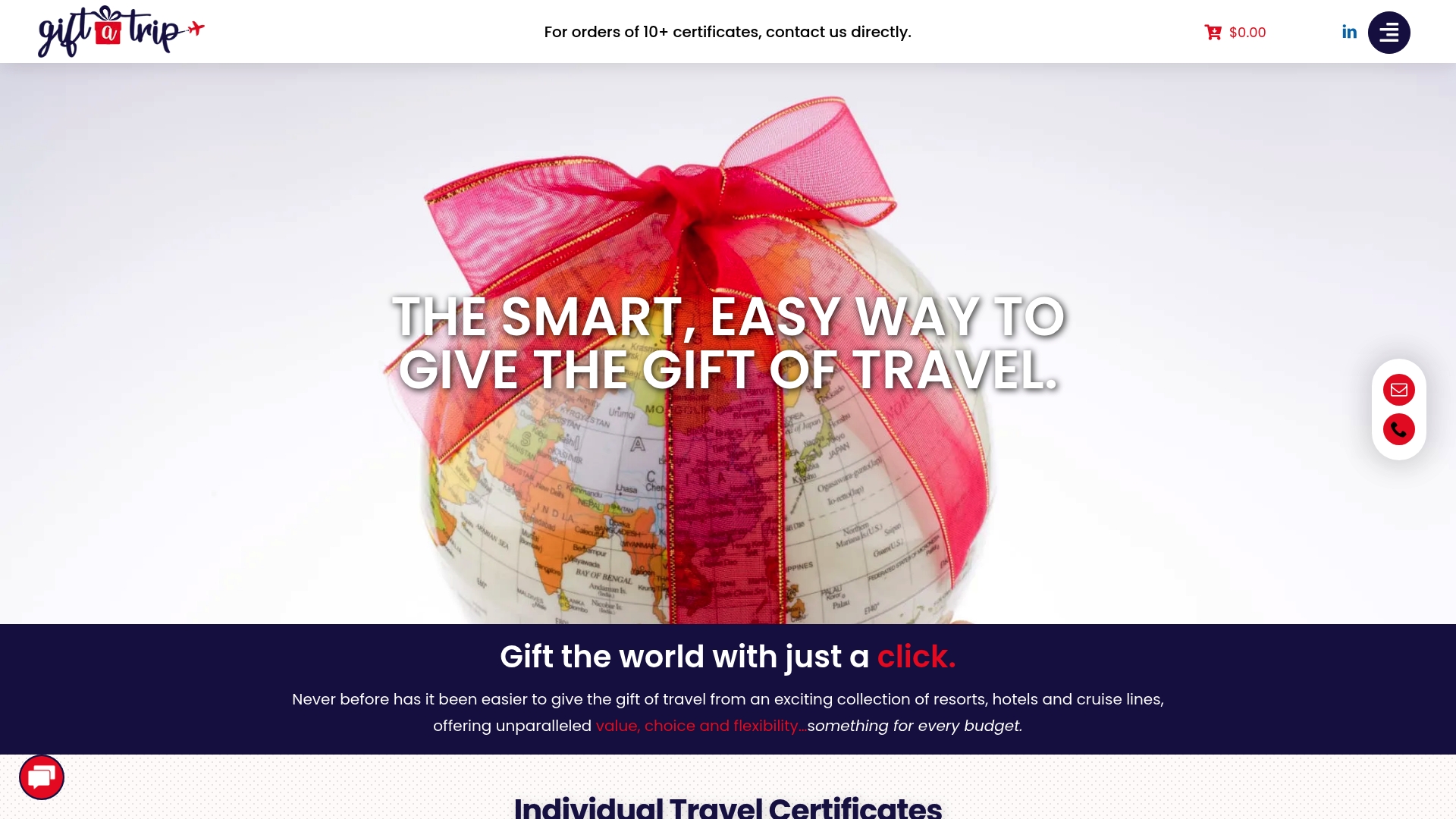
Whether you are rewarding a single top performer or an entire team that hit a group goal, Giftatrip’s vacation gift certificates give recipients a real experience to look forward to. Options range from Virgin Voyages cruise certificates to golf getaway packages, so you can match the reward to the rep. Digital delivery means no shipping delays and no lost envelopes.
FAQ
What are the most effective rewards for sales teams?
The most effective rewards combine financial incentives like commissions and bonuses with experiential rewards like travel vouchers and team trips. Research shows 44% of employees are more likely to stay when rewarded financially, while 41% respond to non-monetary incentives.
How much should companies budget for sales team rewards?
Budget tiers range from $0–$500 for gift cards and merchandise, $500–$2,500 for training or travel vouchers, and $2,500 or more for President’s Club trips or resort stays. Match the reward value to the performance level and business impact.
How do you motivate a sales team without cash bonuses?
Travel vouchers, flexible schedule privileges, peer recognition awards, and professional development funding all motivate sales teams without direct cash payouts. Experiential rewards create lasting memories that cash bonuses rarely match.
What is a SPIF in sales incentives?
A SPIF, or Sales Performance Incentive Fund, is a short-term cash or gift reward tied to a specific behavior or product. SPIFs typically range from $100 to $5,000 and are used to drive quick behavior changes like pushing a new product or recovering a slow quarter.
How do you make a sales reward program fair and transparent?
Publish payout criteria in writing before the program launches and use real-time dashboards so every rep can track their progress and projected earnings. Clear communication about clawback policies and payout triggers prevents disputes and keeps trust intact.