Jump to Section:
TL;DR:
- Promotional rewards motivate specific customer and employee behaviors through monetary, non-monetary, and performance-based incentives. Combining different reward types aligned with program goals increases effectiveness in building loyalty and driving results. High-impact rewards like travel certificates and curated experiences create memorable, emotional connections that foster long-term engagement.
Promotional rewards are defined as incentives that influence specific customer or employee behaviors, spanning monetary, non-monetary, and performance-based categories. The right reward type determines whether a program drives one-time purchases or builds lasting loyalty. Marketing and sales professionals who understand the full range of types of promotional rewards can match each incentive to a precise goal, whether that is acquiring new customers, retaining top performers, or generating referrals. This guide covers every major category with concrete examples, a comparison framework, and practical advice for 2026.
1. What are the main types of promotional rewards?

The three core categories are monetary rewards, non-monetary rewards, and performance-based rewards. Each category targets a different motivational driver. Monetary rewards appeal to rational self-interest. Non-monetary rewards build emotional connection. Performance-based rewards align incentives with measurable actions. Most effective programs combine at least two of these categories to address both short-term behavior and long-term loyalty.
2. Monetary rewards: discounts, coupons, and cashback
Monetary rewards are the most widely recognized promotional reward examples. They include discounts, coupons, free shipping, buy-one-get-one offers, loyalty points, and cashback promotions. Their appeal is universal because the value is immediate and easy to understand. A 20% off coupon requires no explanation. A cashback offer converts directly into dollars saved.
The scale of monetary reward adoption is significant. Nearly 871 billion coupons were redeemed in the U.S. in 2024. That volume confirms that discount-based incentives remain the dominant short-term behavior trigger in consumer marketing.
Gift cards are a particularly flexible monetary format. They work as spend-threshold, bounce-back, or review-incentive promos. A common structure offers a $10 gift card after a $50 purchase, which drives both the initial transaction and a return visit.
Pro Tip: Structure gift card promos with a clear spend threshold and a short expiration window. A 30-day bounce-back card creates urgency without feeling punitive.
Monetary rewards work best for customer acquisition, flash sales, and short-term behavior triggers. They are less effective at building emotional loyalty because the value disappears once redeemed.
3. Non-monetary rewards: experiential and recognition-based incentives
Non-monetary rewards deliver value through experience, status, or recognition rather than direct financial benefit. Common formats include:
- VIP access to events, product launches, or exclusive sales
- Early product releases for loyalty members
- Personalized experiences such as curated travel packages or private consultations
- Social recognition through leaderboards, badges, or public acknowledgment
- Points programs that create progress signals and anticipation
The motivational advantage of non-monetary rewards is well documented. Non-cash incentives can outperform cash alone by creating anticipation, emotional value, and a sense of earned achievement. Cash feels transactional. An exclusive experience feels personal.
The contrast with monetary rewards matters strategically. A discount tells a customer they saved money. A VIP event tells them they matter. That distinction drives a fundamentally different emotional response and a stronger long-term connection to the brand.
Pro Tip: Offer 3–8 curated reward choices rather than an open catalog. Limited curated options improve redemption rates and reduce decision fatigue for recipients.
Non-monetary rewards are the right choice when the goal is retention, brand affinity, or building a community around a product. They require more creative program design but deliver loyalty that outlasts any single transaction.
4. Performance-based rewards: behavior-triggered and milestone incentives
Performance-based rewards are linked to measurable actions like referrals, sales quotas, deal registrations, and milestone completions. They are the dominant reward type in B2B channel sales and employee motivation programs. The defining feature is that the reward only triggers when a specific behavior occurs.
Common performance-based reward formats include:
- Referral bonuses paid when a referred customer completes a purchase
- Quota milestone rewards for sales reps who hit 100%, 110%, or 125% of target
- Deal-registration rewards for channel partners who bring in new business
- Tier upgrades in loyalty programs that unlock new benefits at defined spend levels
- Completion bonuses for finishing onboarding, training, or survey participation
The strategic advantage is cost control. Because the reward only pays out when the target behavior occurs, the program cost scales directly with results. This makes performance-based rewards highly attractive for sales incentive programs where ROI must be demonstrable.
Program design requires clear eligibility criteria. Ambiguous rules create disputes and erode trust in the program. Define the trigger, the reward value, the payout timeline, and any exclusions before launch.
5. Comparing reward types: which one fits your goal?
Choosing between reward types requires matching the incentive to the program goal. The table below summarizes the key differences.
| Reward type | Best for | Key benefit | Main challenge |
|---|---|---|---|
| Monetary (discounts, cashback) | Acquisition, flash sales | Immediate, universal appeal | Low emotional loyalty |
| Non-monetary (experiences, VIP) | Retention, brand affinity | Emotional connection, perceived value | Higher design complexity |
| Performance-based (referrals, milestones) | Sales motivation, referral growth | Direct ROI alignment | Requires clear eligibility rules |
One operational issue that catches many programs off guard is tax treatment. Gift cards used as employee incentives are typically treated as taxable wages in the U.S. This has direct compliance and payroll reporting implications. Align with HR and payroll before launching any gift card reward program for employees.
Targeted promotions consistently outperform broad broadcast campaigns. Sending a VIP access reward to your top 10% of customers produces a stronger response than sending a generic discount to your entire list. Segmentation is not optional. It is the difference between a program that pays for itself and one that erodes margin.
The most effective programs mix reward types. Use monetary rewards to acquire and activate. Use non-monetary rewards to retain and deepen loyalty. Use performance-based rewards to drive specific behaviors at scale.
6. Innovative reward formats: gamification, social incentives, and experiential gifting
Beyond the three core categories, a growing set of reward formats adds engagement and differentiation to incentive programs.
Gamified incentives use mechanics like progress bars, spin-to-win popups, and bingo-style challenges to make earning rewards feel interactive. Gamification increases engagement through interactivity and fun, motivating behavior beyond what a static discount achieves. A progress bar showing “3 more purchases to your next reward” drives repeat visits more effectively than a flat loyalty card.
Social rewards tie incentives to sharing, referrals, or content engagement. Referral credits reduce customer acquisition costs compared to paid advertising and generate higher-quality leads because they come with a personal recommendation. Programs like Dropbox’s referral storage bonus and Airbnb’s travel credit system built significant user bases on this mechanic.
Experiential gifting is the fastest-growing format in corporate incentive programs. Travel certificates, VIP event tickets, cooking classes, and adventure experiences create memories that a cash reward cannot replicate. The gift of travel consistently ranks as one of the most desired non-cash rewards among employees and customers alike.
The design challenge with these formats is complexity. Gamified programs require technical infrastructure. Social rewards need fraud prevention. Experiential rewards require fulfillment logistics. Start with one format, measure engagement, and expand from there.
Key takeaways
The most effective promotional reward strategy combines monetary, non-monetary, and performance-based incentives matched to specific program goals and audience segments.
| Point | Details |
|---|---|
| Match reward to goal | Use monetary rewards for acquisition, non-monetary for retention, and performance-based for sales motivation. |
| Non-cash beats cash for loyalty | Experiential and recognition rewards build emotional connection that outlasts any single transaction. |
| Segment your audience | Targeted incentives outperform broadcast promotions for both engagement and ROI. |
| Watch the tax rules | Gift cards used as employee rewards are taxable wages in the U.S. and require HR alignment from day one. |
| Limit reward choices | Offering 3–8 curated options improves redemption rates compared to open-ended catalogs. |
Why I think most reward programs leave money on the table
Most marketing teams I have worked with default to discounts because they are easy to measure and fast to deploy. That logic is understandable. It is also the reason so many loyalty programs produce one-time buyers instead of repeat customers.
The real mistake is treating all customers as if they respond to the same motivational trigger. A first-time buyer needs a reason to come back. A VIP customer needs to feel recognized. A sales rep hitting 95% of quota needs a visible finish line. None of these situations calls for the same reward.
The programs that consistently outperform are the ones built around incentive design principles: defined eligibility triggers, curated reward options, and a mix of emotional and rational appeal. They also measure success beyond immediate sales lift. Engagement rates, redemption rates, and repeat purchase intervals tell a more complete story than revenue alone.
The operational details matter more than most teams expect. Tax treatment of gift cards, choice architecture in reward catalogs, and the timing of reward delivery all affect whether a program feels rewarding or bureaucratic. Get those details right before you scale.
— Donovan
Travel certificates as high-impact promotional rewards
Travel certificates sit at the intersection of experiential gifting and performance-based reward design. They carry a high perceived value, are easy to deliver digitally, and work equally well for customer loyalty programs and employee incentive campaigns.
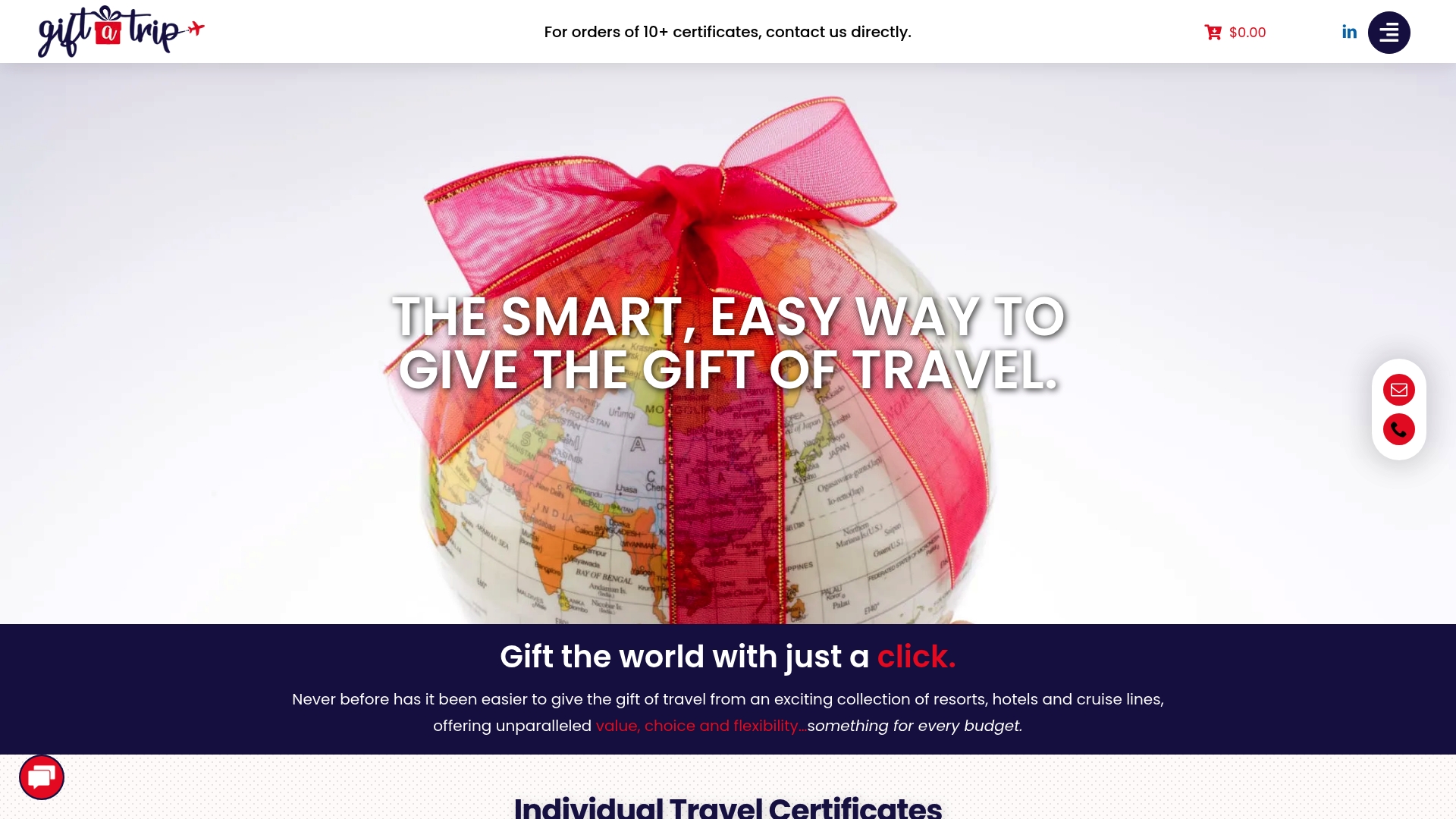
Giftatrip offers digital travel certificates redeemable at major resorts, hotels, and cruise lines including Virgin Voyages cruise certificates, with taxes and resort fees covered and minimal blackout dates. For teams building non-monetary or performance-based reward programs, vacation package certificates provide a flexible, high-impact option that recipients actually remember. Bulk ordering, personalized messaging, and secure digital delivery make Giftatrip a practical choice for programs at any scale.
FAQ
What are the three main types of promotional rewards?
The three main types are monetary rewards (discounts, cashback, gift cards), non-monetary rewards (VIP access, experiences, recognition), and performance-based rewards (referral bonuses, milestone achievements, quota incentives). Each type targets a different motivational driver and suits different program goals.
Are gift cards considered taxable income for employees?
Yes. Gift cards used as employee incentives are treated as taxable wages in the U.S. and must be reported through payroll. Coordinate with HR and finance before including gift cards in any employee reward program.
Which reward type builds the strongest customer loyalty?
Non-monetary and experiential rewards build stronger long-term loyalty than cash or discounts. Non-cash incentives create anticipation and emotional value that transactional rewards cannot replicate.
How do performance-based rewards control program costs?
Performance-based rewards only pay out when a defined behavior occurs, such as a referral conversion or a sales quota hit. This trigger logic means program costs scale directly with results, making ROI straightforward to calculate and control.
What makes experiential rewards more effective than cash?
Experiential rewards create memories and emotional associations with the brand that cash cannot. Travel certificates, event access, and curated experiences deliver a perceived value that often exceeds their actual cost, which is why they consistently outperform cash in employee and customer satisfaction surveys.