
Jump to Section:
TL;DR:
- Gifting occasion trips are personalized travel experiences honoring milestones or achievements.
- They create lasting memories by actively engaging the recipient, unlike material gifts.
- Flexibility, personalization, and timing are key to successful travel gifts.
Most people assume that a generous cash transfer or a gift card covers all the emotional bases of a meaningful present. It doesn’t. Money is forgotten within days, and gift cards often expire unused in a drawer. A gifting occasion trip is something entirely different: it’s a travel experience designed around someone’s life milestone, and it creates the kind of memory that gets retold at dinner tables for years. Whether you’re celebrating a spouse’s birthday, honoring a top-performing employee, or surprising newlyweds, this guide walks you through everything you need to know to get it right.
Table of Contents
- Defining gifting occasion trips
- Types of gifting occasion trips
- Why choose a trip as a gift?
- How to organize a memorable gifting occasion trip
- Common pitfalls and expert tips
- Why most gifting occasion trips fall short—and how to get it right
- Give the ultimate gift of travel—effortlessly
- Frequently asked questions
Key Takeaways
| Point | Details |
|---|---|
| Personalization matters | Customizing a gifting occasion trip to the recipient’s dreams boosts satisfaction and impact. |
| Flexible solutions win | Using established providers and flexible certificates makes gifting trips stress-free and memorable. |
| Ideal for all occasions | Gifting occasion trips work for personal events and corporate rewards, creating lasting memories. |
| Avoid common pitfalls | Plan ahead, allow recipient choice, and gather feedback to ensure the trip is truly enjoyed. |
Defining gifting occasion trips
Now that you understand why a personalized experience matters, let’s clarify exactly what a gifting occasion trip involves.
A gifting occasion trip is a travel experience given to someone specifically in honor of a life milestone or achievement. The key word here is given. Unlike planning a vacation for yourself, you’re designing an experience entirely around the recipient’s wishes, personality, and schedule. That distinction changes everything about how you approach the planning process.
What separates a gifting occasion trip from a regular vacation is intentionality. A standard vacation is self-directed: you pick where you want to go, what you want to do, and when you want to leave. A gifting occasion trip flips that model. Every decision, from the destination to the added touches like spa credits or room upgrades, is made with the recipient in mind. The benefits of experiential gifting are well documented, and they all trace back to this single shift in perspective.
Common occasions that call for this kind of gift include:
- Milestone birthdays (30th, 40th, 50th, and beyond)
- Wedding anniversaries, especially milestone years like 10th, 25th, or 50th
- Honeymoons for newlyweds who want a truly special start
- Retirements, where a trip symbolizes the freedom ahead
- Employee recognition, including top-performer rewards and work anniversary celebrations
- Graduations, where a trip marks a major life transition
“Prioritize personalization and flexibility to match recipient’s dreams, ensuring high satisfaction for both personal and corporate gifting.”
Physical gifts depreciate. A watch collects dust. A bottle of wine is gone in an evening. But a trip to a Caribbean resort or a cruise through the Mediterranean becomes a story the recipient carries with them forever. That emotional staying power is exactly why gifting occasion trips are growing in popularity among both individuals and HR professionals managing recognition programs.
Pro Tip: When defining the occasion, think about what the milestone means to the recipient, not just what it looks like on paper. A retirement trip for someone who loves adventure looks very different from one for someone who craves relaxation.
Types of gifting occasion trips
With the basics established, it’s time to explore how gifting occasion trips can take many forms for any setting or celebration.
The range of options is genuinely wide. You can gift a weekend getaway at a boutique resort, a week-long all-inclusive stay, a cruise vacation, or a custom adventure package. The right choice depends on who you’re gifting and why. Here’s a breakdown of the most common recipient types and what tends to resonate with each:
| Recipient type | Recommended trip style | Ideal added touches |
|---|---|---|
| Newlyweds | Romantic resort or cruise | Champagne, couples massage, ocean view room |
| Milestone birthday celebrant | All-inclusive resort | Private dinner, activity credits, personalized welcome note |
| Retiring employee | Relaxing beach or cultural destination | Flexible dates, travel essentials kit, upgrade options |
| Top-performing sales rep | Luxury hotel or cruise | Premium cabin, spa credit, bonus excursion |
| Long-term employee | Family resort or adventure package | Family room, kid-friendly activities, dining vouchers |
| Couple celebrating anniversary | Boutique hotel or cruise | Room upgrade, sunset dinner, in-room amenities |
For personal occasions, the focus is almost always on emotional resonance. You want the recipient to feel seen. For corporate occasions, the focus shifts slightly toward motivation and recognition, though the emotional component is still critical. A sales rep who earns a luxury cruise certificate feels valued in a way that a cash bonus simply cannot replicate.

One of the smartest moves you can make, especially for corporate gifting, is to use established providers. Trying to coordinate flights, hotels, and excursions across dozens of employee recipients is a logistical nightmare. Gift experiences for couples and corporate recipients alike benefit from turnkey solutions that remove the burden from the giver entirely.
Explore unique travel gift ideas to match the right trip style to your recipient, or browse memorable travel gift ideas for events if you’re planning for a group occasion or corporate event.
Why choose a trip as a gift?
Understanding the variety of possibilities, let’s examine why trips specifically make such powerful and meaningful gifts.
Let’s put it plainly: most gifts don’t work. They’re either forgotten, returned, or never used. Travel experiences are different because they require active participation. The recipient has to show up, engage, and experience something new. That active involvement is what burns the memory into long-term recall.
Here’s a direct comparison of common gift types:
| Gift type | Emotional impact | Memorability | Flexibility | Perceived value |
|---|---|---|---|---|
| Cash | Low | Very low | High | Moderate |
| Gift card | Low to moderate | Low | Moderate | Moderate |
| Branded merchandise | Low | Low | Low | Low |
| Gifting occasion trip | Very high | Very high | High (with certificates) | Very high |
The numbers back this up. Research consistently shows that recipients prefer experiences over material items, especially when those experiences are personalized to their interests. The satisfaction from a meaningful trip outlasts the satisfaction from almost any physical product.
For corporate clients, the case is even stronger. Here’s why a gifting occasion trip works as an employee reward:
- It signals genuine appreciation. A trip says “we invested real thought in you,” not just “here’s a line item in the budget.”
- It motivates future performance. Employees who receive memorable rewards are more likely to repeat the behaviors that earned them.
- It creates shared stories. When employees return from a gifted trip, they talk about it. That organic word-of-mouth builds culture.
- It’s flexible enough to be truly personal. Travel certificates let the recipient choose their destination and timing, removing the risk of a mismatched gift.
- It’s competitive. In a tight labor market, companies that offer travel rewards stand out as employers who genuinely invest in their people.
Learn more about why travel experiences win when compared to traditional reward structures.
How to organize a memorable gifting occasion trip
Ready to take action? Here’s how to actually plan and deliver an unforgettable gifting occasion trip.
Planning this kind of gift doesn’t have to be complicated, but it does require some intentional steps. Rushing the process is one of the most common mistakes gifters make, and it almost always results in a generic experience that misses the mark.
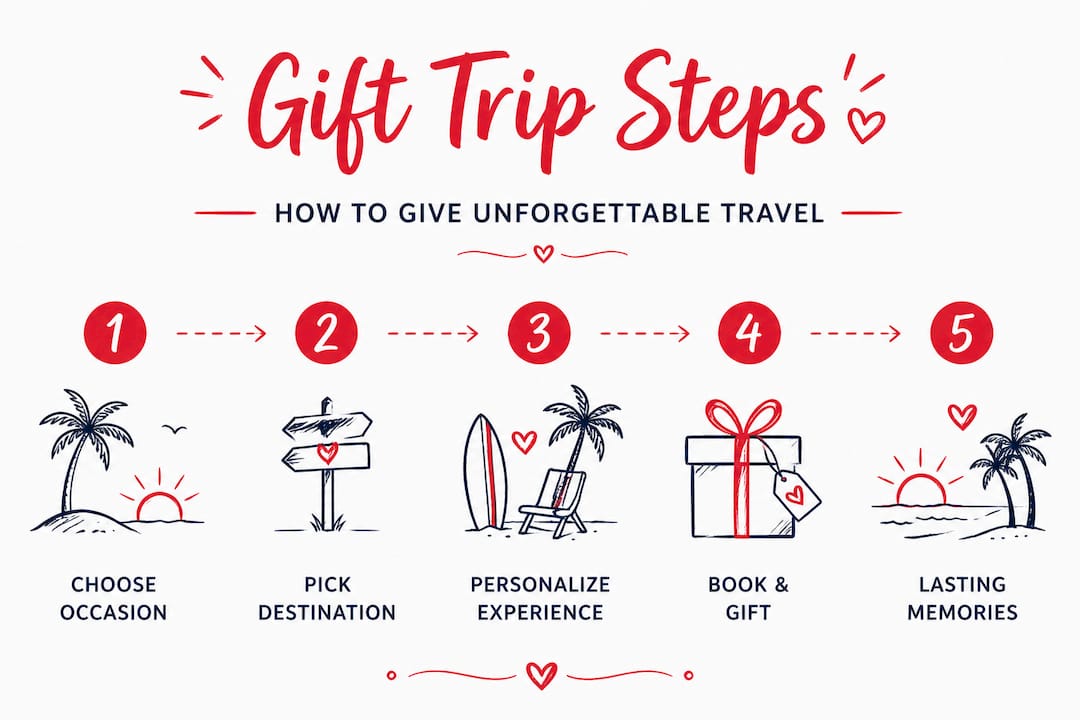
Follow these stages to get it right:
- Define the occasion clearly. Is this a birthday, an anniversary, a retirement, or a corporate reward? The occasion shapes every decision that follows, from the destination type to the tone of the personalized message.
- Assess the recipient’s preferences. Do they love beaches or cities? Adventure or relaxation? Cruises or boutique hotels? If you’re not sure, ask someone close to them or build in destination flexibility.
- Choose a provider or certificate type. This is where most gifters save the most time. A quality travel certificate from a reputable provider covers logistics, taxes, and resort fees, so you hand over a complete experience rather than a pile of booking tasks.
- Add personalization layers. A certificate alone is a great start, but a handwritten note, a custom gift box, or a small travel accessory elevates the whole experience. These touches signal that you didn’t just click “buy.”
- Deliver it memorably. Digital delivery is fast and secure, but consider timing the reveal for maximum emotional impact. Presenting it at a birthday dinner or in a team meeting makes the moment feel special.
- Follow up after the trip. Ask the recipient how it went. This closes the loop emotionally and gives you insight for future gifting decisions.
Using impactful travel gifting tips can help you refine each of these steps, and reviewing best practices for gifting a trip ensures you don’t overlook critical details.
Established providers offer turnkey solutions that handle the heavy lifting, from booking logistics to customer support for the recipient. This is especially valuable for corporate clients managing rewards for large teams.
Pro Tip: Choose open-dated certificates whenever possible. They let the recipient pick their own travel window, which dramatically increases the chance they’ll actually use the gift and love the experience.
Common pitfalls and expert tips
Even the best plans face challenges; let’s ensure your gifting occasion trip is smooth with expert shortcuts and key pitfalls to avoid.
The most common mistake gifters make is prioritizing their own preferences over the recipient’s. You might love a mountain ski retreat, but if the recipient has never skied and doesn’t want to learn, that gift creates stress rather than joy. Always lead with the recipient’s world, not your own.
Here are the most frequent pitfalls and how to sidestep them:
- Being too rigid with dates and destinations. Fixed-date trips put pressure on the recipient to rearrange their life. Flexible certificates solve this entirely.
- Ignoring dietary or accessibility needs. A resort that doesn’t accommodate dietary restrictions or mobility needs turns a gift into a burden. Verify these details before committing.
- Overloading the itinerary. More activities don’t mean more enjoyment. Leave room for spontaneity and rest.
- Skipping the personalized message. A travel certificate without a heartfelt note feels transactional. Take five minutes to write something genuine.
- Choosing the cheapest option to save money. A low-quality experience reflects poorly on the giver and leaves the recipient underwhelmed. Quality matters more than quantity.
- Forgetting to follow up. Post-trip feedback is valuable. It tells you what worked, what didn’t, and how to improve future gifting decisions.
For corporate programs, the stakes are higher because you’re often gifting at scale. A personalized travel certificate approach lets you maintain quality and personalization even across large recipient lists.
Pro Tip: For corporate gifting, survey recipients after their trip with three simple questions: What did you love most? What would you change? Would you recommend this type of reward to a colleague? The answers will sharpen your entire recognition program.
The personalization and flexibility you build into the gift from the start is what separates a forgettable gesture from a genuinely impactful experience.
Why most gifting occasion trips fall short—and how to get it right
Here’s the uncomfortable truth: most gifting occasion trips underdeliver. Not because the destination was wrong or the hotel was mediocre, but because the giver focused on the what and ignored the why.
A trip to Paris sounds impressive. But if the recipient is an introvert who finds crowded tourist destinations exhausting, Paris is the wrong gift regardless of how beautiful it is. The giver chose Paris because it sounds like a great gift, not because it matches the recipient’s actual desires. That gap between the giver’s perception and the recipient’s reality is where most gifting trips fail.
The second most common failure point is rigidity. When a gift comes with fixed dates, a locked destination, and no room for the recipient to make choices, it stops feeling like a gift and starts feeling like an obligation. Autonomy is a core human need. When you give someone the freedom to choose when and where, you’re not just giving them a trip. You’re giving them control over their own celebration.
Timing also matters more than most people realize. A honeymoon trip gifted six months after the wedding loses its emotional resonance. An employee recognition trip announced publicly in a team meeting lands very differently than one quietly emailed to someone’s inbox. The moment of gifting is part of the gift itself.
For corporate clients, there’s an additional layer: the gift must feel personal even when it’s part of a program. Individual travel incentives that allow employees to tailor their experience consistently outperform generic group trips in both satisfaction scores and motivational impact. The employee who chooses their own destination feels recognized as an individual, not just as a headcount.
The fix for all of these failures is the same: lead with the recipient’s autonomy, build in flexibility, and time the delivery for maximum emotional impact. A well-chosen travel certificate does all three simultaneously.
Give the ultimate gift of travel—effortlessly
If this article has convinced you that a gifting occasion trip is the right move, the next question is how to execute it without spending weeks on logistics.
Gift A Trip makes that part simple. Whether you’re gifting a romantic getaway for an anniversary, rewarding a top-performing sales team, or surprising a retiree with a dream vacation, the platform offers flexible travel gift certificates redeemable at major resorts, hotels, and cruise lines. Taxes and resort fees are covered, blackout dates are minimal, and digital travel gifts are delivered securely so nothing gets lost in the mail. For corporate clients, bulk customization and personalized messaging options make large-scale recognition programs genuinely manageable. You can even explore options like Virgin Voyages cruise gifts for a truly premium experience. The hard work is already done. You just get to be the person who gave an unforgettable gift.
Frequently asked questions
What is a gifting occasion trip?
A gifting occasion trip is a travel experience given to someone for a special event, such as a birthday, anniversary, or employee reward, and is personalized for lasting impact rather than chosen for the giver’s convenience.
How does gifting a trip work for corporate rewards?
Companies use travel certificates or turnkey providers to let employees choose their own trip, making the reward both memorable and easy to manage at scale.
What are the main benefits of gifting a travel experience?
Travel experiences create lasting memories and personalization that physical gifts and cash rewards simply cannot match, and they consistently rank higher in recipient satisfaction surveys.
What do I need to consider when planning a gifting occasion trip?
Focus on the recipient’s preferences, build in date and destination flexibility, and use a provider that handles logistics so the recipient receives a seamless, stress-free experience.
Can a gifting occasion trip be personalized?
Absolutely. The best gifting occasion trips are built around the recipient’s specific interests and circumstances, with personalization matching their dreams rather than the giver’s assumptions.