
Jump to Section:
TL;DR:
- Hotel resort fees are mandatory daily charges covering amenities that hotels include to make prices appear lower. These fees are often hidden or renamed but are required contract terms, with the 2025 FTC rule now mandating upfront total price disclosure. Travelers can manage resort fees by booking directly, using loyalty programs, comparing total costs, asking at check-in, and utilizing included amenities.
A resort fee is a mandatory daily charge hotels add on top of the advertised room rate, covering bundled amenities whether or not guests use them. Hotels include resort fees to separate part of the total stay cost from the base rate, making their rooms appear cheaper in search results and on booking platforms. Since may 12, 2025, the Federal Trade Commission requires all mandatory fees to appear in the total price upfront. Understanding why hotels charge these fees, what they cover, and how to manage them protects your vacation budget before you ever pack a bag.
Why do hotels include resort fees separately from room rates?

Hotels separate resort fees from room rates primarily to appear more competitive in price comparisons on third-party booking sites and search maps. When a hotel lists a room at $149 per night instead of $179, it ranks higher in filtered searches and catches more clicks. The resort fee covers the gap, but travelers often do not notice it until checkout.
This pricing tactic is deliberate. A hotel with a $149 base rate and a $30 resort fee competes directly against a hotel charging $179 all-in, even though the total cost is identical. The lower headline number wins attention, and that is exactly the point.
Hotels also use alternative fee names to avoid the “resort fee” label entirely. Common substitutes include:
- Destination fee: used by urban hotels to justify charges for city-specific perks
- Facility fee: tied to building amenities like pools or fitness centers
- Urban amenity fee: popular in major cities like New York and Chicago
- Amenity fee: a catch-all label with no standard definition
No industry standard exists for naming these charges, which makes them harder to spot and compare across properties.
Pro Tip: Always search for the total nightly rate, not just the base room price. Filter booking platforms by “total price” to see the real cost before you compare properties.
What do resort fees typically cover?
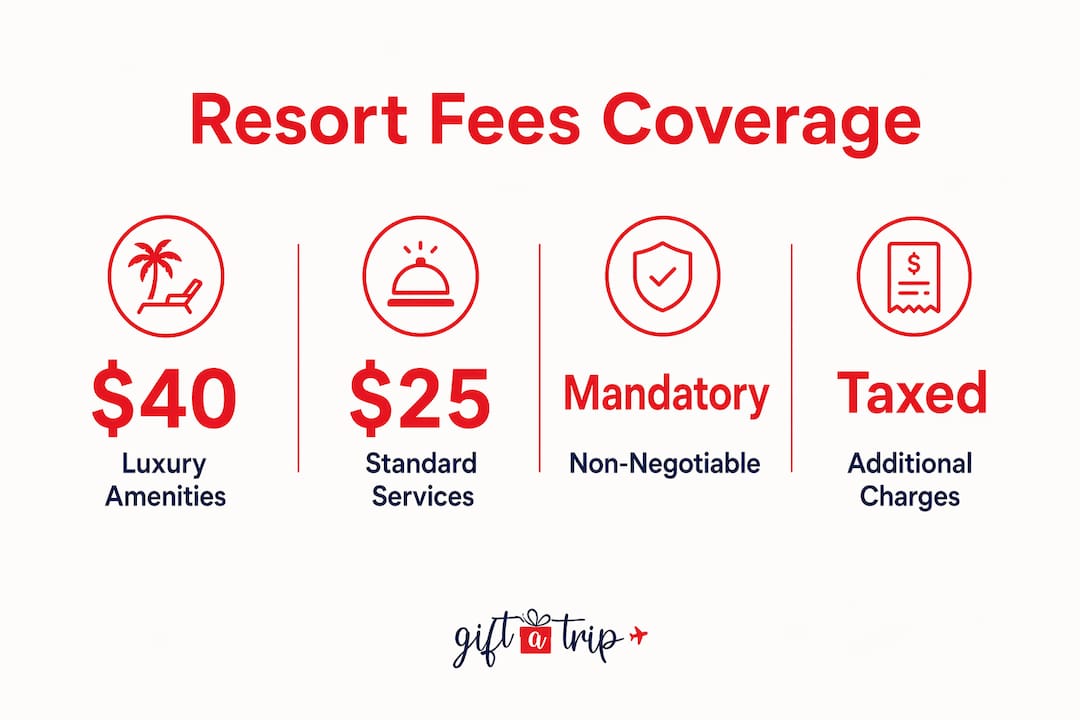
Resort fees cover a bundle of amenities that the hotel considers part of the standard guest experience. Common inclusions vary by property but generally include Wi-Fi access, pool and gym use, bottled water, beach towels, fitness classes, local phone calls, and shuttle services. Some properties add newspaper delivery, in-room coffee, or access to a business center.
The catch is that the fee applies regardless of whether you use any of these amenities. Resort fees are mandatory contract terms tied to the booking agreement. Refusing to pay after confirming a reservation can result in breach of contract consequences. You cannot opt out by skipping the pool or ignoring the gym.
Amenity quality also varies widely. A $40 resort fee at a luxury beachfront property might include daily beach chair service and a welcome cocktail. The same fee at a mid-range airport hotel might cover only Wi-Fi and a fitness room with two treadmills. The label tells you nothing about the value.
Pro Tip: Before booking, call the hotel directly and ask for a written list of what the resort fee covers. This takes two minutes and prevents unpleasant surprises at checkout.
Resort fees also carry a tax burden that most travelers overlook. These charges are subject to occupancy and sales taxes, often adding 10–20% to the stated fee amount. A $35 resort fee in a jurisdiction with a 13% tax rate actually costs $39.55. Multiply that across a five-night stay and the tax alone adds nearly $23 to your bill.
How has the 2025 FTC rule changed resort fee disclosure?
The Federal Trade Commission’s rule, effective may 12, 2025, mandates that hotels display the total price, including all mandatory fees, at the first point of price disclosure. Hotels can no longer bury resort fees in fine print or reveal them only at checkout. This is the most significant shift in hotel pricing transparency in decades.
The rule does not cap the amount hotels can charge. Fees ranging from $25 to over $50 per night remain fully legal as long as they appear in the total price upfront. The protection is about visibility, not limits.
| What changed | What stayed the same |
|---|---|
| Total price must include resort fees at first display | No cap on resort fee amounts |
| Hotels cannot reveal fees only at checkout | Fees remain mandatory per booking contract |
| Applies to all mandatory charges, not just resort fees | Tax on resort fees still applies |
| Enforcement covers hotels, ticket sellers, and short-term rentals | Amenity quality and inclusions vary by property |
Consumer advocates praise the FTC rule for improving price transparency but urge travelers to review final booking confirmations carefully. Some properties may still test compliance boundaries, especially on third-party platforms where enforcement is harder to monitor.
What strategies actually work for managing resort fees?
Managing resort fees starts before you book, not after you arrive. These five approaches give you the best chance of reducing or eliminating the charge.
-
Book directly with the hotel. Direct booking gives you more leverage than booking through a third-party platform. Hotel staff can sometimes waive or reduce fees for direct guests, and you get clearer fee disclosure upfront.
-
Use loyalty program status. Elite tiers and award stays at chains like Hilton and Hyatt sometimes waive resort fees entirely. If you travel frequently, concentrating stays with one brand to earn elite status pays off in fee exemptions alone.
-
Compare total prices, not base rates. Always calculate the full nightly cost including the resort fee and applicable taxes before comparing properties. A hotel with a higher base rate and no resort fee often costs less than a “cheaper” option with a $45 daily charge.
-
Ask the front desk at check-in. Politely requesting a fee waiver works more often than travelers expect, especially if specific amenities are unavailable or under renovation. Hotels with empty pools or closed gyms have less justification for the full charge. Success varies, but asking costs nothing.
-
Use every included amenity. When a fee is unavoidable, treat it as a prepaid amenity package. Use the gym, take the bottled water, attend the fitness class, and request the beach towels. Getting full value from what you already paid for is the most practical response to a fee you cannot avoid.
Pro Tip: Check hotel review sites for recent guest comments about resort fees. Travelers often report whether fees were waived, what amenities were actually available, and whether the front desk was receptive to requests.
For travelers planning accommodations in less familiar destinations, resources like this Morocco accommodation guide show how fee transparency practices differ across international markets, which is useful context when budgeting for overseas trips.
Understanding how digital reservations work also helps you spot mandatory surcharges before they appear on your final bill, regardless of where you book.
Key Takeaways
Resort fees are mandatory, taxed, and non-negotiable once booked, so comparing total prices and using loyalty status are the two most effective tools travelers have.
| Point | Details |
|---|---|
| Resort fees are mandatory | Fees apply regardless of amenity use and are enforceable as contract terms. |
| Fees cover bundled amenities | Common inclusions are Wi-Fi, pool, gym, towels, and water, but quality varies widely. |
| 2025 FTC rule requires upfront disclosure | Hotels must show total price including fees at first display, not at checkout. |
| Taxes inflate the real cost | Occupancy taxes of 10–20% apply to resort fees, raising the actual amount paid. |
| Loyalty status can waive fees | Elite tiers and award stays at major chains sometimes exempt guests from resort fees. |
Resort fees are here to stay. Here is how I think about them.
Resort fees have been a fixture of hotel pricing for over two decades, and the 2025 FTC rule did not eliminate them. It just forced hotels to be honest about them earlier in the booking process. That is progress, but it does not change the math on your bill.
My honest view is that most travelers lose money on resort fees not because the fees are inherently unfair, but because they do not use what they pay for. A $40 daily fee that covers a gym, beach chairs, and daily water bottles is a reasonable deal if you use those things. It is a waste if you spend the day off-property and skip the gym entirely.
The smarter move is to treat the resort fee as a line item in your trip budget from day one. Factor it in when comparing hotels, not after you have already fallen for the lower headline rate. The hidden costs of resort fees are only hidden if you let them be.
Travelers who understand their legal rights under the FTC rule, ask direct questions before booking, and concentrate loyalty with one or two hotel brands are the ones who pay the least and get the most. That combination of preparation and loyalty is the closest thing to a reliable strategy in a fee environment that shows no signs of changing.
— Donovan
Travel certificates that take the guesswork out of vacation costs
Planning a vacation gets complicated when fees appear after you think you know the total cost. Giftatrip offers digital travel certificates redeemable at resorts, hotels, and cruise lines, with taxes and resort fees covered in the certificate value so recipients know exactly what they are getting.

Whether you are gifting a trip for a birthday, anniversary, or corporate reward, Giftatrip certificates remove the fee surprises that frustrate travelers at checkout. The certificates work across major resort brands and cruise lines, including options like resort gifting experiences that bundle the full stay value upfront. If you want to give a travel experience without the fine print headaches, Giftatrip is the place to start.
FAQ
What are resort fees and why are they charged?
Resort fees are mandatory daily charges hotels add on top of the advertised room rate to cover bundled amenities like Wi-Fi, pool access, and gym use. Hotels charge them separately to display lower base rates and appear more competitive on booking platforms.
Are resort fees mandatory even if I do not use the amenities?
Resort fees are mandatory contract terms tied to your booking agreement, meaning you owe them regardless of which amenities you use or skip.
What does the 2025 FTC rule say about resort fees?
The FTC rule effective may 12, 2025 requires hotels to include all mandatory fees in the total price at the first point of disclosure. Hotels can still charge resort fees, but they can no longer hide them until checkout.
Can resort fees be waived?
Resort fees can sometimes be waived through elite loyalty program status, award bookings, or by politely asking the front desk, especially if advertised amenities are unavailable. Success is not guaranteed, but direct booking gives you the best chance of negotiating.
How much do resort fees typically cost?
Resort fees typically run from $25 to over $50 per night, and occupancy taxes of 10–20% apply on top of that stated amount, raising the real cost travelers pay.