Jump to Section:
TL;DR:
- Travel is a powerful culture-building tool that improves retention, performance, and loyalty when used strategically. Companies that design measurable, personalized travel programs see significant employee engagement and long-term benefits.
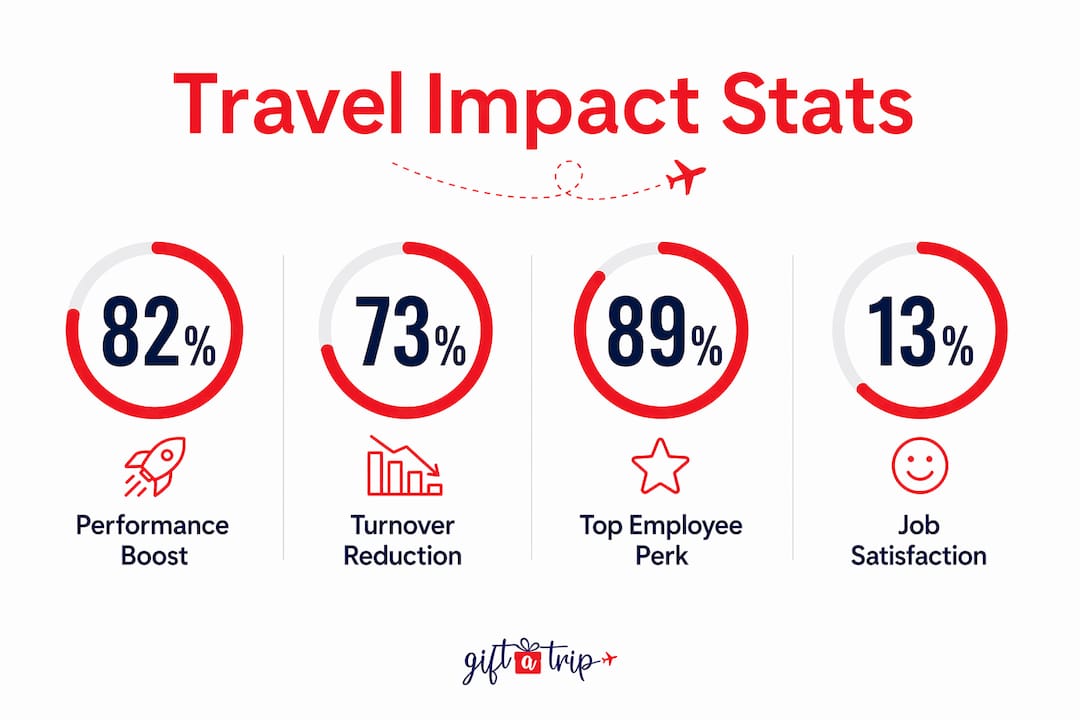
The role of travel in workplace culture is one of the most underused tools in the corporate HR playbook. Travel is defined here as a strategic employee engagement mechanism, not a discretionary perk. Companies that treat it as a core culture-builder see measurable gains in retention, motivation, and team cohesion. Incentive travel is the top non-cash motivator across all working generations, with 89% of employees rating it as a top-tier workplace perk. For HR leaders and corporate executives, that number signals a clear opportunity to build culture through experience rather than compensation alone.
How does travel in workplace culture drive motivation and performance?
Travel rewards outperform cash bonuses in one critical way: they create emotional memory. A cash bonus is spent and forgotten within weeks. A trip to a resort or cruise is recalled, shared, and associated with the employer who made it possible. That emotional durability is the foundation of long-term loyalty.

The data backs this up. Participants show an 82% improvement in work performance within six months of earning a travel reward. That is not a marginal gain. It means the motivational effect of a well-designed trip carries forward into daily output for half a year after the experience.
The impact extends beyond individual performance. Positive corporate travel experiences produce a 13% higher rating in job satisfaction and trust in management. Trust in leadership is one of the hardest metrics to move through traditional HR programs. Travel does it by connecting achievement with personal meaning.
Consider what this means for your retention budget. 95% of travel participants feel valued by their employer after earning a trip. Feeling valued is the single strongest predictor of whether an employee stays or leaves. When 68% of employees say they would work harder to earn a “bucket list” travel experience, you have a self-funding motivation engine.
Key motivational benefits of travel rewards include:
- Performance lift: An 82% improvement in work output within six months of earning a trip.
- Loyalty signal: 91% of companies using incentive travel report it builds long-term loyalty with top performers.
- Effort multiplier: 68% of employees say they would increase effort specifically to earn a travel reward.
- Satisfaction boost: A 13% increase in job satisfaction tied directly to positive travel experiences.
How does travel improve workplace relationships and team bonding?
Shared experience is the fastest way to build trust between colleagues. A team that navigates an unfamiliar city together, shares meals, and solves logistical problems in real time develops a level of rapport that no office workshop replicates. This is the core mechanism behind the importance of travel in teams.

Companies implementing team travel programs report a 73% decrease in employee turnover and a 26% increase in productivity following travel retreats. These are not soft metrics. Turnover reduction directly cuts recruitment and onboarding costs, which run between 50% and 200% of an employee’s annual salary. A single well-designed retreat can pay for itself many times over.
Travel also breaks down the invisible walls between departments. When a sales manager and a product engineer share a dinner table in a new city, they talk differently than they do in a conference room. Cross-functional communication improves because the social context changes. That carries back into the office as stronger collaboration and shorter decision cycles.
Pro Tip: Design team travel so that at least one activity requires cross-functional problem-solving. Escape rooms, cooking classes, or city scavenger hunts all work. The goal is to create a shared challenge that mirrors real work dynamics in a low-stakes environment.
Practical examples of travel contributing to team bonding include:
- Annual sales retreats that combine recognition ceremonies with group excursions, reinforcing both individual achievement and collective identity.
- Leadership offsites where executives and managers work through strategic priorities in a neutral environment, reducing hierarchy-driven friction.
- New-hire cohort trips that accelerate cultural onboarding by immersing new employees in the company’s values through shared experience.
- Milestone celebration trips that mark company anniversaries or project completions, cementing shared history within the team.
For a deeper look at how travel packages function as retention tools, the 2026 HR guide on travel rewards covers the cost-benefit case in detail.
What are the common pitfalls in corporate travel program design?
Most travel programs fail not because of budget but because of poor design. The most common mistake is disconnecting the reward from a clear achievement. Failure to link travel rewards to specific goals undermines motivation because employees perceive the trip as luck rather than earned recognition. That perception destroys the motivational value entirely.
The second major pitfall is ignoring measurement. 94% of top-performing companies report their incentive travel programs as effective, but only 25% track critical ROI metrics such as profit impact or behavioral change. That gap means most companies cannot defend their travel budgets when leadership reviews spending. Programs without data get cut first.
Here is a practical framework for designing a travel program that avoids the most common failures:
- Define the achievement threshold clearly. Employees must know exactly what performance level earns the reward. Vague criteria breed resentment, not motivation.
- Personalize by demographic segment. Segmenting travel rewards to match employee preferences increases engagement. Younger workers often prefer bleisure options that extend a business trip into personal time. Established employees with families respond better to family-inclusive packages.
- Make redemption frictionless. Complicated booking processes kill program enthusiasm. Employees who earn a trip and then face a bureaucratic redemption experience associate the frustration with the employer, not the reward.
- Track at least three ROI metrics. Measure performance change before and after the reward cycle, retention rates among participants versus non-participants, and employee satisfaction scores. These three data points build the business case for continued investment.
- Communicate selection criteria publicly. Transparent processes build trust. When employees understand how winners are chosen, they compete fairly and respect the outcome.
Pro Tip: Use a corporate travel rewards guide to align your program criteria with HR objectives before you announce the program. Retrofitting criteria after launch damages credibility.
Understanding how to maximize reward value within budget constraints is also worth exploring. The 2026 reward guide from GorillaFare covers cost-effective travel incentive strategies that corporate planners can apply directly.
How to integrate travel into your broader HR strategy
Travel programs that sit outside HR strategy are the first to be cut during budget reviews. 35% of incentive travel programs are not integrated with HR initiatives, leaving them exposed when leadership scrutinizes discretionary spending. Integration is not optional. It is the difference between a program that survives and one that disappears after the first budget cycle.
The business travel and company culture connection becomes durable when travel is tied to employee development goals, not just performance rankings. High-impact travel experiences combine leisure with professional development and leadership networking. That combination increases perceived value and makes the program harder to cut because it serves multiple HR objectives simultaneously.
Here is how to embed travel into your HR framework effectively:
- Tie travel to development milestones. Award trips when employees complete leadership programs, earn certifications, or hit multi-year tenure markers. This connects travel to growth, not just sales output.
- Include bleisure options. Allowing employees to extend a company-paid trip by a few personal days at their own cost increases perceived value without increasing program cost.
- Offer family-inclusive packages for senior talent. Established employees with families place high value on experiences they can share. A resort certificate redeemable for a family vacation carries more weight than a solo trip.
- Balance frequency to prevent burnout. Travel rewards lose impact when they become routine. Annual or milestone-based programs maintain the sense of occasion that drives motivation.
The table below shows how travel program integration affects key HR outcomes:
| HR objective | Travel program contribution |
|---|---|
| Retention | 73% turnover reduction reported by companies with team travel programs |
| Performance | 82% improvement in work output within six months of earning a trip |
| Satisfaction | 13% higher job satisfaction and trust in management |
| Loyalty | 91% of companies report incentive travel builds long-term loyalty |
| Engagement | 95% of travel participants feel valued by their employer |
Experiential rewards create emotional durability that transactional rewards cannot match. Personalization increases satisfaction without proportionally increasing costs. That is the financial argument HR leaders need when presenting travel programs to finance teams.
For practical guidance on incorporating travel certificates into your existing incentive structure, the travel incentives certificate strategies resource covers six specific approaches that align with HR retention goals.
Key Takeaways
Travel is the most cost-effective culture-building tool available to HR leaders, delivering measurable gains in retention, performance, and trust when programs are designed with clear criteria, personalization, and integration into broader HR strategy.
| Point | Details |
|---|---|
| Travel outperforms cash | 89% of employees rate incentive travel as a top perk; performance improves 82% within six months. |
| Team travel cuts turnover | Companies with travel programs report a 73% decrease in employee turnover. |
| Measurement is non-negotiable | Only 25% of companies track ROI metrics; programs without data get cut first. |
| Integration protects budgets | 35% of programs sit outside HR strategy, making them vulnerable to elimination. |
| Personalization drives results | Segmenting rewards by demographic preference increases engagement without proportionally raising costs. |
What I’ve learned about travel as a culture tool
Travel moved from a reward category to a culture category the moment companies started measuring what happened after the trip, not just during it. I have watched organizations spend generously on incentive travel and then fail to capture any of the cultural benefit because they treated the trip as the finish line. The trip is not the finish line. It is the starting point for a conversation about what the company values and who it recognizes.
The programs that actually shift culture share one characteristic: they make the recipient feel genuinely seen. That means the destination matches something the employee cares about, the selection criteria were transparent, and the redemption process was simple enough that the experience started feeling good before the plane took off. When any of those three elements breaks down, the emotional impact collapses.
The measurement gap is the most frustrating pattern I see. Companies that cannot prove the ROI of their travel programs are not running bad programs. They are running programs they cannot defend. Tracking three metrics, performance change, retention rate among participants, and satisfaction scores, takes less than a day to set up and gives you a defensible budget case for years.
My honest recommendation: treat travel as a line item in your culture budget, not your perks budget. The moment it moves categories in your internal accounting, the conversation with leadership changes. You stop defending a luxury and start presenting a retention investment with a documented return.
— Donovan
Giftatrip travel certificates for your employee rewards program
HR leaders who want to act on the data in this article need a delivery mechanism that is flexible, fast, and easy to manage at scale. Giftatrip provides digital travel certificates redeemable at major resorts, hotels, cruise lines, and vacation packages, with taxes and resort fees covered and minimal blackout dates.
The certificates work as individual rewards or bulk program tools, with customizable gift boxes and personalized messaging for recognition events, milestone programs, and sales incentives. The travel certificate distribution guide walks HR teams through the full setup process, from criteria alignment to delivery logistics. For leaders looking to add a premium experiential option, Virgin Voyages cruise certificates from Giftatrip offer a memorable reward that employees genuinely compete to earn.
FAQ
What is the role of travel in workplace culture?
Travel functions as a culture-building tool by creating shared experiences that increase trust, collaboration, and loyalty. Companies using structured travel programs report measurable gains in retention, satisfaction, and performance.
How does incentive travel compare to cash bonuses for employee motivation?
Incentive travel outperforms cash bonuses because it creates lasting emotional memory tied to achievement. Research shows 89% of employees rate travel as a top-tier perk, while cash rewards are typically forgotten within weeks.
How much does employee turnover decrease with team travel programs?
Companies implementing team travel and experiential retreat programs report a 73% decrease in employee turnover. Given that replacing an employee costs between 50% and 200% of their annual salary, travel programs deliver a strong financial return.
Why do most incentive travel programs fail to prove ROI?
Only 25% of companies track critical ROI metrics such as profit impact or behavioral change. Programs that do not measure outcomes cannot defend their budgets and are the first to be cut during spending reviews.
How should HR leaders personalize travel rewards for different employee groups?
Segment rewards by demographic preference. Younger employees respond well to bleisure options that extend business trips into personal time. Employees with families place higher value on family-inclusive resort or cruise certificates that create shared experiences outside of work.