Jump to Section:
TL;DR:
- Careful planning and segmentation are essential to ensure thoughtful gifting that strengthens relationships during events.
- Implementing a structured checklist, early personalization, and choice-based options enhances recipient satisfaction and logistical efficiency.
Picking the wrong gift for an event doesn’t just waste money. It signals a lack of thought, and people notice. Whether you’re organizing a corporate awards night, a milestone birthday, a company retreat, or a client appreciation event, the gap between “thoughtful gift” and “generic filler” almost always comes down to preparation. A structured event gifting checklist is what separates memorable moments from forgettable ones. This guide walks you through every step, from locking in your foundational criteria to finalizing vendors and following up after the event.
Table of Contents
- Key takeaways
- 1. Lock in your foundational criteria first
- 2. Build your planning timeline around the event date
- 3. Segment recipients and set gift tiers
- 4. Choose your gift categories
- 5. Prioritize personalization from the start
- 6. Consider choice-based gifting for better outcomes
- 7. Compare direct gifting vs. choice-based gifting at scale
- 8. Nail your event-day gifting logistics
- 9. Finalize your checklist with a decision-flow review
- My honest take on event gifting after years of watching it go wrong
- How Giftatrip makes event gifting effortless
- FAQ
Key takeaways
| Point | Details |
|---|---|
| Lock non-negotiables first | Define recipient, event goal, date, and budget before contacting any vendor to avoid costly revisions. |
| Segment your recipients | Map gift tiers to recipient types like employees, clients, and VIPs for relevance and engagement. |
| Personalize early | Collect personalization data well before the event; late requests trigger rush fees and production errors. |
| Use choice-based gifting | Offering 5 to 8 curated options improves satisfaction without creating logistical chaos. |
| Build in operational buffers | Allocate setup, distribution, and breakdown time on event day to avoid overtime penalties. |
1. Lock in your foundational criteria first
Every effective event gifting checklist starts with four non-negotiables you lock down before you talk to a single vendor: recipient identity, event goal, event date, and total budget. Defining these early shapes every gifting decision downstream and prevents the expensive last-minute pivots that derail otherwise well-run events.
Start by writing out who you are gifting and why. A tech conference gifting 400 general attendees needs a completely different approach than a sales kickoff rewarding 30 top performers. Once you know the “who,” the “what” becomes much clearer.
- Recipients: Name the groups receiving gifts (attendees, employees, VIPs, partners).
- Event goal: Clarify whether the gift reinforces appreciation, motivates performance, celebrates a milestone, or drives brand recall.
- Date and location: These determine lead times, shipping logistics, and whether physical or digital gifts are more practical.
- Guest count: Get a reliable estimate now; you will refine it later, but a starting number anchors your vendor conversations.
- Budget: Set your total gifting budget and add a 10 to 15% contingency to cover surprises.
Pro Tip: Write your non-negotiables on one page and share it with every team member involved in gifting. Alignment at this stage eliminates approval delays later.
2. Build your planning timeline around the event date
Gifting logistics take longer than most people expect. Working backward from your event date is the only reliable way to avoid rush fees, stock shortages, and personalization errors. Timelines starting 6 to 12 months out are standard for large corporate events, with the final two weeks reserved for confirmations and last-minute adjustments.
Here is a practical breakdown of how to think about the timeline:
At the 3 to 6 month mark, research gift categories, shortlist vendors, and get preliminary quotes. At the 6 to 8 week mark, finalize your gift selection and place orders. At the 3 to 4 week mark, confirm guest count with vendors to finalize quantities, names, and any personalization requirements. The final two weeks are for delivery tracking, quality checks, and event-day setup planning.
Starting late compresses every stage and forces trade-offs you would not otherwise make.
3. Segment recipients and set gift tiers
A one-size-fits-all approach is one of the most common gifting mistakes. Segmenting recipients by type, such as employees, clients, partners, and event attendees, and then mapping budget tiers to each group transforms gifting from a random gesture into a deliberate strategy.
Think of it in three tiers. Tier one covers general attendees where a modest, well-branded gift works fine. Tier two covers clients and mid-level stakeholders where a more personalized, higher-value gift reflects the business relationship. Tier three covers VIPs, top performers, or keynote speakers where premium gifting is expected and its absence is noticed.
This segmentation also prevents awkward situations where a frontline employee and a C-suite executive receive the same gift at the same event. The distinction doesn’t need to be obvious to the room, but it needs to be intentional on your checklist.
Pro Tip: Create a simple spreadsheet with recipient name, category, tier, and assigned gift. This becomes your master reference and approval document throughout the planning process.
4. Choose your gift categories
Your gift planning guide needs a category decision early in the process. The three main categories are physical gifts, experiential gifts, and hybrid gifts that combine both.
Physical gifts (branded merchandise, gourmet baskets, personalized items) work well for in-person events where presentation is part of the experience. Experiential gifts (travel certificates, spa days, event tickets) are increasingly preferred because they create lasting memories rather than collecting dust. Hybrid gifts, like a branded travel bag paired with a resort certificate, combine immediate tactile value with long-term experiential payoff.

For corporate events in 2026, experiential gifting continues to grow as the preferred format, particularly among professionals who already have everything they need on a physical level. Travel gift ideas for events are especially strong in this category, offering flexibility and broad appeal across demographics.
5. Prioritize personalization from the start
Personalization is no longer a nice-to-have in 2026. 62% of procurement managers now prioritize adding names, roles, and recipient preferences during the early phases of their gifting checklist. The organizations that do this well see measurably higher engagement and post-event sentiment.
The practical implication is that personalization data collection needs to happen well before you would intuitively think. Names, preferred pronouns, dietary restrictions for edible gifts, even travel preferences for experiential gifts. Treat this data like a vendor deliverable with a firm deadline and approval step built into your checklist.
Personalization vendor lead times peak toward the end of the year, so if your event falls between October and December, engage your vendors by September to avoid rush fees. This single step prevents one of the most common and expensive event gifting mistakes.
6. Consider choice-based gifting for better outcomes
One of the more underused strategies in a solid gift selection checklist is giving recipients a degree of choice. Rather than selecting one gift for everyone in a tier, you offer a curated menu of options and let recipients pick what appeals to them.
Choice-based gifting with 5 to 8 vetted options per tier strikes the right balance. It improves recipient satisfaction because people receive something they actually want, and it prevents gift fatigue, where recipients end up with yet another branded item they will never use. At the same time, limiting the selection to a curated range keeps your logistics manageable and your vendor relationships clean.
The execution is simpler than it sounds. A digital survey or a pre-event selection portal can capture preferences in advance. For digital gifts like travel certificates, the flexibility is built in by design.
7. Compare direct gifting vs. choice-based gifting at scale
Understanding the difference between approaches helps you pick the right strategy for your event size and audience.
| Factor | Direct gifting | Choice-based gifting |
|---|---|---|
| Recipient experience | Uniform, less personal | Higher satisfaction, more relevant |
| Logistics complexity | Simpler to execute | Requires data collection upfront |
| Personalization potential | Limited | High |
| Vendor coordination | Single SKU, easier | Multiple options, more vendor communication |
| Best for | General attendees, tight timelines | VIPs, clients, high-value recipients |
| Cost predictability | Easier to budget | Requires range-based budgeting |
For most mid-to-large events, a blended approach works best. Use direct gifting for your general attendee tier and choice-based gifting for your upper tiers where the relationship investment justifies the added coordination.
Pro Tip: If you use choice-based gifting, close the selection window at least 4 weeks before the event to give vendors enough lead time for personalization and fulfillment.
8. Nail your event-day gifting logistics
Even the best gifts fail to land if the event-day execution is chaotic. Operational buffers matter: plan for at least 20 minutes before doors open for gift setup, 10-minute transition windows between segments if gifts are being distributed mid-event, and 30 minutes post-event for breakdown and remaining distribution.
Assign a specific team member to oversee gift distribution. This person is responsible for knowing the recipient list, the gift assignments by tier, and what to do if a gift is missing or damaged. Having this role defined in advance prevents the scramble that derails otherwise smooth events.
Digital gifts, like travel certificates delivered by email, sidestep many of these logistics challenges entirely. They can be scheduled for delivery at any time, which makes them particularly attractive for large events where physical distribution would create bottlenecks.
9. Finalize your checklist with a decision-flow review
Before you lock everything in, run through a structured decision flow as your final checklist for gifting review. This is not a creative step. It is an operational one.
- Confirm the final recipient list against your segment tiers and gift assignments.
- Verify the total gift budget including personalization costs, shipping, and your contingency buffer.
- Confirm vendor order status and delivery windows.
- Check that personalization approvals are complete and sent to vendors.
- Confirm the event-day logistics plan including who distributes gifts, when, and where.
- Review your post-event follow-up plan including thank-you notes and any digital follow-ups.
Post-event thank-you notes and giveaways extend the gifting impact beyond the event day and reinforce the relationships the gift was meant to build. This step is often skipped, which is a missed opportunity. A thoughtful follow-up email sent within 48 hours of the event, referencing the gift and expressing gratitude, significantly strengthens the impression you made.
Pro Tip: Schedule your post-event follow-up communications as a task in your event plan before the event happens. Waiting until after the event to think about follow-up means it almost never gets done.
My honest take on event gifting after years of watching it go wrong
I’ve watched organizations spend significant money on event gifts that landed with a thud. The gift wasn’t bad. The timing was fine. But no one had thought about whether the recipient would actually want it. That’s the core issue most checklists miss.
In my experience, the difference between gifting that strengthens relationships and gifting that gets thrown in a desk drawer comes down to two things: segmentation and genuine choice. When you treat every recipient as identical, you’re signaling that the gift was about your convenience, not their experience. Giving people even a small element of choice changes how they receive it entirely.
I’ve also seen the timing failures up close. Organizations that wait until six weeks before a major year-end event to start the personalization process routinely end up with rushed, error-prone production and frustrated vendors. The corporate travel reward ideas that generate the most positive feedback are almost always the ones planned at least three months out, with recipient data collected early and vendor approvals built into a clear timeline.
The checklist I outlined above is not just a planning tool. It is a relationship strategy. Every step you take to understand who you are gifting, what they value, and how to deliver it thoughtfully is an investment in the relationship the event is meant to support. That framing changes how you approach every decision on the list.
— Donovan
How Giftatrip makes event gifting effortless
If your event gifting checklist is leading you toward experiential gifts that genuinely excite recipients, Giftatrip is worth exploring seriously.
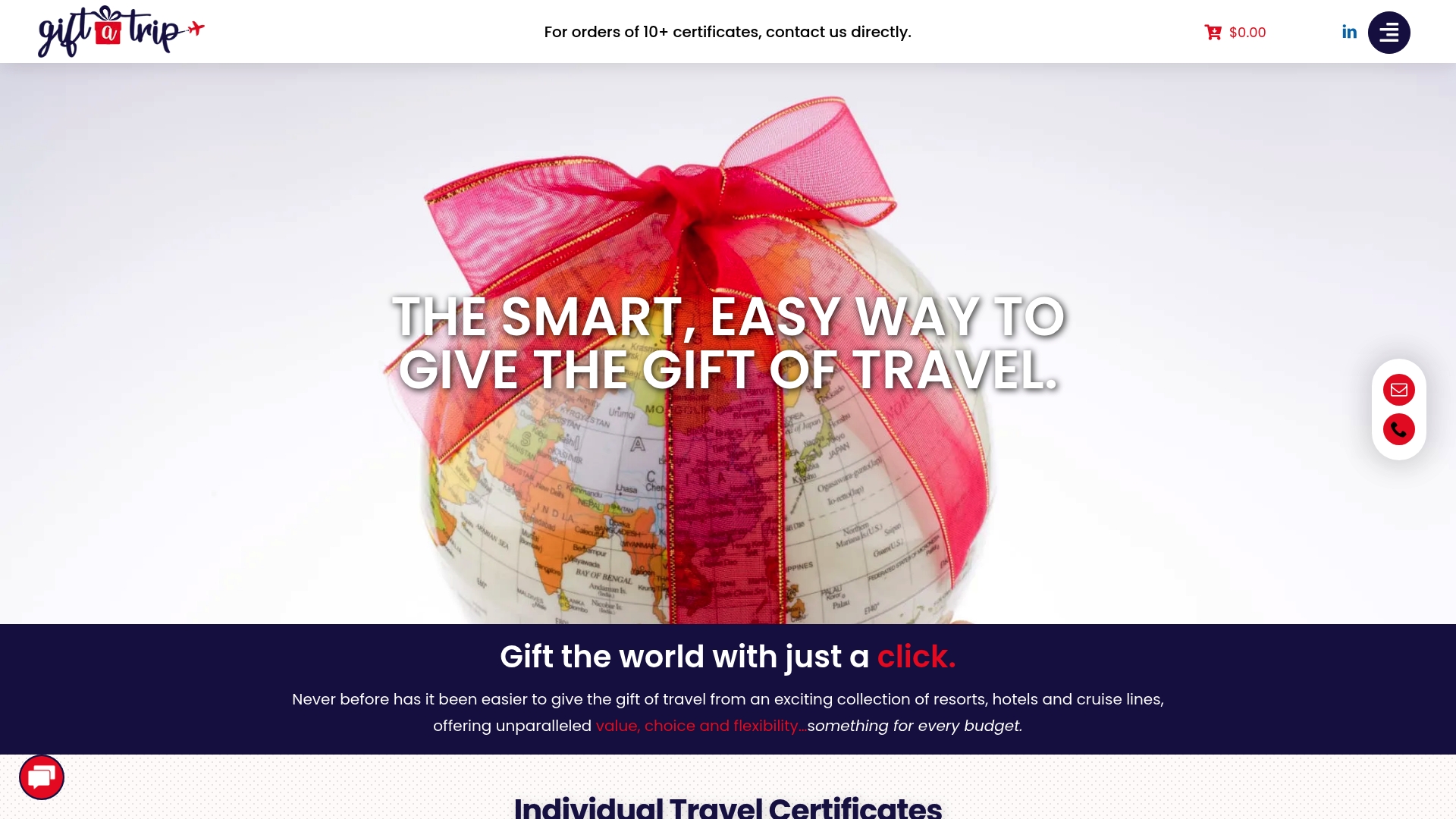
Giftatrip specializes in travel certificates for corporate events and personal occasions, offering certificates redeemable at resorts, hotels, and cruise lines from major brands. For organizations gifting at scale, the platform supports bulk orders with customizable gift boxes, personalized messaging, and secure digital delivery. Taxes and resort fees are included, and blackout dates are minimal, which removes the fine print frustration recipients often encounter with travel gifts.
For high-value tiers, options like Virgin Voyages cruise certificates make a lasting impression without the logistics burden of physical gifts. Whether you are rewarding employees, recognizing clients, or celebrating a milestone, Giftatrip aligns naturally with the choice-based, experiential gifting strategies that drive the strongest post-event sentiment.
FAQ
What goes on an event gifting checklist?
An event gifting checklist should cover recipient segmentation, budget by tier, gift category selection, personalization data collection, vendor lead times, event-day distribution logistics, and post-event follow-up. Starting with these elements prevents costly last-minute changes.
How early should I start planning gifts for an event?
For large corporate events, begin your gifting strategy 3 to 6 months out. Confirm guest counts with vendors 3 to 4 weeks before the event and close personalization requests at least 4 weeks prior to avoid rush fees.
What are the best gifts for corporate events in 2026?
Experiential gifts, particularly travel certificates and choice-based reward options, rank highest for satisfaction in 2026. They are flexible, memorable, and sidestep the common problem of recipients receiving items they already own.
How do I set a gifting budget for an event?
Set your total gifting budget early and build in a 10 to 15% contingency for unexpected costs. Map budget tiers to recipient segments so higher-value relationships receive proportionally higher-value gifts.
What is choice-based gifting and why does it work?
Choice-based gifting offers recipients a curated selection of 5 to 8 vetted options within a budget tier. It improves satisfaction because recipients get something they actually want, while keeping your vendor relationships and logistics manageable.