Jump to Section:
TL;DR:
- Travel for milestone recognition creates lasting emotional loyalty by offering personalized experiences that motivate and engage employees.
- Implementing digital, customizable travel rewards enhances program scalability and sustains recognition across diverse workforce categories.
Travel for milestone recognition is the most effective way to create lasting employee engagement because experiences produce stronger emotional memory than cash or merchandise rewards. Experiential rewards generate stronger motivation and longer recall than cash-equivalent rewards, with 84% of program owners citing memorability as the key to lasting engagement. That finding alone reframes the entire recognition conversation. A bonus check clears in two weeks. A trip to a Caribbean resort stays with an employee for years. HR professionals and event planners who understand why choose travel for milestone recognition gain a direct advantage in building cultures where people want to stay.
Why choose travel for milestone recognition over traditional rewards?
Travel recognition, known in the incentive industry as incentive travel, is a structured reward program that uses funded trips or travel certificates to mark significant employee achievements or tenure milestones. The distinction from a simple gift card matters. Incentive travel creates a narrative around the reward. The employee anticipates the trip, lives the experience, and retells the story afterward. Each phase reinforces the emotional connection to the organization that gave it.
76% of travelers plan trips specifically around important life milestones in 2026. That statistic reflects a cultural shift: people already attach deep meaning to travel. When a company aligns its recognition program with that instinct, the reward feels personal rather than transactional. Birthdays, anniversaries, and family reunions top the list of milestone travel motivators, which maps directly onto the tenure anniversaries and performance peaks that HR programs already track.
Incentive travel delivers a rare blend of recognition and emotional loyalty that influences organizational success. That combination is difficult to replicate with merchandise or points-based systems. A plaque communicates appreciation. A trip to a resort in Cancún or a cruise through the Mediterranean communicates investment in the person.

What benefits does travel recognition provide to employees and organizations?
The benefits of travel rewards operate on two levels simultaneously: the individual employee and the organization as a whole.
For the employee, the impact is emotional and motivational:
- Travel creates a forward-looking anchor. Anticipation of travel enhances daily performance and long-term engagement, meaning the reward motivates before the trip even happens.
- Experiences build identity. Employees who travel as a recognition reward associate that identity with their employer, deepening loyalty in ways that a quarterly bonus cannot.
- Travel accommodates diverse lifestyles. A 25-year-old Gen Z employee and a 52-year-old senior manager can both find meaning in a travel certificate, even if they choose entirely different destinations.
For the organization, the returns are measurable:
- Strategic incentive travel programs with diverse recognition categories can achieve a 50% repeat-winner rate. That figure signals sustained engagement rather than a one-time spike.
- Travel recognition strengthens employer branding. Companies known for rewarding employees with real experiences attract candidates who value culture over compensation alone.
- Cross-functional travel recognition fosters a team mentality. When multiple departments see colleagues earning travel rewards, the program builds collective aspiration.
“Incentive travel delivers a rare blend of recognition and emotional loyalty that influences organizational success.” This is not a soft benefit. It is a retention mechanism with measurable ROI.
Travel for team recognition works because it scales across seniority levels and job functions without losing its personal impact. A sales rep and a logistics coordinator can both earn a trip, and both feel equally seen.
How does personalization enhance travel rewards for milestone recognition?

Personalization transforms incentive travel from a reward into a strategic motivation driver. Generic rewards signal that the organization values output. Personalized travel experiences signal that the organization values the individual.
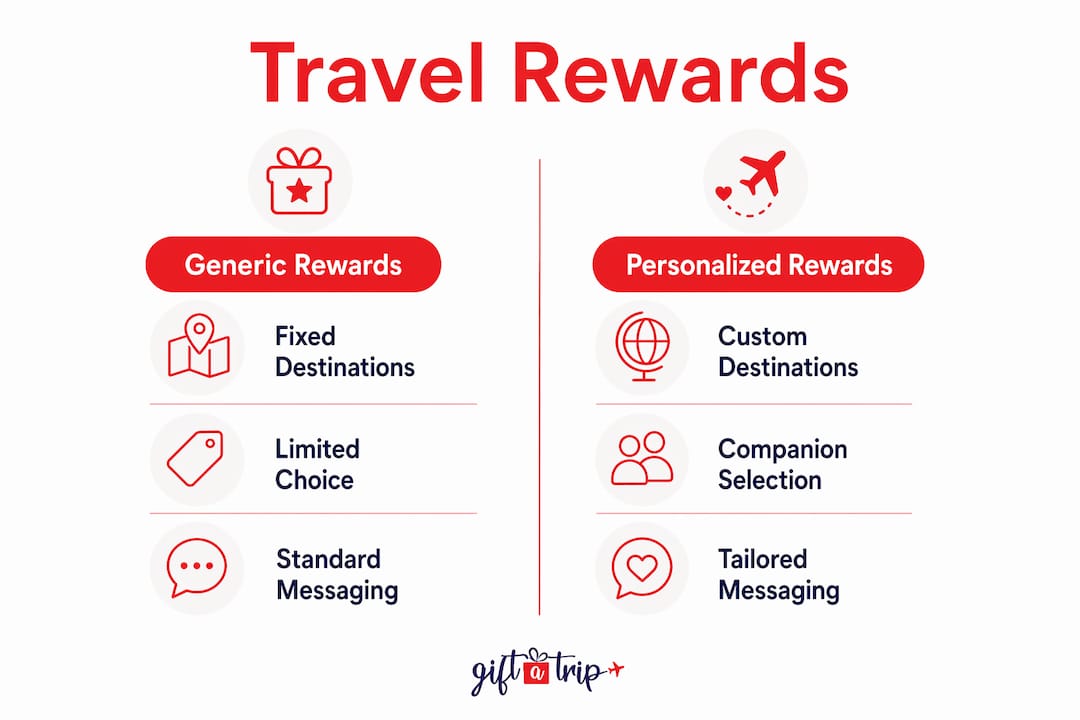
The difference shows up in three concrete areas:
Destination and companion choice
Allowing employees to select their own destination removes the assumption that everyone wants the same experience. One employee may want a beach resort in the Bahamas with a spouse. Another may want a solo adventure in Japan. Giving that choice is itself an act of recognition. Tiered fixed-price reward structures help organizations scale this flexibility without renegotiating budgets for every award.
Pre-arrival preparation
Custom agendas and curated packing lists set the tone for meaningful celebrations before the employee even boards a plane. Pre-arrival gifting, personalized itineraries, and concierge introductions communicate that the trip was designed specifically for that person. That level of preparation elevates the perceived value of the reward significantly.
Digital delivery and concierge support
Digital-first travel solutions allow HR teams to deliver personalized travel certificates instantly, with custom messaging and branded packaging. Individual incentive travel programs reduce logistical overhead through concierge service, enabling HR teams to focus on celebration instead of coordination. That shift from logistics manager to recognition architect is exactly where HR professionals add the most value.
| Feature | Generic travel reward | Personalized travel reward |
|---|---|---|
| Destination | Fixed, company-selected | Employee’s choice from curated options |
| Companion | Not included or assumed | Employee selects travel companion |
| Pre-trip experience | Standard confirmation email | Custom agenda, packing list, concierge intro |
| Emotional impact | Moderate, transactional | High, deeply personal |
| Recall after 12 months | Low to moderate | High, story-worthy |
Pro Tip: When building your travel recognition program, offer at least three destination tiers at different price points. Employees who feel genuine choice in their reward report higher satisfaction than those given a single fixed destination, even when the fixed option is objectively more expensive.
Effective personalization distinguishes travel rewards that feel genuine and memorable from generic perks. That distinction is what separates programs employees talk about from programs they forget.
What are best practices for implementing travel-based milestone recognition programs?
Building a travel recognition program that holds up over multiple years requires structure, not just enthusiasm. The following practices reflect what high-performing HR teams apply consistently.
-
Align reward tiers with milestone categories. A five-year tenure anniversary warrants a different travel experience than a quarterly sales achievement. Tiered pricing models aligned to milestones allow consistent budgeting without renegotiation, while preserving personalization through destination and companion choices. Define your tiers before you launch the program.
-
Choose digital-first delivery partners. Paper certificates and manual booking processes create friction that undermines the recognition moment. Digital travel certificates delivered instantly with personalized messaging remove that friction entirely. Giftatrip’s platform, for example, offers secure digital delivery with customizable gift boxes and covered taxes and resort fees, which eliminates common hidden-cost surprises for recipients.
-
Incorporate travel advisors into the program. Younger travelers, including Gen Z and Millennials, use travel advisors and flexible payment methods to optimize planning. Offering concierge or advisor access as part of the reward package increases the likelihood that employees actually use their certificates, which is the only outcome that matters.
-
Build repeat recognition into the program structure. Programs that recognize only top performers once a year lose momentum quickly. Cross-functional recognition categories that achieve a 50% repeat-winner rate sustain engagement across the full workforce, not just the top 10%.
-
Communicate the award publicly. The recognition moment is as important as the reward itself. Announce travel awards in team meetings, internal newsletters, or company-wide channels. Public recognition amplifies the motivational signal for every employee who witnesses it.
Pro Tip: Pair your travel certificate announcement with a short handwritten note from the employee’s direct manager. The combination of a personal message and a meaningful travel experience creates a recognition moment that employees describe to family and friends, extending your employer brand beyond the office.
The primary barrier for organizations running incentive travel programs is logistics. Partners offering full concierge and 24/7 support address that barrier directly, ensuring zero HR resource burden. Choosing the right travel incentives partner is therefore a program design decision, not an afterthought.
How can travel recognition be integrated to celebrate milestones and improve event planning?
Event planners and HR professionals often treat recognition and events as separate workstreams. Combining them produces better outcomes for both.
- Host milestone celebrations at travel destinations. A five-year anniversary dinner at a resort property, funded through a group travel certificate, transforms a routine recognition event into a destination experience. Employees remember where they were when they were recognized, not just what they received.
- Use themed travel experiences to reinforce company values. A sustainability-focused company can reward employees with eco-resort certificates. A company that values adventure can offer experiential milestone gifts like aerial experiences over scenic destinations. The theme communicates culture without a single slide deck.
- Coordinate group versus individual travel appropriately. Group travel builds team cohesion and works well for sales kickoffs or annual recognition events. Individual travel certificates work better for tenure milestones and personal achievements, where the employee’s autonomy is part of the reward.
- Leverage digital delivery for event-day impact. Presenting a digital travel certificate during a live recognition ceremony, with a custom message displayed on screen, creates a shareable moment. Employees photograph the moment and post it. That organic visibility is worth more than any recruitment advertisement.
- Sustain engagement between events. Travel rewards function as forward-looking anchors. An employee who knows a trip is coming performs differently than one waiting for a year-end review. Build travel incentives for recognition into quarterly or semi-annual cycles, not just annual ones.
The best travel destinations for milestones are the ones employees choose themselves. That principle should guide every program design decision an event planner makes.
Key Takeaways
Travel for milestone recognition outperforms cash and merchandise rewards because personalized experiences create emotional loyalty, sustained motivation, and measurable retention outcomes that no transactional reward can replicate.
| Point | Details |
|---|---|
| Experiences outlast cash rewards | 84% of program owners cite memorability as the key to lasting engagement from travel rewards. |
| Personalization drives ROI | Letting employees choose destinations and companions converts a reward into a deeply personal recognition moment. |
| Tiered structures enable scale | Fixed-price tiers aligned to milestones allow consistent budgeting while preserving individual choice. |
| Digital delivery removes friction | Instant certificate delivery with custom messaging eliminates logistics burden and elevates the recognition moment. |
| Repeat recognition sustains culture | Programs with diverse recognition categories achieve higher repeat-winner rates and broader workforce engagement. |
Travel recognition is changing faster than most HR teams realize
I have spent years watching HR professionals debate whether travel rewards are worth the complexity. The answer is yes, but only when the program is built around the recipient, not the budget spreadsheet.
The organizations I have seen get this right share one habit: they treat the travel award as a story, not a transaction. They think about what the employee will say at dinner six months later when someone asks about the best thing their company ever did for them. That framing changes every decision, from destination options to pre-trip communication to the moment the award is announced.
The shift toward digital-first delivery and concierge support has removed the main excuse for not running travel programs. Logistics used to be the real barrier. That barrier is largely gone. What remains is the willingness to invest in experiences over objects, and to trust that employees will remember the trip long after they have forgotten the bonus.
My prediction for 2026 and beyond: organizations that build individual travel incentives into their recognition calendars will see measurable advantages in retention and employer brand perception. The research already points in that direction. The question is which HR teams act on it first.
— Donovan
Giftatrip makes travel recognition simple for HR teams
Corporate recognition programs succeed when the logistics are invisible and the experience is unforgettable. Giftatrip provides digital travel certificates redeemable at resorts, hotels, cruise lines, and vacation packages from major brands, with taxes and resort fees covered and minimal blackout dates.
HR teams and event planners use Giftatrip to deliver personalized travel awards instantly, with custom messaging and branded packaging for bulk orders. The platform removes the coordination burden entirely, so your team focuses on the recognition moment rather than the booking process. Whether you are rewarding a five-year tenure milestone or a top-performing sales team, Giftatrip offers the flexibility to match the award to the individual. Explore digital travel certificates and see how easy milestone recognition can be, or browse the full travel certificate catalog to find the right fit for your program.
FAQ
Why is travel more effective than cash for employee recognition?
Travel creates lasting emotional memories that cash cannot replicate. Research shows 84% of program owners cite memorability as the primary driver of long-term engagement from experiential rewards.
What milestones work best for travel recognition programs?
Tenure anniversaries, sales achievements, and cross-functional performance milestones all align well with travel rewards. Programs that recognize multiple categories sustain broader workforce engagement and achieve higher repeat-winner rates.
How does personalization affect the impact of travel rewards?
Personalized travel experiences, including destination choice and companion selection, deepen emotional impact and loyalty far beyond what generic rewards produce. Effective personalization is what distinguishes memorable recognition from a forgettable perk.
How can HR teams manage the logistics of travel recognition programs?
Digital-first travel partners with concierge and 24/7 support eliminate the logistical burden for HR teams. Platforms like Giftatrip deliver travel certificates instantly with custom messaging, covering taxes and fees so recipients face no hidden costs.
Are travel rewards suitable for all employee demographics?
Yes. Younger employees, particularly Gen Z and Millennials, actively plan milestone travel and use advisors to maximize their experiences. Older employees value the autonomy and prestige of a meaningful travel award equally, making travel recognition one of the few reward types that works across all age groups.