
Jump to Section:
The right moment to gift travel is a milestone, celebration, or life transition where the recipient has the flexibility to actually use it. For most givers, a flexible digital travel certificate is the safest starting point. A fully booked trip works when you can personally handle the logistics. Everything else falls somewhere in between.
Before you buy anything, run through three quick checks:
- Confirm availability. Does the recipient have the time off, the travel documents, and no caregiving obligations in the near term?
- Pick a flexible format when in doubt. A certificate the recipient can redeem on their own schedule beats a locked-in booking they can’t use.
- Cover the logistics. Time off work, pet care, and valid passports are the giver’s responsibility in a surprise trip. If you can’t confirm all three, go with a certificate instead.
Key Takeaways
The most successful travel gifts match the occasion’s scale, give the recipient flexibility on timing, and arrive with enough logistical support that the trip actually happens.
| Point | Details |
|---|---|
| Best occasions | Milestone birthdays, anniversaries, graduations, retirements, and engagements reliably justify travel gifts. |
| Format decision rule | If you can handle all logistics, book the trip. If not, give a flexible certificate. |
| Surprise trip checklist | Confirm passport validity, arrange pet care, and verify time off before any surprise reveal. |
| Certificate checklist | Check expiration dates, blackout windows, participating properties, and whether taxes and resort fees are included. |
| Giftatrip | Offers digital travel certificates with included fees, minimal blackout dates, and instant delivery for personal and corporate gifting. |
Table of Contents
- When to gift travel: the best life moments for a trip
- How do you give travel as a gift? Formats and when each works
- Surprise trips vs. telling the recipient — how to decide
- Timing and logistics checklist before you buy or present travel
- Creative ways to present the travel gift
- Budget-friendly and last-minute travel gifting options
- What should you check before buying a travel certificate?
- What to include with the travel gift
- Why flexible travel gifts work better than you’d expect
- Giftatrip makes travel gifting simple and stress-free
- Sources
- FAQ
When to gift travel: the best life moments for a trip
Not every occasion calls for a trip, but some are almost made for it. Travel generates anticipation before the trip, joy during it, and lasting memories after — which is why it tends to outperform physical gifts at the moments that matter most.
The occasions with the highest success rate, roughly in order of how well travel lands:
Major milestone birthdays. A round-number birthday carries enough emotional weight to justify a multi-day trip. Recipients at this stage usually have more schedule flexibility than they did in their 30s.
Anniversaries. Especially 10th, 25th, and 50th. Travel gift ideas for couples work particularly well here because the experience belongs to both people. A luxury honeymoon safari or a resort stay gives couples something to plan together.

Graduations. High school, college, and graduate school. The window between finishing school and starting a job is one of the few times a young adult has open-ended availability. Strike before the new job starts.
Retirements. The recipient now has unlimited time. The only constraint is health and mobility, so match the trip’s intensity to the person.
Engagements and honeymoons. Couples are already in planning mode. A certificate toward a honeymoon or a fully arranged romantic escape fits naturally into that energy. See the best travel certificate occasions guide for a fuller breakdown.
Major career achievements. A promotion, a business launch, or a professional award. These moments often go uncelebrated in a tangible way. A trip changes that.
When to hold off. New parents in the first year, someone in the middle of a job transition, or anyone dealing with a health issue or family crisis. Travel adds planning pressure they don’t need right now.
Pro Tip: Match the scale of the gift to the occasion. A local overnight escape suits a small celebration; a multi-day international trip belongs at a milestone event. Mismatching scale is the fastest way to make a generous gift feel awkward.
How do you give travel as a gift? Formats and when each works
The format you choose matters as much as the occasion. Hotel gift cards and broad certificates are widely recommended because they let the recipient pick dates without risking a conflict.
- Fully arranged trip. Best when you can personally confirm time off, travel documents, and care arrangements. High emotional impact, high logistical risk. Works for close partners and spouses.
- Hotel or resort certificate. The most flexible option for most givers. The recipient books when it suits them. Covers a wide range of budgets and destinations.
- Airline or hotel gift cards / points transfers. Good for frequent travelers who already have a loyalty program. Points and miles can be excellent value, but the giver needs to understand program rules and sometimes complete the booking themselves.
- Contribution toward a trip. Ideal for group gifts. Pool money toward a specific trip the recipient has already mentioned wanting. Low friction, high relevance.
- Local experiences. Spa treatments, curated city tours, cooking classes. Low cost, zero blackout risk, and experience-based gift cards that unlock activities feel more personal than a generic hotel voucher.
The one-line decision rule: if you know the recipient’s schedule and can manage logistics, book the trip. If you don’t, give a certificate.
Surprise trips vs. telling the recipient — how to decide
The surprise trip is one of the most romanticized ideas in gifting. It’s also one of the most frequently botched. Experts consistently caution that surprises create stress and logistical problems when the giver hasn’t pre-handled every moving part.
| Factor | Surprise trip | Told in advance |
|---|---|---|
| Emotional impact | High if executed well | Builds anticipation together |
| Logistical risk | High — giver owns everything | Low — recipient can self-manage |
| Calendar conflicts | Real risk without checking | Eliminated |
| Passport / visa issues | Giver must verify in advance | Recipient handles it |
| Pet / home care | Giver must arrange | Recipient arranges |
| Medication / health needs | Giver must confirm | Recipient self-manages |
| Best for | Close partners, short domestic trips | International trips, families |
If you’re committed to a surprise, run this checklist first:
- Confirm the recipient’s passport is valid for at least six months beyond the travel dates.
- Arrange pet or childcare before the reveal.
- Verify time off is feasible — ideally by coordinating discreetly with their employer or a trusted contact.
- Choose a destination with no visa requirement for the recipient’s passport.
- Book refundable or changeable tickets until after the reveal.
If you can’t check all five boxes, a flexible reveal works just as well emotionally. Hand over a certificate with a card that says “pick the dates together” and let the planning become part of the gift.
Timing and logistics checklist before you buy or present travel
Good timing is what separates a travel gift that gets used from one that expires in a drawer. Work backward from the occasion date.
- 3+ months out: Confirm the recipient has no major conflicts (new job, surgery, family obligation). Check passport expiration dates — U.S. passport processing currently takes several weeks for routine applications, longer during peak periods.
- 2–3 months out: Research visa requirements for the destination. Book refundable flights and accommodations if you’re arranging the trip yourself.
- 6–8 weeks out: Purchase travel insurance. For nonrefundable bookings, this is non-negotiable.
- 3–4 weeks out: Arrange pet care, house-sitting, or childcare if the recipient can’t do it themselves.
- 1–2 weeks out: Confirm all bookings, print or save confirmation numbers, and prepare the presentation materials.
- Gift day: Present the certificate or itinerary with suggested date windows and a written note about what’s included.
Pro Tip: Buy nonrefundable items only after the recipient has confirmed dates. For everything else, choose flexible booking options and upgrade to nonrefundable once the trip is locked in.
For a weekend domestic getaway, you can compress this to a 4–6 week window. An international trip needs the full 3-month runway, especially if visas are involved.
Creative ways to present the travel gift
The reveal is its own moment. A certificate handed over in an envelope lands differently than one presented with intention.
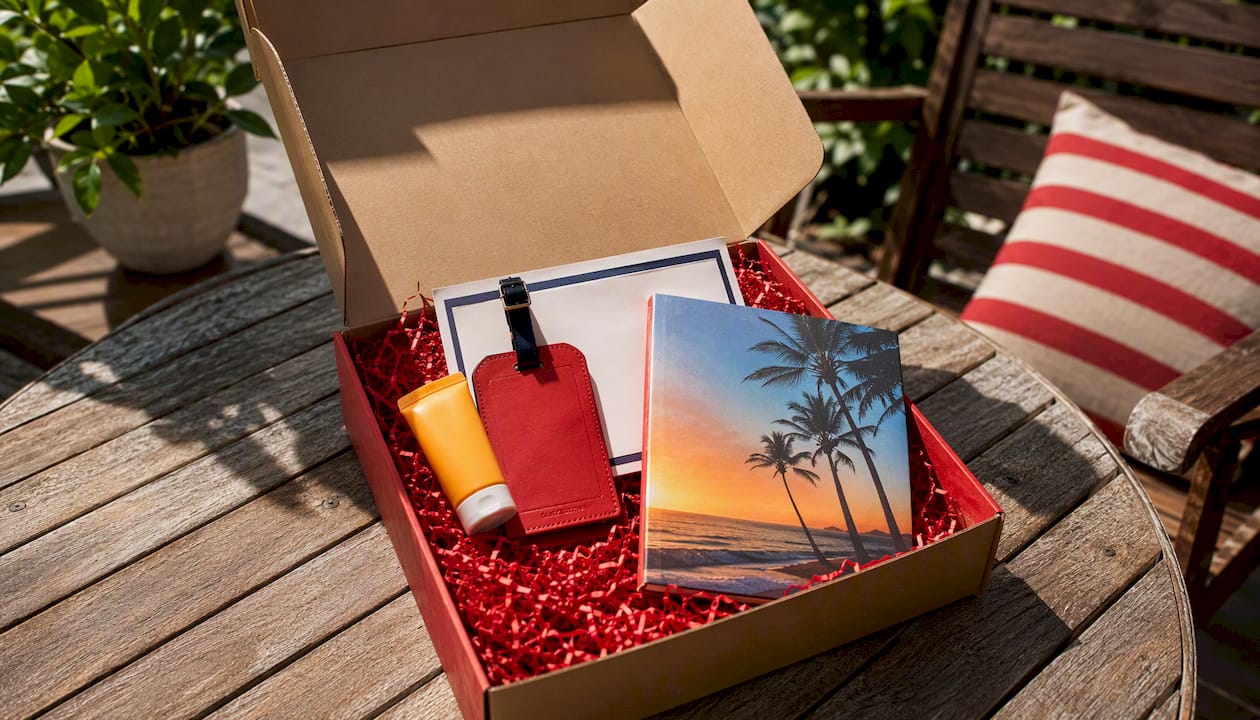
A few formats that work well without adding logistical complexity:
The itinerary packet. Print a simple one-page overview of the destination, suggested activities, and the accommodation details. Slip it into a folder with the certificate. It makes the trip feel real before it happens.
The reveal box. A small gift box with themed items — a travel-sized sunscreen, a destination guidebook, a luggage tag, and the certificate tucked underneath. The unboxing becomes the moment.
The digital certificate with a personal message. For last-minute gifting, a digital travel gift sent directly to the recipient’s inbox with a custom note is clean, instant, and genuinely thoughtful. No shipping, no waiting.
The promise card. A handwritten card that says “I’m taking you somewhere — let’s pick the dates together.” Pair it with a small immediate present (a travel book, a passport holder) so there’s something tangible to open. This works especially well when you want the planning to be a shared experience.
Budget-friendly and last-minute travel gifting options
A tight budget or a short timeline doesn’t mean settling for a generic gift card. There are real options that still feel like travel.
Budget options:
- A local weekend escape at a nearby resort or boutique hotel. Often under $200 and genuinely restorative.
- A curated experience voucher (cooking class, wine tour, guided hike). Personal and low-friction.
- A contribution toward a trip the recipient is already planning. Ask what they need and cover one piece of it — the flight, the first night, the excursion.
- Discounted travel certificates when platforms run seasonal sales. Holiday periods often bring real reductions.
Last-minute fixes (48 hours or less):
- Hotel gift cards delivered digitally. For last-minute gifting, hotel gift cards and packaged local experiences are the fastest, most reliable options because they can be delivered instantly with no booking friction.
- A digital travel certificate from Giftatrip, sent to the recipient’s email within minutes.
- A points or miles transfer, if you’re in the same loyalty program and the recipient knows how to use them.
Watch the fine print. Expiration dates, blackout windows, and dormancy fees can quietly kill the value of a travel gift. Read the terms before you buy, and choose certificates with the fewest restrictions.
What should you check before buying a travel certificate?
The best travel gift certificates are the ones with the fewest restrictions. Common problems include blackout dates during peak travel periods, a limited network of participating properties, dormancy fees that kick in after 12 months of inactivity, and expiration rules buried in the fine print.
Before you buy, check every item on this list:
- Expiration date. How long does the recipient have to redeem? Twelve months is the minimum; 18–24 months is better.
- Blackout dates. Are major holidays excluded? Spring break? Summer peak weeks?
- Participating properties. Is the network broad enough to match the recipient’s travel style (beach resorts, city hotels, cruise lines)?
- Refund and cancellation policy. Can the recipient change dates without a fee? What happens if they can’t travel?
- Fees. Dormancy fees, processing fees, or activation fees reduce the face value of the gift.
- Taxes and resort fees. Some certificates exclude these, which means the recipient pays out of pocket at check-in. Look for certificates that include them.
- Travel insurance. If you’re buying a nonrefundable booked trip rather than a certificate, add travel insurance at checkout.
Match the certificate’s scope to the recipient. A beach lover needs a certificate that covers coastal resorts. A cruise enthusiast needs one redeemable on major cruise lines. A personalized travel certificate that fits the recipient’s actual preferences is far more likely to get used.
What to include with the travel gift
The certificate or booking confirmation is the core of the gift, but what surrounds it determines how useful it actually is. Include a simple itinerary outline, suggested date windows, and a recommendation for travel insurance when you present any nonrefundable trip.
A complete travel gift package should contain:
- The certificate or booking confirmation with redemption instructions clearly marked.
- Suggested date windows — two or three options that work for the destination’s season and the recipient’s likely schedule. This removes the paralysis of an open-ended gift.
- A brief itinerary outline. Even a half-page sketch of what the trip could look like (arrival, one or two activities, departure) makes the destination feel tangible.
- Travel insurance information. If the trip is nonrefundable, include a note recommending coverage and a link to a reputable provider. This protects both the gift and the recipient.
- Certificate terms summary. Pull the key points from the fine print (expiration, blackout dates, how to redeem) and write them in plain language on a single card. Recipients shouldn’t have to hunt for this.
Why flexible travel gifts work better than you’d expect
The conventional wisdom says a fully planned surprise trip is the gold standard of travel gifting. The reality is more nuanced. Most recipients, when surveyed, say they’d prefer to have some input on timing and destination. The surprise element matters less than people assume. What creates the emotional impact is the intention behind the gift and the quality of the experience itself.
Flexible certificates solve the two biggest failure modes in travel gifting: calendar conflicts and unused gifts. A recipient who chooses their own dates is far more likely to actually go. And a certificate that covers taxes and resort fees removes the hidden costs that make recipients hesitate at checkout.
That said, a fully arranged trip to a destination the recipient has mentioned wanting to visit — handled with enough logistical care that they don’t have to think about anything — is genuinely one of the most powerful gifts you can give. The key word is “handled.” Half-arranged surprises, where the giver books flights but leaves accommodation open, or confirms dates but forgets the visa, create more stress than joy.
The practical middle ground: give a certificate, include suggested dates, and offer to help plan. You get the flexibility of a certificate with the personal touch of a planned trip.
Giftatrip makes travel gifting simple and stress-free
Giftatrip solves the hardest part of gifting travel: the logistics. Instead of booking a trip the recipient might not be able to use, you send a digital travel certificate that covers resort stays, hotel nights, cruise lines, and vacation packages from major brands, with taxes and resort fees already included.

Certificates are delivered instantly by email, include a personalized message, and carry minimal blackout dates so the recipient can actually redeem them. For couples, families, and corporate gifters, Giftatrip also offers customizable gift boxes and bulk ordering. Browse the full range of flexible travel certificates and find the right fit for your occasion.
Sources
- The top gift to give this season: travel — if you can figure out how
- Giving travel as a gift: how to do it smart
- Give travel gift: use points, gift cards, and other methods
- How to Give a Travel Experience Without Booking the Trip
FAQ
When is the best time to gift travel?
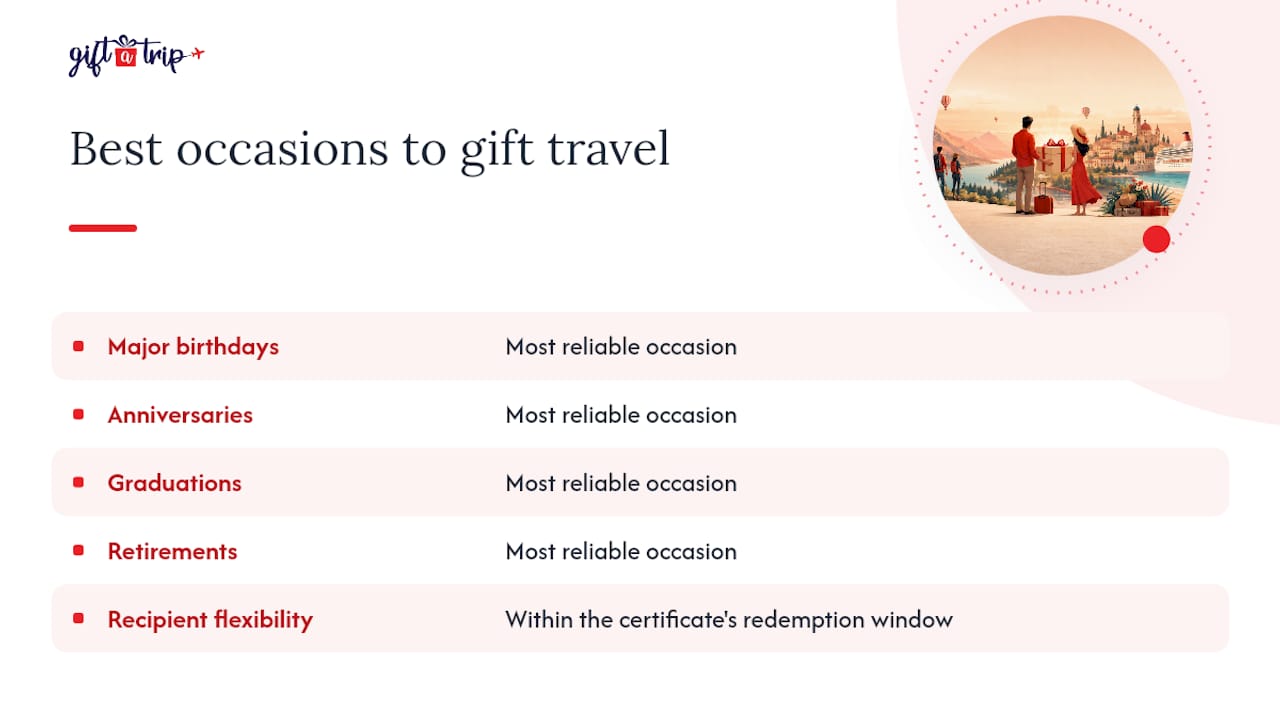
Milestone events — major birthdays, anniversaries, graduations, and retirements — are the most reliable occasions. The recipient should have the flexibility to travel within the certificate’s redemption window.
What is a good gift for someone who loves to travel?
A flexible travel certificate redeemable at hotels, resorts, or cruise lines is a strong choice because it lets the recipient choose their own dates and destination. Experience vouchers (local tours, spa treatments) work well for last-minute gifting.
Should you surprise someone with a trip?
Only if you can confirm their passport is valid, arrange pet or childcare, and verify time off in advance. Otherwise, a flexible certificate or a “promise” card with planned dates together avoids the logistical stress that often derails surprise trips.
What is the 5 gift rule for adults?
The 5 gift rule suggests giving something to wear, something to read, something to want, something to need, and something to experience. A travel certificate covers the “experience” category and often the “want” category simultaneously.
What should you include when gifting a trip?
Include the certificate or booking confirmation, two or three suggested date windows, a brief itinerary outline, and a plain-language summary of the certificate terms. For nonrefundable bookings, add a travel insurance recommendation.