
Jump to Section:
TL;DR:
- Digital gifting involves instant electronic delivery of gifts like gift cards or travel certificates via email or mobile devices. It offers quick, eco-friendly, and trackable options, ideal for personal and corporate use. Personalized messages and mobile wallet support enhance the experience and reduce the risk of lost or ignored gifts.
Digital delivery in gifting is defined as the instantaneous electronic transfer of a gift, such as a gift card, subscription, or travel credit, directly to a recipient’s email, SMS, or mobile device, with no physical packaging or shipping required. The gift typically arrives within seconds of the transaction completing. This guide explains what is digital delivery in gifting, how the process works from purchase to redemption, and why both individual gift givers and corporate buyers are choosing it over traditional physical gifts. Platforms like Giftatrip have built their entire model around this format, delivering digital travel certificates for resorts, hotels, cruise lines, and vacation packages with personalized messaging and mobile wallet support.
What is digital delivery in gifting, and how does it work?
Digital delivery in gifting is the process of sending a gift electronically, typically via email, text message, or mobile wallet, so the recipient can access and redeem it immediately. The industry term for this practice is e-gifting, and it covers everything from retail gift cards to travel certificates to digital subscriptions. Understanding both terms matters: “digital delivery” describes the mechanism, while “e-gifting” describes the broader practice.

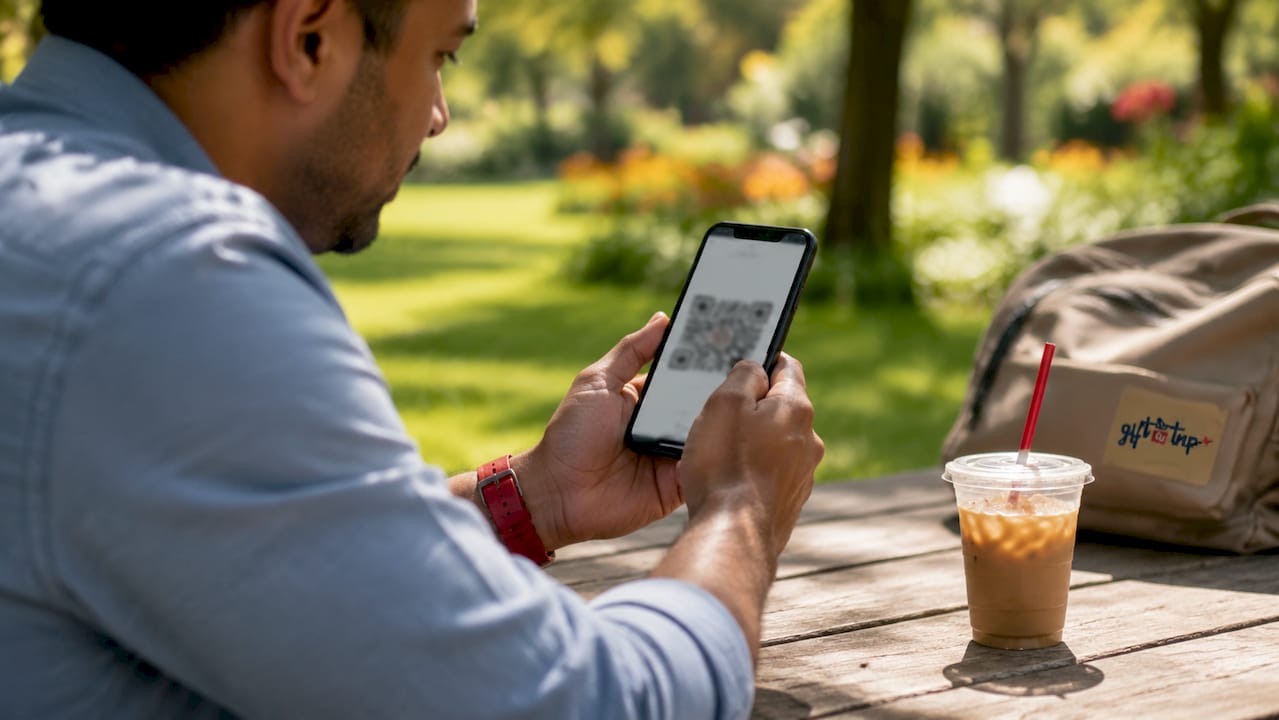
The most common digital gift formats include unique redemption codes, barcodes, QR codes, and mobile wallet passes. Each format serves the same purpose: giving the recipient a verifiable, redeemable credential they can use online or in store. The delivery typically occurs within seconds of the sender completing their purchase. That speed is the defining feature that separates e-gifting from every physical gifting method.
Corporate buyers use digital delivery for employee rewards, sales incentives, and milestone recognition. Individual gift givers use it for birthdays, anniversaries, and last-minute occasions. Both groups benefit from the same core advantage: the gift reaches the recipient instantly, regardless of geography.
What types of digital gifts are commonly delivered?
Digital gifts fall into several clear categories, each with its own delivery and redemption method.
- Digital gift cards: Retail and restaurant gift cards delivered as a code or barcode via email or SMS. Gift card values typically range from $10 to $500 or more on most platforms.
- Digital experiences: Subscriptions to streaming services, online courses, fitness apps, or software licenses sent as access credentials.
- Travel certificates: Redeemable credits for hotel stays, resort packages, cruise lines, or vacation bundles. Giftatrip specializes in this category, offering certificates for brands like Virgin Voyages and Crystal Cruises.
- Cause-driven gifts: Charitable donations made in a recipient’s name, confirmed via email.
- Digital prepaid cards: Visa or Mastercard prepaid cards delivered electronically and usable anywhere those networks are accepted.
The purchase and customization process is straightforward. A sender selects a gift, chooses a value or package, adds a personal message or image, and selects a delivery time. The platform then handles transmission automatically. Recipients access their gift through a link in their email or SMS, or by adding it directly to Apple Pay or Google Pay via a mobile wallet pass.
Redemption happens either online at checkout or in store by presenting the code or scanning the barcode. Travel certificates, like those from Giftatrip, are redeemed by contacting the provider to book dates and destinations within the certificate’s terms.
How does the digital delivery process work step by step?
The four key stages of digital delivery follow a consistent pattern across nearly every platform.
- Purchase and customization: The sender selects the gift type, value, and any personalization options. These include a written message, a photo, or a short video. Giftatrip, for example, allows senders to add personalized gift box designs for bulk corporate orders.
- Scheduling: The sender chooses when the gift is delivered. Options include immediate delivery or a scheduled future date, such as the recipient’s birthday or a work anniversary.
- Automated transmission: The platform sends the gift via the chosen channel, most commonly email, SMS, or an in-app notification. No manual action is required after the sender confirms the order.
- Recipient access: The recipient opens the message, clicks the link or scans the code, and either redeems the gift immediately or saves it to their mobile wallet for later use.
This process works identically for a single gift sent to one person and for a batch of 500 gifts sent to an entire sales team. The automation at stage three is what makes digital delivery practical at corporate scale.
Pro Tip: Schedule digital gifts to arrive the morning of the recipient’s special day rather than the night before. A gift that appears in someone’s inbox at 9 a.m. on their birthday feels far more intentional than one that arrives at midnight.
Digital delivery also supports personalization beyond what physical gifts allow. Adding a short video message, a branded image, or a custom note transforms a simple code into a memorable experience. That layer of personalization is what separates a thoughtful digital gift from a generic one.
What are the advantages of digital delivery over physical gifting?
Digital delivery removes shipping costs, eliminates packaging waste, and delivers the gift in seconds. Those three benefits alone explain why e-gifting has grown across both personal and corporate gifting. The comparison below shows where each method leads.
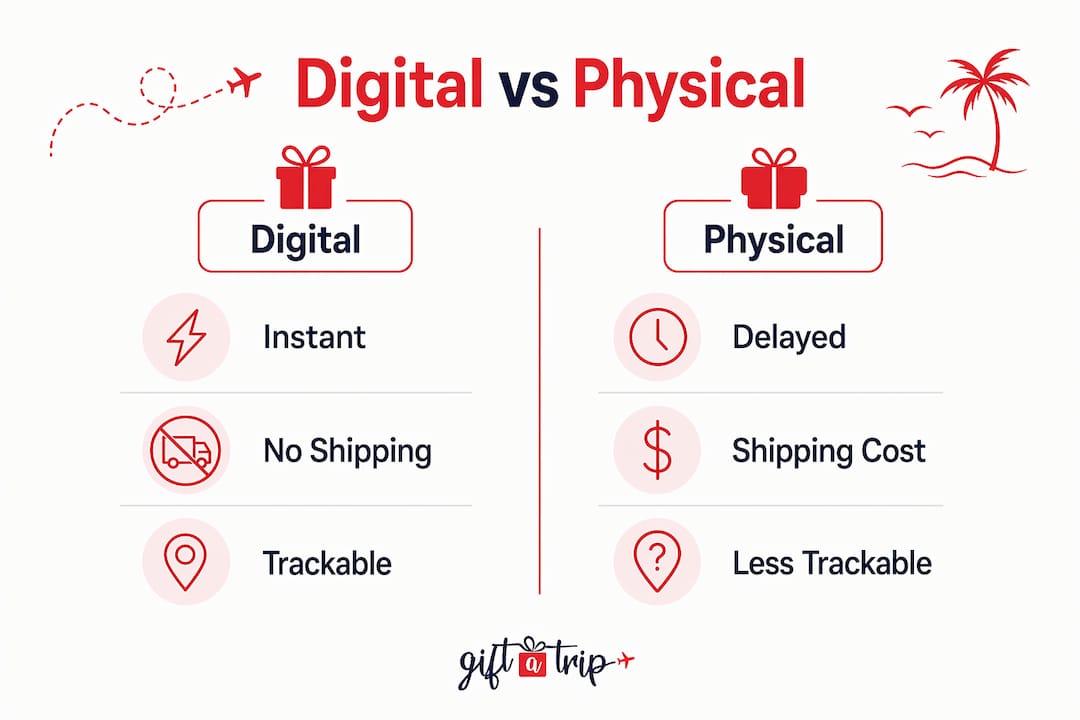
| Feature | Digital delivery | Physical gifting |
|---|---|---|
| Delivery speed | Seconds | Days to weeks |
| Shipping cost | None | Varies, often significant |
| Environmental impact | No plastic, no emissions | PVC cards, packaging, transport |
| Personalization | Video, images, scheduled timing | Card and wrapping only |
| Trackability | Open and redemption data available | Not trackable unless registered |
| Re-issuance if lost | Possible on most platforms | Not possible |
| Last-minute suitability | Ideal | Not practical |
Digital delivery eliminates the need for PVC plastic cards entirely. That matters for organizations with sustainability commitments, since physical gift card production involves plastic manufacturing, printing, and transportation emissions at scale.
Businesses value digital delivery for a reason that goes beyond cost: trackability. Senders can see when gifts are opened and redeemed, a feature that is not possible with physical cards unless the recipient registers them. That visibility improves program effectiveness and reduces fraud risk.
The one real challenge with digital delivery is digital clutter. Gift codes can get buried in crowded inboxes and go unused. The solution is mobile wallet integration. When a recipient adds a gift to Apple Pay or Google Pay, it stays visible and accessible without requiring them to search their email.
Pro Tip: If you are sending a digital gift to someone who is not tech-savvy, include a brief note in your message explaining exactly how to redeem it. One clear sentence removes the friction that causes gifts to go unused.
What best practices should senders and recipients follow?
Effective digital gifting requires attention from both sides of the transaction. These practices apply whether you are sending one gift or one thousand.
For corporate senders
- Test small batches before sending to your full list. High-volume batch sends can trigger spam filters, which means recipients never see the gift at all.
- Ask recipients to whitelist your sending address before a campaign goes out. A brief heads-up email solves the spam problem before it starts.
- Use a platform that provides delivery and redemption reporting. Giftatrip’s corporate gifting program, for example, supports bulk orders with tracking and customizable gift box designs.
- Schedule gifts to align with meaningful dates: work anniversaries, performance milestones, or the start of a holiday period.
For individual senders
- Add a personal message every time. A digital gift without a note feels like a transaction. A note makes it a gift.
- Use scheduled delivery to time the arrival precisely. Instant gift delivery is ideal for last-minute moments, but scheduled delivery is better for planned occasions.
- Remind the recipient to check their spam folder if they do not see the gift within a few minutes.
For recipients
- Add the gift to your mobile wallet immediately after receiving it. This prevents it from getting lost in your inbox.
- Know that digital gifts can be re-issued if accidentally deleted. Contact the sender or platform to request a resend rather than assuming the gift is gone.
- Check expiration dates and redemption terms as soon as you receive the gift, especially for travel certificates that require advance booking.
The gift delivery process works best when both sender and recipient understand their role. Senders control timing and personalization. Recipients control redemption. When both sides are prepared, digital gifting delivers on its promise.
Key Takeaways
Digital delivery in gifting works because it combines instant transmission, zero shipping cost, and trackable redemption into a single process that scales from one gift to thousands.
| Point | Details |
|---|---|
| Definition of digital delivery | E-gifting sends gifts electronically via email, SMS, or mobile wallet, with delivery in seconds. |
| Four-stage process | Purchase, schedule, automated transmission, and recipient access form the complete delivery cycle. |
| Core advantages | No shipping cost, no plastic waste, full trackability, and re-issuance if a gift is lost. |
| Biggest challenge | Digital clutter buries gift codes; mobile wallet integration is the fix. |
| Corporate best practice | Test small batches and whitelist sending addresses to avoid spam filters on bulk sends. |
Why personalization is the real differentiator in digital gifting
I have spent years watching organizations treat digital gift delivery as a logistics problem. Send the code, check the box, move on. That mindset misses the entire point.
The data backs this up: the primary advantage of digital delivery is not speed. It is intentional personalization. A scheduled video message from a manager arriving on an employee’s work anniversary lands differently than a generic retail code. The technology makes that level of care possible at scale. Most senders never use it.
The sustainability angle is also underused in corporate gifting conversations. Eliminating PVC plastic cards and transportation emissions is not a minor footnote. For organizations sending thousands of gifts annually, switching to digital delivery is a measurable reduction in environmental footprint. That is a talking point worth including in any employee recognition program.
The challenge I see most often is the inbox problem. Recipients miss gifts. They delete them by accident. They forget to redeem them. The fix is not complicated: push recipients toward mobile wallet integration from the moment the gift arrives. Platforms that support Apple Pay and Google Pay integration solve this problem before it starts. Any platform that does not offer wallet support is behind.
Looking ahead, the next shift in digital gifting will be around experience-based gifts, particularly travel. A redeemable travel certificate delivers something a retail gift card cannot: anticipation. The recipient does not just spend the gift. They plan around it. That emotional dimension is where digital gifting is heading, and it is where the most thoughtful senders are already operating.
— Donovan
Travel gifting made simple with Giftatrip
Giftatrip puts digital delivery at the center of its travel gifting model. Every certificate is sent electronically, arrives with personalized messaging, and can be customized with a gift box design for corporate bulk orders.
Whether you are rewarding a top performer, celebrating a milestone, or giving a honeymoon gift, Giftatrip’s digital travel certificates cover resorts, hotels, cruise lines, and vacation packages from recognized brands. Taxes and resort fees are included, and blackout dates are minimal. Corporate buyers can explore the travel certificate distribution guide for HR and events teams to see how bulk digital delivery works in practice. For individual gift givers ready to send something memorable, browse the full range of options at Giftatrip’s gift delivery page.
FAQ
What is digital delivery in gifting?
Digital delivery in gifting is the electronic transmission of a gift, such as a gift card, travel certificate, or subscription, directly to a recipient’s email, SMS, or mobile device. Delivery typically occurs within seconds of the sender completing the purchase.
What is the difference between e-gifting and digital delivery?
E-gifting is the broader practice of giving gifts electronically. Digital delivery is the specific mechanism that transmits the gift to the recipient. The two terms are closely related and often used interchangeably.
How do recipients redeem digital gifts?
Recipients redeem digital gifts by clicking a link in their email or SMS, entering a unique code at checkout, or scanning a barcode in store. Many platforms also support adding the gift directly to Apple Pay or Google Pay for easier access.
Can a digital gift be resent if the recipient loses it?
Yes. Unlike physical gift cards, digital gifts can often be re-issued if accidentally deleted or lost. The sender or platform can resend the code to the recipient’s email or phone.
Are digital gifts better for corporate gifting than physical ones?
Digital gifts are more practical for corporate gifting because they eliminate shipping costs, support bulk sending, and provide redemption tracking. Senders can see when each gift is opened and used, which is not possible with unregistered physical cards.