The most effective sales incentive programs in 2026 combine monetary rewards, experiential prizes, and genuine recognition, because no single reward type motivates every rep on your team. A well-built sales incentive ideas list gives you the range to match the right reward to the right behavior, whether you’re pushing for a Q3 sprint or sustaining a year-long performance culture. Research confirms that intrinsic and extrinsic motivators work best when they work together, not when one replaces the other.
Table of Contents
- The best sales incentive ideas list for 2026
- What types of sales incentives actually drive behavior change?
- How to build a sales incentive program that actually works
- Why travel incentives outperform most other rewards
- Giftatrip makes travel rewards easy to execute at scale
- FAQ
- Key Takeaways
The best sales incentive ideas list for 2026
Here are 15 proven ideas, organized from cash-based rewards to experiential and recognition-driven options. Use this as your starting catalog, then narrow down based on your team’s makeup and your business goals.
Monetary incentives
- Tiered commission accelerators. Once a rep hits quota, their commission rate jumps. Accelerators typically run 1.5x to 3x the standard rate, which rewards overperformance and eliminates the “coast after quota” problem.
- Quarterly performance bonuses. A lump-sum payout tied to a specific metric, such as net new revenue or customer retention rate, gives reps a clear target with a defined payoff date.
- SPIFs (Sales Performance Incentive Funds). Short-term cash bonuses for pushing a specific product or closing a specific deal type. SPIFs work best when they run for two to four weeks and target a behavior that needs an immediate lift.
- Profit-sharing pools. Tie a percentage of team-wide margin to a shared bonus pool. This rewards collaboration and keeps individual reps invested in deals they didn’t personally close.
- Gift cards. Flexible, immediate, and easy to distribute digitally. Amazon, Visa, and restaurant gift cards are perennially popular because reps choose how to spend them.
Experiential incentives
- President’s Club trips. The gold standard of sales reward programs. A fully paid trip to a resort or international destination, reserved for top performers, carries aspirational weight that a cash bonus rarely matches. Programs running for an extended period benefit most from travel rewards because the anticipation sustains motivation across a long sales cycle.
- Team offsites and group experiences. A cooking class, escape room, or sporting event for the whole team builds camaraderie while celebrating collective wins. These work especially well after a strong quarter.
- Cruise or resort certificates. Digital travel certificates redeemable at major hotel chains, resorts, or cruise lines give winners flexibility without the logistical burden of planning a group trip. Giftatrip’s travel incentive certificates cover taxes and resort fees, which removes the “hidden cost” frustration that often deflates the reward.
- Concert, sports, or event tickets. A front-row seat at a sold-out game or a VIP concert experience feels personal and memorable. These work best as spot rewards for a specific win rather than a program-end prize.
Recognition-based incentives
- Public leaderboards. Real-time visibility into rankings taps into the social comparison instinct. Reps who see themselves in fourth place often push harder than those who don’t know where they stand.
- Peer-nominated awards. “Most Helpful Teammate” or “Best Mentor” awards chosen by colleagues fulfill the social and esteem needs that recognition-seeking drives. Peer recognition carries different weight than manager praise.
- President’s Circle or Hall of Fame status. A permanent record of top performance, displayed on an internal platform or office wall, gives high achievers a lasting symbol of their accomplishment.
- Extra paid time off (PTO). An extra Friday or a full week off is one of the most requested non-cash rewards, particularly among reps with families or long commutes. It costs the company relatively little while delivering high perceived value.
Team-based and development incentives
- Team-based contests. Divide the floor into competing squads and reward the winning group with a shared experience or bonus. This builds accountability within the team because no one wants to be the person who dragged the group down.
- Professional development stipends. A budget for a sales conference, a coaching program, or an online course rewards ambition and signals that the company invests in its people’s growth. Reps who see a career path stay longer and sell more.
What types of sales incentives actually drive behavior change?
Not all rewards pull the same psychological levers. Understanding the four main categories helps you build a program that addresses your team’s actual motivations, not just the ones you assume they have.
Monetary incentives
Cash, commissions, and bonuses are the most straightforward extrinsic motivators. They work because the link between effort and reward is direct and measurable. The risk is that an over-reliance on compensation-seeking can crowd out a rep’s intrinsic enjoyment of selling. A meta-analysis covering 127 studies found that intrinsic motivation correlates more strongly with sales performance than extrinsic rewards alone. That doesn’t mean cash doesn’t work. It means cash alone isn’t enough.
Experiential incentives
Trips, events, and experiences create memories that outlast any bonus check. They also carry social currency: a rep who went on the President’s Club trip to Cancún tells that story for years. For longer incentive cycles, experiential rewards sustain engagement in a way that a deferred cash payout rarely does, because the anticipation of the experience itself becomes part of the motivation.
Recognition-based incentives
Public acknowledgment, peer-nominated awards, and status titles fulfill the need for belonging and esteem. Research on motivational orientations in sales shows that task enjoyment combined with recognition-seeking produces the strongest gains in work engagement. A shout-out in the all-hands meeting costs nothing and can mean more to a rep than a $50 gift card.
Non-monetary and development incentives
Flexible work arrangements, extra PTO, and professional development stipends address intrinsic motivators: autonomy, mastery, and growth. These are particularly effective for experienced reps who have already hit their income targets and are now motivated by career trajectory and work-life balance.
Segmenting by role matters too. SDRs are typically rewarded for meetings booked and pipeline generated, while Account Executives are rewarded for closed deals and revenue. Applying the same incentive structure across both roles creates perceived unfairness and misaligns effort with the behaviors you actually want.
How to build a sales incentive program that actually works
Designing a program is the easy part. Getting reps to care about it three months in is where most programs fail. These practices separate the ones that drive real results from the ones that quietly die.

Set a few clear, measurable goals
Incentive programs that try to reward everything end up rewarding nothing. Pick the specific behaviors you want to change, whether that’s increasing average deal size, shortening the sales cycle, or growing a particular product line. Defining 1–3 daily behaviors tied to business outcomes keeps the program focused and gives reps a clear picture of what winning looks like.
Match duration to the reward type
Short contests work well for SPIFs and gift card prizes. Longer-running programs need a reward that sustains anticipation, and travel experiences are particularly effective for these. A rep who knows they’re competing for a resort trip in December will think about that goal every week, not just in the final sprint.
Keep the rules simple and visible
- Post the rules in one place, in plain language, before the program launches.
- Update the leaderboard or progress tracker at least weekly.
- Never change the rules mid-program without a transparent explanation.
Complex or opaque incentive structures are one of the leading causes of program failure. When reps can’t quickly calculate what they’ll earn for a specific action, they disengage.
Treat the program as a living cadence

The best programs aren’t set-and-forget. They rely on leading indicator tracking and allow for mid-program adjustments when the data shows a goal is too easy or too hard. A weekly check-in on progress metrics lets you course-correct before the program loses momentum.
Align payouts with margin, not just volume
Paying out on revenue without accounting for margin can reward deals that cost the company money. Tiered payouts aligned with profit margins make the program sustainable and prevent the scenario where a rep wins big on a low-margin deal that hurts the business.
Pro Tip: Set a payout threshold above baseline performance, not at zero. This ensures every dollar you spend on incentives is tied to incremental margin, not activity that would have happened anyway.
Avoid the most common pitfalls
- Rewarding only the top 10% of reps demotivates the middle 80%, who are often your most coachable performers.
- Ignoring intrinsic motivators (challenge, autonomy, growth) produces short-term spikes but no lasting behavior change.
- Skipping progress updates kills momentum. Reps who don’t know where they stand assume they’re losing.
Why travel incentives outperform most other rewards
Travel rewards occupy a unique position in any sales incentive ideas list. They combine the aspirational pull of an experience with the social status of having earned something exclusive. That combination is hard to replicate with a cash bonus or a gift card.
What makes travel incentives different
- Anticipation sustains motivation. A rep competing for a Cancún resort trip thinks about that reward for months, not just in the week before the deadline.
- Experiences create lasting memories. A bonus gets deposited and forgotten. A trip to a Caribbean resort becomes a story the rep tells for years.
- Travel rewards signal status. Being named to the President’s Club and earning a trip to an exclusive destination carries organizational prestige that a cash payout doesn’t.
- Flexibility reduces friction. Digital travel certificates let winners choose their own dates and destinations, which removes the “I can’t travel that week” objection that kills participation in fixed-date group trips.
How top-performing companies structure travel incentive programs
President’s Club programs are the most recognized model. They reserve a share of top performers for an annual trip, often to a resort or cruise destination. The key design elements that make these programs work:
| Element | Best practice |
|---|---|
| Eligibility threshold | Top performers by revenue or quota attainment, not arbitrary headcount caps |
| Program duration | 90 days or longer to justify the aspirational reward |
| Reward flexibility | Digital certificates redeemable at multiple properties or cruise lines |
| Announcement timing | Reveal the destination early to maximize anticipation |
| Inclusion of fees | Cover taxes, resort fees, and transfers to eliminate hidden-cost surprises |
Travel incentives also complement monetary and recognition rewards rather than replacing them. A rep who earns a tiered commission accelerator AND a trip to a luxury resort gets both the immediate financial validation and the aspirational experience. That combination addresses both intrinsic and extrinsic motivators simultaneously, which research consistently shows produces the highest engagement.
Pro Tip: For teams spread across multiple time zones or with varying vacation schedules, digital travel certificates are far easier to administer than a single fixed-date group trip. Each winner redeems on their own timeline, and you avoid the logistical nightmare of coordinating 20 travel schedules.
For sales managers building a travel reward component, Giftatrip’s corporate gifting program offers digital certificates redeemable at resorts, hotels, and cruise lines from major brands, with taxes and resort fees already covered. The travel rewards guide walks through how to structure these as part of a broader incentive program.
Giftatrip makes travel rewards easy to execute at scale
Running a President’s Club trip or a quarterly travel reward shouldn’t require a full-time event planner. Giftatrip gives sales managers a faster route to the same outcome: digital travel certificates redeemable at resorts, hotels, and cruise lines from brands like Virgin Voyages and Crystal Cruises, with taxes and resort fees already included.
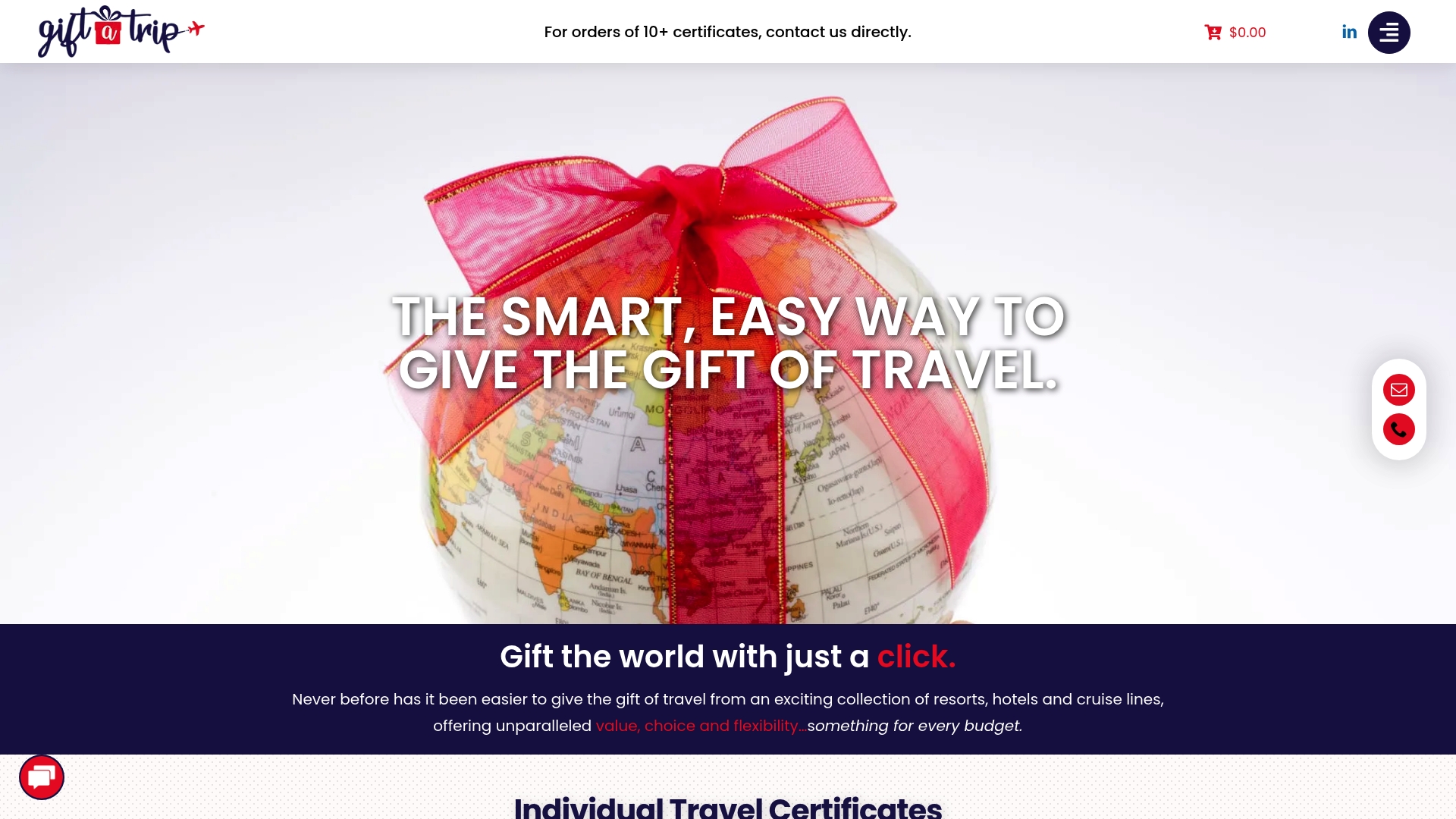
The practical advantage over a traditional group trip is real. You skip the venue negotiation, the group flight coordination, and the blackout-date arguments. Each winner gets a certificate they redeem on their own schedule, at a property they actually want to visit. Giftatrip handles bulk orders with customizable gift boxes and personalized messaging, so the reward feels considered rather than generic. For teams of any size, from a five-person inside sales squad to a national field force, the certificates scale without adding administrative overhead.
Sales managers who want to add a travel component to their incentive program can browse cruise certificates and resort options directly, or download the travel certificate distribution guide to see how other HR and sales teams have structured their rollout.
FAQ
What are good sales incentives for a sales team?
The most effective sales incentives combine monetary rewards (tiered commissions, bonuses, SPIFs) with experiential prizes (travel certificates, team outings) and recognition (public awards, peer nominations). The right mix depends on your team’s roles, tenure, and what behaviors you’re trying to reinforce.
What are good examples of incentives for individual reps?
Strong individual incentives include tiered commission accelerators that pay 1.5x to 3x above quota, extra PTO, gift cards, and travel certificates redeemable at resorts or cruise lines. Giftatrip’s digital certificates work well here because each rep redeems on their own schedule.
What are the main types of sales incentives?
Sales incentives fall into four categories: monetary (commissions, bonuses, SPIFs), experiential (trips, events, travel certificates), recognition-based (awards, leaderboards, peer nominations), and non-monetary (extra PTO, flexible work, professional development). Combining types addresses both intrinsic and extrinsic motivators, which produces stronger performance gains than any single category alone.
How do you measure whether a sales incentive program is working?
Track leading indicators weekly, such as pipeline activity, meetings booked, or deal velocity, rather than waiting for end-of-period revenue. Effective programs use real-time tracking and allow mid-program adjustments when goals prove too easy or too hard.
How long should a sales incentive program run?
Short contests tied to SPIFs or gift cards work well at two to four weeks. Programs built around travel or experiential rewards benefit from running 90 days or longer, because the anticipation of the experience sustains motivation across a full sales cycle.
Key Takeaways
The strongest sales incentive programs combine monetary, experiential, and recognition rewards, because intrinsic motivation correlates more strongly with performance than extrinsic rewards alone.
| Point | Details |
|---|---|
| Mix reward types | Combine monetary, experiential, and recognition incentives to address both intrinsic and extrinsic motivators. |
| Segment by role | SDRs and Account Executives respond to different incentives; align rewards to the behaviors each role controls. |
| Keep rules simple | Transparent rules and weekly progress updates prevent disengagement caused by perceived complexity or unfairness. |
| Match duration to reward | Programs running 90 days or longer sustain motivation best when anchored to a travel or experiential prize. |
| Giftatrip for travel rewards | Giftatrip’s digital travel certificates cover taxes and resort fees, making travel incentives easy to scale without event-planning overhead. |