Jump to Section:
The fastest way to run travel prizes for sales contests that work is a curated mix: one or two high-value group trips for your top performers, backed by flexible digital travel certificates for broader tiers. Group trips carry the brag appeal that drives competitive behavior; certificates cut the booking headaches that sink most incentive programs before they launch. Pick your format, set a qualification window of a few months, and build from there.
TL;DR:
- Digital travel certificates offer flexible redemption options and minimize logistical hurdles, making them ideal for quick deployment and geographically dispersed teams.
- Budgeting should include resort fees, travel insurance, currency exchanges, rebooking costs, and administrative overhead to avoid hidden expenses surpassing initial estimates.
- Contests should have clear qualification metrics, secondary reward tiers, and documented rules, with a pre-approved budget for gross-up costs and tax considerations.
- Group trips require at least 60 to 120 days of planning for booking and logistics, while certificates can be delivered within days after winners are announced.
- Tax rules depend on the trip’s primary purpose, and proper documentation is essential to qualify for deductible business travel deductions under IRS guidelines.
Table of Contents
- Travel Prizes for Sales Contests: 8 Formats Worth Budgeting For
- How Do You Design Fair Contest Rules and Qualification Tiers?
- What Budget and Tax Rules Apply to Travel Prizes?
- Group Bookings vs. Digital Certificates: Which Fulfillment Path Fits?
- How Do You Measure ROI From a Travel Incentive Program?
- Where Gift A Trip Fits Into Fulfillment
- What Happens When a Winner Has to Cancel?
- What Hidden Costs Should You Budget For?
- What’s the Realistic Timeline From Contest Launch to Prize Delivery?
- A Working Checklist From Running Incentive Travel Programs
- Ready to Fulfill Your Next Sales Contest Prize?
- Sources
- FAQ
Travel Prizes for Sales Contests: 8 Formats Worth Budgeting For
Not every contest needs a five-night resort trip. The right prize format depends on your budget, your team size, and how fast you need to launch. Here are the eight formats that consistently show up in well-run sales contest prizes travel programs, ranked roughly by ambition and cost.
- Group incentive trip. The classic: fly your top 10 to 20 performers somewhere memorable for three to five nights. Best for annual recognition programs where exclusivity matters. Case studies compiled by the Incentive Research Foundation show sample program budgets running around $4,000 per person once airfare, lodging, ground transport, and on-site production are factored in.
- All-expenses-paid individual trip. A single big prize for the top seller, often a bucket-list destination. Costs vary widely, but plan for airfare, a premium hotel tier, and daily spending money on top of the base package.
- Weekend getaway or city escape package. Two to three nights somewhere within a few hours’ flight. Low logistics burden, strong appeal for mid-tier winners who won’t hit the top-trip threshold.
- Experience packages. Concert weekends, VIP sporting events, or chef’s-table dinners often beat a generic trip when your team is younger or when you’re rewarding a short sprint rather than an annual push.
- Wellness retreats and micro-retreats. A two-night spa or fitness retreat works well for smaller, recurring contests. Timing matters here: avoid quarter-end weeks when winners can’t actually take the time off.
- Cruise packages. Strong perceived value per dollar spent, but book early. Cabin availability tightens fast, and cruise lines typically need more lead time than a hotel package.
- Digital travel certificates or voucher packs. Bulk-purchased certificates redeemable across resorts, hotels, or cruise lines give winners choice and flexibility, and they carry the lowest logistical friction of any format on this list because there’s no group contract to manage.
- Performance-weighted raffle. Every qualifying rep earns raffle entries based on sales volume, so nobody with reasonable performance is shut out. This keeps the middle of your team engaged without diluting the top prize.
Academic research on channel incentive travel programs backs up why formats like these consistently outperform cash: how customer engagement shapes unforgettable tourism experiences shows that travel carries a perceived prestige that a bonus check simply doesn’t replicate, even at equivalent dollar value.
How Do You Design Fair Contest Rules and Qualification Tiers?
Start with the objective. Are you rewarding your absolute top performers, or trying to lift the entire team’s average? That single decision shapes everything else about qualification.
- Pick the metric first. Revenue closed, net new logos, upsell volume, or a weighted point system, whatever ties directly to the behavior you want more of.
- Choose a qualification method. Stack-ranking (top 10 win) works for small, motivated teams. Threshold qualification (anyone above X qualifies) works better for larger teams because it doesn’t cap participation. Points-based systems let you reward multiple behaviors at once.
- Set the window. Short promotional pushes run 30 to 90 days. Full incentive-trip cycles typically run annually, tied to fiscal-year performance.
- Add a second tier. IRF research on successful incentive travel program design shows that opening a secondary reward tier “moves the middle” of your sales force, engaging reps who’d otherwise write off the contest in week one.
- Communicate and validate. Publish rules before the window opens, confirm eligibility mid-contest, and audit the final numbers before announcing winners.
Pro Tip: Run your qualification math past finance and legal before you announce it. A rule that looks fair on a spreadsheet can look like favoritism once reps start comparing notes.
What Budget and Tax Rules Apply to Travel Prizes?
Budget line items for sales competition prizes travel programs typically include airfare, lodging, ground transport, event production, welcome gifts, and administrative overhead. Realistic per-person planning figures, drawn from IRF case studies, cluster around $4,000 for a multi-night group trip once every line item is counted.
Tax treatment is where most planners get tripped up. The IRS draws a hard line based on primary purpose: a trip built around a genuine business agenda can qualify for different treatment than one that’s purely a reward junket. Publication 15-B lays out which employer-provided travel benefits are excludable from an employee’s income and which trigger payroll reporting and withholding.
- Confirm whether the trip has a documented business purpose, not just a celebratory one.
- Track attendance at any required business sessions, since documentation is what preserves deductibility.
- Model a gross-up scenario in your initial budget if you plan to cover winners’ tax liability. It raises program cost but avoids handing a surprise tax bill to your best performer.
- Keep receipts, agendas, and attendee lists for at least as long as your standard tax recordkeeping window.
Guidance on IRS rules for deducting incentive travel points to a business-time benchmark that many employers use to separate deductible business travel from non-deductible entertainment. Skip the documentation and you risk losing the deduction entirely, even if the trip’s intent was legitimate.
Group Bookings vs. Digital Certificates: Which Fulfillment Path Fits?
Group-managed bookings work well when you’re moving a large cohort to one destination at one time. A site-selection partner or destination management company can negotiate group rates that individual bookings can’t touch, which is exactly why IRF’s program design research recommends outsourcing this piece rather than DIY-ing it.
Digital travel certificates flip the model. Winners redeem on their own schedule across a catalog of resorts, hotels, or cruise lines, which removes the group contract entirely and shortens the time between “you won” and “you’re booked.”
- Lock cancellation and rebooking terms before you buy, not after a winner tries to use them.
- Set a clear guest or spouse policy up front. Ambiguity here causes more complaints than the prize itself.
- Confirm blackout dates and whether travel insurance is bundled or optional.
- Send winners a single-page redemption guide with a direct contact for support.
Pro Tip: For geographically spread-out teams, certificates solve a problem group trips can’t: nobody has to coordinate five time zones around one departure date.
How Do You Measure ROI From a Travel Incentive Program?
Track four numbers from day one: contest participation rate, sales lift during the window, retention of winners over the following 12 months, and post-trip satisfaction scores from a short survey.
- Compare the contest window’s sales performance against the same period last year, or against a small control group that wasn’t eligible.
- Run a short measurement window (30 to 60 days) for tactical promotions; use a full quarter or year for major incentive-trip cycles.
- Report participation rate, cost per qualified winner, and revenue lift to leadership on a fixed cadence, monthly for short contests, quarterly for annual programs.
- Ask winners one question after the trip: would they change their sales behavior to qualify again? The answer tells you more than any survey score.
Programs modeled on the IRF Top Performers research tend to qualify a smaller, exclusive group for the top prize and deliver higher value per winner, a design choice associated with stronger engagement metrics.
Where Gift A Trip Fits Into Fulfillment
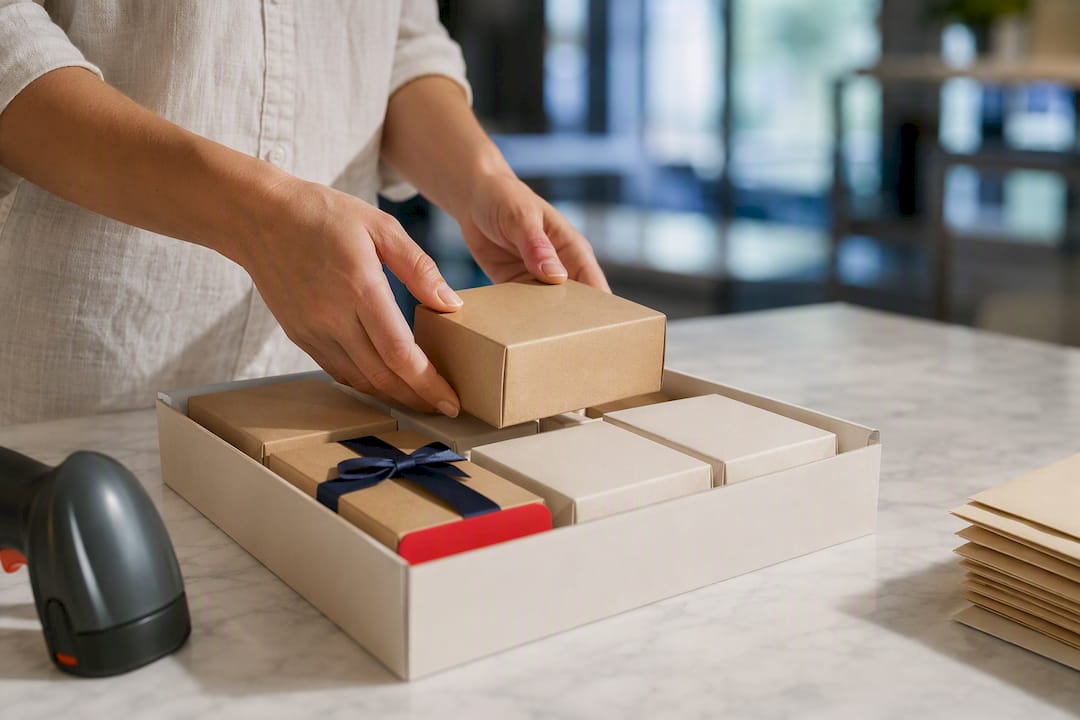
Bulk digital certificates, custom packaging, and included resort fees solve the two problems that sink most contests: slow group logistics and rigid redemption windows. One planner might need 40 certificates shipped for a product-launch contest; another needs a fast substitute after a winner’s original date fell through. Both scenarios show why flexible, pre-purchased certificates earn their place next to a top-tier group trip.
What Happens When a Winner Has to Cancel?
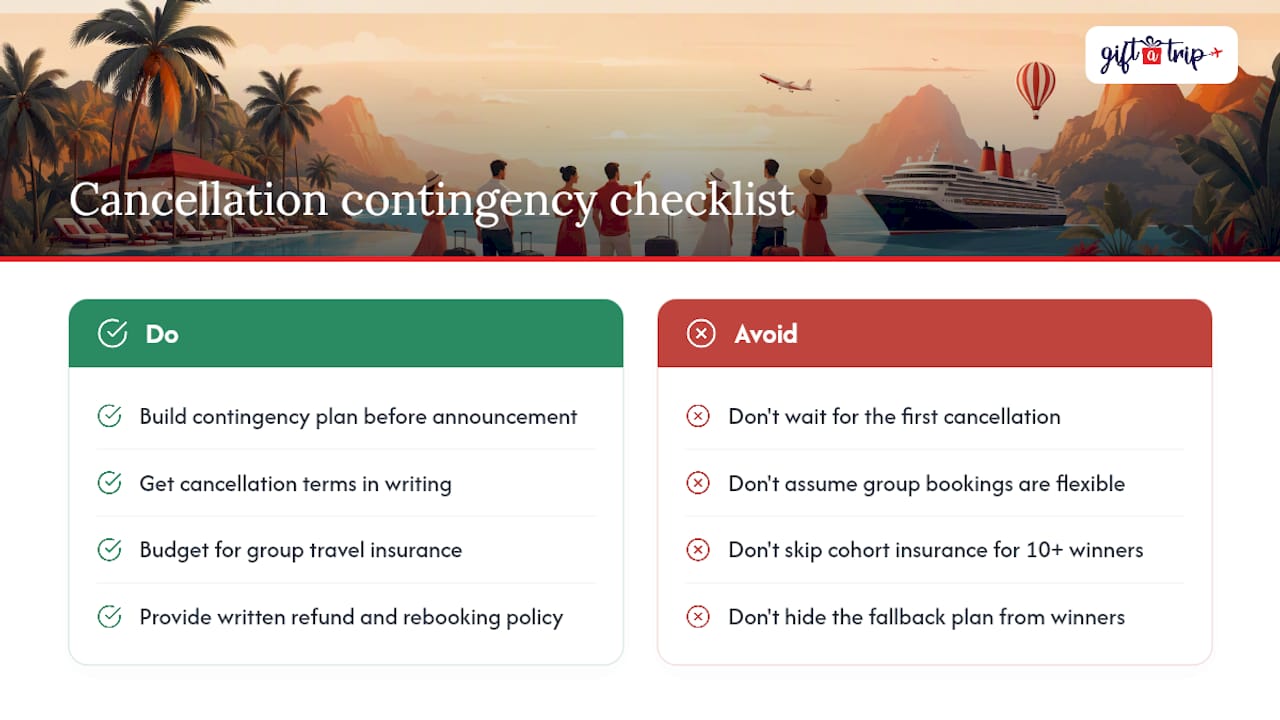
Cancellations are not a hypothetical. Between illness, family emergencies, and simple scheduling conflicts, a meaningful share of incentive-trip winners will need to change plans at some point. Build your contingency plan before you announce the prize, not after the first cancellation call comes in.
Start with the cancellation terms on any group booking. Ask your DMC or hotel partner exactly how many days out you can cancel or rebook without penalty, and get that answer in writing before you sign a contract. Group trips locked in months ahead carry more cancellation risk than flexible formats, simply because more can change between booking and departure.
Travel insurance deserves a specific line in your budget, not an afterthought. A basic trip-protection policy typically covers cancellation, interruption, and lost-baggage reimbursement, and the cost per traveler is small relative to the exposure of eating a nonrefundable group deposit. For programs covering 10 or more winners, insuring the whole cohort is usually cheaper than insuring each trip individually.
Digital travel certificates sidestep much of this risk by design. Because winners choose their own redemption dates within a validity window, a single cancellation doesn’t unravel a group contract or forfeit a deposit the way a fixed-date group trip can. That flexibility is one reason certificates pair so well as the fallback tier underneath a marquee group trip.
Have a written refund and rebooking policy ready before launch, and communicate it to winners alongside the prize announcement. Winners who understand the fallback plan complain less when plans change.
What Hidden Costs Should You Budget For?
The headline prize cost is rarely the real cost. Airfare and hotel nights get budgeted first; the line items that blow past projections are almost always the ones planners forget to list.
Resort fees are the most common surprise, since many hotels tack on daily charges that don’t show up in the advertised room rate. Building certificates or packages that already include these fees, rather than discovering them at checkout, protects your budget from a slow bleed of small overages. Travel insurance, as covered above, is a second line item that’s easy to skip and expensive to regret skipping.
Beyond those two, budget for:
- Gross-up costs if you’re covering a winner’s tax liability on the prize’s fair market value.
- Currency and exchange fees for any international destination, which can shift a per-person cost by several percentage points depending on timing.
- Rebooking or change fees for winners who need to shift dates within the certificate’s validity window.
- On-site production costs for group trips, including welcome dinners, branded materials, and photography.
- Administrative time, which rarely gets a dollar figure but eats real hours from HR, sales ops, or whoever runs the contest.
A detailed budgeting breakdown that accounts for resort fees and incidental charges up front tends to run closer to actual spend than a budget built only from base package prices. Add a 10 to 15% contingency line to whatever total you land on. It almost always gets used.
What’s the Realistic Timeline From Contest Launch to Prize Delivery?
Work backward from the trip date or certificate delivery deadline, and give yourself more runway than feels necessary.
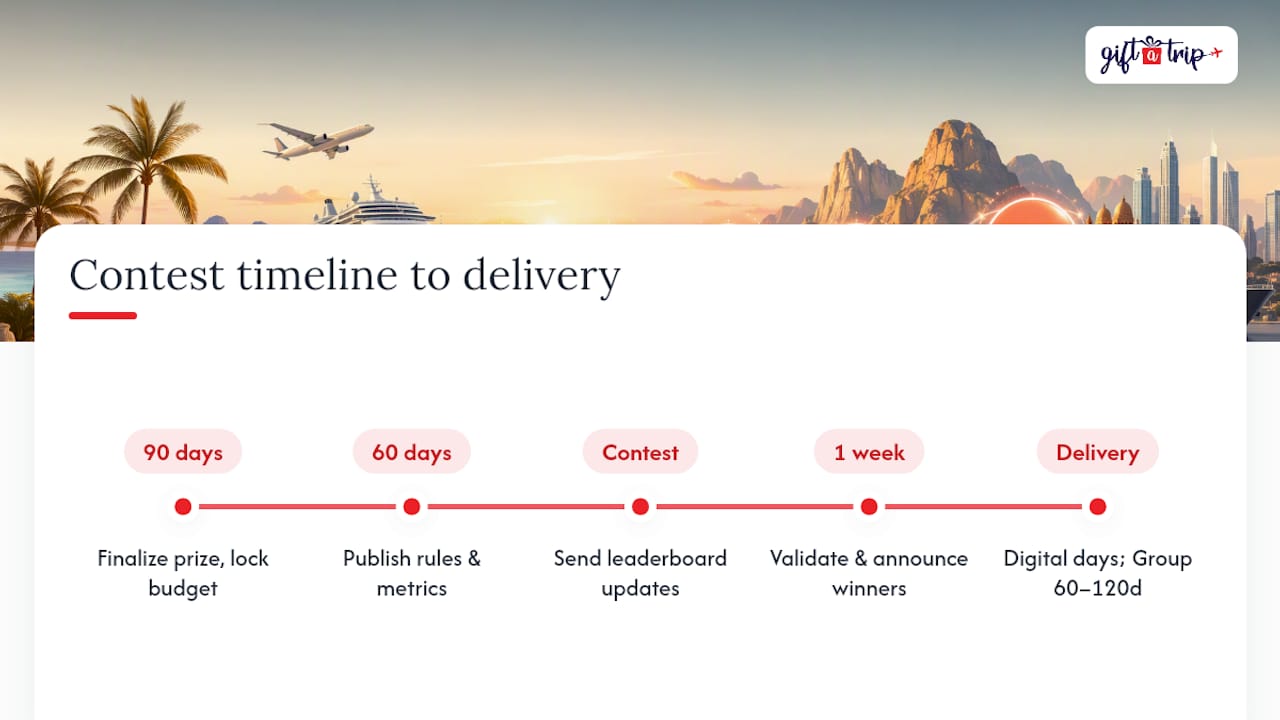
Roughly 90 days before the contest opens, finalize the prize format, lock the budget, and confirm any group bookings or certificate order with your fulfillment partner. Group trips especially need this lead time, since destination and hotel availability tightens the closer you get to peak travel seasons.
About 60 days out, publish contest rules to the sales team, including the qualification metric, the window, and exactly what winners receive. Ambiguity here causes more disputes than almost anything else in the program.
During the 30 to 90 day contest window itself, send regular leaderboard updates. Momentum fades fast if reps can’t see where they stand.
Within a week of the contest closing, validate the final numbers and announce winners. Waiting longer than that kills the excitement you just spent weeks building.
Finally, deliver the prize. Digital certificates can go out within days of the announcement since there’s no group contract to finalize. Group trips need a separate runway, often 60 to 120 days between announcement and departure, to lock flights, rooms, and any required travel documents.
A Working Checklist From Running Incentive Travel Programs
Do define your metric before you pick the prize. Don’t promise a group trip without confirming your budget covers gross-up. Do build in a second tier so the middle of your team stays engaged. Don’t skip travel insurance to save a few dollars per head; one cancellation costs more than the premium ever would.
— Donovan
Ready to Fulfill Your Next Sales Contest Prize?
Group trips take months to plan. Certificates take days. That’s the practical case for building bulk digital travel certificates into your prize mix: certificates redeemable across resorts, hotels, and cruise lines, with taxes and resort fees already built in and minimal blackout dates to fight with. Winners pick their own dates instead of waiting on a group contract, and you skip the site-selection negotiation entirely.
For planners building a full incentive calendar rather than a one-off contest, Giftatrip’s travel certificate distribution guide for HR and events walks through bulk ordering, custom packaging, and personalized messaging for corporate rewards programs. If your next contest closes in a few weeks, the faster move is to request a bulk quote or browse available travel certificates directly and get sample boxes moving before your qualification window ends.
FAQ
What Are Some Good Prize Ideas for a Sales Competition?
Group incentive trips, individual getaways, experience packages like VIP concerts or sporting events, and digital travel certificates all rank as strong sales competition prizes, with certificates offering the most flexibility for winners.
Can You Give an Example of Incentive Travel Done Well?
A common example is a company qualifying its top 10 to 20 performers for a multi-night group trip with a documented business agenda, budgeted around $4,000 per person once airfare, lodging, and production are included.
What Are Good Gift Ideas for Contest Winners Who Don’t Hit the Top Tier?
Weekend getaway packages, wellness micro-retreats, and bulk digital travel certificates work well as second-tier prizes, keeping mid-performers engaged without diluting the top group trip’s exclusivity.
Are Travel Prizes Taxable to the Employee?
They can be. Under IRS Publication 15-B, employer-paid travel benefits may count as taxable compensation unless the trip meets specific exclusion criteria, so employers should plan for potential withholding or a gross-up before launch.
How Far in Advance Should We Plan a Travel Prize Contest?
Plan for roughly 90 days before launch to lock budget and bookings, 60 days to publish rules, and 60 to 120 days between winner announcement and departure for group trips; digital certificates can deliver within days.