Jump to Section:
TL;DR:
- Giving travel experiences instead of material gifts creates lasting memories and emotional satisfaction.
- Proper planning and personalized messaging enhance the impact, turning the gift into a meaningful story.
Giving someone a material gift feels safe in the moment, but there’s a quiet truth most of us already know: those gifts rarely stay meaningful past the first few weeks. A blender gets shoved to the back of a cabinet. A generic item card gets forgotten in a wallet. Travel gifting is increasingly focused on unique, experience-first choices because real moments spent on a beach in Hawaii or exploring the streets of Tokyo simply don’t collect dust. This guide walks you through every step of the process so your next gift becomes one that gets talked about for years.
Table of Contents
- Why travel gifting makes occasions unforgettable
- What you need to plan a successful travel gift
- Step-by-step guide to travel gifting
- Common travel gifting mistakes (and how to avoid them)
- What results to expect: Lasting memories and practical payoffs
- Why experience-first travel gifting is the future (and what most guides miss)
- Ready to start travel gifting? Explore flexible options
- Frequently asked questions
Key Takeaways
| Point | Details |
|---|---|
| Experience-first matters | Personalized travel gifts create lasting memories and outperform generic presents. |
| Plan with data | Use 2026 gifting benchmarks to inform your choices for maximum impact. |
| Step-by-step is key | Following a structured process ensures a stress-free and memorable travel gifting experience. |
| Avoid vague gifts | Specificity and context inspire and delight recipients more than ‘cash toward travel’ gifts. |
Why travel gifting makes occasions unforgettable
The case for giving travel over things has never been stronger. Researchers who study happiness consistently find that experiences produce more lasting satisfaction than physical possessions. You remember a road trip through Italy long after you’ve forgotten which sweater you got for your birthday three years ago. That’s not nostalgia speaking. It’s how human memory actually works, anchoring emotions to events far more reliably than to objects.
The data from 2026 makes this shift concrete. According to Honeyfund’s 2026 trends report, couples now allocate 26% of total wedding spend to the honeymoon, and the average honeymoon budget sits at $6,500. That’s real money being moved deliberately away from household goods and toward lived experience. And the behavior is spreading beyond newlyweds to birthday celebrations, anniversary milestones, and graduation gifts.
Understanding why experience-based gifts win comes down to a simple concept: shared anticipation. When someone receives a travel certificate, they don’t just feel good in the moment. They spend weeks looking forward to the trip, researching destinations, and imagining themselves there. That extended joy is something a physical gift simply cannot provide.
Comparing travel gifts to traditional gifts
| Category | Traditional gifts | Travel gifts |
|---|---|---|
| Emotional impact | Short-term | Long-lasting |
| Personalization potential | Limited | High |
| Recipient engagement | Low | High (pre, during, post) |
| Memory creation | Minimal | Significant |
| Flexibility | Fixed | Adaptable |
Key reasons travelers and gift-givers are making the switch in 2026:
- Millennials and Gen Z now prioritize experiences over possessions when spending discretionary money
- Destination weddings represent 31% of all weddings this year, making travel-related gifts highly relevant
- Honeymoon registries have become standard practice, replacing traditional registries for thousands of couples
- Corporate gifting programs increasingly reward employees with travel to drive motivation and loyalty
Now that you know why experience gifts matter, let’s explore what you need to get started.
What you need to plan a successful travel gift
A great travel gift doesn’t happen by accident. Before you choose a certificate or book anything, you need a few key pieces of information. Skipping this step is the single most common reason travel gifts miss the mark, and it’s entirely avoidable.
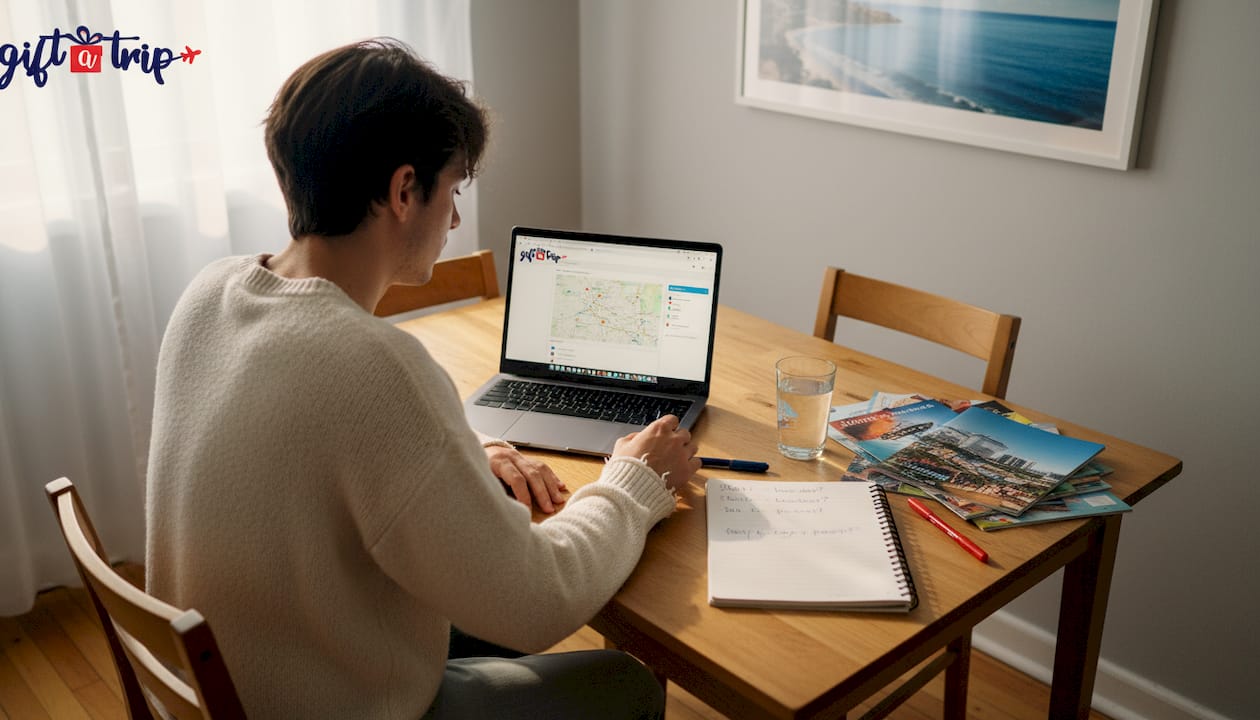
The most important thing to gather first is context. Detailed planning context matters enormously, including the recipient’s destination preferences, travel timeline, and specific interests. A couple who dreams about Japan in cherry blossom season needs something very different from a family that wants a Caribbean all-inclusive resort in July. Knowing this up front shapes every decision that follows.
Comparing your main travel gifting options
| Gifting method | Best for | Flexibility | Setup time |
|---|---|---|---|
| Digital travel certificates | Any occasion, any budget | Very high | Under 10 minutes |
| Honeymoon/travel registry | Weddings, milestone trips | High | Moderate |
| Surprise trip booking | Close relationships, experienced planners | Low | High |
| Cash with travel note | Budget-focused givers | Moderate | Minimal |
Your planning checklist before you gift:
- Confirm the recipient’s preferred travel dates or general availability
- Research their bucket list destinations or ask a close friend or family member
- Set your budget and decide if you want to cover taxes and resort fees (not all certificates do)
- Choose between a solo certificate or a contribution to a registry
- Decide whether you want to add personalized messaging or extra travel essentials like luggage tags or packing cubes
- Check delivery method: digital works perfectly for last-minute occasions
Pro Tip: If you’re gifting for a honeymoon or anniversary, reach out to someone in the couple’s inner circle for destination clues before you purchase. Even one specific detail, like a preferred airline or a country they’ve always mentioned, instantly makes the gift feel personal.
For more detail on crafting the right approach, tips for impactful travel gifting can help you zero in on what resonates most for your specific occasion.
With your essentials in hand, it’s time to follow the step-by-step process for travel gifting.
Step-by-step guide to travel gifting
This is where it all comes together. Follow these steps in order and you’ll create a gift that feels both meaningful and effortless.
Step 1: Choose your gift format. Digital travel certificates are the most versatile starting point. They’re delivered instantly, can be customized with a personal message, and they work for nearly every occasion. If you’re gifting for a wedding, contributing to a structured registry reduces the risk of duplicates while converting monetary gifts into funded travel experiences the couple actually wants.
Step 2: Set the right value. Think about the occasion and your relationship to the recipient. A close family member gifting for a honeymoon might contribute $200 to $500. A friend gifting for a birthday might choose a $100 to $150 resort certificate. There’s no wrong number, just an honest reflection of your relationship and budget.
Step 3: Personalize the message. This step is where most people undersell themselves. Don’t write “Enjoy your trip.” Write something that connects the gift to the person. Reference a destination they’ve mentioned, a trip they’ve always dreamed about, or a moment you’ve shared that’s connected to travel. Three sentences of genuine connection outperform three paragraphs of generic warmth every time.
Step 4: Choose your delivery method. For digital certificates, email delivery works well for birthdays, anniversaries, and honeymoons. If you want a more tactile presentation, some platforms offer customizable gift boxes that arrive by mail with the certificate included.
Step 5: Send with context. Don’t just fire off the certificate. Include a note that tells them how to redeem it, what it covers (resort fees, taxes, etc.), and any inspiration you have for how they might use it. Giving travel as a gift is most effective when the recipient can immediately picture themselves using it.
Step 6: Follow up after redemption. Ask them about the trip when they return. This closes the loop and reinforces that you put genuine thought into the gift, not just money.
“With 31% of weddings now being destination weddings and 1 in 4 couples using AI to assist their travel planning, the infrastructure around travel gifting has never been more sophisticated or more widely embraced.”
Pro Tip: Use AI tools like ChatGPT to draft your personalized message if you’re stuck. Feed it two or three facts about the recipient’s travel style or dream destinations, and ask it to write a 3-sentence note. Then edit it in your own voice. It takes five minutes and the result is miles ahead of a blank card.
For occasions beyond personal milestones, personalized travel gift certificates are equally powerful for corporate recognitions, sales incentives, and employee rewards.
Understanding the process helps, but it’s equally important to avoid common missteps so your gift delivers its full impact.
Common travel gifting mistakes (and how to avoid them)
Even well-intentioned travel gifts can fall flat. Here’s what to watch for:
Mistake 1: Being too vague. Handing someone cash “for travel” is not the same as giving them a specific, redeemable travel certificate with a clear destination category. Vague travel messaging consistently underperforms compared to gifts that come with context, inspiration, or a defined destination type. The recipient needs to be able to picture themselves using the gift.
Mistake 2: Ignoring logistics. Some certificates come with hidden blackout dates, limited destinations, or fees not covered by the face value. Always read what’s included before purchasing. The best certificates cover taxes and resort fees and have minimal blackout periods.
Mistake 3: Mismatching the occasion. A spontaneous weekend getaway certificate is perfect for a birthday. It might not suit a couple planning a multi-week honeymoon to Japan. Match the scope and style of the gift to the scale of the occasion.
Mistake 4: Over-complicating the process. Some gift-givers spend so much time overthinking that they either delay the gift or choose something generic at the last minute. Having a reliable platform ready simplifies this significantly.
Here’s a quick comparison of vague versus inspiring messaging:
Vague: “Here’s some money toward your trip. Have fun!”
Inspiring: “We know you’ve always talked about watching the sunrise over Haleakalā. This certificate is a step toward making that happen. We can’t wait to hear about it.”
See the difference? The second version connects the gift to a real aspiration. It demonstrates that recognition-driven travel gifts are about more than the dollar amount. They’re about showing someone you were actually paying attention.
By steering clear of these mistakes, you maximize the meaning and success of your travel gift. But what’s the evidence that these steps actually work?
What results to expect: Lasting memories and practical payoffs
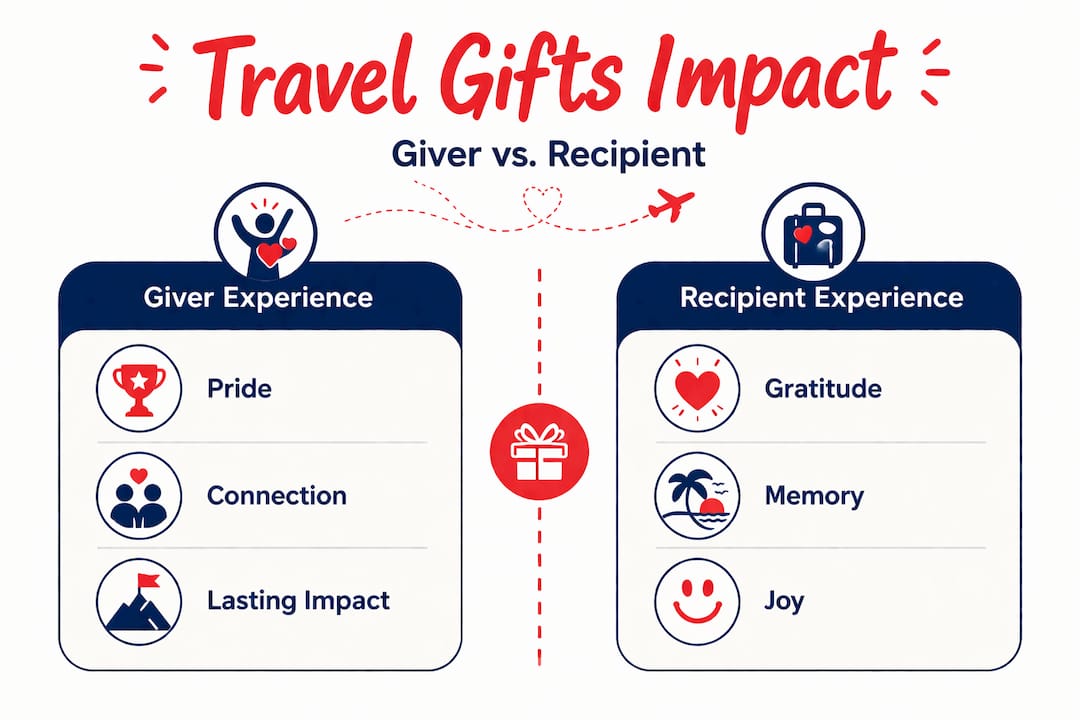
When you follow this process, the returns are measurable on both sides of the exchange. Recipients value three things above almost everything else: flexibility to use the gift on their own schedule, simplicity in the redemption process, and the feeling that the gift was chosen with them specifically in mind.
Experience-first gifting has become the standard in 2026, and the data shows that recipients of well-planned travel gifts report higher long-term satisfaction than those who received comparable-value physical gifts. The trip becomes a story they tell. The physical gift becomes something they eventually donate.
What to expect from a well-executed travel gift
| Outcome | Gift-giver experience | Recipient experience |
|---|---|---|
| Emotional impact | Pride and connection | Gratitude and excitement |
| Practical value | Easy redemption, covered fees | Memorable trip |
| Longevity | Talked about for years | Revisited in photos and stories |
| Relationship value | Strengthened bond | Feels seen and appreciated |
Pro Tip: After the trip, send the recipient a small follow-up, maybe a handwritten note or a printed photo frame. It costs almost nothing and permanently anchors the memory back to your gift. The person remembers not just the trip but who made it possible.
To explore ready-made solutions that deliver these results consistently, travel gift certificate solutions offer a range of options designed around flexibility and recipient satisfaction.
Let’s step back and consider travel gifting from our experience in the industry.
Why experience-first travel gifting is the future (and what most guides miss)
Most how-to guides on travel gifting stop at the mechanics. They tell you to “pick a destination” and “add a personal note” without ever explaining why those choices matter so deeply or what separates a forgettable gift from one that gets brought up at dinner tables for the next decade.
Here’s what we’ve observed after helping thousands of gift-givers across personal and corporate occasions: context is the multiplier. A $100 certificate paired with a handwritten note referencing a specific shared memory or a dream the recipient has mentioned aloud will outperform a $300 cash transfer every single time. The dollar amount matters less than the evidence that you were genuinely paying attention.
The other insight most guides skip entirely is the role of data. Couples planning honeymoons in 2026 aren’t guessing at destinations anymore. They’re using AI tools, consulting trend reports, and making informed choices. Gift-givers who tap into that same data, knowing that Hawaii leads destination preferences, that Japan is spiking in popularity, that all-inclusive resorts in Mexico dominate budget-conscious honeymoon choices, are giving gifts that feel contemporary and relevant rather than generic.
The uncomfortable truth about cash-only travel gifts is that they dissolve into a general budget. Nobody ever looks back and says “Remember that $200 my aunt sent toward travel?” But they absolutely remember “the resort in Maui that my aunt’s certificate covered.” Specificity and structure are what transform a financial gesture into an emotional one.
We also see this pattern in case studies of experience gifting: the gifts people describe years later are almost always the ones that came with a story attached, not just a dollar amount.
Ready to start travel gifting? Explore flexible options
Choosing the right platform makes all the difference between a gift that feels polished and one that falls through the cracks at the last minute. Gift A Trip offers a wide range of digital travel certificates redeemable at top resorts, hotels, and cruise lines, covering taxes and resort fees so recipients get real value without surprises.
Whether you’re gifting for a honeymoon, an anniversary, a milestone birthday, or a corporate reward, Gift A Trip’s solutions are built around flexibility and ease. Personalized messaging, custom gift boxes for bulk occasions, and secure digital delivery mean you can create something truly memorable in minutes. Explore the full range of travel gift certificate solutions and find the option that fits your occasion, your recipient, and your budget perfectly. Your gift should feel as good to give as it does to receive.
Frequently asked questions
What is the best way to give travel as a gift in 2026?
Personalized travel certificates or registries with clear details deliver the best experience, outperforming generic cash gifts. 2026 travel gifting benchmarks show that experience-first, context-rich gifts consistently drive higher recipient satisfaction.
How much should I budget for a travel gift?
The average honeymoon budget in 2026 is $6,500, but individual travel gift contributions typically range from $50 to $500 depending on the occasion and your relationship to the recipient.
What destinations are most popular for travel gifts in 2026?
Hawaii ranks first for travel gifting in 2026, followed by Italy and Japan, making certificates tied to those destinations especially well-received.
Are travel gifts better than traditional household gifts?
Travel gifts create more lasting memories and emotional impact than household items, especially for major life events. The shift toward experience-first spending in 2026 confirms that recipients actively prefer travel over things.
How do I make sure my travel gift feels personal?
Gather details about the recipient’s dream destinations and preferred travel timing before purchasing, and include a note that references something specific to them. Detailed planning context is what separates a thoughtful gift from a forgettable one.