
Travel gift etiquette comes down to one idea: a trip should feel like an invitation, never an assignment. Give the recipient room to choose dates, confirm they actually want to go, settle the costs up front, and explain the gift kindly. The same spirit applies when you are the traveler, whether you are attending a destination wedding or bringing something to a host abroad. Below are ten rules that cover all three situations.
TL;DR
- Never book a fixed trip for someone without confirming that they want to go, are free, and have the right documents.
- Prefer a flexible certificate over a locked itinerary, and pay taxes and fees up front so the recipient does not get a surprise bill.
- At a destination wedding, your presence counts for a lot. Honor a “no gifts” request, and scale back your budget if travel costs are high.
- When visiting a host abroad, bring something small, local and culturally safe, and check for taboos before you pack.
- Add a personal note that says why you chose the gift and how it can be used.
Table of Contents
- The three situations people mean by “travel gift”
- Part one: giving a trip as a gift
- What makes the gift of travel worth the care
- Perspective: why we lean toward flexible gifts
- Part two: gifts when you travel to an event
- Part three: bringing a gift to a host abroad
- A quick reference: what to do in each situation
- How to give a travel certificate gracefully, step by step
- Our travel certificates, for givers who want to get this right
- Common mistakes and how to fix them
- FAQ
- Sources
The three situations people mean by “travel gift”
The phrase covers more than one scenario, and the etiquette differs for each.
- Giving a trip or travel experience to a partner, parent, friend, employee or client.
- Giving a gift when you travel to an event, most often a destination wedding.
- Bringing a gift on your travels, to a host, coworkers or business contacts abroad.
The rules below are grouped in that order. If you only need one scenario, jump to it.
Part one: giving a trip as a gift
Rule 1: Ask before you book anything
A surprise is only a gift if the recipient is delighted. A trip can fail on timing, health, work leave, caregiving duties or plain preference. Condé Nast Traveler’s advice from travel advisor Rudi Steele is to consult the recipient and plan the trip for when the time is right and at a price that works.
You can still keep the surprise. Ask indirect questions: “If you had a long weekend in the spring, would you rather be on a beach or in a city?” Check the calendar with a spouse or assistant. Then you are surprising them with a trip they will want, not guessing.
Rule 2: Do not make nonrefundable bookings until the details are confirmed
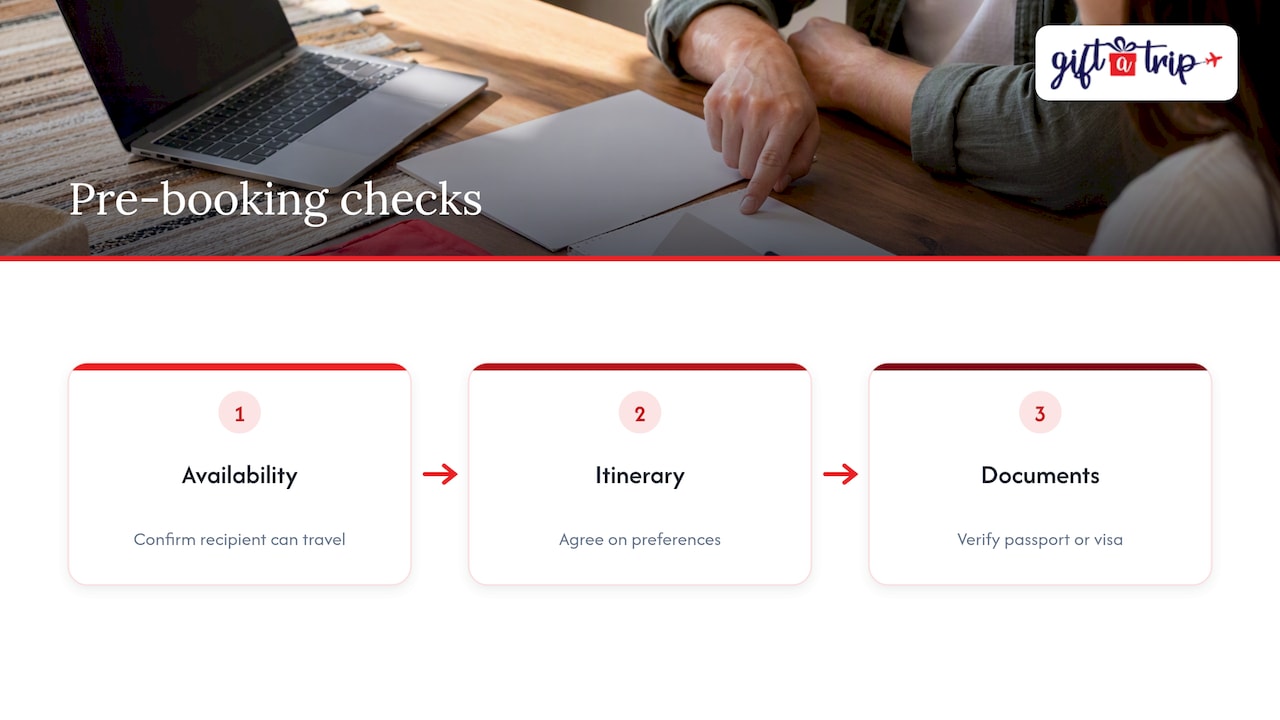
The Points Guy is blunt on this point: do not book a surprise trip unless you know the recipient wants to go and is available, and make sure they hold the passport and travel documents the trip requires. The same piece advises against making actual or nonrefundable bookings until availability, itinerary preferences and documents are confirmed.
This matters most for international travel, where a passport that is close to expiring or a missing visa can cancel a trip after you have paid. For a domestic getaway the risk is smaller, but a blocked-out work week can be just as damaging.
Rule 3: Choose flexibility over a fixed itinerary
The most common complaint about travel gifts is not the destination. It is the date. CNBC reported in 2024 that 34% of surveyed consumers complained about needing to book exact dates when giving travel. A gift that arrives with a locked date turns the recipient into a scheduler.
A flexible certificate solves this. The recipient picks the destination or property within what you have chosen, and travels when it suits them. If you are weighing the trade-offs, our guide to flexible date travel certificates explains how they work, and the page on open date travel vouchers covers the practical timing questions to ask before you buy.
Fixed dates are fine in one case: you have already confirmed the date and the people coming, as with a milestone anniversary dinner trip you planned together.
Rule 4: Pay the hidden costs yourself
Nothing deflates a gift like an unexpected charge. Taxes, resort fees, gratuities and booking charges should be inside what you pay for, not left to the recipient at checkout. When you compare options, ask exactly what is included and what is not.
Think about the extras beyond the booking too. Airfare, baggage fees, pet care and time off are costs of using the gift. If the recipient may struggle with them, consider adding an airfare voucher or tell them plainly that you are happy to help.
Rule 5: Write a note that explains the gift
A certificate in an envelope with no explanation can be confusing. Condé Nast Traveler suggests including a note on why you chose the trip, how it can be tailored, and the freedom to pick dates and destinations. Cover four things:
- Why you chose this destination or type of trip for them.
- What is included, in plain terms.
- That they can choose when to go.
- Who to contact, and what they should do first.
Keep the tone warm and low-pressure. “No rush, use it whenever life gives you a gap” beats “Make sure you go this year.”
Rule 6: Match the size of the gift to the relationship
A lavish trip from a casual acquaintance creates obligation and discomfort. A modest certificate to a close friend can feel stingy if the occasion is a major milestone. Use the occasion as a guide: a wedding, a retirement or a big anniversary can carry a larger gift, while a birthday between coworkers usually should not.
For couples, the question often comes up at weddings: should guests give a honeymoon fund contribution or a gift card? Our piece on honeymoon fund versus gift card etiquette walks through what couples and guests should know, including processing fees on funds.
Rule 7: In a workplace, keep it fair and simple
Travel is a popular reward for employees and sales teams, and etiquette matters here too. Offer the same type of reward for the same level of achievement, make the terms clear in writing, and avoid putting people in a position where they must pick a trip in front of colleagues. Open choice lets each person redeem privately.
If you manage a program, the travel certificate distribution guide for HR and events covers how to hand out certificates smoothly, and vacation package certificates for employee recognition shows how companies structure recognition.
What makes the gift of travel worth the care
The extra care is worth it. UCLA’s Dr. Cassie Mogilner Holmes, quoted by Condé Nast Traveler, notes that experiences tend to bring more happiness than material goods because they build social connection and break up routine. A trip handled gracefully delivers that benefit. A trip handled badly, with the wrong dates or surprise costs, turns it into stress.
Perspective: why we lean toward flexible gifts
We sell travel certificates, so you might expect us to say any trip is a good gift. We do not think that. The gifts that go best are the ones where the giver did the hard part, covering the taxes and fees, choosing a trustworthy brand and writing a thoughtful note, and left the fun part to the recipient: picking when and where.
That is why our certificates are built around inclusive pricing, delivery in a form that suits the occasion, minimal blackout dates and no minimum order. A gift should not need a spreadsheet to be enjoyed. If you are unsure, give the recipient a choice among resorts, hotels or cruises rather than a single fixed plan. The etiquette is the same whether you are giving one certificate to your sister or hundreds to your sales team: make it easy, make it clear, and make it theirs.
— Donovan
Part two: gifts when you travel to an event
Rule 8: At a destination wedding, your presence counts, but a gift is still gracious
Guests often ask whether they still owe a gift after paying for flights and a hotel. According to The Knot, presence is often considered the gift itself, yet giving one remains courteous if your budget allows. Etiquette experts quoted there note that guests may scale back the value, or skip a gift, when travel costs are significant.
A few practical guidelines follow from that:
- If the couple says “no gifts” or “your presence is your present,” respect it fully. The same article advises against sending physical or cash gifts in that case.
- If there is a registry, you may choose something modest from it. There is no standard discount, so decide based on what you can comfortably afford after travel costs.
- If you do give, a card with a warm handwritten message costs little and is remembered.
- If you are traveling a long way and your budget is tight, a heartfelt note is better than a gift that strains you.
A travel-related gift can suit a couple well, such as a contribution toward a future honeymoon or anniversary trip. See the earlier note on fund versus card fees before choosing.
Rule 9: Choose portable, useful gifts for travelers and event guests
If you are gifting someone who is already on the road, or preparing welcome gifts for guests, portability matters. Inc. reports that the best gifts for travelers are useful, relevant, portable and intentional, with items like multi-device charging cords, tracking tags and small comfort items working well. For room drops and event gifts, the same piece recommends items guests can take home in a carry-on without being questioned by TSA.
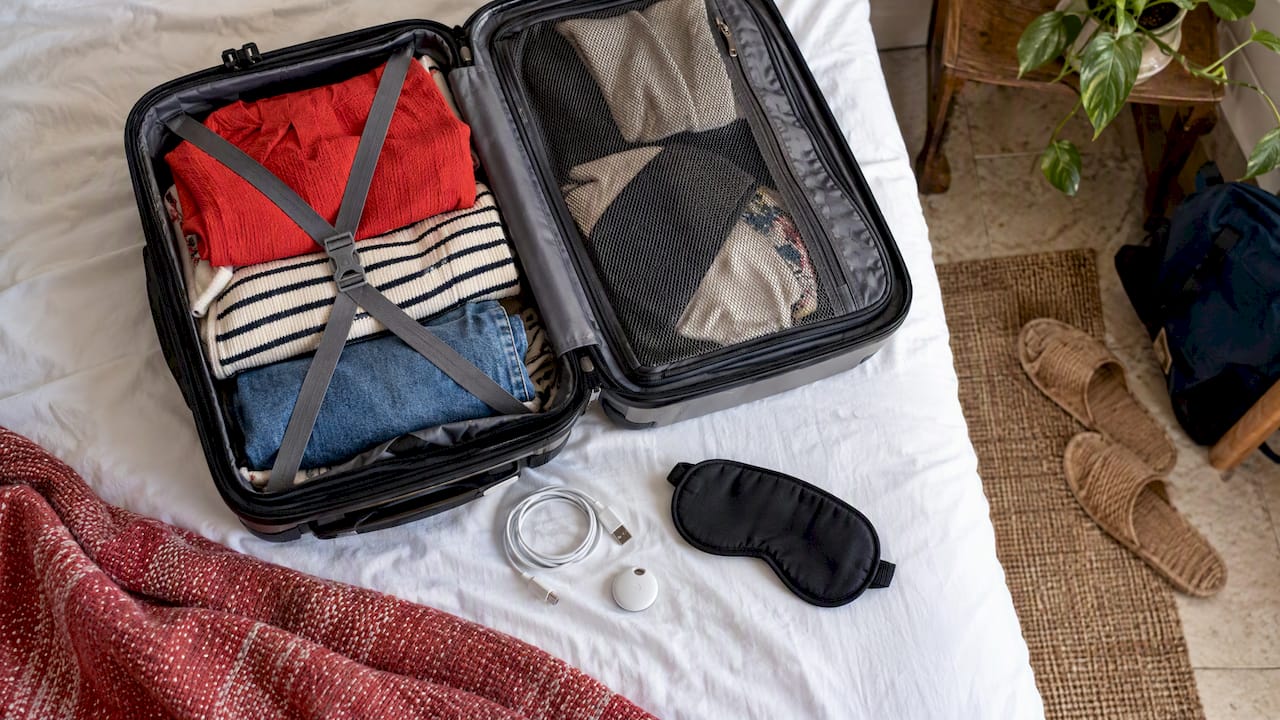
That rules out large liquids, sharp tools and fragile glass. Think flat, light and practical.
Practicality counts when kids are traveling too. If you are gifting a family heading out on a long drive, a screen-free road trip plan can help you choose something that keeps children occupied without a tablet.
For more ideas that go beyond gear, our unique travel gift ideas for 2026 lay out how to choose between experiences, practical items and keepsakes.
Part three: bringing a gift to a host abroad
Rule 10: Research local customs and bring something small and local
When you arrive as a guest in another country, a gift is often expected, but the wrong one can offend. The International Center advises that you research what not to give: taboos can involve flowers, quantities of four, religious practices, leather or alcohol. It suggests a locally made, culturally relevant gift with appropriate presentation.
A short checklist before you pack:
- Search the country’s gift customs and any taboo colors, numbers or materials.
- Pick something small, from your own hometown or region, so it feels personal rather than generic.
- Check whether the gift can pass customs and airline rules, especially food and alcohol.
- Decide how to present it. In some cultures, wrapping, timing and using both hands matter.
- Add a brief explanation of where it is from and why you chose it.
For business trips, bring something modest and uniform if you are giving to a team, so no one feels ranked. Avoid anything that looks like a bribe or an expensive favor, since many companies have gift rules.
A quick reference: what to do in each situation
| Situation | Safe move | What to avoid |
|---|---|---|
| Giving a trip to a partner or friend | Confirm interest, give a flexible certificate, cover taxes and fees | Locked dates, nonrefundable bookings, surprise costs |
| Giving travel to employees | Same reward for the same achievement, clear written terms | Public choosing, vague conditions |
| Attending a destination wedding | Honor a no-gifts request, scale to your budget, send a card | Pressuring yourself into a large gift after big travel costs |
| Visiting a host abroad | Small local gift, checked for taboos | Alcohol, leather or flowers without checking customs |
| Gifting a traveler | Portable, useful, carry-on-friendly items | Bulky, liquid or restricted items |
How to give a travel certificate gracefully, step by step
Here is a practical sequence that puts the rules together.
- Decide the type of trip. Resort, cruise, golf and spa, or a vacation package. Choose a category that fits the person, not just your own taste.
- Confirm the basics quietly. Ask about timing, travel companions and whether they are comfortable traveling.
- Pick a flexible option. Our Flex Trip Collections let the recipient choose within the collection.
- Check what is included. Taxes, fees and gratuities should be accounted for.
- Plan the presentation. A digital certificate with a personal message works when you are far away, while a physical presentation feels special at a party.
- Write the note. Explain why, what and how, and release them from deadlines.
- Offer help. Say you are glad to help with redemption questions. Our redemption process guide shows what recipients can expect.
Our travel certificates, for givers who want to get this right
If you want a gift that follows the rules above, Giftatrip offers certificates for cruises, resorts and hotels, and golf and spa getaways, with options like Royal Caribbean certificates and golf and spa resort stay certificates. Taxes and fees are covered, blackout dates are minimal, and there is no minimum order.
For a more formal presentation, our Red Box Delivery is $69 one-off. Companies giving to teams or clients can look at corporate gifting, which includes custom flex trip collections, airfare vouchers and branded gift box delivery.
Common mistakes and how to fix them
The recipient cannot use the gift. Offer to help rebook or exchange. If you chose a flexible certificate, the fix is usually simply a later date.
You gave too much and it feels awkward. Keep the tone light, avoid mentioning the price, and do not ask whether they used it.
You gave too little for the occasion. Pair a smaller certificate with something personal, such as a handwritten note or a framed photo from a past trip.
A destination wedding invitation says nothing about gifts. Choose something modest that fits your budget after travel, or a card. Do not feel obliged to match what a local guest would spend.
You are unsure about a host’s customs abroad. Ask a local colleague or the host’s family. People usually appreciate the question.
FAQ
Do I have to give a gift if I travel to a destination wedding?
Not strictly. Presence is often seen as part of the gift, and etiquette experts say guests may reduce or skip a gift when travel costs are high. If the couple asks for no gifts, honor that. If you can afford something small, a card and a modest gift are gracious.
Should a travel gift have a set date?
Only if you have confirmed the date and the people traveling. Otherwise give the recipient freedom to pick. CNBC reported that 34% of surveyed consumers complained about needing to book exact dates. A flexible certificate avoids that.
Is a surprise trip a good idea?
Usually not unless you know the person wants to go, is free, and holds the right documents. The Points Guy advises confirming availability and documents before making nonrefundable bookings. A surprise certificate with an open date keeps the fun without the risk.
What should I bring as a gift when visiting a host in another country?
Bring something small, local and culturally appropriate. Check for taboos first, since some cultures avoid certain flowers, numbers, leather or alcohol, as the International Center notes. Explain briefly where it is from.
What is a good gift for someone who travels a lot?
Choose something useful and portable, such as a charging cord, tracker or small comfort item, as Inc. recommends. Or give the trip itself, using a flexible certificate for their next getaway.
Sources
- A Guest’s Guide to Destination Wedding Gift Etiquette, The Knot
- How to Give the Gift of Travel, Condé Nast Traveler
- The top gift to give this season? Travel, CNBC
- How to give a surprise trip as a gift, The Points Guy
- Smart, Strategic Gifting for Events and Hotel Room Drops, Inc.
- Proper Protocol: A Gift Giving Guide, The International Center