Jump to Section:
TL;DR:
- Travel experiences significantly enhance donor engagement by creating emotional connections that traditional methods cannot achieve. They deepen relationships through immersive, firsthand impact stories, leading to higher retention, larger gifts, and stronger loyalty. Effective programs include field expeditions, luxury auction packages, tiered impact tours, and micro excursions tailored to donor levels.
Travel is the most underused tool in nonprofit fundraising, and organizations that recognize the role of travel in donor engagement are converting one-time contributors into lifelong major supporters. Experiential philanthropy, the practice of using immersive travel to deepen donor relationships, has moved from a niche tactic to a recognized cultivation strategy at organizations ranging from wildlife conservation groups to international health nonprofits. Donors who witness impact firsthand give more, give longer, and bring others with them. This guide breaks down exactly how to build, price, and measure travel programs that produce those results.
How do travel experiences enhance donor engagement compared to traditional methods?
Traditional donor engagement relies on galas, annual reports, and one-on-one meetings. These methods inform donors, but they rarely move them. Travel does something fundamentally different: it puts the donor inside the story rather than handing them a brochure about it.

Using travel in situ to tell your nonprofit’s story significantly improves donor understanding and emotional connection more than traditional reports or meetings. That gap in emotional resonance explains why organizations that run field expeditions consistently report stronger retention and larger subsequent gifts from participants. A donor who has stood in a community your organization serves does not need to be convinced of impact. They have felt it.
The mechanics behind this are straightforward. Shared physical experiences create what psychologists call episodic memory, the kind that resurfaces unprompted and carries emotional weight. When a donor recalls a trip to a conservation reserve or a school your nonprofit built, that memory is tied to your mission in a way no newsletter can replicate.
“Unstructured moments during donor trips, such as traveling between sites or quiet downtime, are often more valuable for relationship-building than scheduled activities.” — Chronicle of Philanthropy
This insight from James Ward at Rewild Safaris reframes how nonprofits should think about trip design. The formal site visit matters, but the conversation on the bus ride back is where trust actually forms. Staff who accompany donors on these trips report that authentic relationships develop faster in three days of travel than in three years of quarterly meetings.
Travel experiences create memorable, shared moments that deepen emotional investment in the cause, producing donor loyalty that outlasts any single campaign. For fundraising professionals, that loyalty translates directly into retention rates, planned giving conversations, and peer introductions that traditional cultivation rarely generates.
What types of travel programs effectively engage donors?
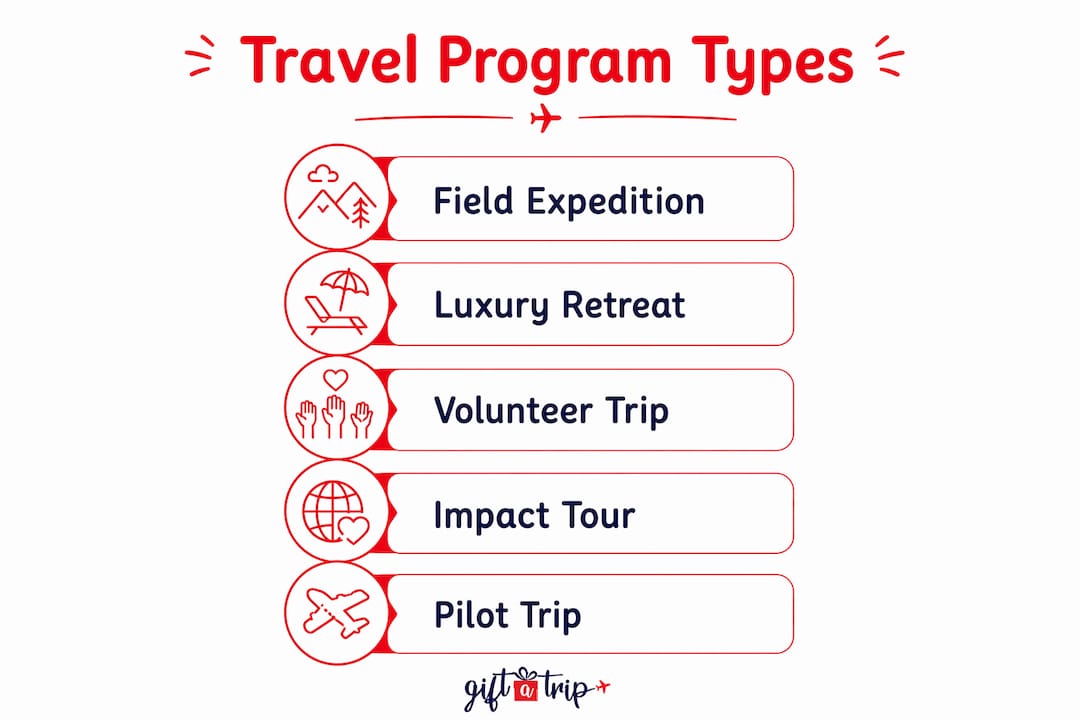
Not every travel program looks the same, and the format you choose should match your donor base, mission, and budget. The four most effective models in use today are:
-
Field expeditions and impact tours. These are multi-day trips to program sites where donors observe work directly. Conservation organizations, international development nonprofits, and education-focused groups use this model most frequently. Costs typically range from $3,000 to $15,000 per participant depending on destination and duration.
-
Luxury travel incentives in auctions and fundraisers. Most American households budget $4,000 or more annually for travel, often surpassing their philanthropic giving capacity. This creates a practical opening: offer a luxury travel package at auction and donors redirect existing travel spending toward your cause. The bid becomes a gift, and the experience becomes a cultivation touchpoint.
-
Tiered travel programs for mid-level and major donors. Price tiering within donor travel programs allows nonprofits to nurture a broader donor base and identify hidden major donor prospects. A mid-level tier at $1,500 to $3,000 per person opens the program to donors who are not yet at the major gift threshold but have the capacity and interest to grow. Many organizations have discovered their next six-figure donor by including them in a trip originally designed for mid-level cultivation.
-
Micro excursions and day trips for emerging donors. Shorter, lower-cost experiences serve younger or newer donors who are building their relationship with your organization. A half-day tour of a local program site or a curated regional experience costs far less to organize and still delivers the firsthand impact that drives deeper giving.
| Program type | Best for | Typical cost per donor | Primary outcome |
|---|---|---|---|
| Field expedition | Major donors and prospects | $5,000 to $15,000 | Planned gifts, major gift upgrades |
| Auction travel package | Broad donor base | $500 to $4,000 bid value | Increased event revenue |
| Tiered impact tour | Mid-level donors | $1,500 to $3,000 | Donor pipeline development |
| Micro excursion | Emerging and younger donors | $100 to $500 | Retention and first-time upgrades |
Pro Tip: Run a pilot trip with 8 to 12 donors before scaling. A smaller group lets staff test logistics, refine the narrative, and collect testimonials that will market future trips far more effectively than any brochure.
What are best practices and pitfalls in planning donor travel programs?
Planning a donor travel program without clear goals is the single most common mistake nonprofits make. Before booking a single flight, your team needs to answer three questions: What giving outcome does this trip support? Which donor segment are we cultivating? And how will we follow up within 30 days of return?
Staff preparation matters as much as itinerary design. The development officer accompanying the trip is not a tour guide. Their role is relationship cultivation, which means they need to know each donor’s giving history, interests, and potential before departure. Briefing documents, pre-trip calls, and clear internal roles prevent the awkward dynamic where staff are managing logistics instead of building relationships.
Authenticity is non-negotiable. Donors increasingly want travel experiences that support local communities, requiring nonprofits to design programs that reflect these values. A trip that feels like a luxury vacation with a brief charity stop will not produce the emotional connection you need. Local community involvement, honest conversations about challenges, and unscripted moments of genuine impact are what separate transformative trips from expensive photo opportunities.
On the financial side, tax deductibility of travel expenses for charitable giving is complex. Expenses directly related to charitable services may qualify, but trips with significant personal pleasure components often do not meet IRS standards. Communicate this clearly to donors before they register. Surprises at tax time damage trust and can overshadow an otherwise excellent experience.
Common pitfalls to avoid:
- Overloading the itinerary with scheduled activities, leaving no room for the unstructured conversations that build real relationships
- Pricing the trip so high that only your top five donors can attend, limiting the pipeline development potential
- Failing to brief program staff at the destination on how to speak to donors about impact and funding needs
- Neglecting post-trip follow-up, which is where the cultivation converts into an actual gift conversation
- Misaligning the trip experience with your stated mission, which creates cognitive dissonance rather than emotional connection
How can nonprofits measure the impact of travel on donor engagement?
Measurement is where most travel programs fall short. Organizations invest in the experience but fail to track whether it actually changed donor behavior. Three metrics matter most: retention rate among trip participants versus the general donor population, gift size growth in the 12 to 24 months following the trip, and the number of peer introductions or new donors attributed to trip alumni.
Donor travel programs open to mid-level donors often reveal hidden giving potential, as seeing real impact triggers greater future giving. Tracking this requires a baseline. Pull each participant’s giving history before the trip and set a 24-month review point to compare. Organizations that do this consistently report that trip participants upgrade their giving at rates two to three times higher than non-participants.
Qualitative data is equally valuable. Collect written testimonials within two weeks of return, when memories and emotions are still fresh. These testimonials serve double duty: they give your team insight into what resonated, and they become the most persuasive marketing material for recruiting the next cohort of trip participants.
| Metric | What to track | Review timeline |
|---|---|---|
| Donor retention rate | % of trip participants who give again | 12 months post-trip |
| Gift size growth | Average gift increase among participants | 24 months post-trip |
| Peer introductions | New donors referred by trip alumni | 18 months post-trip |
| Testimonial quality | Depth of emotional language in feedback | 2 weeks post-trip |
Integrate travel into your long-term cultivation calendar rather than treating each trip as a standalone event. Donors who travel with you once are the most likely candidates for a second trip, a planned gift conversation, or a leadership giving society invitation. The trip is not the destination. It is the beginning of a deeper relationship.
Key takeaways
Travel-based donor engagement produces stronger retention, larger gifts, and deeper loyalty than any traditional cultivation method when programs are designed with clear goals, authentic experiences, and disciplined follow-up.
| Point | Details |
|---|---|
| Experiential philanthropy outperforms traditional methods | Firsthand impact visits create emotional memory that reports and meetings cannot replicate. |
| Tiered programs expand your pipeline | Mid-level travel tiers reveal hidden major donor prospects who would otherwise remain undiscovered. |
| Unstructured time drives relationship depth | The most valuable donor conversations happen between scheduled activities, not during them. |
| Measurement requires a pre-trip baseline | Track gift size and retention before and after each trip to quantify program ROI accurately. |
| Tax deductibility needs clear communication | Trips with personal pleasure components often do not qualify under IRS guidelines, so set expectations early. |
Why I think most nonprofits are leaving their best donors on the table
After years of watching fundraising professionals invest in galas, direct mail, and digital campaigns, I keep coming back to the same observation: the organizations that grow their major donor base fastest are the ones that get donors on a plane.
The conventional wisdom says travel programs are only for organizations with large budgets and established major donor pipelines. I think that framing is exactly backwards. Travel programs, especially tiered ones that include mid-level donors, are how you build the pipeline in the first place. The Air Canada Aeroplan program demonstrates the scale possible when travel and giving intersect: 1.8 billion points donated to 1,554 charities over 20 years. That is not a niche strategy. That is a proven model at scale.
What I find most underappreciated is the value of the unscheduled moment. Every trip I have seen work well has a version of the same story: a donor who was politely engaged before the trip becomes a passionate advocate after a single unplanned conversation at dinner or during a long drive between sites. You cannot manufacture that in a meeting room.
The other thing I would push back on is the assumption that donors want polished, comfortable experiences above all else. The donors who become your most committed supporters are often the ones who saw something difficult and stayed anyway. Authenticity, including the hard parts of your mission, builds more trust than a perfectly curated itinerary.
Start smaller than you think you need to. A well-run trip with ten donors will outperform a poorly run trip with fifty. And track everything from day one, because the data you collect from your first cohort will make every subsequent trip more effective and easier to fund.
— Donovan
How Giftatrip supports your donor travel strategy
Giftatrip makes it practical for nonprofits to add travel to their donor engagement programs without the logistical complexity of building custom trips from scratch. Whether you need auction items that tap into donor travel budgets, recognition gifts for mid-level donors, or flexible rewards for giving society members, Giftatrip’s digital travel certificates cover resorts, hotels, cruise lines, and vacation packages from major brands. Taxes and resort fees are included, blackout dates are minimal, and delivery is fully digital, removing the fulfillment burden from your team. You can send digital travel gifts to donors instantly, with personalized messaging that reinforces your mission. For nonprofits building a travel-based fundraising program, Giftatrip offers bulk certificate options and customizable gift packages that scale with your donor base.
FAQ
What is the role of travel in donor engagement?
Travel deepens donor relationships by creating firsthand, emotional connections to a nonprofit’s mission that traditional cultivation methods cannot replicate. Donors who experience program impact directly give more frequently and at higher levels than those who only receive reports or attend events.
How do travel incentives increase fundraising revenue?
Luxury travel packages used as auction items or donor rewards tap into existing household travel budgets, redirecting that spending toward charitable giving. Most American households budget $4,000 or more annually for travel, making premium travel packages highly competitive auction items.
Should mid-level donors be included in travel programs?
Yes. Mid-level donors included in travel programs frequently reveal major gift potential after witnessing program impact firsthand. Organizations that tier their travel programs to include donors below the major gift threshold consistently identify their next major donors from that group.
How should nonprofits handle tax deductibility for donor trips?
Communicate clearly before registration that trips with significant personal enjoyment components typically do not qualify as fully tax-deductible under IRS guidelines. Only expenses directly tied to charitable service delivery are likely to qualify, so donors should consult their tax advisors before assuming deductibility.
What metrics should nonprofits track after a donor trip?
Track donor retention rates, gift size growth, and peer introductions at 12 and 24 months post-trip, using pre-trip giving history as your baseline. Collect written testimonials within two weeks of return to capture emotional impact while it is still fresh.