Jump to Section:
TL;DR:
- Charitable incentives are most effective when credible, salient, and aligned with donor motivations, especially travel rewards. A large experiment showed that announcing a matching gift significantly increased donations and donor engagement, particularly when the incentive was highly visible. Travel certificates, when curated and framed as aspirational experiences, outperform low-value premiums and drive higher returns in auctions and recognition programs.
Incentives reliably increase charitable giving when they are credible, salient, and matched to donor motivations. A large field experiment with more than 50,000 donors found that announcing a matching gift raised revenue per solicitation and increased individual donation probability significantly. Travel gift certificates, specifically curated experiential packages, rank among the highest-performing incentive types for auctions and corporate reward programs because they carry strong perceived value and resist easy price comparison.
When travel certificates work best:
- Charity silent and live auctions where aspirational framing drives competitive bidding
- Major-donor cultivation packages that signal organizational sophistication
- Corporate employee recognition programs rewarding top performers or milestone achievers
When to skip low-value premiums:
- Generic thank-you gifts (tote bags, branded mugs) often backfire, per a systematic review of 153 studies by Chapman & Thai
- Premiums that feel transactional can crowd out intrinsic giving motivation
Table of Contents
- How do incentives actually change donor behavior?
- Which incentive types produce the best fundraising ROI?
- How do you design travel incentives that actually drive bids?
- What are the IRS and legal rules for incentive-based fundraising?
- How do you measure whether an incentive actually worked?
- What pitfalls should you avoid with travel certificate incentives?
- Key Takeaways
- Why the conventional wisdom on donor incentives gets it wrong
- Giftatrip makes travel incentives turnkey for fundraisers
- Useful sources
- FAQ
How do incentives actually change donor behavior?
Incentives shift the perceived cost-benefit calculation of giving and add a social-signaling layer that makes donating feel both rational and rewarding. That combination is especially powerful when donors have low baseline prosocial motivation or uncertainty about an organization’s credibility.
The flagship evidence comes from the AER field experiment: a 19% revenue lift and 22% higher donation probability from a simple match announcement. Part of that effect is a pure price mechanism — a $1:$1 match effectively doubles the donor’s impact. But a meaningful share comes from credibility signaling. When a lead donor or corporate sponsor commits a match, it tells prospective donors that someone credible already vetted the cause.
“Charitable organizations may increase engagement from new or lapsed donors by making the incentives they already offer more salient, without fear that these efforts will harm engagement among more motivated donors.”
— Yoon & Woolley, incentive salience research
Salience matters more than most fundraisers realize. Research across controlled experiments and an alumni field study with over 22,400 participants found that visible incentives increase giving specifically among donors with low prosocial motivation, without reducing giving among already-committed donors. The practical implication: put the travel reward front and center in your appeal, not buried in fine print.
One caution worth naming: motivation crowding. When a self-benefit incentive feels too transactional, it can undermine the altruistic frame that drives larger gifts. The fix is framing, not removal. Present the travel certificate as a recognition of generosity, not a payment for it.

Which incentive types produce the best fundraising ROI?
Matches, tax framing, recognition, and high-value experiential offers consistently outperform low-value premiums. The Chapman & Thai systematic review synthesized 153 studies across four decades and found thank-you gifts often have limited effect or actively backfire.
Core incentive types:
- Matching gifts: Lead donor or employer matches each dollar given; signals credibility and amplifies impact
- Tax framing/rebates: Highlighting deductibility or tax credit ratios; especially effective for corporate donors
- Experiential travel rewards: Curated packages (resort stays, cruises, vacation bundles) offered as auction lots or recognition gifts
- Donor recognition/naming: Public acknowledgment, naming rights, or exclusive access; works well for major donors
- Thank-you premiums: Small branded gifts; low ROI and risk of crowding out intrinsic motivation
| Incentive type | Best for | Expected ROI | Fulfillment complexity | Tax/IRS reporting impact | Donor appeal |
|---|---|---|---|---|---|
| Matching offers | All donor segments | High (19% revenue lift; 22% higher donation probability in field data) | Low | Donor deducts net gift after match | Very high; credibility signal |
| Tax framing | Corporate and high-income donors | High | Low | Requires accurate FMV disclosure | High for tax-motivated givers |
| Experiential packages | Auction bidders, major donors, employees | High when curated | Moderate | Donor benefit must be valued and disclosed | Very high; aspirational |
| Donor recognition | Major donors, workplace campaigns | Moderate | Low | Minimal unless tangible benefit given | High for status-motivated donors |
| Thank-you premiums | Broad acquisition | Low to negative | Low | FMV of gift reduces deductible amount | Low; often ignored |
Tax incentive policy research confirms that increases in tax credit ratios produce observed increases in corporate giving, making tax framing a lever worth pulling explicitly in corporate solicitations.
Matching a donor segment to the right incentive:
- Major donors: Recognition, naming opportunities, and curated travel packages for VIP cultivation
- Low-prosocial or lapsed donors: Salient experiential incentives placed prominently in messaging
- Employees: Company matching plus travel reward for top performers
- Auction bidders: Boutique travel lots that cannot be easily pre-shopped online
How do you design travel incentives that actually drive bids?
The core design principle is exclusivity plus ease. Experiential framing consistently outperforms commodity gifts because donors cannot Google a competing price. A resort stay or cruise package with included taxes and fees, flexible dates, and concierge support feels genuinely premium. A $200 gift card to a chain retailer does not.
Travel incentive design checklist:
- Set a clear face value and perceived value. State the retail value prominently in auction listings and solicitation copy.
- Curate unique experiences. Boutique resort stays, cruise packages, and golf getaways that are hard to pre-price protect bidding energy.
- Define redemption terms upfront. Specify blackout dates, expiration windows, and any fees covered so winners have no unpleasant surprises.
- Include IRS benefit valuation language. State the fair market value of the travel certificate on all receipts and auction materials.
- Prepare fulfillment and support. A concierge contact or clear redemption portal reduces post-event friction and protects donor satisfaction.
For live auctions, lot descriptions should lead with the destination and the experience, not the logistics. “Five nights at a private Caribbean resort, all taxes and fees included” outperforms “travel certificate valued at $2,500.” Pair aspirational copy with an energetic auctioneer and the same lot can generate multiples of its face value. Presenting donated travel packages as aspirational gifts rather than inventory items stimulates more altruistic behavior than a transactional sale framing.
For corporate programs, bulk ordering with co-branded packaging and personalized messaging turns a certificate into a memorable moment rather than a line item. Giftatrip’s travel certificate distribution guide covers the operational workflow for HR teams managing large-volume orders.
Pro Tip: Package a travel certificate with a small add-on (a restaurant credit, a spa voucher, or a printed itinerary card) to increase perceived value without significantly raising your cost. The add-on signals curation and effort, which bidders and recipients notice.
Pro Tip: For corporate event booking logistics and bundling travel incentives with team experiences, the step-by-step corporate event booking process is a useful operational reference.
What are the IRS and legal rules for incentive-based fundraising?
Incentives are permitted in U.S. charitable fundraising, but donor tax receipts must deduct the fair market value (FMV) of any benefit the donor receives. A donor who pays $500 for an auction lot with an FMV of $300 can only deduct $200. Charities that fail to disclose this correctly expose donors to audit risk and themselves to IRS penalties.
Key compliance points:
- Charities must provide written acknowledgment for any single contribution of $250 or more, stating the FMV of goods or services received
- For auction items, the charity must determine and publish the FMV of each lot before the event
- Travel certificates donated to the charity and used as auction lots are valued at their FMV on the date of the auction, not their face value
- Corporate donors using travel incentives as employee rewards may treat them as compensation or business expenses depending on structure; consult a CPA for the correct treatment
For travel certificates specifically, FMV is typically the price a willing buyer would pay on the open market. Giftatrip certificates include taxes and resort fees, which simplifies valuation because the all-in cost is transparent. Still, charities should document their valuation method and include benefit language on every receipt. For edge cases involving high-value lots or complex corporate structures, a qualified CPA review is the right call.
How do you measure whether an incentive actually worked?
Measure both short-term conversion lifts and long-term donor value. A spike in first-time donors after an auction means little if none of them give again the following year.
Core KPIs to track:
- Conversion rate: percentage of solicitations that result in a gift
- Average donation (AOV): mean gift size in the incentive group vs. control
- Revenue per solicitation: total revenue divided by total solicitations sent
- Donor acquisition cost: total campaign cost divided by new donors acquired
- Donor retention/upgrade rate: percentage of incentive-acquired donors who give again or increase their gift
- Redemption rate: percentage of travel certificates actually redeemed (high redemption signals genuine perceived value)
Simple A/B test design:
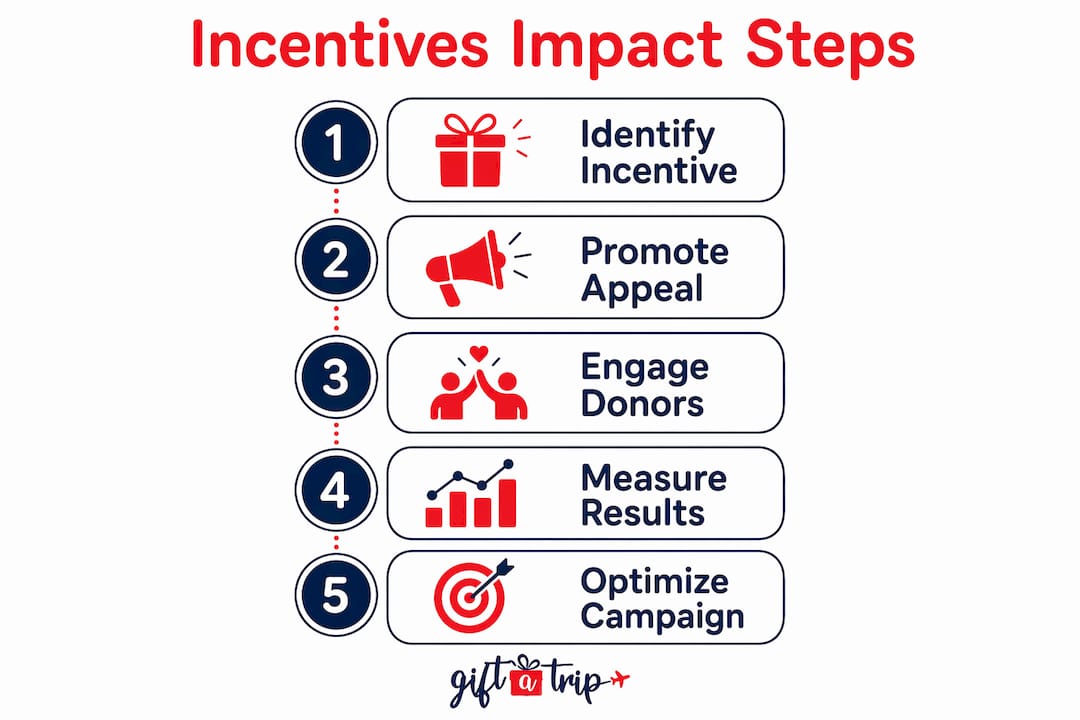
Randomly assign solicitations to two groups: one receives the standard appeal, one receives the appeal with the travel incentive prominently featured. Keep all other variables constant. Run the test for a full campaign cycle (typically 4–8 weeks). Primary outcome: revenue per solicitation. Secondary outcomes: donor retention at 12 months and redemption rate.
| Metric | Control group | Incentive group | Difference |
|---|---|---|---|
| Revenue per solicitation | Baseline | Target: +19% | Primary outcome |
| Conversion rate | Baseline | Target: +22% | Primary outcome |
| Average donation | Baseline | Track separately | Secondary |
| Donor retention (12 mo.) | Baseline | Track separately | Long-term signal |
| Redemption rate | N/A | Track | Fulfillment health |
Track fulfillment costs (certificate cost, taxes, administrative overhead) against incremental revenue to compute net ROI. The benefits of travel rewards for nonprofits covers additional ROI framing for board-level reporting.
What pitfalls should you avoid with travel certificate incentives?
Most incentive failures trace back to four causes: mispriced offers, vague redemption terms, poor donor-segment fit, and ignored tax reporting duties.
Common pitfalls:
- Low-value premiums: A $15 branded item signals low organizational sophistication and can reduce giving among high-value donors
- Vague redemption terms: Certificates with unclear blackout dates or undisclosed fees generate post-event complaints and damage donor trust
- Hidden costs: If a winner discovers unexpected fees at redemption, the goodwill from the auction evaporates immediately
- Wrong incentive for the segment: A travel package aimed at a donor base that skews elderly and mobility-limited will underperform; match the experience to the audience
- Skipping IRS disclosure: Failing to state the FMV of auction lots on receipts is a compliance error, not just a best practice gap
Mitigation tactics: Test incentive salience with a small pilot before a full campaign. Pre-define the fulfillment process and assign a point of contact for redemption questions. Use aspirational framing in all copy. Price the reward to cover all costs, including taxes and fees, so the charity nets positive on every lot. Communicate donor benefit valuation transparently in auction materials and receipts.
Watch for these red flags mid-campaign: unusually high customer service volume about redemption, rapid social media complaints about hidden fees, or donor feedback that the incentive felt “too commercial.” Each signals a framing or fulfillment problem. The fix is usually faster communication and clearer terms, not removing the incentive. For more on experiential auction items and how to frame them correctly, Giftatrip’s resource covers the key distinctions.
Pro Tip: Always include a one-page redemption guide with every travel certificate lot. Auction winners who know exactly how to book their trip are far less likely to let the certificate expire unused, which protects both donor satisfaction and your organization’s reputation.
Key Takeaways
Travel incentives and matching gifts are the two highest-ROI tools in charity fundraising, but only when designed with clear valuation, salient messaging, and airtight fulfillment.
| Point | Details |
|---|---|
| Match offers drive the most lift | A field experiment found a 19% revenue increase and 22% higher donation probability from match announcements. |
| Salience matters for lapsed donors | Making incentives visible increases giving among low-prosocial donors without reducing giving among committed ones. |
| Low-value premiums often have limited effect or may reduce giving, according to a synthesis of many studies. | |
| IRS valuation is non-optional | Donor receipts must deduct the FMV of any benefit received; document and disclose every travel lot’s value. |
| Giftatrip simplifies travel fulfillment | Giftatrip offers curated travel certificates with included taxes and fees, bulk ordering, and concierge support for auctions and corporate programs. |
Why the conventional wisdom on donor incentives gets it wrong
Most fundraising guides treat incentives as a binary: either you offer them or you don’t. The research tells a more interesting story. The question is never whether to use incentives but which ones, for whom, and how visibly.
The finding that surprises most practitioners is the salience effect. Charities routinely downplay their own incentives, worried that highlighting self-benefit will make donors feel manipulated. The data says the opposite is true for lapsed and low-engagement donors. Burying a travel reward in the footer of an email is not humility; it is leaving revenue on the table.
The other underappreciated insight is diminishing returns on match ratios. A 1:1 match delivers most of the effect that a 3:1 match does. Organizations that spend heavily to secure a higher ratio are often buying marginal lift at significant cost. A better use of that budget: pair a 1:1 match with a curated travel certificate for the top tier of donors, which adds aspirational value without inflating the match commitment.
Travel certificates work in fundraising for a structural reason that goes beyond perceived value. A boutique resort stay or a cruise package cannot be pre-shopped on Google. That price opacity protects bidding energy in auctions in a way that cash-equivalent gifts simply cannot. The role of travel in donor engagement extends beyond the event itself: donors who redeem a meaningful travel experience tend to associate that memory with the organization that gave it to them.
Giftatrip makes travel incentives turnkey for fundraisers
Putting together a high-value auction lot or a corporate recognition program is hard enough without sourcing, packaging, and fulfilling travel certificates from scratch. Giftatrip offers digital travel certificates redeemable for resort stays, cruises, and vacation packages from major brands, with taxes and resort fees already included.
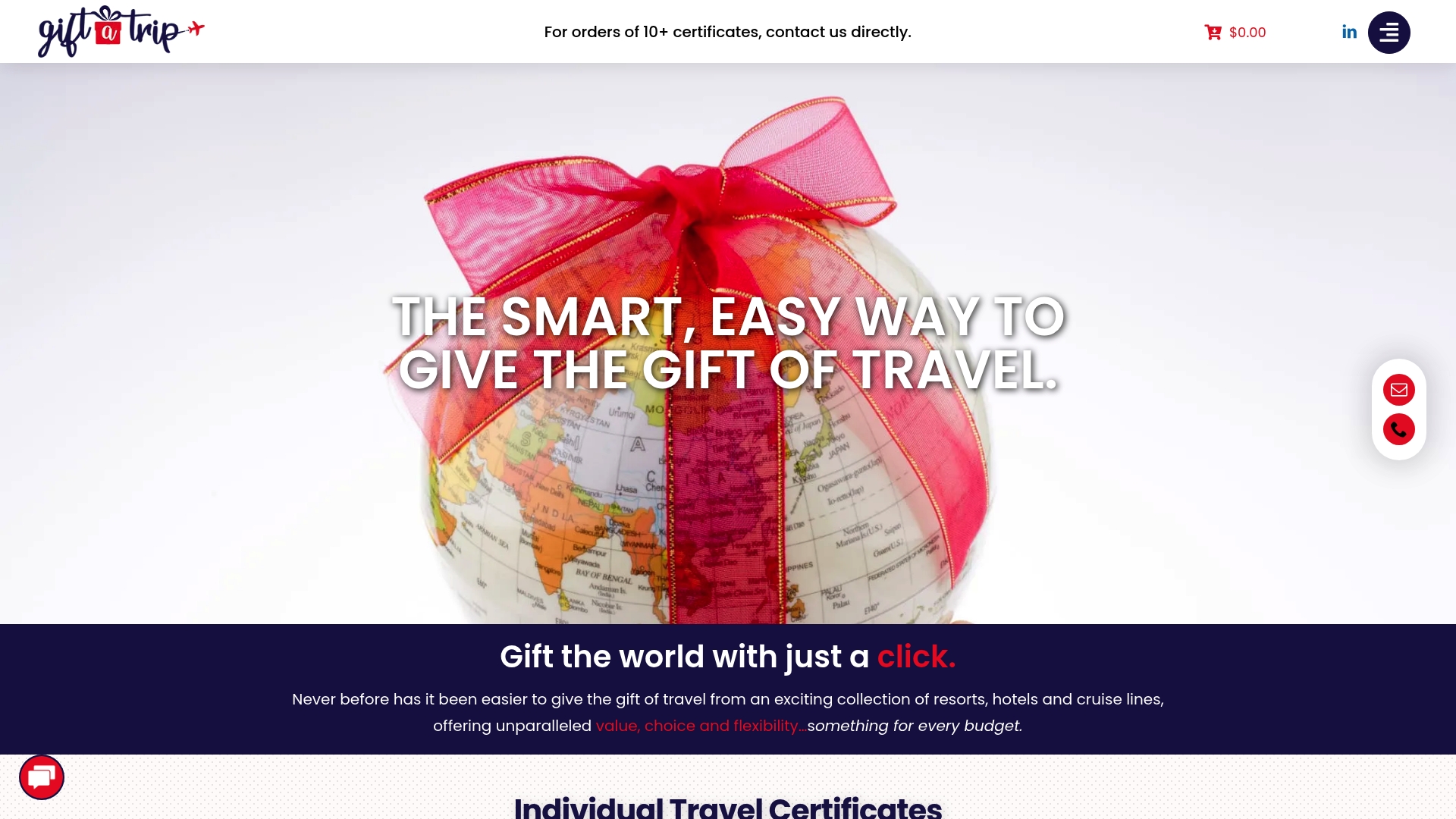
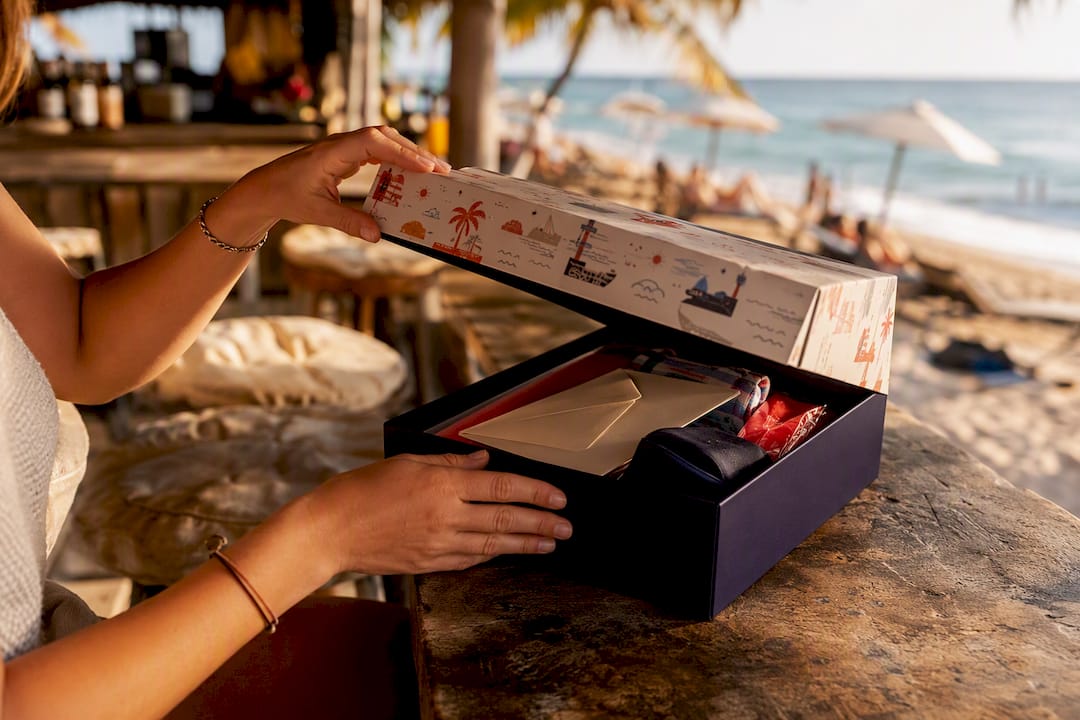
For fundraisers, that fee-inclusive structure matters. It means the FMV you publish in your auction materials is the actual all-in cost, with no hidden charges waiting to frustrate winners at redemption. Giftatrip supports bulk ordering with co-branded gift boxes, personalized messaging, and concierge redemption support, covering the three friction points that most often turn a great incentive into a donor service headache.
Use cases:
- Charity auction lot: A curated resort or cruise certificate with sample listing copy and suggested starting bid, ready to drop into your event program
- Corporate employee recognition: Bulk vacation package certificates with co-branded packaging, delivered digitally to HR for distribution
- VIP donor cultivation: A premium travel package paired with a personalized note, positioned as a thank-you for a major gift commitment
Browse Giftatrip’s full catalog, including Virgin Voyages cruise certificates for high-end auction lots, or contact the team directly to discuss bulk pricing and co-branding options for your next campaign.
Useful sources
The evidence base for incentive-driven fundraising is deep. These are the highest-value sources cited in this article.
| Source | Why it matters |
|---|---|
| AER field experiment on matching gifts | Flagship field evidence: 19% revenue lift and 22% donation probability increase from match announcements in 50,000+ donor study |
| Chapman & Thai systematic review | Synthesizes 153 studies; definitive taxonomy of which incentives work and which backfire |
| Yoon & Woolley incentive salience study | Controlled experiments and 22,400-person field study on making incentives visible to low-motivation donors |
| NBER matching gifts working paper | Shows diminishing returns of larger match ratios; 1:1 captures most of the effect |
| CSR tax incentive policy study | Documents how tax credit ratios influence corporate giving levels |
| ScienceDirect donation-for-gift framing study | Demonstrates that aspirational gift framing outperforms transactional sale framing for donated products |
Giftatrip resources for deeper reading:
- Travel rewards for fundraising: top 10 ideas in 2026
- Charitable auction travel workflow: your 2026 guide
- Travel gift fundraising guide: raise more for your cause
This article is general information, not legal or tax advice. Confirm current IRS rules and your organization’s specific obligations with a qualified CPA or tax attorney.
FAQ
Do incentives always increase charitable donations?
No. Matches, tax framing, and experiential rewards consistently increase giving, but low-value thank-you gifts often have no effect or can reduce donations by making the exchange feel transactional, per the Chapman & Thai review of 153 studies.
What is the best incentive for a charity auction?
Curated experiential travel packages, such as resort stays or cruise certificates with included taxes and fees, outperform cash-equivalent prizes because they carry high perceived value and cannot be easily pre-shopped online.
How does the IRS treat travel certificates given at charity auctions?
Donors may only deduct the amount they paid above the fair market value of the certificate received. Charities must state the FMV of every auction lot in writing and include that figure on donor receipts.
Does a higher match ratio raise more money than a 1:1 match?
Generally not. Field experiment evidence shows that a 1:1 match captures most of the revenue lift, and larger ratios ($2:$1 or $3:$1) add little incremental effect, making a 1:1 match the most budget-efficient choice.
How can Giftatrip help with travel incentive fulfillment?
Giftatrip provides digital travel certificates with included taxes and resort fees, bulk ordering, co-branded packaging, and concierge redemption support, covering the logistics that most commonly create friction in auction and corporate reward programs.