Jump to Section:
TL;DR:
- Effective corporate gifting programs require clear goals, recipient segmentation, and a strategic calendar to ensure consistent, meaningful recognition.
- Ownership, centralized tracking, and choosing practical, choice-based, and experience-based gifts significantly enhance recipient satisfaction and program impact.
Organizing gifting programs is the process of planning, executing, and managing gift initiatives strategically to strengthen employee recognition and client appreciation. A well-run corporate gifting program, the industry term for what many HR teams call a “gift initiative,” does more than distribute presents. It signals organizational values, reinforces loyalty, and drives measurable engagement. Platforms like RewardStation® and Giftatrip have made it easier to manage these programs at scale, but the real work starts with a clear strategic framework before any gift is ordered or delivered.
How to organize gifting programs with clear goals and audience segmentation

Every effective gifting program begins with a defined purpose. The three most common goals are employee recognition, client retention, and reinforcing brand culture. Each goal demands a different gift strategy, budget range, and delivery cadence. Treating all three as one undifferentiated effort is where most programs fail.
Segmenting your recipient audience is the second critical step. HR professionals should divide employees by role, tenure, and performance tier. Client-facing managers should segment by account size, relationship stage, and industry. A five-year employee milestone gift should look nothing like a new-hire welcome kit, and a top-tier client gift should differ from a standard holiday token.
Aligning your goals with business priorities keeps the program from becoming a cost center. If your company is focused on reducing turnover, weight your gifting budget toward tenure milestones and peer recognition moments. If client retention is the priority, concentrate spend on renewal anniversaries and project completions. Gifting success comes from treating gift programs as strategic levers rather than seasonal chores, blending marketing, HR, and CSR goals into one coordinated effort.
Key goals to define before launching any gifting program:
- Employee recognition: Milestone anniversaries, performance awards, onboarding kits
- Client appreciation: Renewal gifts, project completion tokens, holiday acknowledgments
- Brand culture: Values-aligned gifts that reflect company identity
- Sales motivation: Incentive rewards tied to quota attainment or team performance
Pro Tip: Write a one-sentence goal statement for each recipient segment before selecting a single gift. “We recognize five-year employees with a premium experience gift to reduce voluntary turnover” is a strategy. “We give gifts at the holidays” is not.
What does a practical gifting calendar look like?
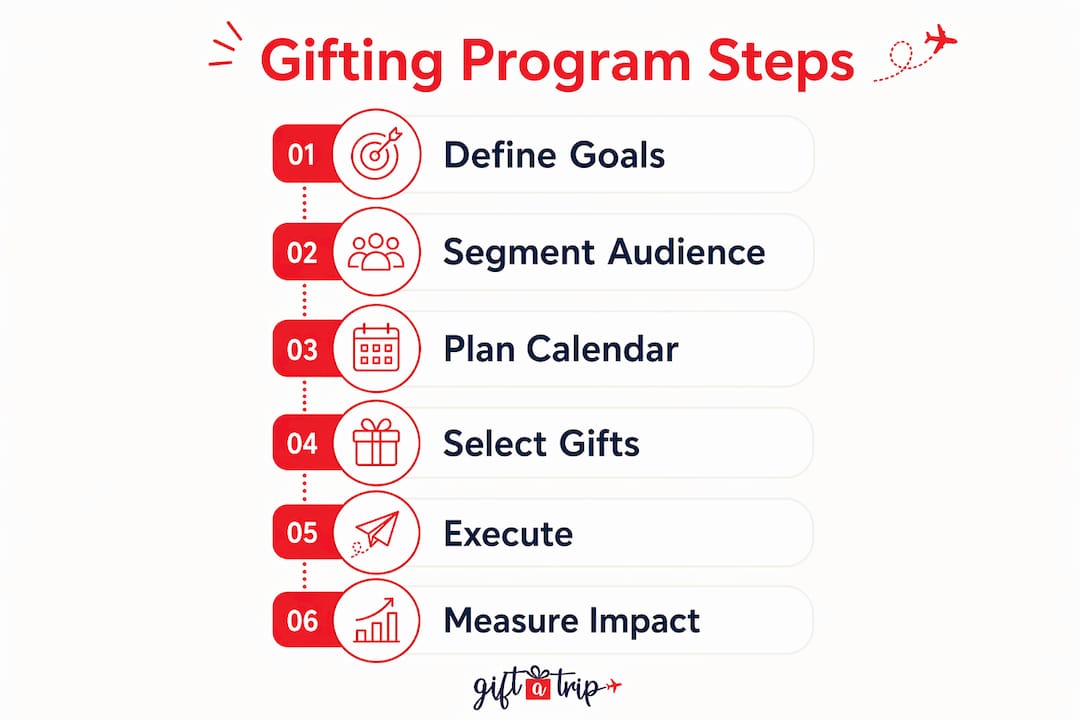
A gifting calendar is a structured, month-by-month plan that maps every gift occasion to a budget owner, a recipient segment, a gift type, and a fulfillment deadline. Without one, gifting becomes reactive and inconsistent. Quarterly gifting tied to marketing, HR, and CSR keeps engagement balanced and prevents any single department from monopolizing the program.
The table below shows a sample quarterly gifting framework that HR professionals and managers can adapt directly:
| Month | Occasion | Recipient Segment | Gift Type | Lead Time Needed |
|---|---|---|---|---|
| January | New Year kickoff | All employees | Digital gift card or experience voucher | 2 weeks |
| March | Q1 performance close | Sales team | Premium experiential reward | 4 weeks |
| May | Work anniversary cycle | Tenure milestones | Personalized bundle | 3 weeks |
| September | Client retention push | Top-tier accounts | Travel certificate or curated box | 6 weeks |
| November | Holiday gifting | All clients and employees | Choice-based catalog gift | 3+ months |
Lead times matter more than most managers realize. Complex or customized gifts require at least three months of planning, personalized bundles need two to four weeks, and digital gifts can be delivered within 48 hours. Missing these windows forces last-minute substitutions that undermine the program’s perceived quality.
Pro Tip: Build your gifting calendar in a shared project management tool like Asana or Monday.com. Assign a named owner to every row, not just a department. Accountability by name eliminates the “someone else will handle it” problem that derails most programs.
Which gift categories actually increase recipient satisfaction?
The four main gift categories in corporate programs are physical merchandise, digital gift cards, experiential rewards, and points-based programs. Each has a distinct role, and the best programs use all four depending on the occasion and recipient segment.
Receivers value practical, useful gifts that provide long-term benefits far more than surprise or flashy gifts that givers tend to prefer. This is one of the most consistent findings in gift-giving psychology, and it has direct implications for how you build your gift catalog. The instinct to impress with novelty often produces gifts that sit unused. The discipline to choose what recipients actually need produces gifts that get remembered.
| Gift Category | Best Use Case | Recipient Satisfaction | Waste Risk |
|---|---|---|---|
| Physical merchandise | Onboarding kits, milestone awards | Moderate to high | High if poorly chosen |
| Digital gift cards | Quick recognition, remote teams | High | Low |
| Experiential rewards | Premium recognition, client appreciation | Very high | Very low |
| Points programs | Ongoing engagement, sales incentives | High | Low |
Choice-based gifting models that let recipients select from a curated catalog significantly increase perceived gift value and reduce waste. This approach removes the giver’s anxiety about choosing wrong and aligns the gift with the recipient’s actual preferences. Giftatrip’s travel certificates work on exactly this principle: the recipient chooses when and where to travel, within a defined set of premium options.
Personalization amplifies any gift category. Personalized notes and role-based bundles increase recipient engagement measurably. A handwritten note explaining why a specific employee earned a reward transforms a standard gift card into a recognition moment. A resort gift certificate paired with a message referencing a client’s specific contribution lands far better than a generic holiday basket.
Additional tactics that improve gift relevance:
- Match gift value to relationship tier, not just occasion type
- Offer two or three curated options rather than one fixed gift
- Include a physical or digital card with a specific, personal message
- For remote or international recipients, prioritize digital or experience-based gifts that travel well
How to structure gifting program operations for smooth execution
Operational structure separates gifting programs that scale from those that collapse under their own weight. Nearly half of organizations manage corporate gifting entirely in-house without a dedicated platform, and the most common result is product limitations, inconsistent quality, and missed deadlines.
The following operational framework gives HR professionals and managers a repeatable structure:
-
Appoint a primary program owner. One named person holds accountability for the entire gifting calendar, budget, and vendor relationships. A secondary stakeholder covers absences and approvals. Centralized program ownership reduces fragmentation and improves consistency across every gifting occasion.
-
Build a centralized tracking system. Use a shared spreadsheet or project management tool that logs every gift occasion, recipient segment, budget allocated, vendor used, and delivery status. This single source of truth prevents duplicate orders, budget overruns, and missed milestones.
-
Standardize your approved vendor and SKU list. Standardized vendor lists simplify ordering, improve pricing through volume, and maintain quality consistency. Rotate the list annually to keep the program fresh, but avoid ad-hoc vendor additions that bypass quality checks.
-
Plan acquisition timelines by gift complexity. Premium or customized gifts often require three or more months of lead time to guarantee quality and availability. Build these deadlines backward from your target delivery dates in the gifting calendar.
-
Account for global logistics. If your workforce or client base spans multiple countries, factor in customs regulations, currency differences, and local gift-giving norms. Digital gifts and travel certificates are the most logistics-friendly options for international recipients.
Pro Tip: Run a quarterly gifting audit. Review what was sent, to whom, at what cost, and with what result. A 30-minute review each quarter catches budget drift, vendor quality issues, and recipient segments that are being overlooked.
How do you measure the impact of a gifting program?
Measurement converts a gifting program from a feel-good expense into a defensible business investment. Tracking redemption rates, engagement scores, and client retention linked to gifting provides the data needed to refine programs and justify budgets to leadership.
The metrics that matter most for HR and client-facing teams:
- Redemption rate: The percentage of gift certificates or choice-based gifts actually claimed. A low rate signals the wrong gift type or poor communication around the gift.
- Employee engagement scores: Track whether scores improve in segments where gifting frequency or quality increased. HR platforms like Workday or Lattice can isolate this data.
- Client retention rate: Compare renewal rates for clients who received structured gifting versus those who did not. Even a two to three percentage point difference justifies significant program investment.
- Recipient feedback: A short post-gift survey with two or three questions captures qualitative data that numbers miss. Ask whether the gift felt personal, whether it was useful, and what they would prefer next time.
- Budget efficiency: Cost per recognized employee or client, tracked over time, reveals whether the program is becoming more or less efficient as it scales.
Retaining program history is undervalued. Year-over-year data on what worked, what was returned or ignored, and which occasions drove the strongest engagement creates a compound advantage. Programs that document their history improve faster than those that start fresh each cycle.
Key takeaways
A well-structured corporate gifting program requires clear goals, segmented recipients, a planned calendar, and centralized ownership to deliver consistent, measurable results.
| Point | Details |
|---|---|
| Define goals before selecting gifts | Align each gift occasion to a specific business objective like retention or recognition. |
| Build a structured gifting calendar | Map every occasion to a budget owner, gift type, and lead time to prevent last-minute failures. |
| Prioritize practical, choice-based gifts | Receivers prefer useful gifts they choose themselves over surprising or flashy items. |
| Centralize ownership and tracking | One named program owner with a shared tracking system prevents fragmentation and missed deadlines. |
| Measure redemption and retention | Track redemption rates, engagement scores, and client retention to justify and refine the program. |
Why most gifting programs underperform, and what actually fixes them
I have reviewed and advised on corporate gifting programs across industries for years, and the single most common failure is not budget. It is ownership. Programs without a named, accountable manager drift into seasonal chaos. Someone orders holiday gifts in November because “we always do it,” nobody tracks what was sent or to whom, and the program delivers zero measurable value.
The second failure is confusing generosity with thoughtfulness. Companies that shift budgets toward fewer, higher-value gifts consistently outperform those that distribute large quantities of low-relevance items. A single well-chosen travel experience lands harder than a branded tote bag and a gift card to a retailer the recipient never visits.
The trend I find most promising in 2026 is the move toward experience-based and choice-driven gifting. Travel certificates, resort stays, and cruise experiences give recipients something to anticipate, plan, and remember. That emotional arc, from receiving the gift to actually using it, creates a far stronger association with your company than any physical item. Thoughtful, practical gifts that recipients can actually use and appreciate over time are the gold standard, and travel fits that definition precisely.
My practical advice: treat your gifting program like a product. Give it an owner, a roadmap, a budget, and a review cycle. The companies that do this stop asking whether gifting “works” because the data makes the answer obvious.
— Donovan
Elevate your corporate gifting with Giftatrip travel certificates
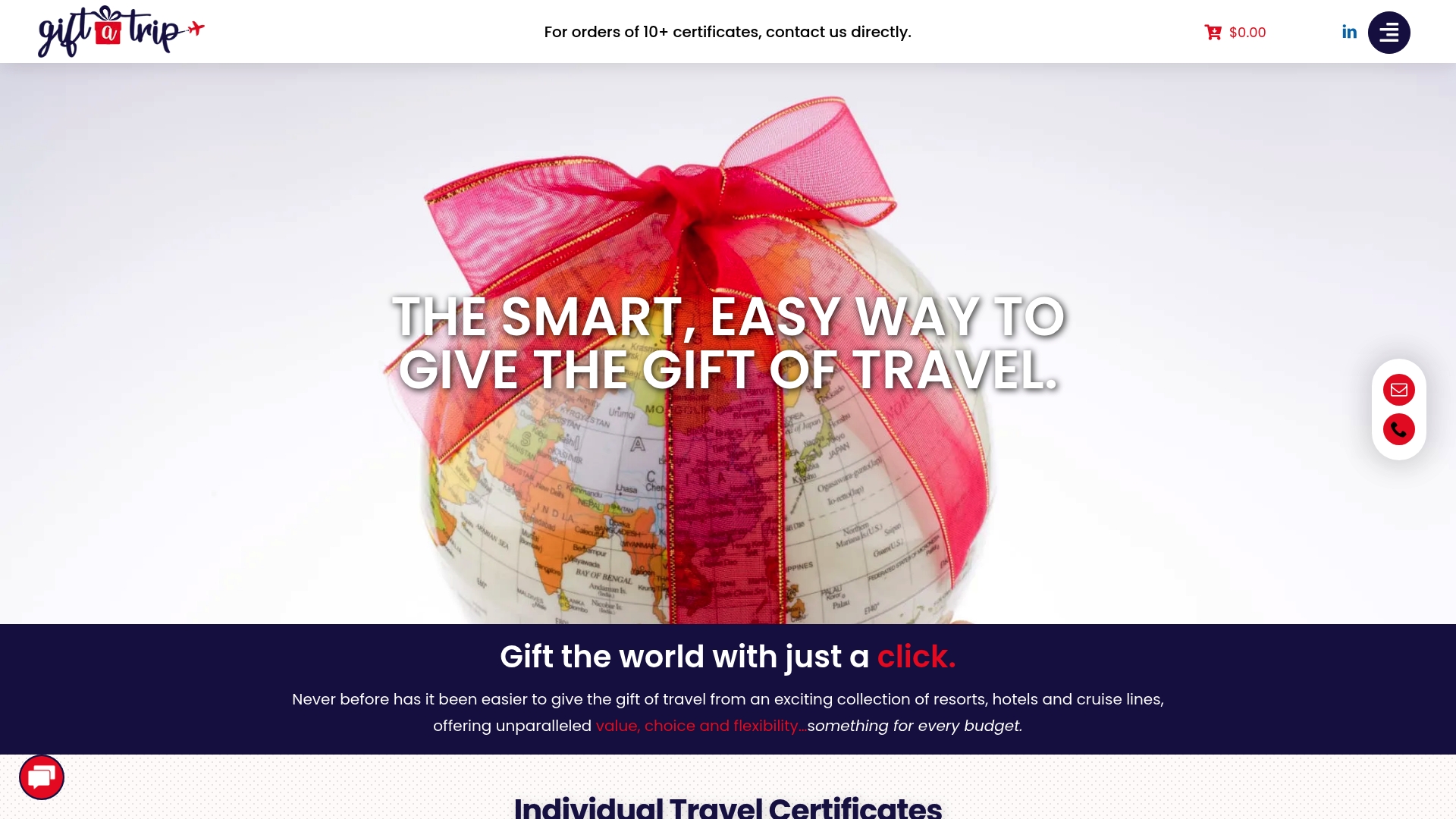
Travel certificates are one of the most effective tools in a corporate gifting program because they combine premium perceived value with complete recipient flexibility. Giftatrip offers digital travel certificates redeemable at resorts, hotels, cruise lines, and vacation packages from major brands, with taxes and resort fees covered and minimal blackout dates. For HR professionals building recognition programs and managers rewarding top clients, these certificates deliver the kind of lasting impression that a physical gift rarely matches. Explore travel vouchers for corporate rewards to see how Giftatrip’s options fit your gifting calendar, or browse hotel gift certificates for employee recognition programs that scale.
FAQ
What is a corporate gifting program?
A corporate gifting program is a structured initiative in which a company plans, budgets, and delivers gifts to employees or clients at defined occasions to strengthen relationships and reinforce recognition. It differs from ad-hoc gifting by having clear goals, assigned ownership, and measurable outcomes.
How much should companies budget per recipient for corporate gifts?
Budget benchmarks vary by recipient tier and occasion, but the industry trend is toward fewer, higher-value gifts rather than broad distribution of low-cost items. A meaningful employee milestone gift typically ranges from $50 to $200, while premium client gifts can exceed $300 for top-tier accounts.
How far in advance should you plan corporate gifts?
Plan at least three months ahead for complex or customized gifts, two to four weeks for personalized bundles, and up to 48 hours for digital gifts. Building these timelines into a shared gifting calendar prevents last-minute substitutions.
What types of gifts have the highest recipient satisfaction?
Choice-based gifting models and experiential rewards consistently produce the highest satisfaction because they align with recipient preferences rather than giver assumptions. Travel certificates, resort stays, and curated digital catalogs outperform generic merchandise in most feedback surveys.
How do you measure whether a gifting program is working?
Track redemption rates, employee engagement scores, client retention rates, and post-gift survey responses. Linking gifting outcomes to retention and engagement data gives leadership the evidence needed to sustain or expand the program budget.