Jump to Section:
TL;DR:
- Launching a travel gift program requires strategic planning, including clear objectives, audience segmentation, and measurable criteria to ensure engagement and success. Offering flexible reward options and transparent communication enhances motivation and inclusivity for diverse participants, while compliance with IRS rules and meticulous documentation are essential for tax accuracy. Regular progress updates and feedback collection support continuous improvement, making the program a sustained performance and relationship-building tool.
Keeping employees engaged and clients loyal is one of the hardest jobs in any organization, and generic gift cards rarely move the needle anymore. If you’re exploring how to launch a travel gift program, you’re already thinking bigger than most. Travel rewards tap into something deeply personal: the desire to experience something memorable. Done right, a structured travel gift program gives you a tangible return on motivation, stronger performance culture, and client relationships that feel genuinely valued. This guide walks you through every critical step, from initial planning to tax compliance and scaling.
Table of Contents
- Key takeaways
- How to launch a travel gift program: planning foundations
- Designing the reward structure and travel experience
- Tax, compliance, and documentation
- Communicating, promoting, and tracking your program
- Measuring outcomes and scaling the program
- My honest take on travel gift programs
- Simplify your launch with Giftatrip
- FAQ
Key takeaways
| Point | Details |
|---|---|
| Start at the right time | Launch at the beginning of a performance cycle to shape behavior from day one. |
| Design for flexibility | Offer tiered or choice-driven rewards to keep diverse employee groups motivated and included. |
| Know your tax obligations | IRS rules require accurate fair market value reporting and thorough documentation to stay compliant. |
| Communicate clearly and often | Participants need to understand qualification criteria and track progress to stay motivated throughout. |
| Measure and refine | Track ROI and collect feedback after each cycle to strengthen the program before you scale it. |
How to launch a travel gift program: planning foundations
Before you pick a destination or set a budget, you need to lay the groundwork. A seven-step launch process starts with clear objectives, target audience identification, and measurable performance criteria. Most programs skip this phase and wonder why participation drops off after the first quarter.
Start by defining what you want the program to accomplish. Is this about reducing sales team turnover? Rewarding your top clients for revenue milestones? Recognizing HR-nominated employees for above-and-beyond performance? The answer shapes everything downstream, including which rewards resonate and what behavior qualifies.
Next, segment your audience. A sales incentive program for account executives operates very differently from a client appreciation program or a company-wide recognition initiative. Each group has different motivators, different schedules, and different personal circumstances that affect what kind of travel they find appealing.
| Planning requirement | What to define |
|---|---|
| Business objective | Specific outcome tied to a measurable metric (revenue, retention, satisfaction) |
| Audience segment | Who qualifies: employees, clients, partners, or a combination |
| Performance criteria | The behavior or outcome that earns the reward |
| Budget per participant | Total cost including certificates, logistics, and administration |
| Program timeline | Start and end dates aligned to performance cycles |
| Compliance review | IRS rules, documentation needs, and reporting obligations |
Pro Tip: Launch programs at cycle start rather than mid-year. Starting in a month like November, for example, often fails to create the behavioral shift you need because the cycle is already too far along.
Designing the reward structure and travel experience
This is where travel gift program ideas either inspire people or fall flat. The single biggest mistake is offering one fixed reward to a diverse workforce. A couple with young children has completely different travel needs than a 28-year-old who prefers solo adventures. Flexible redemption options across a range of experiences keep your program inclusive and relevant to every segment.
Choosing the right reward model
Three main structures dominate corporate travel reward programs:
- All-or-nothing: Participants who hit a specific target receive a single defined trip. High perceived value, but only motivates people who believe they can win. Works well for elite sales competitions.
- Tiered rewards: Multiple performance levels unlock increasingly valuable travel experiences. This keeps mid-tier performers engaged instead of checking out once they fall behind the top earners.
- Points-based: Participants accumulate points redeemable for travel certificates or packages of their choice. Highest flexibility, but requires more administrative infrastructure to manage.
| Reward model | Best for | Pros | Cons |
|---|---|---|---|
| All-or-nothing trip | Sales competitions | High perceived value | Discourages middle performers |
| Tiered rewards | Employee recognition | Broad engagement | More complex to administer |
| Points-based | Ongoing programs | Maximum flexibility | Requires tracking tools |
For client appreciation programs, individual travel certificates work better than group trips. Sending a client a meaningful travel certificate they can redeem on their own schedule respects their time and autonomy, which is exactly the kind of thoughtfulness that deepens a business relationship.
Pro Tip: When considering how to create travel gifts that feel premium, include details like covered resort fees, minimal blackout dates, and personalized messaging. These specifics separate a thoughtful program from a generic one.
When you’re deciding on destinations and experience types, use third-party guidance on selecting incentive travel destinations that appeal to your specific workforce demographics. Beach resorts, city hotels, cruises, and adventure packages each attract different personality types. Offering choice within a defined budget range is almost always more motivating than one predetermined destination.
Tax, compliance, and documentation
This section is where most HR managers get caught off guard. The IRS treats incentive trips as taxable non-cash compensation unless strict criteria are met, specifically that at least 60% of the trip time must be spent on legitimate business activities. Airfare, lodging, meals, and entertainment all count toward the taxable value, which gets reported on the employee’s W-2.

If your program involves rewarding performance rather than a structured business meeting or conference, the default assumption is that it’s taxable. That does not mean you can’t run the program. It means you need to calculate and report fair market value accurately and build that cost into your budget from the start.
Companies that want to keep reimbursements non-taxable must follow IRS accountable plan rules, which require a documented business connection, timely substantiation of expenses, and return of any excess funds. Failing to follow these rules converts the reimbursements into taxable wages, adding payroll tax obligations neither party expects.
Best practices for documentation include:
- Detailed trip agendas listing business activities by time slot
- Signed attendance logs for any sessions or meetings
- Receipts for all covered expenses
- Written accountable plan policy distributed to participants
- Records showing the business purpose connection for each trip element
“Documentation is the most common failure point in IRS audits. Contemporaneous records like agendas, minutes, and attendance logs are non-negotiable. Reconstructed memories or credit card statements alone won’t hold up.”
Pro Tip: Keep documentation current throughout the trip, not after. Backdating agendas and reconstructing records is one of the fastest ways to lose an audit.
For travel gifts given to clients rather than employees, the tax treatment differs. Client gifts generally fall under standard business gift deduction rules rather than compensation rules, but the same documentation standards apply. Review this with your tax advisor before the program launches, not after your first award cycle.
Communicating, promoting, and tracking your program
How you announce and sustain the program matters as much as the rewards themselves. Here is a practical sequence to follow for successful program execution:
- Announce at the performance cycle start. Send a detailed kickoff communication covering who qualifies, what behaviors or metrics earn rewards, what the rewards are, and when the cycle ends.
- Set up a progress dashboard. Participants stay motivated when they can see where they stand in real time. A simple leaderboard or progress tracker tied to your CRM or HR system works well for most teams.
- Send mid-cycle updates. A reminder at the halfway point, with personalized progress data, re-engages participants who have fallen slightly behind and reinforces commitment from those who are ahead.
- Prepare fulfillment logistics early. Whether you use turnkey travel certificates or booked packages, have redemption details ready before the cycle closes. Delayed or disorganized rewards kill enthusiasm faster than anything else.
- Conduct a post-program debrief. Survey participants, review participation rates, and compare performance data against baseline. This step is what turns a one-time initiative into a program that keeps improving.
One execution pitfall to avoid: vague qualification criteria. If employees or clients are unclear on exactly what earns a reward, trust in the program erodes quickly. Define rules in writing, distribute them at launch, and keep them accessible throughout the cycle. Transparency is not optional in travel gift program strategies that work long-term.
Understanding how to plan the incentive travel details from logistics to participant communication is what separates programs that feel premium from those that feel thrown together. Every touchpoint, from the announcement email to the certificate delivery, is an opportunity to reinforce that this reward is worth earning.
Measuring outcomes and scaling the program
Once your first cycle wraps up, the real work begins. Measuring the right metrics tells you whether the program delivered value and where to adjust before you scale.
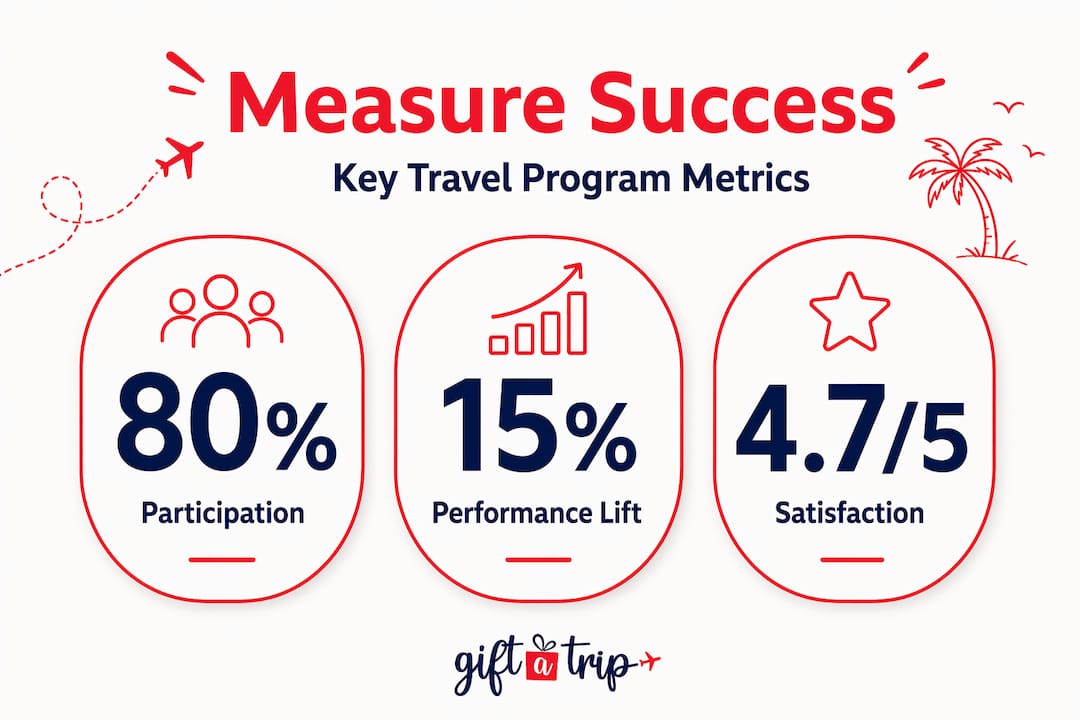
Key indicators to track include participation rate as a percentage of eligible employees or clients, performance lift compared to the previous cycle, redemption rate of awarded certificates, and qualitative feedback on reward satisfaction. A program where 80% of eligible participants actively engaged and performance increased measurably is worth investing in more heavily next cycle.
Participant feedback often reveals something numbers alone miss. A sales rep who earned a beach resort certificate but never redeemed it is sending a signal. Maybe the redemption process was confusing. Maybe the destination options did not fit their life at that moment. Integrating travel rewards into a flexible framework that adapts based on feedback is what separates a program that lasts years from one that quietly disappears after two cycles.
When scaling, increase complexity gradually. Add destination tiers before adding entirely new reward categories. Expand the eligible audience before overhauling the qualification structure. Starting a vacation gift initiative at one department level and proving the model before rolling it out company-wide is sound program planning and protects your budget.
My honest take on travel gift programs
I’ve watched organizations put together travel incentive programs with real enthusiasm, only to see them stall within two cycles. The reason is almost always the same. Managers treat the program like a nice-to-have perk rather than a strategic performance tool, and that mindset shows in how the program is designed, communicated, and supported.
What I’ve found is that the organizations that get lasting results are the ones that tie travel rewards to specific, observable behaviors from day one. Not “top performers win a trip,” but “accounts with three consecutive quarters of growth above 15% earn a certificate.” Precision matters because it changes how people think about their daily choices.
The tax compliance piece is genuinely underestimated. I’ve seen programs expose companies to unexpected payroll tax liabilities because someone assumed travel rewards were treated like a bonus. They are not. Build the IRS requirements into your planning process, not as an afterthought but as a first-order constraint.
My strongest piece of advice for starting a vacation gift initiative: do not wait until you have the perfect program designed. Launch a focused pilot, measure honestly, and improve. A well-executed small program builds more internal credibility than an ambitious one that collapses under its own weight.
— Donovan
Simplify your launch with Giftatrip
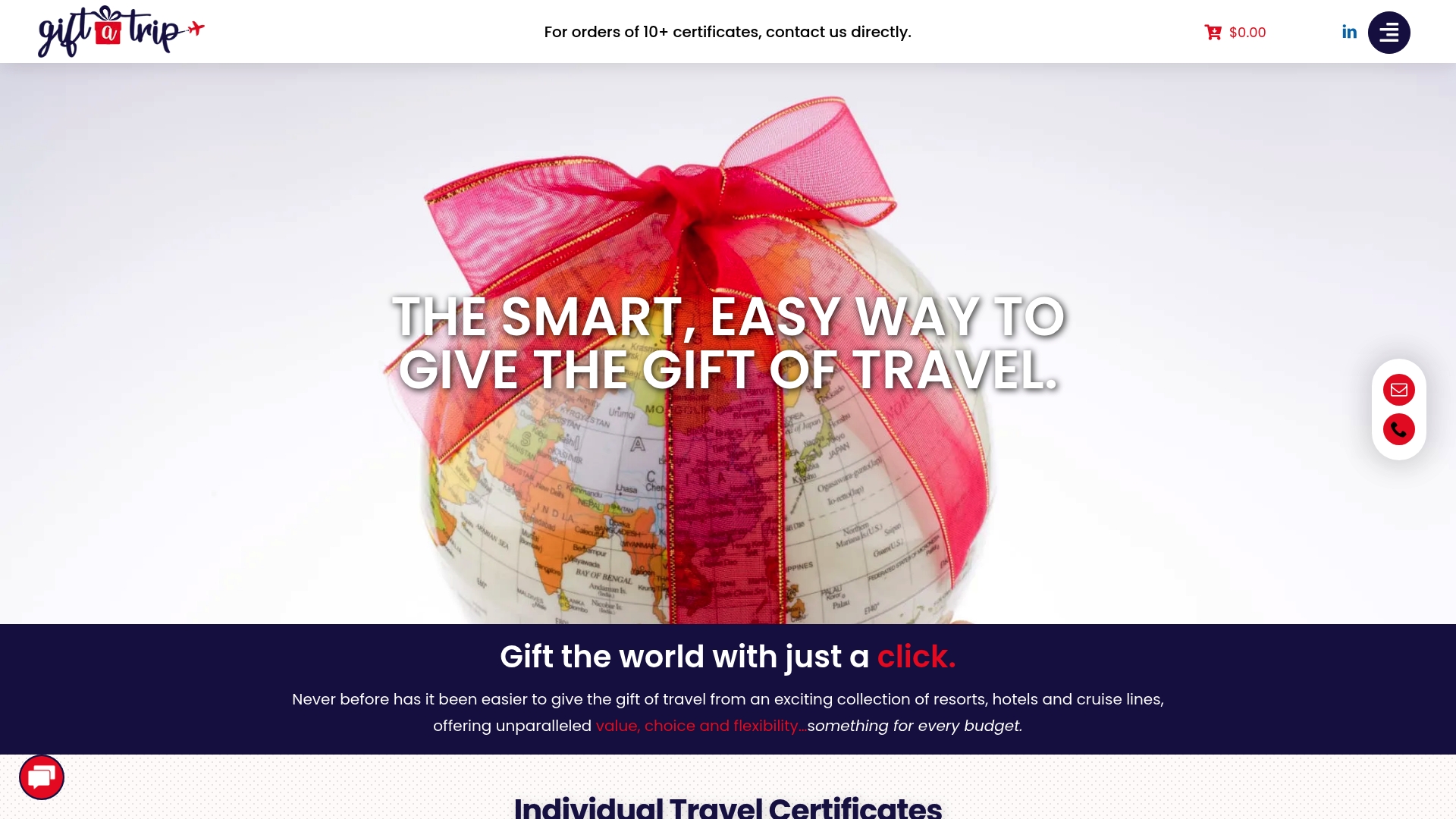
Giftatrip makes it significantly easier to put a professional, flexible travel gift program into action. Whether you’re rewarding a top sales team, appreciating a key client, or recognizing an employee milestone, Giftatrip’s digital travel certificates cover stays at resorts, hotels, and cruise lines from major brands, with resort fees and taxes included. Bulk orders come with customizable packaging and personalized messaging, so the reward feels premium from the moment it arrives. Explore the corporate gifting options to see how vacation vouchers can anchor your rewards program, or browse the experiential rewards catalog to find the right fit for your team and budget.
FAQ
How early should you plan a travel gift program launch?
Start planning at least 60 to 90 days before your performance cycle begins. This gives you time to finalize budgets, set qualification criteria, prepare communications, and complete compliance review before participants are involved.
Are travel gifts taxable for employees?
Generally yes. The IRS treats incentive trips as taxable income unless at least 60% of the trip is dedicated to documented business activities. Employers must calculate and report the fair market value of airfare, lodging, and meals on the employee’s W-2.
What reward structure works best for motivating sales teams?
Tiered reward structures tend to produce the broadest engagement for sales teams because they give every participant a realistic target to chase. All-or-nothing models motivate top earners but often disengage the middle majority of your team.
How do you keep participants motivated throughout the program cycle?
Send personalized progress updates at the midpoint of the cycle and make progress tracking visible in real time. Participants who can see exactly where they stand relative to their goal stay more engaged than those waiting for a final announcement.
Can you use travel gift certificates for client appreciation programs?
Absolutely. Digital travel certificates work especially well for client gift programs because they are easy to deliver, personally meaningful, and flexible enough to fit different client schedules and preferences without requiring you to coordinate logistics.