
Experiential gifting is now a mainstream choice, not a niche one. The National Retail Federation’s October 2026 holiday survey found that 27% of U.S. shoppers plan to give an experiential gift, up from 19% five years ago. Deloitte’s 2026 Holiday Retail Survey puts the figure at 50%, because it counts meals, tickets and subscriptions too. The two surveys measure different things, but they point the same way. This guide covers the seven shifts behind the numbers and what they mean if you buy gifts for employees, sales teams, clients, guests or auction bidders.
TL;DR
- Experience gifting keeps growing: Deloitte reports 50% of U.S. shoppers planning to give one in 2026, up from 47% in 2025 and 39% in 2024.
- Younger buyers lead the shift, and dining is the biggest category, with travel gifts a premium step up.
- Flexibility wins: recipients who choose the destination and the date are more likely to actually use the gift.
- Businesses are blending recognition and experiences, with price and perceived value still the top buying criteria.
- Plan for logistics early: delivery, availability, sustainability and a simple redemption path matter as much as the gift itself.
Table of Contents
- What experiential gifting means in 2026
- The numbers behind the trend
- Seven experiential gifting trends to plan around in 2026
- How businesses are using experiences
- Promo: turn the trend into a gift
- How to choose an experience that gets used
- What we expect next
- Our perspective
- FAQ
- Sources
What experiential gifting means in 2026
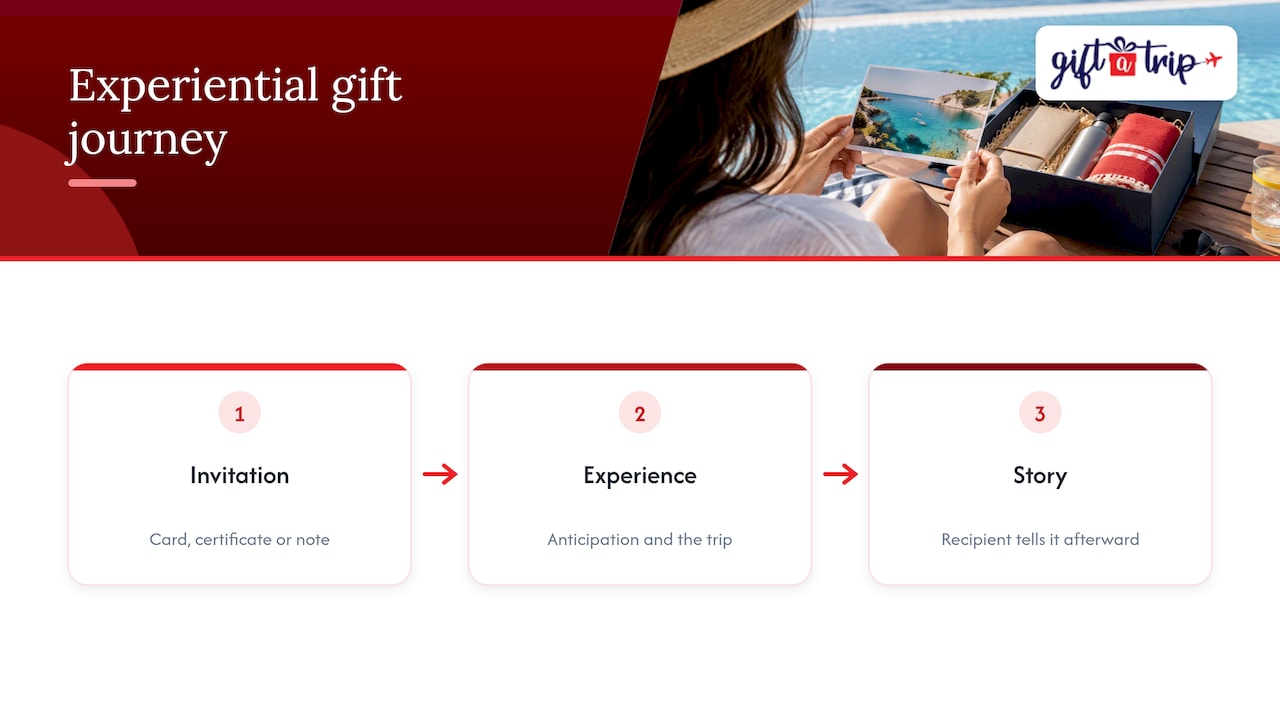
An experiential gift gives someone something to do, not something to keep: a dinner, a class, a concert, a weekend at a resort, a cruise. The object, if there is one, is just the invitation. A card in a box, a certificate in an email, a note that says “pack your bags.”
The value shows up later. The gift is the anticipation, the trip and the story the recipient tells afterward. That is why the format fits so many occasions: birthdays, anniversaries, honeymoons, retirements, sales awards and milestone celebrations. If you want the basics of why this format works, our overview of the benefits of experiential gifting covers the reasoning in more depth.
The numbers behind the trend
Start with what the large surveys say, because they separate real momentum from hype.
- NRF: 27% of U.S. holiday shoppers plan to give an experiential gift, a record, against 19% five years earlier. NRF reports millennials at 38%, with Gen Z driving the category to a new high.
- Deloitte: 50% of U.S. shoppers plan to give an experience gift. The Deloitte 2026 survey shows the share rising from 39% in 2024 and 47% in 2025.
- Age: in the same Deloitte survey, 57% of millennials and 51% of Gen Z planned to give experiences, up from 52% and 41% the year before.
The gap between 27% and 50% comes down to definitions. Adweek’s summary of the Deloitte findings shows that Deloitte’s category includes dining, event tickets and subscriptions. Treat 27% as a floor for strictly experiential gifts and 50% as the broad view of the market.
Seven experiential gifting trends to plan around in 2026
1. Dining still leads, travel is the premium tier
When Deloitte broke down the experience category, restaurant meals or gift cards came first at 37%, followed by event tickets at 19%, subscription products or services at 8% and classes or services at 7%.
| Experience category | Share of shoppers (Deloitte 2026) |
|---|---|
| Restaurant meals or gift cards | 37% |
| Event tickets | 19% |
| Subscription products or services | 8% |
| Classes or services | 7% |
Dining is the easy entry point: low price, low planning. Travel sits above it as the gift that signals real appreciation. For a top performer, a long-tenured employee or a key client, a dinner is nice, but a resort stay is remembered. Our resort gifting guide walks through how to choose a property that suits the person.
2. Gen Z and millennials set the pace
The youngest working adults are the most open to experiences, and they are also the employees and junior clients many HR teams are trying to retain. A branded mug is unlikely to compete with a weekend away. If your workforce skews younger, expect experience rewards to land better than another piece of swag.
3. Flexibility is part of the gift
An experience that is tied to one date or one place can become a chore. The strongest programs let the recipient pick where and when. That is the idea behind flexible certificates: the giver chooses the occasion and the budget tier, and the recipient chooses the destination. See how our Flex Trip Collections work, or read our explainer on travel certificates and flexible gift solutions.
4. Gift cards and vouchers become the delivery format
In rewards programs, the card or voucher is how experiences travel. The IRF 2026 Trends Report found that gift cards are the most widely used reward in North America and Europe, at 30% and 34% of program allocations, with dining cards passing online-only retailer cards in North America. Local hospitality works the same way at small scale: a coffee roastery gift card or a digital gift card for sauna gear turns a small budget into a tasting or a ritual rather than an object. At the bigger end, a travel voucher does the same job for a week away. Our guide to travel vouchers as employee incentives covers how they fit a program.
5. Experience plus object
The most effective gifts often pair something tangible with the experience: a luggage tag with a certificate, a beach bag with a resort stay, a branded box with an invitation inside. The object builds anticipation and gives the recipient something to hold. Our Red Box Delivery option, at $69 one-off, packages a certificate this way for people who want it to feel like a real gift rather than an email.
6. Personalization goes beyond a name
A generic experience is just a smaller version of a generic gift. Personalization means matching the experience to the person: a golf and spa stay for the colleague who plays every weekend, a cruise for the team that has been traveling all year, a couples’ resort for an anniversary. A written note that names the reason for the gift counts for more than a logo. Our guide to giving experience gifts shows how to build that into the presentation.
7. Practical constraints decide the winner
In the Incentive Marketing Association’s 2026 gifting survey, planners named price as the biggest consideration in gift selection, followed by perceived value. Rising costs, availability, delivery delays and customs issues were also named as challenges. Digital delivery and certificates that bundle taxes and fees remove several of those headaches at once.
How businesses are using experiences
Employee recognition
Experiences work well for milestone recognition: work anniversaries, project completions, retirement. A U.S. Chamber of Commerce piece on corporate gifting notes that popular choices among corporate recipients tend to be relaxation experiences such as massages, weekend getaways and food experiences such as cooking classes or restaurant visits. A weekend getaway sits at the top of that list in terms of impact. For ideas by role and budget, see our HR guide to employee reward examples and why resort certificates elevate employee rewards.
Sales incentives
Sales teams respond to a clear target and a vivid prize. A trip is easy to describe in a kickoff meeting and easy to picture, which makes it a stronger motivator than a cash bonus that disappears into a paycheck. Tiered certificates let you reward the top performer with a cruise and the next tier with a resort night, without running separate programs. Our corporate gifting page outlines custom trip selection sites, airfare vouchers and branded gift box delivery for that purpose.
Client gifts
Client gifting is moving away from loud branding. A trip certificate with a personal note says more than a logo on a tote bag. Check your client’s own gift policies first, since many firms cap what employees may accept. Keep the gift modest, personal and easy to redeem.
Events and charity auctions
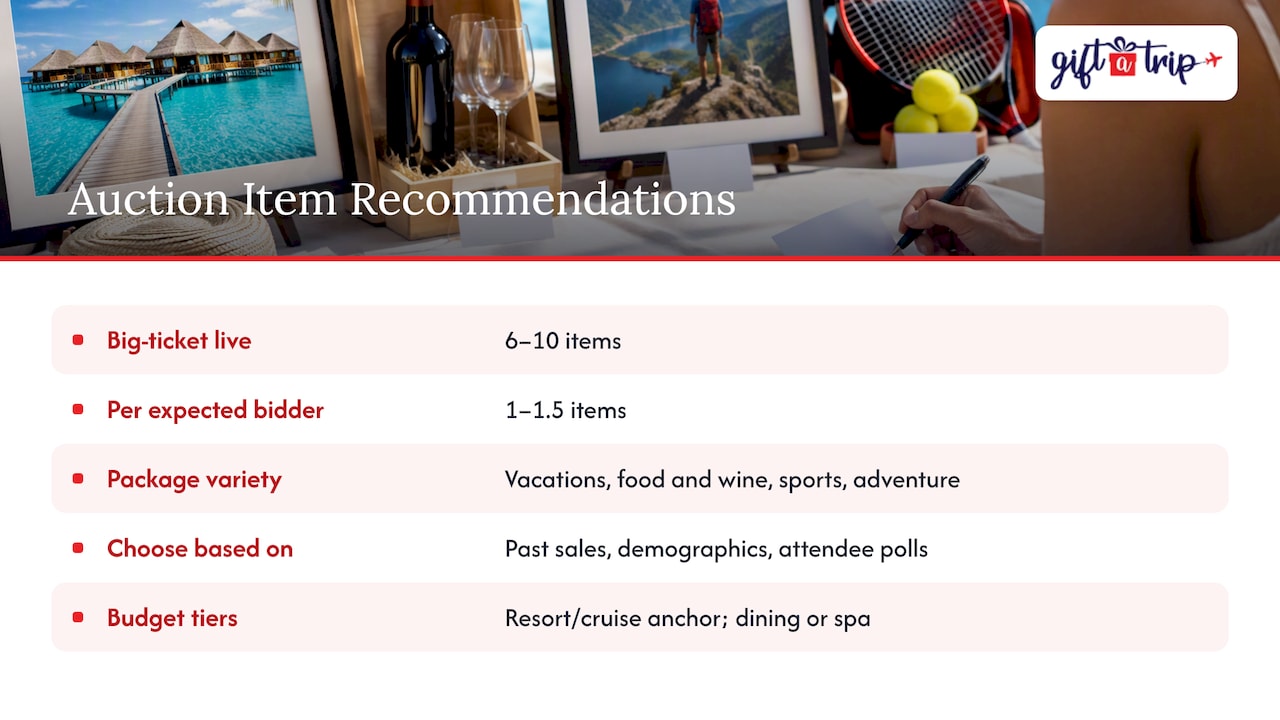
Travel is a classic auction item because it appeals to a broad crowd and has a high perceived value. The Association of Fundraising Professionals recommends keeping big-ticket live items to about 6 to 10 and offering 1 to 1.5 auction items per expected bidder. It also suggests choosing varied items, such as vacations, food-and-wine packages, sports tickets or adventure trips, based on past sales, audience demographics and attendee polls. A resort or cruise certificate is a natural anchor item, with smaller dining or spa packages around it for lower budgets.
Promo: turn the trend into a gift
If you are ready to move from reading about experiences to giving one, Gift A Trip sells digital and physical travel certificates for resorts, hotels, cruises and vacation packages. Individuals can buy a single certificate, and companies can order in bulk, with no minimum order. Our pricing is designed to include taxes and fees, and our certificates are designed with minimal blackout dates. Browse cruises, resorts and golf and spa getaways, or talk to us about a custom corporate program.
For a celebration with a specific theme, start with a brand page, such as Royal Caribbean certificates for the cruise lover or golf and spa resort stay certificates for someone who needs to unwind.
How to choose an experience that gets used
- Set the budget first. Price is the top consideration for planners, so decide the amount per recipient before you browse.
- Match the experience to the person. Ask what the recipient already does with their free time. A hobby is a better guide than a generic category.
- Give them room. A certificate with a flexible window beats a fixed date. Our explainer on open date travel vouchers shows what to look for in the redemption terms.
- Think about logistics. Digital delivery avoids shipping delays. If you want a physical presentation, order early.
- Consider sustainability. The IMA survey found that nearly three-fourths of planners consider sustainability very or somewhat important in gift selection, and 55% of recipients consider it too. Choosing one trip over several small objects is one way to cut the waste.
- Present it well. The note, the box and the timing do a lot of the work. Our tips on how to gift travel for impactful recognition cover the moment of giving.
What we expect next
Three directions look likely, based on where the surveys are moving. First, more employers will treat experiences as a standard part of recognition, not a holiday extra. Second, recipient choice will become the default, since fixed itineraries miss too many people. Third, the gift will be judged on how easy it is to redeem. A certificate that takes five minutes to use will beat a bigger one that takes five emails.
For a wider view of how to build gifts around trips, our travel gifting guide and our list of unique travel gift ideas for 2026 are good next steps.
Our perspective
We talk to HR leaders, sales managers and event planners every week, and the pattern is consistent: people want a gift that makes the recipient feel seen, and they want it to be simple to give.
That is why we built Gift A Trip around certificates that handle the hard parts. Digital delivery gets the gift there instantly. Taxes and fees are designed to be included, so there are fewer surprises for the recipient. Blackout dates are kept minimal, so the trip can fit a real calendar. And there is no minimum order, so the same platform works for one anniversary gift or a full sales incentive program.
Our view is that a trip is the clearest way to say thank you. It gives people time away, a story to tell and a reason to remember who gave it. If you are choosing between another round of swag and a travel gift, we would choose the trip, and we would let the recipient pick where.
Donovan
FAQ
What is experiential gifting?
Experiential gifting means giving an activity or event instead of a physical item. Examples include a restaurant meal, concert tickets, a class, a resort stay or a cruise. The gift is often delivered as a certificate, voucher or invitation that the recipient redeems later.
How popular are experience gifts in 2026?
It depends on how you count. NRF found 27% of U.S. holiday shoppers planning an experiential gift, a record high. Deloitte, which includes dining, tickets and subscriptions, found 50%, up from 47% in 2025 and 39% in 2024.
Which experience gifts work best for employees?
The most popular picks among corporate recipients tend to be relaxation experiences, weekend getaways and food experiences, according to a U.S. Chamber of Commerce article. A resort or travel certificate fits milestone recognition, while dining and spa gifts suit smaller thank-yous.
Can I give travel certificates in bulk?
Yes. We offer bulk orders with no minimum order, plus custom flex collections, custom trip selection sites, airfare vouchers and branded gift box delivery. See our corporate gifting page for how a program is set up.
Are travel certificates good for charity auctions?
They are a strong anchor item because travel has broad appeal. AFP guidance suggests keeping big-ticket live items to about 6 to 10 and mixing in varied categories. A resort or cruise certificate can headline the live auction, with smaller packages in the silent auction.
Sources
- NRF: 2026 holiday shopping trends
- Deloitte 2026 Holiday Retail Survey
- Adweek: Half of shoppers plan to buy experience gifts
- IRF 2026 Trends Report
- Incentive Marketing Association: 2026 gift trends survey
- U.S. Chamber of Commerce: how startups are modernizing corporate gifting
- AFP: how to decide the right number of auction items