
Whether a travel gift card covers taxes, resort fees, and airfare charges depends entirely on the card type and the issuer’s own wording, not on a single industry standard. Before you buy or redeem one, check the issuer’s terms and the final “total price” screen at checkout. Federal rules from the Department of Transportation back up your right to see the full cost upfront.
TL;DR:
- General use prepaid cards do not include taxes or fees; airline and hotel cards usually deduct those charges from the balance at checkout.
- Only certificates explicitly stating that taxes and fees are included bundle those charges; vague redemption wording usually means travelers must pay separately.
- Airfare totals must include government taxes and mandatory carrier surcharges, but gift cards do not automatically cover baggage or seat selection fees.
- Most denominated cards cannot charge inactivity fees for 12 months and receive federal expiration protection for at least five years; state laws may extend them.
- Before redeeming, check partial payment rules and issuer restrictions, then save the final price screen and certificate terms in case of a dispute.
Table of Contents
- How coverage differs by travel gift card type
- Federal rules that shape what fee disclosures must show
- Where state laws and issuer terms add or remove protections
- Common fees and where they show up at redemption
- How redemption actually plays out for flights, hotels, and packages
- Checklist: what to check before you buy or gift a travel card
- How to avoid surprise fees and what to do if one appears anyway
- How Gift A Trip addresses taxes and fees in its certificates
- Donovan’s perspective: the simplest habit that prevents tax surprises
- Gift A Trip: get a tax-inclusive travel gift
- FAQ
- Sources
How coverage differs by travel gift card type
Not every “travel gift card” works the same way, and the label on the box rarely tells you which category you’re holding. Three types dominate the market, and each handles taxes and fees differently.
Bank-branded general-use prepaid cards (Visa, Mastercard, American Express gift cards) work like cash toward a purchase. They never include taxes or fees because they’re not tied to a specific booking: you load the card, then taxes and fees come out of the balance just as they would with a debit card.
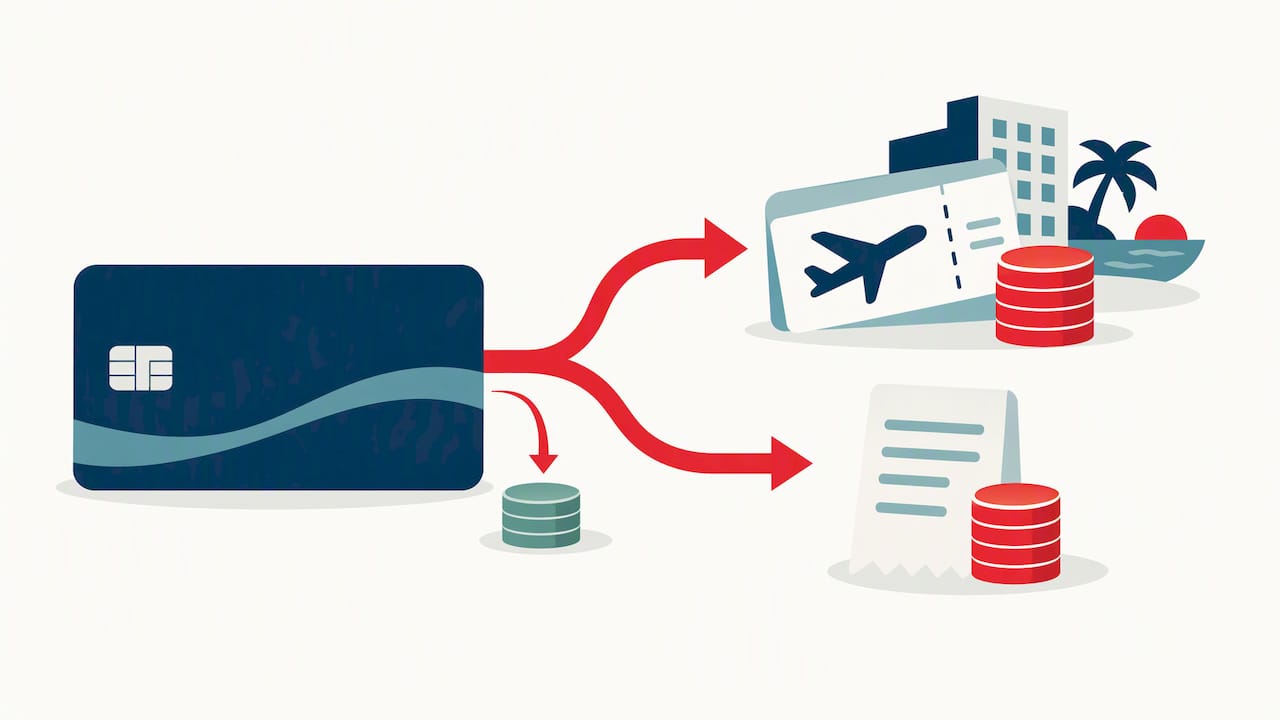
Airline and hotel brand-specific gift cards apply as a credit toward a reservation on that brand’s site. Government taxes and airport fees usually get deducted from the balance at checkout, same as if you’d paid with a credit card, so the “value” you received as a gift can shrink once taxes are applied.
Issuer-specific travel certificates or vouchers are built differently. These are pre-set packages, often for a hotel stay, cruise, or vacation bundle, where the issuer has already negotiated to bundle taxes and resort fees into the certificate’s value.
- Look for wording like “taxes and fees included” or “all-inclusive pricing” directly on the certificate terms.
- Watch for vaguer language such as “redeemable toward” or “applicable toward,” which usually signals taxes come out separately.
- Confirm whether the certificate names specific resorts or allows open booking, since open-booking certificates tend to have clearer fee disclosures.
Federal rules that shape what fee disclosures must show
Three federal frameworks set the floor for how travel pricing and gift cards get advertised and redeemed, and knowing them helps you spot a misleading offer.
The Department of Transportation requires airlines and ticket agents to advertise the total price a passenger actually pays, including government taxes and mandatory carrier-imposed surcharges. A fare that balloons after you click “buy” is not how airfare pricing is supposed to work under this rule.
The FTC’s rule on unfair or deceptive fees targets “drip pricing,” the practice of advertising a low headline price and adding mandatory charges like resort fees later in the booking flow. FTC reviews have repeatedly found hotels and booking sites excluding resort fees from quoted prices, sometimes burying them in fine print.
The CARD Act and related consumer protections govern how denominated gift cards can charge fees and expire.
- Most gift cards with a stated dollar value can’t carry inactivity or service fees for at least a year.
- Those same cards generally have expiration protections extending several years from the purchase or last-load date.
- Most denominated gift cards are protected against early expiration and inactivity fees, as detailed in CFPB guidance on gift cards.
Together, these rules mean a mandatory tax or fee should already be baked into any advertised total price. If it isn’t, that’s worth questioning before you hand over your card number.
Where state laws and issuer terms add or remove protections
Federal rules set a baseline, not a ceiling. Several states extend gift card protections further, banning certain fees outright or stretching expiration windows beyond the federal five-year minimum.
- Check your state attorney general’s consumer protection page or the NCSL gift card statutes directory before assuming only federal minimums apply.
- Issuer terms can add blackout dates, restrict redemption to specific partner sites, or limit how much of a booking can be paid with the card, all of which affect whether taxes and resort fees end up covered.
- Some issuers allow partial card use toward a larger purchase, while others require the card to cover the entire transaction, which changes how fees get applied.
A quick read of both the state rules and the specific certificate’s terms before purchase takes a few minutes and avoids a frustrating surprise weeks later when someone tries to redeem a gift.
Common fees and where they show up at redemption
Fee names get used loosely across the travel industry, so it helps to know what each one actually means before you’re staring at a checkout screen.
- Activation or purchase fees apply mostly to prepaid general-use cards, charged once at the time of purchase rather than at redemption.
- Inactivity or service fees can’t be charged for at least 12 months on most denominated gift cards under federal protections, per CFPB guidance.
- Resort fees cover amenities like Wi-Fi, pool access, or gym use, and properties often disclose them separately from the nightly rate rather than folding them into the advertised price.
- Government taxes and airport or security fees on airfare must appear in the advertised total price under DOT rules, so a price jump after booking is a red flag.
- Carrier surcharges and ancillary fees, like baggage or seat selection, are increasingly disclosed before purchase thanks to a 2024 DOT ancillary fee rule, though most gift cards don’t automatically cover them.
Pro Tip: Screenshot the total price screen the moment you redeem a certificate, before confirming the booking. It’s the easiest proof you’ll have if a fee shows up later that shouldn’t have.
How redemption actually plays out for flights, hotels, and packages
The mechanics of using a travel gift card vary by what you’re booking, and the breakdown you see on screen tells you most of what you need to know.
- For airline gift cards, apply the balance during checkout on the airline’s own site; the total price displayed should already include government taxes and carrier fees under DOT rules.
- For hotel or brand gift cards, apply the card at the final payment step; resort fees and local taxes typically show up as separate line items unless the brand states otherwise.
- For travel certificates, redeem directly through the issuer’s booking portal rather than a third-party agent when possible, since third-party bookings can obscure which charges the certificate covers.
- Register the card or certificate as soon as you receive it. Registration protects your balance if it’s lost or stolen and gives you a paper trail if a dispute comes up later.
Checklist: what to check before you buy or gift a travel card
A few minutes of reading before purchase saves a lot of back-and-forth later, especially if you’re buying for someone else.
- Confirm the certificate explicitly states “taxes and fees included” rather than vaguer phrasing.
- Read the expiration, inactivity-fee, and lost-card replacement policies in full before checkout.
- Ask whether partial payments are allowed or if the certificate must cover the full cost of a stay or flight.
- If you’re an employer buying for employees, remember the IRS treats gift cards as taxable wages in nearly every case, since cash-equivalent gifts don’t qualify as de minimis fringe benefits.
How to avoid surprise fees and what to do if one appears anyway
Prevention beats dispute resolution every time, but it helps to know your options when a mandatory charge shows up unexpectedly.
- Buy certificates that explicitly state tax and fee inclusion, and always view the total price screen before finalizing any purchase.
- If a mandatory fee appears during redemption, contact the issuer’s customer service first and ask for written confirmation of what the certificate covers.
- Keep your purchase receipt and the certificate’s terms on hand; both become essential if you need to file a chargeback with your card issuer.
- If the issue involves airline pricing or hotel resort fees, you can file a complaint with the DOT or the FTC when disclosure rules appear to have been violated.
Pro Tip: Ask for fee confirmation in writing, by email, rather than over the phone. A written record is far more useful if you need to escalate a dispute.
How Gift A Trip addresses taxes and fees in its certificates
We built our tax-inclusive travel certificates around the exact problem this guide describes: the gap between what a gift card promises and what it actually covers at checkout.
- Our certificates include taxes, gratuities, and resort fees in the advertised value, so the price a gift-giver pays is the price the recipient redeems.
- We keep blackout dates minimal across our flexible-date certificates, which reduces the odds of running into fee surprises tied to peak-season bookings.
- Digital delivery is secure, and we support both individual gifting and bulk corporate orders.
- Personalized messaging and custom gift box delivery options are available for gifting needs.
Flexible-date certificates matter here because fixed-date vouchers often push buyers into peak pricing windows where resort fees run higher and availability is tighter.
Donovan’s perspective: the simplest habit that prevents tax surprises
The single best habit when gifting travel is this: buy a certificate that states tax inclusion in writing, then verify the total price screen again at the moment of redemption. Terms change, booking portals update, and a certificate that was tax-inclusive at purchase can still run into a mismatched display if a property has shifted its fee structure.
People often assume a headline price on a booking site is the final price. It rarely is, and that gap is exactly where frustration starts.
— Donovan
Gift A Trip: get a tax-inclusive travel gift
We handle the tax and fee question before you ever have to think about it. Every certificate we sell states clearly what’s included, so there’s no separate math to do when a flight or resort stay gets booked.

- Browse our Flex Trip Collections for flexible-date, tax-inclusive certificates that work across resorts, hotels, and cruise lines.
- Add Red Box Delivery for a one-off fee if you want a premium physical presentation shipped to the recipient.
- For bulk employee rewards or client gifting, our corporate gifting programs support custom trip selection sites and branded gift box delivery with no minimum order.
If you’re planning the trip itself and want predictable transfer costs on the ground, fixed-price options like the ones Easy Transfer offers in Iceland follow the same all-in pricing logic we apply to our certificates. Ready to send a gift that covers the real cost of travel? Shop the Flex Trip Collections today.
FAQ
Is a $100 gift card taxable?
For individual consumers buying or receiving a personal gift, no sales tax applies to the gift card itself at purchase; tax applies only when the card is later used to buy a taxable good or service. For employees receiving gift cards from an employer, the IRS treats them as taxable wages because cash-equivalent gifts don’t qualify as de minimis fringe benefits.
What are the best travel gift cards?
The best options are certificates that explicitly state tax and resort-fee inclusion in writing, rather than general-use prepaid cards that leave taxes to be deducted at redemption. Our tax-inclusive certificates are built specifically around that distinction, bundling taxes, gratuities, and resort fees into the advertised value.
How much is the fee for a $100 Visa gift card?
Activation fees on general-use prepaid cards like Visa gift cards vary by retailer and issuer, and no single federal rate applies, so check the specific retailer’s posted fee at purchase. These fees are separate from any taxes, which are not charged on the gift card purchase itself but apply later when the balance is spent on taxable goods or services.
What are the IRS rules for gift cards to customers?
The IRS generally treats cash-equivalent gifts, including gift cards, given to customers as part of a business relationship differently from employee gifts, though specific tax treatment depends on the business context and should be confirmed with a tax professional. For employee gifts specifically, IRS guidance is clear that gift cards count as taxable wages rather than tax-free de minimis benefits.
Sources
- Buying a ticket | US Department of Transportation
- Rule on unfair or deceptive fees: frequently asked questions | Federal Trade Commission
- De minimis fringe benefits | Internal Revenue Service