
Jump to Section:
Before you buy any travel gift certificate, check four things: the expiration date and whether it complies with state law, the redemption window or final-payment deadline, blackout dates or seasonal availability limits, and whether the certificate is transferable or refundable for cash. Miss any one of these, and your recipient could end up holding a certificate they can’t actually use. Some vendors list these terms clearly upfront, which is exactly what you should demand from any issuer before you hand over payment.
TL;DR:
- Many travel certificates have expiration dates that may be invalid in some states, requiring buyers to verify local laws before purchasing.
- Booking deadlines, blackout dates, and minimum stay requirements often restrict when and how recipients can redeem certificates, especially for cruises and peak seasons.
- Fees, taxes, and exclusions vary widely; certificates bundling fees in the face value reduce surprises, while unbundled costs can cause frustration.
- Bulk purchases should include clear delivery timelines, reissue policies, and redemption tracking features to prevent operational issues and support delays.
- Most certificates are nonrefundable, nontransferable, and not reloadable, so buyers should confirm policies and test redemption steps before large orders.
Table of Contents
- What Are the Common Airline Gift Card Restrictions and Terms?
- What Should Buyers Check Before Purchasing a Travel Certificate?
- What Changes When You Buy Travel Certificates in Bulk?
- Can You Add Funds or Reload a Travel Gift Certificate?
- What Donovan Has Learned From Real Orders and Redemptions
- Buy a Travel Certificate That Actually Redeems Smoothly
- Sources
- FAQ
What Are the Common Airline Gift Card Restrictions and Terms?
Every travel certificate comes with a set of conditions that determine whether it actually works when someone tries to redeem it. Understanding airline gift card restrictions and the parallel rules that govern hotel, cruise, and vacation certificates means reading past the marketing copy and into the fine print. Here’s what actually shows up in those terms, and why each one matters.
Expiration rules. Some certificates expire in as little as six months; others carry no expiration at all. The catch is that state gift-card laws frequently override what the issuer prints on the card. Several states require no expiration date or mandate multi-year validity windows, so a certificate that says “expires in 90 days” may not be enforceable depending on where the purchaser or recipient lives. Corporate buyers distributing certificates across multiple states need to verify this before assuming a short window is even legal.
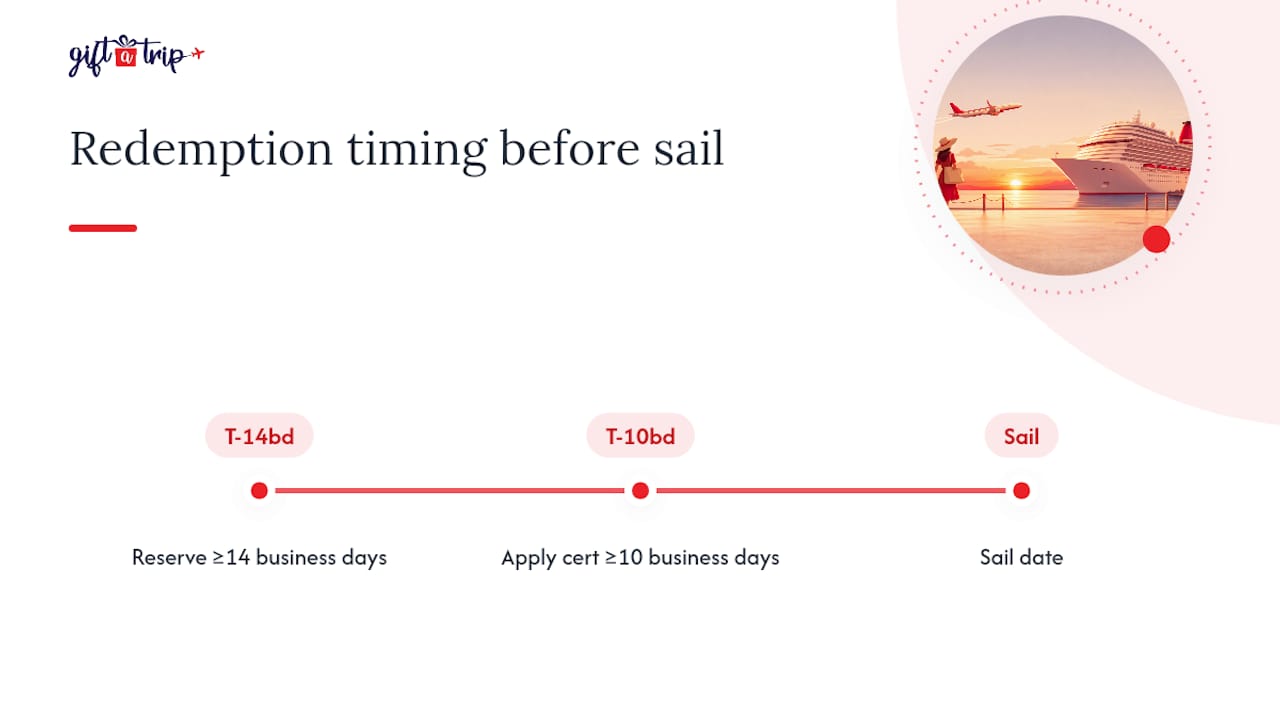
Redemption windows and booking timing. Cruise certificates are the clearest example of how rigid these deadlines can get. Royal Caribbean’s gift certificate terms require reservations at least 14 business days before the sail date, and the certificate must be applied at least 10 business days prior to sailing for certain redemption types, including use as onboard credit. Miss that window, and the certificate becomes far harder to use, if it’s usable at all.
Blackout dates and limited inventory. Peak weeks, holidays, and high-demand sailings often carry blackout restrictions or require minimum-stay commitments. A certificate that looks flexible on paper can turn out to be nearly impossible to book during the exact weeks most gift recipients want to travel.
Eligible uses and exclusions. Not every certificate covers the same things. Some apply only toward room cost or cruise fare; others convert to onboard credit instead of paying for the trip itself. Template guidance recommends issuers state clearly whether a certificate is a monetary credit or a full prepaid voucher, because that distinction changes what the recipient can actually apply it to.
Nontransferable and nonrefundable clauses. Most certificates carry language making them nonrefundable, not redeemable for cash, and nonreplaceable if lost or stolen. Royal Caribbean’s terms explicitly state certificates altered, photocopied, or reported lost typically cannot be reissued, and issuers reserve the right to cancel certificates tied to fraudulent purchases.
Fees and taxes. Some certificates bundle taxes and resort fees into the face value; others leave recipients to pay those costs separately at checkout. This is one of the most common sources of recipient frustration, since a “free vacation” that suddenly requires $200 in unbudgeted fees feels like a broken promise.
Age, ID, and eligibility requirements. Cruise certificates commonly require the recipient to meet a minimum age, often 21 for cruise lines serving alcohol or 18 for unaccompanied passage, along with valid travel documents at the time of booking. Some issuers also restrict purchases to residents of a specific country, with Royal Caribbean’s gift card program limited to U.S. residents and USD currency only.
Quick statistic to keep in mind: Royal Caribbean’s own terms set a 14-business-day minimum reservation window and a separate 10-business-day final-application deadline, two different clocks that both have to be met for full redemption flexibility.
What Should Buyers Check Before Purchasing a Travel Certificate?
Running through a short checklist before you buy takes ten minutes and can save weeks of frustration for the person redeeming it.
- Read the full terms and conditions, then save a copy. Screenshot or download the T&Cs and redemption instructions at the time of purchase, since issuer websites change and links go dead.
- Save the unique code and purchaser contact information. Vendors typically require a specific PIN or code for redemption, and having a backup record matters if the recipient loses their copy.
- Confirm the expiration date against state law. If the certificate expires faster than your state permits, that’s worth raising with the issuer before you buy, not after your recipient tries to book.
- Check blackout dates, minimum stays, and booking deadlines. Ask the issuer for specific examples if the terms are vague about “peak season” or “limited availability.”
- Verify what’s included. Confirm whether taxes, resort fees, and gratuities are covered, and whether the certificate applies to group or conference bookings if that’s relevant.
- Confirm transfer and reissue policies. Ask directly what happens if the recipient’s plans change or the code gets lost, since many issuers won’t reissue at all.
- Request bulk-delivery and reporting options if buying for a group. Consolidated invoicing and redemption tracking make a real difference once you’re past a handful of recipients.
- Test with a small batch first. If you’re distributing certificates at scale, send a pilot round to a few recipients and confirm redemption works smoothly before committing to the full order.
Pro Tip: Call the issuer’s support line before buying in bulk and ask them to walk you through an actual redemption, step by step. Terms pages rarely mention the small operational snags, like which browser their booking portal supports, that show up the moment fifty employees try to redeem certificates in the same week.
What Changes When You Buy Travel Certificates in Bulk?
Corporate and event-planning purchases carry a different risk profile than a single personal gift, mostly because problems multiply across every recipient instead of affecting just one person.
Negotiate specific contract terms before signing off on a bulk order. Push for a consolidated redemption window across all certificates rather than individually staggered expiration dates, a clear reissue policy for recipients who lose codes, and reporting access that shows which certificates have been redeemed versus outstanding. The Travel Certificate Distribution Guide for HR and Events covers this kind of operational planning in more depth for teams managing dozens or hundreds of certificates at once.
Delivery format matters more than most buyers expect. Secure digital delivery with personalization works well for remote teams and gets certificates into inboxes within minutes, but physical gift boxes for in-person events need lead time for printing, packaging, and shipping.
Here’s what to request from any vendor before signing a bulk contract:
- A written SLA covering delivery timeline and what happens if it slips
- A replacement policy for lost or undelivered codes
- Bulk pricing tiers and whether taxes are included in the quoted price
- A redemption dashboard or reconciliation report for accounting purposes
| Consideration | What to ask the vendor |
|---|---|
| Delivery timeline | How many business days for digital vs. physical delivery |
| Reissue policy | Whether lost codes can be replaced, and how many times |
| Reporting | Whether redemption status is trackable per recipient |
| Tax treatment | Whether the quoted price is tax-inclusive |
Piloting a small batch before a full rollout, as noted in Gift A Trip’s own distribution guidance, tends to surface issues, like a confusing redemption step or an unclear blackout period, before they hit your entire employee list.
Can You Add Funds or Reload a Travel Gift Certificate?
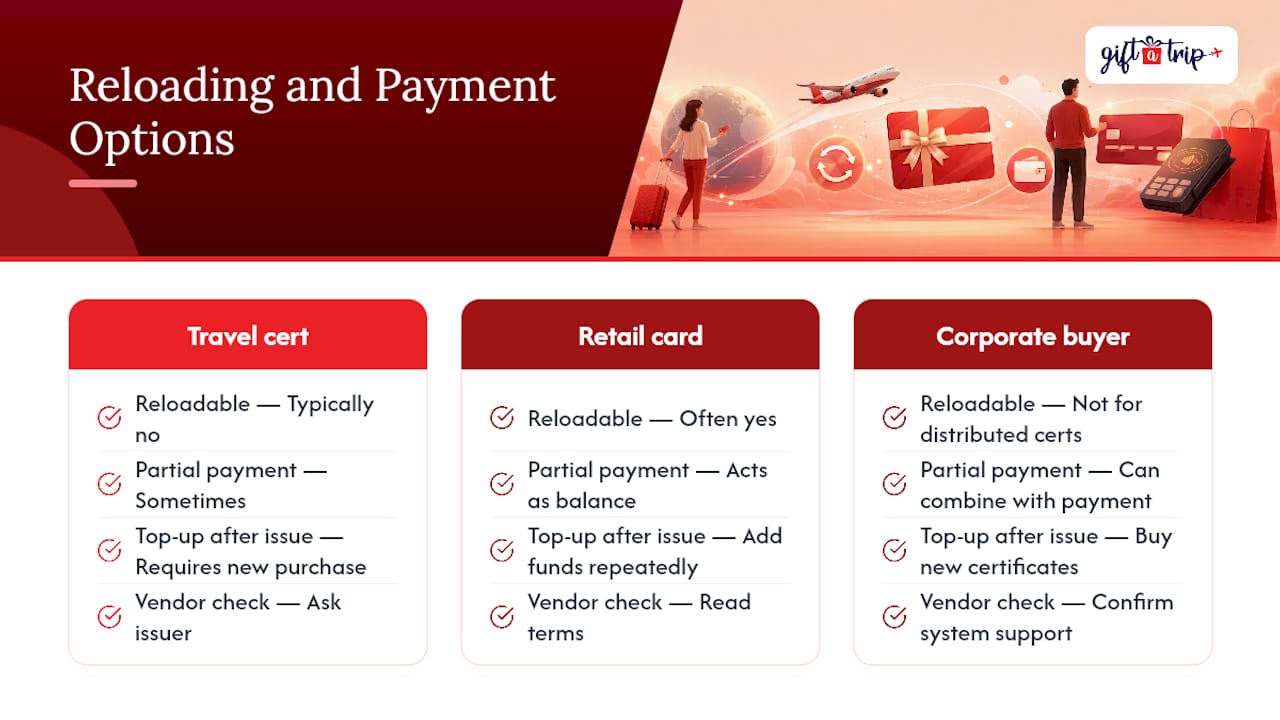
Most travel certificates are one-time-use instruments, not reloadable balances. Once the value is applied to a booking, the certificate is typically closed out rather than left open for additional deposits. This differs from a retail gift card, where a customer might add funds repeatedly over months.
That said, some issuers allow a certificate’s value to be combined with additional payment at booking, so a recipient can apply the certificate toward a portion of the cost and pay the remainder out of pocket. This isn’t the same as reloading the certificate itself. It’s simply the certificate acting as partial payment rather than full coverage.
If a corporate buyer wants to add value to an existing batch of certificates already distributed, most issuers require a new purchase rather than a top-up to the original code. Ask the vendor directly whether their system supports incremental value additions or strictly separate transactions, since this affects how you budget for mid-year bonus programs or recognition awards that build on an earlier gift. Buyers assuming reload flexibility without confirming it first are one of the more common sources of redemption disappointment.
What Donovan Has Learned From Real Orders and Redemptions
The redemption problems that come up again and again trace back to the same root cause: a buyer assumed a term instead of confirming it. A recipient tries to book during a week that turns out to be blacked out, or discovers the certificate covers the room but not the resort fee, and suddenly a thoughtful gift feels like a bait and switch.
The fix is almost always the same. Certificates that state taxes and resort fees are included upfront generate far fewer support calls, because there’s no gap between what the recipient expects and what they actually get. Clear redemption instructions delivered securely, rather than a code buried in a forwarded email, cut down on lost-code incidents dramatically. None of this is complicated. It just requires the issuer to say exactly what the certificate does before the sale, not after the complaint.
— Donovan
Buy a Travel Certificate That Actually Redeems Smoothly
Some platforms are built around removing the friction points covered above. Certificates list terms clearly, taxes and resort fees may be included in the price, and blackout dates can be minimized so recipients aren’t stuck choosing between “never” and “right now.”

Digital delivery arrives with clear redemption instructions and personalized messaging, which cuts down on the lost-code and confused-recipient problems that plague less transparent programs like those featured by Easea. Bulk buyers get formatting options built for distributing dozens or hundreds of certificates at once, including options like the Virgin Voyages cruise certificates for teams looking for a premium reward. If you’re planning an employee recognition program or a large event giveaway, the Travel Certificate Distribution Guide for HR and Events walks through invoicing, bulk delivery, and redemption reporting in detail. Browse the current certificate selection and get a quote for your next order today.
Sources
FAQ
Do travel gift certificates expire?
Many do, but expiration terms must comply with applicable state gift-card laws, which sometimes require longer validity periods or bar expiration entirely regardless of what the certificate states.
Can you get a refund on a travel gift certificate?
Most issuers state certificates are nonrefundable and not redeemable for cash, a common clause in cruise gift certificate terms and across the travel-certificate industry generally.
What happens if a certificate code is lost or stolen?
Standard terms typically treat certificates like cash, meaning lost or stolen codes are often nonreplaceable unless the specific issuer’s policy allows reissue with proof of purchase.
Are there blackout dates on travel certificates?
Yes, many certificates carry blackout dates during peak seasons or high-demand periods, though some issuers design certificates with minimal blackout restrictions to keep booking flexible.
Can travel certificates be used for someone other than the original recipient?
Most certificates are nontransferable once issued to a named recipient, so confirm transfer policy with the issuer before assuming a certificate can be passed along.