Jump to Section:
Travel gift certificates work as a loyalty program travel rewards tool when two things are handled correctly: redemption mechanics and tax treatment. Get those wrong and you’ve got angry employees and a payroll headache. Get them right, and you have one of the most motivating, low-maintenance incentives available to HR teams. Gift A Trip is a ready-built provider for this exact use case, handling fulfillment so your team doesn’t have to build the process from scratch.
TL;DR:
- Travel certificates offer fixed-value rewards that can be redeemed immediately, avoiding the variability and complexity of points programs.
- Ensuring clear communication about fees, blackout dates, and transferability is crucial to prevent support issues and maintain recipient trust.
- Proper tax and accounting setup, including policy documentation and coordination with payroll, is essential to avoid tax liabilities and reporting mistakes.
- Choosing certificates that include taxes and fees, with minimal blackout restrictions, maximizes recipient satisfaction and simplifies the redemption process.
- Automated bulk ordering and digital delivery streamline program management, making travel incentives low-maintenance for HR teams.
Table of Contents
- What Are Travel Gift Certificates, and How Do They Differ From Points Programs?
- How Do Recipients Actually Redeem a Travel Certificate?
- What Tax and Accounting Rules Apply to Employer-Issued Certificates?
- How Do You Design a Travel Certificate Program That Protects ROI?
- What’s the Step-by-Step Process From Procurement to Redemption?
- How Do You Measure Whether the Program Is Working?
- How Do Traditional Travel Rewards Loyalty Programs Actually Earn Points?
- What Are the Main Types of Travel Loyalty Programs?
- What Are the Best Strategies for Maximizing Travel Rewards Value?
- What Pitfalls Trip Up Travel Loyalty Program Members?
- How Do Alliances and Transfer Partners Connect Different Programs?
- What’s New in Travel Loyalty and Experiential Rewards?
- How Gift A Trip Handles the Fulfillment Side
- Next Steps for Evaluating Gift A Trip for Your Program
- Sources
- FAQ
What Are Travel Gift Certificates, and How Do They Differ From Points Programs?
A travel gift certificate is a fixed-value voucher redeemable for a specific trip, resort stay, or cruise, purchased once and delivered to a recipient. That’s fundamentally different from airline miles or hotel points, which accrue slowly through flights, stays, and card spending before a traveler can redeem them for anything useful. Points programs reward frequent travelers over years. Certificates reward someone right now, for a specific achievement or occasion, with no accrual period required.
That distinction matters for HR because most reward moments (a sales win, a five-year anniversary, a raffle prize at a company event) need something deliverable immediately, not a promise of future miles. A certificate gives a fixed, known dollar value your finance team can budget against. A points balance is a moving target tied to a program you don’t control.
Here’s why travel certificates keep showing up in corporate incentive budgets:
- Retention lift. Experiential rewards create stronger emotional recall than cash bonuses of equal value, which is why sales teams often use trip incentives for their highest performers.
- Broad use cases. The same certificate format covers sales contests, milestone anniversaries, event raffle prizes, and customer loyalty perks without redesigning the program each time.
- Operational simplicity. Bulk ordering, customizable gift boxes and digital delivery let one administrator issue dozens or hundreds of certificates in a single afternoon.
- Personalization at scale. Adding a name, a message, or a company logo to a digital certificate takes minutes, not a design cycle.
None of that works, though, if recipients hit fees or blackout dates they didn’t expect. That’s the next problem to solve.
How Do Recipients Actually Redeem a Travel Certificate?
Redemption is where good programs either build trust or generate support tickets. Most certificates follow a similar sequence: the recipient activates the certificate online, selects dates subject to availability, pays any applicable fees, and books through the issuing vendor’s own reservation system.
The exclusions matter more than the headline value. Royal Caribbean’s certificate terms, for example, apply the certificate value only to cruise fare, not the required upfront deposit, and the value can’t be used for onboard credit or shipboard charges. Resort certificates carry their own quirks: activation fees, processing charges, and daily resort fees are common add-ons that the certificate itself doesn’t cover, and a pre-redemption checklist typically flags activation fees in a typical modest range, booking or processing fees that may be substantial, and daily resort fees that can add to nightly costs.
Before you distribute anything, walk through this sequence:
- Confirm which fees the certificate covers and which fall to the recipient.
- Check blackout dates and availability windows against your typical redemption season.
- Verify transferability. Some certificates lock to the original recipient’s name.
- Flag any mandatory sales presentation or timeshare pitch tied to the redemption, which is a common red flag in lower-cost resort deals.
- Document the booking window (how many days before travel a reservation must be confirmed).
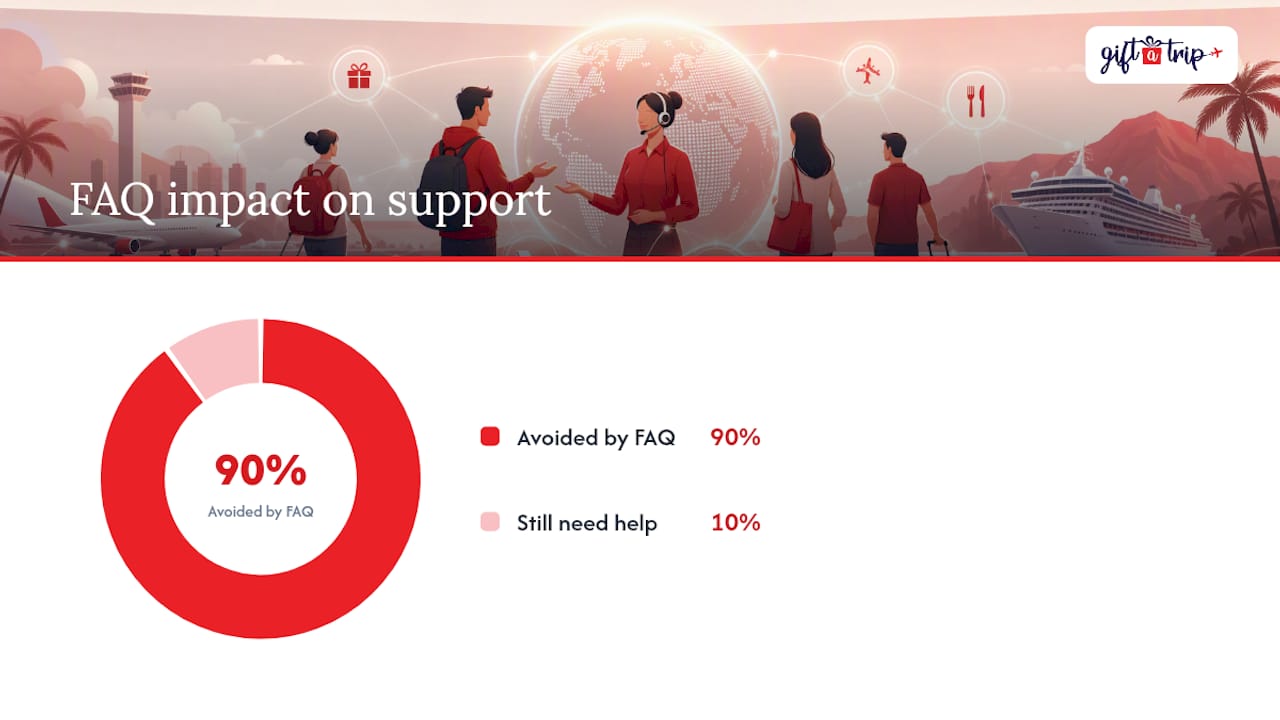
Pro Tip: Send recipients a one-page FAQ specific to their certificate type at the same time you send the certificate. Cruise, resort, and vacation-package certificates each have different booking quirks, and answering the fee question upfront avoids nine out of ten support emails.
What Tax and Accounting Rules Apply to Employer-Issued Certificates?
The IRS doesn’t treat every travel reward the same way, and this is where HR teams get exposed if they skip the paperwork. The controlling concept is the accountable plan: a reimbursement or benefit arrangement that meets a business-connection test, requires substantiation, and requires employees to return any excess amount.
IRS guidance on accountable plans is explicit that amounts failing any of those three tests get reclassified as taxable wages, subject to withholding and employment taxes. That reclassification risk applies directly to incentive trips: whether a trip or certificate counts as a taxable fringe benefit often comes down to primary purpose and fair market value documentation, meaning a trip framed as pure recreation gets taxed differently than one tied to a documented sales achievement.
A few numbers worth building into your budget planning:
- Nonaccountable-plan amounts are fully included in gross income and reported on W-2s, no exceptions.
- Gift certificate income can sometimes be deferred under specific accounting rules (Treas. Reg. § 1.451-5, Rev. Proc. 2004-34), but only with proper tracking by sale year.
- Timing mismatches between when a certificate is issued and when it’s redeemed create reporting risk if finance isn’t tracking outstanding liability.
Three action steps protect you here: write clear policy language defining the business purpose of each award, build a simple substantiation process recipients can actually complete, and loop payroll and finance into the design phase, not after certificates have already shipped.
How Do You Design a Travel Certificate Program That Protects ROI?
Start with the objective, not the vendor. A sales-incentive program built to reward top-quarter performers needs a different certificate tier than a milestone-anniversary gift meant for every five-year employee. Define the budget per recipient before you shop, because certificate value and included features move together: more included fees and fewer blackout dates generally cost more per unit.
Certificate features to compare before you buy:
- Are taxes and resort fees included, or does the recipient pay them separately?
- How many blackout dates apply, and do they overlap with your company’s peak redemption season (usually summer and December)?
- Is the certificate transferable if the named recipient can’t travel?
- What’s the activation window, and does it give recipients enough runway to plan?
Personalization matters more than most HR teams expect. A digital certificate with a custom message and company branding reads as a genuine reward. The same certificate delivered as a bare confirmation email reads as an afterthought.
Pro Tip: If your goal is flexibility and low recipient friction, prioritize certificates that bundle taxes and resort fees into the price. If tight cost control matters more, expect recipients to cover incidentals themselves, and say so clearly in the award announcement.
For fulfillment, decide early whether you need bulk ordering with a single invoice, staggered delivery timed to an event date, or instant digital delivery for last-minute recognition moments.
What’s the Step-by-Step Process From Procurement to Redemption?
Running a travel certificate program smoothly comes down to sequencing. Skip a step and you’ll find out about it from a confused employee three weeks later.
- Review the vendor’s terms and conditions before purchase: activation fees, expiration windows, and transferability rules vary by certificate type.
- Confirm refund and cancellation policy in case a recipient can’t use the certificate.
- Place the bulk order and request a reconciliation report if you’re issuing more than a handful of certificates.
- Draft recipient communications that spell out redemption steps, expected fees, and a support contact in plain language.
- Distribute certificates with personalized messaging tied to the achievement or occasion being recognized.
- Track redemption status internally, especially for large programs, so you can flag certificates approaching expiration.
- Establish a reissue and dispute process for lost certificates or booking conflicts before you need one.
That last step gets skipped constantly, and it’s the one that saves the most support time. A short, pre-written policy for “certificate lost” or “recipient can’t travel by the deadline” means your HR team isn’t improvising under pressure.
How Do You Measure Whether the Program Is Working?
Redemption rate is the first number to watch. If fewer than half your issued certificates get used within the activation window, something in the fee structure or communication is discouraging recipients from booking. Pair that with a short post-redemption survey asking about satisfaction and any unexpected costs.
Tie behavior metrics to the original objective. A sales-incentive program should show measurable uplift in the targeted metric (closed deals, renewal rate) among recipients versus non-recipients. A retention-focused program should track whether milestone-award recipients show improved retention over the following year.
Cost-per-engaged-recipient is a useful simplifying number: total program spend divided by certificates actually redeemed, not just issued.
How Do Traditional Travel Rewards Loyalty Programs Actually Earn Points?
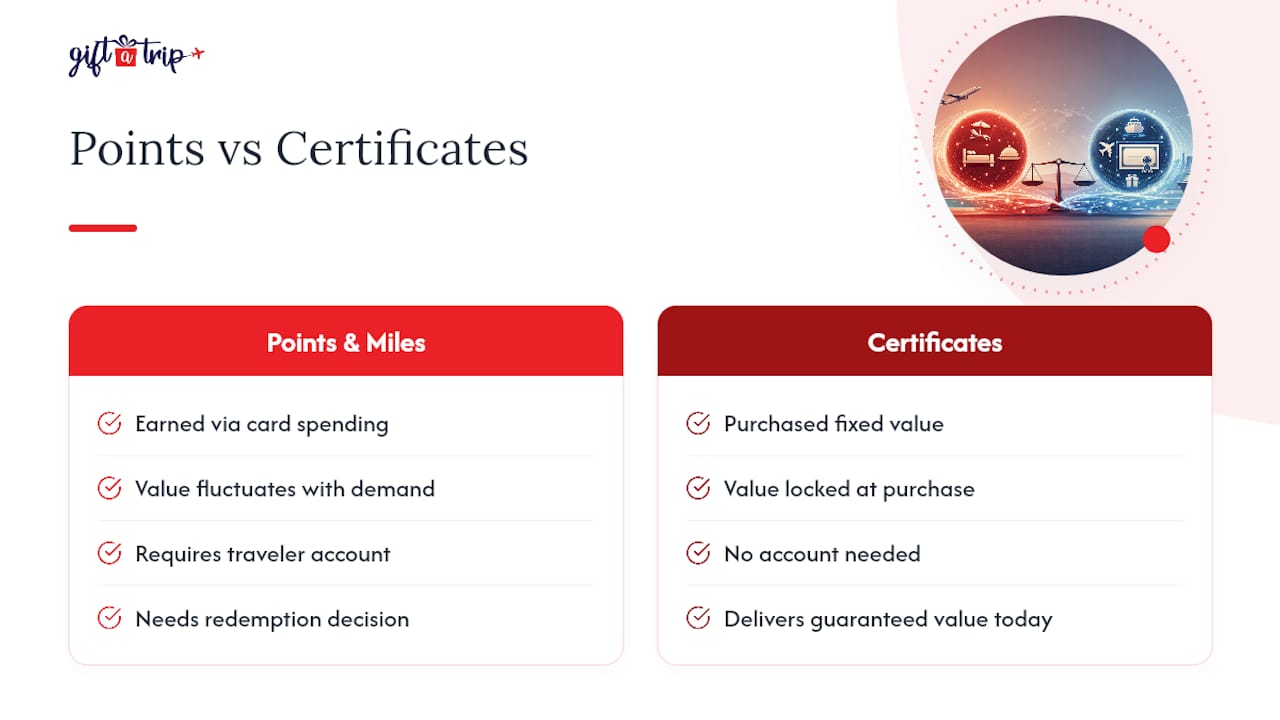
It helps to understand the points-and-miles world briefly, since it’s the system most employees compare certificates against. Airline and hotel loyalty programs award points or miles based on money spent: flight distance or fare class, nightly hotel stays, or dollars charged on a co-branded credit card. Every dollar or mile earned accumulates in an account tied to one traveler, and that balance grows or shrinks based on program rules the traveler doesn’t control.
Credit card spending has become the dominant earning mechanism for most travelers, often outpacing miles earned from actual flying, because everyday purchases (groceries, gas, subscriptions) generate points continuously while flights happen only a few times a year. That’s part of why loyalty programs partner so heavily with card issuers: the card is the earning engine, and travel is just where the points eventually get spent.
The redemption side works on a variable-value model. The same 50,000 points might book a $200 flight one week and a $600 flight the next, depending on demand, seat class, and how the airline’s revenue-management system is pricing that specific route that day. That unpredictability is the single biggest difference between a points balance and a fixed-value certificate: one has a value that shifts with market conditions, the other has a value locked at the moment of purchase.
For HR purposes, this matters mainly as context. Employees who are frequent travelers will understand the points system intuitively and may ask why a reward wasn’t structured as miles instead. The honest answer: a certificate delivers guaranteed value today, while a points award requires the recipient to already have (or build) an account, and its value depends entirely on the redemption they eventually choose.
What Are the Main Types of Travel Loyalty Programs?
Three structures dominate the traditional loyalty landscape, and each earns and pays out differently.
Airline mileage programs reward flight activity and card spending with miles redeemable for flights, upgrades, or partner airline seats. Elite status tiers within these programs unlock lounge access, priority boarding, and bonus mile multipliers, but tiers usually require a minimum annual spend or flight segment count to maintain.
Hotel points programs work similarly but center on nights stayed and brand credit card spend. Redemption typically covers free nights, though award availability at popular properties during peak seasons is often limited.
Credit card rewards programs sit somewhat apart: they’re not tied to one airline or hotel chain, and points earned through everyday spending can often transfer to multiple airline and hotel partners at varying ratios. This flexibility is the main draw, but transfer ratios and partner availability change without much notice, which frustrates travelers trying to plan redemptions months in advance.
Each type demands ongoing engagement: tracking expiration dates, monitoring status thresholds, and researching the best redemption path for a given trip. That’s a meaningfully different experience from handing someone a certificate they can use without first building a habit of card spending or flight tracking. For a one-time reward moment, a fixed-value certificate removes that entire learning curve.
What Are the Best Strategies for Maximizing Travel Rewards Value?
Travelers serious about squeezing maximum value from points and miles generally follow a few consistent tactics. Booking award flights and hotel stays well in advance, often 9 to 11 months out, tends to unlock better award availability before the best inventory disappears. Transferring flexible card points to airline or hotel partners at the right moment, rather than redeeming directly through a card portal, frequently yields a higher value per point since direct redemptions often apply a fixed, lower conversion rate.
Stacking earning categories matters too: routing everyday spending through a card that earns bonus points on categories like dining or travel purchases compounds faster than a flat-rate card. Consolidating activity onto one or two loyalty programs rather than spreading it thin also helps travelers hit elite status tiers that unlock meaningfully better perks.
None of these tactics translate to a corporate incentive context, though, and that’s precisely the point worth flagging for HR. Asking an employee to “maximize” a points reward requires them to research redemption values, watch for transfer bonuses, and time their booking correctly, work most recipients won’t do and won’t enjoy. A travel certificate sidesteps that entire optimization exercise. The value is fixed the day it’s issued, and the only “strategy” a recipient needs is picking dates and booking. If your goal is to reward someone, not to teach them a hobby, that simplicity is worth more than any theoretical point-value ceiling.
What Pitfalls Trip Up Travel Loyalty Program Members?
Expiration policies catch travelers constantly. Miles and points in many programs expire after a defined period of account inactivity, sometimes as short as 12 to 24 months, and a traveler who forgets to make one qualifying purchase can watch years of accumulated balance disappear.
Blackout periods and limited award inventory are the second major frustration. Popular routes and peak-season hotel nights often have minimal award availability, forcing travelers to either pay cash, accept a worse redemption, or delay travel entirely. Elite status tiers add another layer of complexity: maintaining a tier usually requires meeting an annual spend or flight-segment threshold, and falling short means a demotion the following year, sometimes with little warning.
Devaluation is the pitfall travelers notice least until it happens: airlines and hotel chains periodically change award charts, quietly requiring more points for the same redemption than the previous year. A traveler who banked points for three years assuming stable value can find the goalposts moved right before they try to book.
Compare that landscape to certificate-based rewards, where the fixed value and defined activation window remove most of these failure points. A certificate expires on a known date, not a moving inactivity clock, and its value doesn’t get quietly devalued between issuance and redemption. For a corporate program, predictability of that kind is worth more to an administrator than any theoretical upside a points program might offer a frequent flier.
How Do Alliances and Transfer Partners Connect Different Programs?
Airline alliances (groupings of carriers that share reciprocal earning and redemption rights) let travelers earn and burn miles across partner airlines rather than being locked to one carrier’s route network. Hotel and card transfer partnerships work on a similar principle, letting a cardholder move points from one flexible program into a specific airline or hotel partner’s account, usually at a fixed ratio.
The appeal is obvious: more redemption options, better route coverage, and a chance to find award availability on a partner’s flight when the primary airline has none. The complexity is just as real. Transfer times vary by partner, ratios change without warning, and a points balance spread across five loyalty accounts is far harder to track and use effectively than one that sits in a single program.
This is exactly the coordination problem that travel certificates avoid entirely. A certificate redeemed through a single vendor, whether cruise, resort, or vacation package, doesn’t require the recipient to understand alliance networks, transfer windows, or partner booking engines. They activate one certificate and book through one system.
What’s New in Travel Loyalty and Experiential Rewards?
Dynamic pricing has spread from cash fares into the award world. Airlines and hotel chains increasingly price award redemptions the way they price cash tickets, meaning the same flight can cost wildly different point amounts depending on demand, day of week, and how far out someone books. That shift has made maximizing point value harder for casual travelers and easier for people who track pricing patterns closely.
Experiential rewards are the more interesting trend for the corporate audience. Loyalty programs and reward providers are leaning harder into curated experiences (private tours, unique dining access, spa credits bundled with a stay) rather than pure point accumulation, because travelers increasingly rate a memorable experience above a marginal discount. That trend lines up directly with why travel certificates work as incentives: the reward is the trip itself, not a balance that requires further decision making to become useful.
How Gift A Trip Handles the Fulfillment Side
Most of the friction described throughout this guide, unclear fees, confusing activation steps, recipients who don’t know who to call, comes down to fulfillment design, not certificate value. Gift A Trip builds around that problem directly: digital certificates with taxes and resort fees typically included, minimal blackout dates, and bulk-order workflows built for corporate purchasing rather than one-off consumer gifting.
Picture a mid-size sales team hitting quarterly targets. An HR administrator orders 40 certificates in one bulk transaction, adds a personalized message to each, and delivers them digitally the same afternoon awards are announced. No printing, no shipping delays, no separate vendor calls for each recipient. The client’s own HR guide to travel packages as rewards walks through exactly this kind of program design in more depth.
That combination, included fees plus low blackout restrictions plus one-click bulk ordering, is what actually determines whether a program feels generous or feels like a hassle.
— Donovan
Next Steps for Evaluating Gift A Trip for Your Program
If the certificates and cash bonuses you’ve compared all come with the same tradeoff (better value on paper, more admin work in practice), Gift A Trip’s advantage is straightforward: fewer fees for recipients to discover after the fact, and a bulk-order process built for one HR administrator to manage alone, not a procurement committee.

Start by reviewing the travel certificate distribution guide for HR and events teams, which walks through procurement timing and recipient communication templates. From there, request a bulk quote or a sample certificate to check the exact fee structure and blackout policy against your program’s redemption season. If cruise rewards fit your incentive tier, the Virgin Voyages certificate options show how included fees and flexible dates work in practice.
Before you launch, loop in payroll and finance so the accounting treatment is settled before certificates go out, not after the first W-2 question comes in. That single step prevents most of the tax headaches this guide covers.
Sources
- Royal Caribbean gift certificate terms and conditions
- IRS Chief Counsel Advice (example) on reimbursed expenses and accountable plans
- When does an incentive trip become taxable to an employee? – Accounting Insights (2025)
- Redeem your travel resort certificate (practical redemption checklist)
FAQ
Are Travel Gift Certificates Taxable to Employees?
They can be, depending on primary purpose and documentation. Awards tied to a documented business achievement and properly substantiated under accountable-plan rules are treated differently than a certificate given as pure recreation, which is more likely to count as a taxable fringe benefit.
What Fees Should Recipients Expect When Redeeming a Certificate?
Common charges include activation fees, booking or processing fees, and daily resort fees that add to the overall cost, on top of applicable taxes. The exact list varies by certificate type, so check the vendor’s terms before distributing.
How Is a Travel Certificate Different From an Airline Miles Program?
A certificate has a fixed value set at purchase and requires no accrual period, while airline miles accumulate gradually through flights and card spending and fluctuate in redemption value based on demand and dynamic pricing.
Can Employees Transfer a Travel Certificate to Someone Else?
It depends on the vendor’s terms. Some certificates lock to the original recipient’s name, while others allow transfer. Confirm transferability before purchase, especially for bulk corporate orders.
Does Gift A Trip Include Taxes and Resort Fees in Its Certificates?
Gift A Trip designs its certificates to include taxes and resort fees in most cases, with minimal blackout dates, which reduces the out-of-pocket surprises recipients often face with other vendors.
How Do I Choose Between a Cruise, Resort, or Vacation Package Certificate?
Match the certificate type to your recipient’s likely preference and your budget: cruise certificates typically apply only to fare, resort certificates often carry daily fees, and package certificates bundle more inclusions at a higher price point.