Jump to Section:
What loyalty rewards examples actually look like in travel programs
Travel loyalty programs span a wider range than most people realize. The core types include points-based earning, tiered elite status, subscription bundles, cashback on travel spend, gamified engagement, and hybrid models that blend several mechanics at once. Here is what each looks like in practice:
- Points-based: Earn miles per dollar on flights or hotel stays, redeem for free nights or upgrades
- Tiered: Reach Silver, Gold, or Platinum status to unlock room upgrades, lounge access, and priority service
- Subscription/paid: Pay an annual fee for bundled travel perks like free breakfast or waived resort fees
- Cashback: Receive a percentage of travel spend back as credit toward future bookings
- Gamified: Complete challenges, earn badges, or hit streak milestones for bonus rewards
- Hybrid: Combine points with cash payment options, or layer status tiers onto a points base
The clearest shift in U.S. travel loyalty right now is toward experience-led redemption with flexible blended cash-plus-points payment options, which removes the “I don’t have enough points” barrier that keeps occasional travelers from ever redeeming anything.
Table of Contents
- 10 types of loyalty rewards programs you should know
- How to design a travel loyalty program that actually changes behavior
- How Giftatrip approaches experiential travel loyalty rewards
- What the best travel loyalty programs have in common
- How loyalty programs shape traveler behavior: real case studies
- What engagement and retention data tells us about loyalty program design
- Common pitfalls in loyalty programs and how to avoid them
- Loyalty program examples from outside the travel industry
- Giftatrip makes travel rewards simple for corporate programs
- Key Takeaways
- FAQ
10 types of loyalty rewards programs you should know
Understanding how each loyalty program model works helps you pick the right structure or evaluate the programs you already participate in.
1. Points-based programs
The most common model. Customers earn points per dollar spent and redeem them for free stays, flights, or merchandise. Starbucks Rewards layers personalized challenges and double-star days on top of its base points system, tying every bonus to a purchase rather than passive app activity. That distinction keeps the mechanics revenue-generating rather than just engagement-generating.

2. Tiered elite status programs
Hotel tiered programs use status levels to influence booking behavior directly. Marriott Bonvoy’s structure runs from Member through Titanium Elite, with perks like room upgrades, lounge access, and late checkout unlocking at each step. The psychology here is different from a basic points program: members are chasing recognition, not just discounts.
3. Cashback rewards
Straightforward and transparent. Rakuten returns a portion of affiliate commissions directly to shoppers as cashback on completed purchases. In travel, credit cards offering 2–5% back on hotel and airline spend operate on the same principle. Every dollar earned is a direct cost to the program operator, so cashback models work best when the behavioral uplift in spending frequency justifies the margin.
4. Subscription and paid membership programs
Amazon Prime is the textbook case: the original value proposition was friction removal (free two-day shipping), not loyalty mechanics. Travel equivalents bundle perks like free breakfast, room upgrades, or waived fees behind an annual fee. The sunk-cost effect encourages members to use the program enough to justify what they paid.
5. Gamified programs
Nike Membership connects workout streaks and challenge completions to product drops and member-exclusive access, tying participation back to spend rather than app usage alone. In travel, gamified check-in challenges and bonus-point sprints serve the same function: they make engagement feel earned rather than transactional.
6. Referral programs
Existing members invite friends and earn rewards for successful referrals. The mechanic grows the customer base organically while rewarding the behavior most likely to bring in high-value new members.
7. Coalition programs
Groups of businesses share one rewards currency. Members earn points at any coalition partner and redeem them across the network, which increases perceived value without requiring any single brand to fund the entire liability.
8. Value-based and charity-driven programs
Members donate earned points to causes rather than redeeming for personal rewards. This builds emotional loyalty by aligning the brand with values the customer already holds.
9. Experiential loyalty programs
Instead of discounts, members get access to VIP events, product launches, or travel experiences. Emotional loyalty takes longer to build than transactional loyalty, but it is significantly harder for competitors to win away.
10. Hybrid models
Most mature programs blend at least two mechanics. Sephora’s Beauty Insider combines tiered status with points earning and experiential perks, segmenting members into Insider, VIB, and Rouge based on annual spend. Travel programs increasingly layer blended cash-plus-points payment options onto existing tier structures to widen participation among occasional travelers.
How to design a travel loyalty program that actually changes behavior
Start with the objective, not the mechanics. Defining clear KPIs before building program rules prevents the most common failure mode: a reward scheme that costs money without changing what customers do.
The most effective programs reward behaviors that drive long-term value: referrals, category exploration, and non-transactional brand engagement, not just repeat purchases. A hotel program that only rewards bookings misses the chance to reward reviews, social shares, or direct-channel sign-ups.
Personalization by traveler segment delivers higher ROI than one-size-fits-all reward structures. A road warrior who books 80 nights a year has different motivations than a leisure traveler who takes two trips. Treating them identically wastes both budget and relevance.
Flexible redemption options matter more than most program designers expect. When convenience drives business travel decisions, a redemption process that requires 40,000 points minimum or has 30 blackout dates will see most members never redeem at all, which erodes the emotional connection the program was supposed to build.
Pro Tip: In corporate travel programs, hotel loyalty points typically belong to the individual traveler, not the company paying for the trip. This creates a real tension: employees may book out of policy to protect their status, while the company loses negotiating leverage. Address this explicitly in your travel policy before it becomes a pattern.
How Giftatrip approaches experiential travel loyalty rewards
Giftatrip takes a different angle from traditional points-and-miles programs. Rather than asking recipients to accumulate currency over time, it delivers digital travel certificates redeemable for stays at resorts, hotels, cruise lines, and vacation packages from major brands, with taxes and resort fees already included.
For corporate clients, that structure solves several problems at once:
- Employee recognition: A travel certificate for a resort stay lands differently than a gift card. It signals that the company invested in a real experience, not just a dollar amount.
- Sales incentives: Certificates can be issued in bulk with customizable gift boxes and personalized messaging, making them practical for large sales teams.
- Milestone rewards: Anniversaries, promotions, and performance milestones all map naturally to travel experiences, which research consistently links to higher engagement and retention.
- Minimal redemption friction: Giftatrip certificates carry minimal blackout dates and cover fees upfront, removing the hidden-cost frustration that undermines many travel reward programs.
- Flexible delivery: Secure digital delivery means certificates reach recipients instantly, whether the team is in one office or spread across the country.
The experiential focus matters strategically. A resort stay or cruise creates a memory the recipient associates with the company that gave it. Points balances do not.
What the best travel loyalty programs have in common
The programs that hold member attention over years share a few consistent traits:
- They reward behavior change, not just spending volume
- Redemption is genuinely easy, with few restrictions and no surprise fees
- Status or recognition is visible and meaningful to the recipient
- The program adapts to different traveler segments rather than treating everyone identically
- Hybrid mechanics give occasional travelers a reason to engage, not just frequent flyers
The trend toward experience-led rewards and flexible travel gifting reflects a broader shift: travelers increasingly value what they do over what they accumulate. Programs that offer a memorable stay or a cruise certificate often generate stronger emotional loyalty than those offering another points balance to manage.
How loyalty programs shape traveler behavior: real case studies
British Airways’ shift from mileage-based to spend-based earning illustrates how program design directly drives booking behavior. U.S. carriers including United Airlines, Delta Air Lines, and American Airlines made the same transition years earlier. The result, as industry analysts note, is that spend-based schemes can encourage late bookings, more expensive fare types, and out-of-policy purchases as travelers chase status thresholds.
World of Hyatt’s Globalist tier demonstrates the opposite dynamic: a program that creates genuine aspiration. At Globalist level, members can gift benefits to a separate booking for another guest, which turns the status itself into a social currency. That mechanic drives both retention and word-of-mouth in ways a simple points multiplier cannot.
Marriott Bonvoy’s base earning of 10 points per dollar on eligible charges at most brands gives members a clear, trackable accumulation path. The program’s scale means members can earn and redeem across thousands of properties, which reduces the “I never stay at the right brand” dropout that kills smaller hotel programs.
What engagement and retention data tells us about loyalty program design
Loyalty programs that reward actual behavior change rather than administrative convenience produce measurably better retention outcomes. The mechanism is straightforward: when a reward requires a specific action the customer might not have taken otherwise, the program is shaping behavior. When it rewards what the customer would have done anyway, it is subsidizing existing spend without changing anything.
Tiered programs tend to produce stronger retention at the top of the funnel because status creates switching costs. A traveler who has reached Gold status at a hotel chain faces a real cost in giving that up, even when a competitor offers a better rate on a given night. That psychological lock-in is worth more to the program operator than any single redemption.
Blended cash-plus-points redemption options widen participation among members who would otherwise let their balances expire unused. An unused balance is a liability on the program’s books and a missed engagement opportunity. Flexible redemption converts passive members into active ones.
Common pitfalls in loyalty programs and how to avoid them
Points devaluation is the fastest way to destroy member trust. When airlines and hotels reduce the value of existing points balances, members experience it as a retroactive pay cut. The frustration is well-documented: stricter elite status requirements and dynamic award pricing have created what industry observers call “reward fatigue.”
Redemption complexity is the second major failure mode. When redeeming points requires navigating dynamic pricing, blackout dates, and category restrictions simultaneously, many members simply stop trying. Programs that make booking a weekend stay straightforward retain far more active redeemers than those that treat redemption as an obstacle course.
Corporate vs. personal points asymmetry creates policy compliance problems. When employees earn personal loyalty points on company-funded travel, their booking decisions may prioritize status over cost. Travel managers at companies with business-class entitlements are now running monthly audits on top routes and travelers to catch loyalty-driven out-of-policy bookings early.
Over-reliance on transactional rewards produces members who leave the moment a competitor offers a better deal. Emotional loyalty, built through recognition, personalization, and experiential rewards, is harder to win but far more durable.
Loyalty program examples from outside the travel industry
Starbucks Rewards earns its reputation as a benchmark not because of its points structure but because of its personalization layer. Individualized challenges and double-star days make every member’s experience slightly different, which increases perceived value without increasing cost proportionally.
Sephora’s Beauty Insider shows how tiered status creates visible social differentiation. Rouge members are not just getting better discounts; they are signaling something about their relationship with the brand. That identity dimension is what keeps high-spending members from defecting for a marginal price advantage elsewhere.
Amazon Prime remains the clearest example of loyalty built on friction removal rather than reward accumulation. The program did not start by trying to create loyalty. It started by solving a real customer problem: shipping costs causing cart abandonment.
Nike Membership demonstrates how gamification works when it connects to commerce. Workout streaks and challenge completions surface personalized product recommendations and early access to gear, tying activity back to spend rather than running as a standalone engagement loop.
Each of these programs succeeds because it rewards a specific behavior the business actually wants, not just spending in general.
Giftatrip makes travel rewards simple for corporate programs
Most corporate loyalty programs require months of setup, vendor negotiations, and ongoing administration. Giftatrip cuts that down to something a single HR manager or event planner can execute in an afternoon.
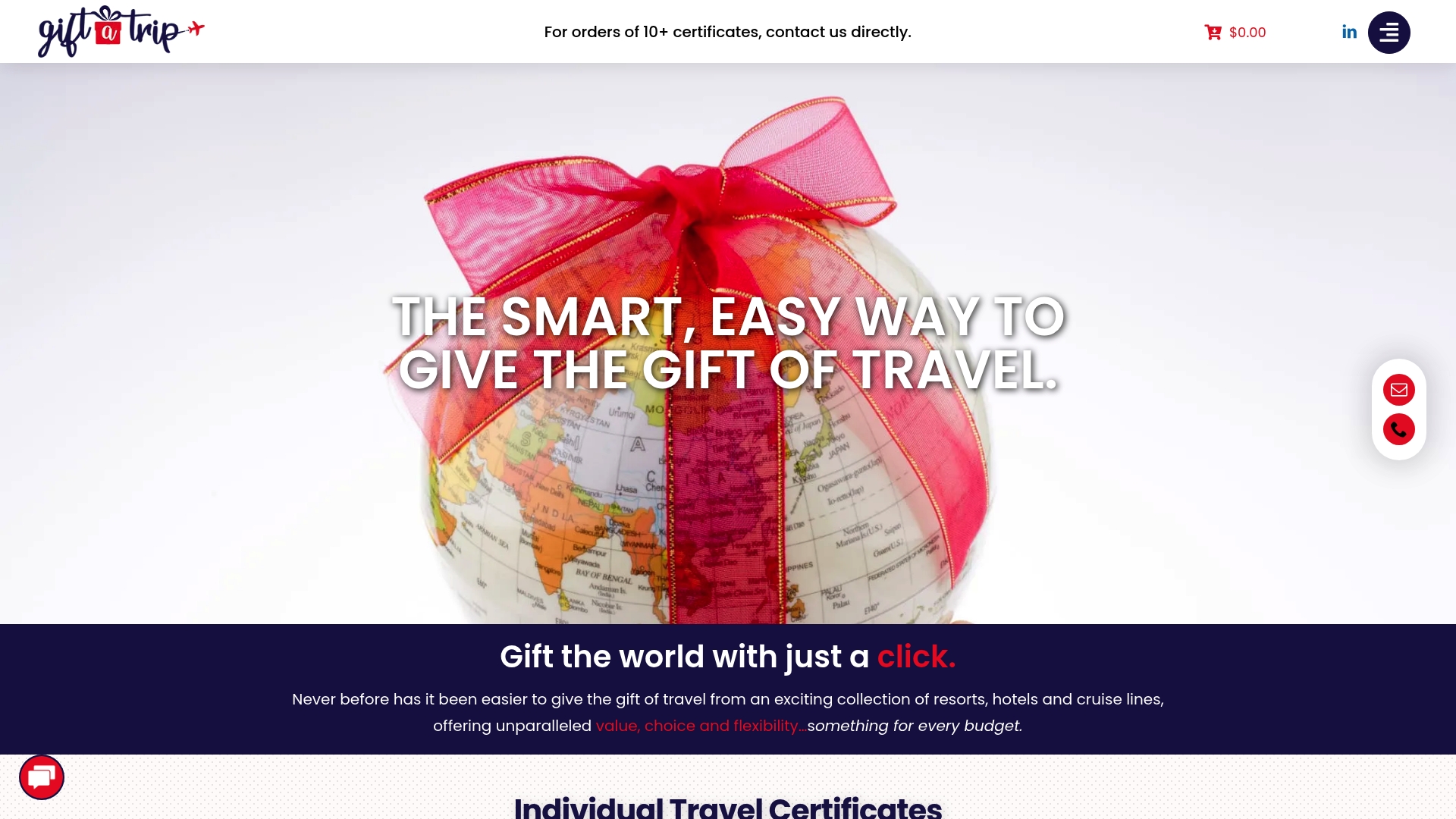
The platform offers digital travel certificates for resorts, hotels, cruise lines, and vacation packages, with taxes and resort fees already covered. No hidden costs for the recipient, no surprise charges that undermine the reward’s impact. Certificates arrive via secure digital delivery with personalized messaging, and bulk orders come with customizable gift boxes suited to sales incentive programs, employee recognition events, or milestone celebrations.
For companies that want to offer a meaningful travel reward without building a full loyalty infrastructure, Giftatrip is the practical path. Browse the certificate options at giftatrip.com and request a corporate quote to get started.
Key Takeaways
The most effective travel loyalty programs combine experiential rewards with flexible redemption and clear behavioral objectives, rather than relying on points accumulation alone.
| Point | Details |
|---|---|
| Program type determines behavior | Points, tiers, cashback, and hybrid models each drive different customer actions and retention patterns. |
| Experience beats accumulation | Travel certificates and experiential rewards build stronger emotional loyalty than points balances alone. |
| Redemption friction kills programs | Blackout dates, dynamic pricing, and complexity cause members to disengage before they ever redeem. |
| Corporate points create policy risk | Individual ownership of loyalty points in company-funded travel can drive out-of-policy booking behavior. |
| Giftatrip for corporate rewards | Giftatrip delivers digital travel certificates with fees included, suited for employee recognition and sales incentives. |
FAQ
What are the main types of loyalty rewards programs?
The core types are points-based, tiered, subscription, cashback, gamified, referral, coalition, value-based, experiential, and hybrid programs. Most mature programs blend at least two of these models.
How do travel loyalty programs influence booking behavior?
Spend-based and tiered programs can encourage travelers to book more expensive fares or out-of-policy options to chase status thresholds, which is why corporate travel managers monitor loyalty-driven booking patterns closely.
What makes an experiential travel reward more effective than points?
A travel experience creates a lasting memory tied to the brand that gave it, while a points balance is abstract and easily devalued. Programs offering resort stays or cruise certificates tend to generate stronger emotional loyalty.
How does Giftatrip work as a corporate loyalty reward?
Giftatrip provides digital travel certificates redeemable at resorts, hotels, cruise lines, and vacation packages, with taxes and resort fees included. Corporate clients can order in bulk with personalized messaging and customizable delivery for employee recognition or sales incentive programs.
What is the biggest pitfall in loyalty program design?
Points devaluation and redemption complexity are the two most common failures. When members cannot easily redeem what they have earned, or find their balances suddenly worth less, trust erodes quickly and engagement drops.