Jump to Section:
TL;DR:
- Personalized gifting enhances engagement by fostering genuine recognition, activating gratitude, and strengthening loyalty.
- Effective programs align gifts with relationship stages, timing, and recipient preferences, boosting retention and trust.
Personalized gifting is the deliberate practice of selecting gifts tailored to a recipient’s preferences, relationship history, and context, and research confirms it directly drives measurable engagement outcomes. The role of personalized gifting in engagement extends far beyond a thoughtful gesture. It activates psychological responses, including gratitude and a sense of recognition, that translate into loyalty, retention, and stronger collaboration. A 2026 Snappy study found that 88% of employees say gifts increase engagement and collaboration. That number alone signals why businesses and individuals who invest in personalization are building relationships that last.
How does personalized gifting influence employee engagement and retention?
Personalized gifting functions as a measurable workforce strategy, not a nice-to-have perk. The 2026 Snappy research shows that 72% of employees say receiving a work anniversary gift would make them more likely to stay at their company. That retention signal is significant because replacing a single employee typically costs a company between 50% and 200% of that person’s annual salary. A well-timed, personalized gift at a milestone moment can do more for retention than a generic bonus.

The same research identifies personalization as the single most important factor in meaningful recognition, with 73% of employees rating it as the top driver. This means the gift’s monetary value matters far less than whether it reflects genuine knowledge of the recipient. A curated book from a favorite author, a wellness subscription aligned with a known interest, or a travel experience tied to a personal goal all communicate something a gift card cannot: that the giver paid attention.
Despite this evidence, only 47% of employees report ever receiving a work anniversary gift. That gap represents a concrete opportunity for companies willing to build gifting into their employee experience programs. Organizations that close this gap gain a direct advantage in employer brand and team cohesion.
Scaling personalization across a workforce used to require significant manual effort. Today, AI-assisted curation and recipient choice platforms allow HR teams to offer genuinely tailored options at scale, matching gifts to employee milestones, tenure, and stated preferences without requiring individual managers to source every item.
Key gifting moments that drive the strongest engagement outcomes include:
- Work anniversaries: The highest-impact moment for retention-focused gifting, especially at 1, 3, and 5-year milestones.
- Onboarding gifts: Personalized welcome packages set a tone of recognition from day one.
- Project completions: Acknowledging effort after a demanding sprint reinforces a culture of appreciation.
- Life events: Recognizing births, graduations, or personal achievements signals that the company sees the whole person.
- Spot recognition: Unexpected, personalized gifts for exceptional contributions carry outsized emotional weight because they are not anticipated.
Pro Tip: When building a corporate gifting program, let employees choose from a curated selection rather than sending a single item. Recipient choice preserves personalization at scale and eliminates the risk of sending something irrelevant.
What research reveals about personalized gifting effects on customer relationships
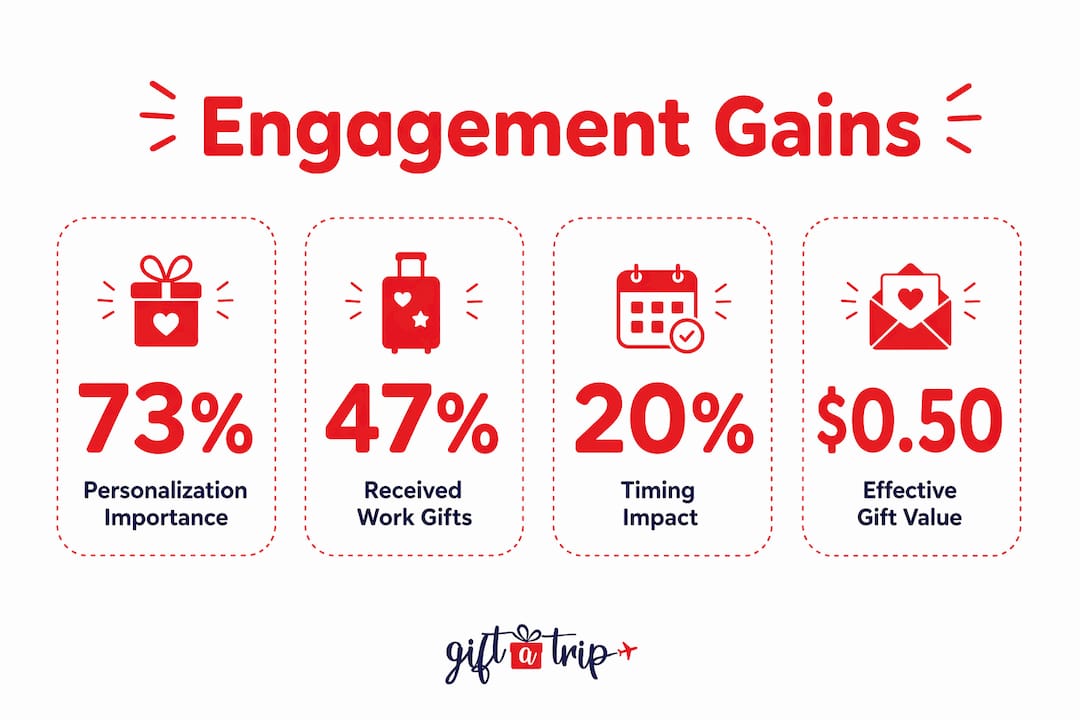
The impact of gifting on customer relationships is not uniform. The Academy of Marketing Science confirms that gift timing and value relative to relationship stage can shift outcomes by more than 20% in either direction. A high-value gift sent to a brand-new customer can trigger suspicion rather than gratitude. A low-value gift sent to a long-term loyal customer can feel like an insult. The relationship stage determines what a gift communicates.
Research published in the Journal of the Academy of Marketing Science identifies two distinct psychological levers that gifts activate: gratitude and obligation. Gratitude builds long-term loyalty, while obligation drives immediate transactional spending. Unconditional gifts improve firm outcomes through both mechanisms, with customer spending increasing by up to 31.66% following a well-executed gifting campaign. Businesses can deliberately tune their programs by understanding which lever they want to activate at a given stage.
One counterintuitive finding from BI Business Review’s 2026 analysis: even gifts worth $0.50 effectively activate gratitude and obligation, increasing loyalty and immediate spending. The implication is that the act of giving, when it feels genuine and appropriately timed, matters more than the dollar amount. This removes cost as the primary barrier to running a gifting program.
| Psychological lever | Primary effect | Best use case |
|---|---|---|
| Gratitude | Long-term loyalty and repeat engagement | Unconditional gifts at milestone or renewal moments |
| Obligation | Immediate transactional spending | Gifts tied to a purchase prompt or campaign launch |
| Recognition | Bonding and emotional connection | Personalized gifts reflecting recipient preferences |
| Suspicion | Negative relationship impact | High-value gifts sent too early in the relationship |
The risk of mismatched gifting is real. Sending an expensive gift to a prospect who has only made one purchase can feel transactional and calculated, which undermines the very trust the gift was meant to build. Personalized gifting benefits are maximized when the gift feels proportionate and genuine, not like a calculated investment.
How to tailor personalized gifts effectively by relationship stage and context
Relationship-stage fit is the single most underused principle in gifting strategy. The Academy of Marketing Science recommends sequencing gifts by three lifecycle phases: early awareness, active nurture, and loyalty or renewal. Each phase calls for a different gift value, level of personalization, and communication approach.
Here is a practical framework for applying this principle:
- Early awareness stage: Keep gifts low-value and low-pressure. A branded item, a small digital gift, or a relevant resource communicates goodwill without creating an uncomfortable sense of obligation. The goal is to introduce the relationship, not accelerate it.
- Active nurture stage: Increase personalization over monetary value. A gift that reflects something you know about the recipient, such as their industry challenges, a shared conversation, or a stated preference, signals attentiveness. This is where tailored gifts in relationships begin to differentiate your approach from competitors.
- Loyalty and renewal stage: This is the moment for higher-value, experience-based gifts. A customer who has stayed for three years or an employee celebrating a milestone deserves recognition that matches the depth of the relationship. Travel experiences, curated packages, and personalized keepsakes work well here.
Unconditional gifts consistently outperform conditional rewards in building emotional engagement. A conditional reward, such as “spend $500 and receive a gift,” activates a transactional mindset. An unconditional gift, given without a purchase requirement, activates gratitude and genuine reciprocity. Digital gifting adds another dimension: online platforms allow recipients to perceive etiquette and care through symbolic fit, meaning the gift’s design, presentation, and message carry as much weight as the item itself.
Pro Tip: When sending a gift at any stage, include a brief, specific message explaining why you chose it. “I remembered you mentioned wanting to explore the Pacific Northwest” is more powerful than any gift tag. The message is the personalization signal.
Avoid two common mistakes: over-gifting early, which creates suspicion, and under-gifting at loyalty moments, which signals that long-term relationships are taken for granted. Both errors damage the relationship more than no gift at all.
Practical strategies for businesses and individuals using personalized gifting
Applying personalized gifting at scale requires both a clear strategy and the right tools. For businesses, the most effective programs combine milestone tracking, recipient choice, and consistent measurement. For individuals, the key is specificity: a gift that references a shared memory or a known preference will always outperform a generic option at the same price point.
Concrete approaches that work across both corporate and personal contexts include:
- Use recipient choice platforms: Tools like Snappy allow recipients to select from a curated range of options, preserving personalization while removing the guesswork for the giver. This approach scales across large teams without sacrificing relevance.
- Track engagement metrics: Effective gifting programs measure both short-term purchase uplift and long-term retention to evaluate success. Tracking only one metric gives an incomplete picture of how gifting affects engagement.
- Balance monetary value with thoughtfulness: A $25 gift that references a specific conversation will generate more loyalty than a $100 gift card. Thoughtfulness is the multiplier, not the price tag.
- Leverage travel incentive strategies for high-impact moments: Experience-based gifts, particularly travel, consistently rank among the most memorable and emotionally resonant options for both employees and customers.
- Personalize the delivery, not just the gift: A handwritten note, a custom gift box, or a personalized digital message transforms even a simple gift into a meaningful gesture.
For customer loyalty programs, the research from the Journal of the Academy of Marketing Science confirms that unconditional gifting campaigns require operational discipline to balance immediate spending activation with long-term loyalty building. The most effective programs run both types of campaigns in sequence, using obligation-driven gifts to activate short-term behavior and gratitude-driven gifts to cement long-term relationships.
Pro Tip: For employee recognition programs, set calendar reminders for every team member’s work anniversary at least 30 days in advance. Last-minute gifting signals low effort, which cancels out the positive intent.
Key takeaways
Personalized gifting drives engagement because it communicates genuine attention, activates gratitude and loyalty, and aligns with the recipient’s relationship stage and preferences.
| Point | Details |
|---|---|
| Personalization outranks monetary value | 73% of employees rate personalization as the top driver of meaningful recognition, not gift cost. |
| Relationship-stage fit is non-negotiable | Mismatched gift value to relationship stage reduces effectiveness by more than 20%, per Academy of Marketing Science research. |
| Unconditional gifts outperform conditional rewards | Gifts given without purchase requirements increase customer spending by up to 31.66% and build stronger loyalty. |
| Only 47% of employees receive anniversary gifts | This gap represents a direct, measurable opportunity for businesses to improve retention through personalized gifting programs. |
| Digital gifting carries symbolic weight | Online gift presentation, messaging, and design communicate care as effectively as the physical item itself. |
Why I think most gifting programs miss the point entirely
After years of watching companies invest in gifting programs that produce minimal results, the pattern is consistent: they optimize for the gift and ignore the relationship. They spend hours selecting the right product, the right price point, and the right packaging, then send it at the wrong moment to someone they barely know. The gift lands flat, and the company concludes that gifting doesn’t work.
What actually doesn’t work is gifting without context. The research is clear that timing and relationship-stage fit matter more than value. A $10 gift sent at exactly the right moment, with a message that references something specific about the recipient, will generate more loyalty than a $200 gift sent generically to a list. I’ve seen this play out repeatedly in corporate recognition programs where the highest-rated gifts were often the simplest ones, chosen because someone paid attention.
Technology has made it easier to scale personalization, but it hasn’t made it easier to care. AI-assisted curation and recipient choice platforms solve the logistics problem. They don’t solve the intention problem. The companies that get the best results from gifting are the ones where a manager actually knows their team members well enough to choose something meaningful, or at minimum, creates a system that captures that knowledge over time.
The other mistake I see constantly is treating gifting as a one-time campaign rather than a relationship-building practice. The resort gifting guide from Giftatrip illustrates this well: the most effective gifting programs in hospitality are built around repeated, contextually relevant touchpoints, not single gestures. That principle applies equally to employee recognition and customer loyalty. Gifting works when it’s a practice, not a promotion.
— Donovan
How Giftatrip makes personalized travel gifting effortless
Giftatrip specializes in travel gift certificates that work as personalized engagement tools for both corporate programs and individual occasions. Whether you’re recognizing a five-year employee milestone, rewarding a top-performing sales team, or celebrating a personal anniversary, a travel certificate communicates something a physical gift rarely can: that you want the recipient to experience something extraordinary.
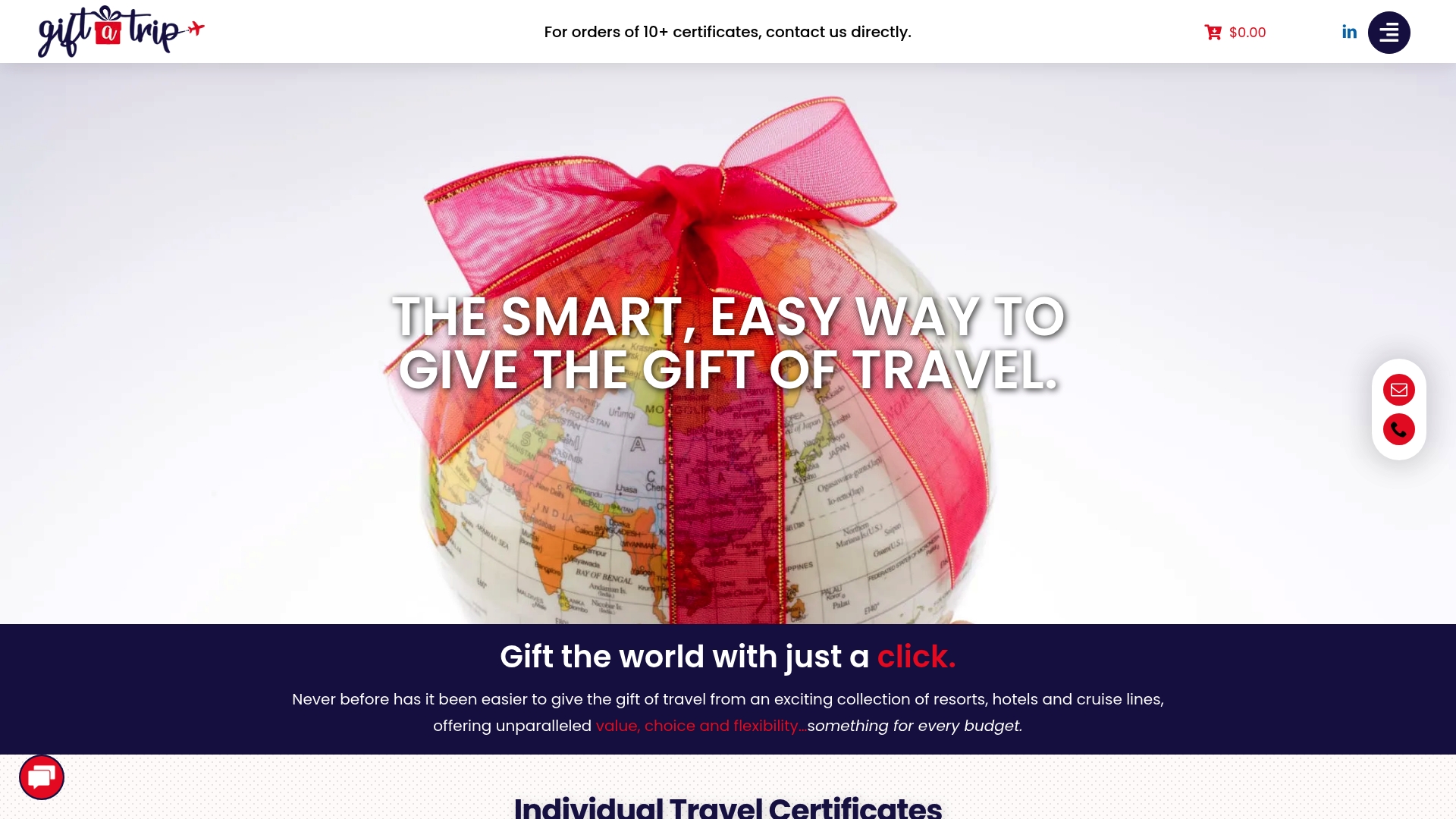
Giftatrip’s digital travel certificates are redeemable at resorts, hotels, cruise lines, and vacation packages from major brands, with taxes and resort fees covered and minimal blackout dates. Bulk orders include customizable gift boxes and personalized messaging, making it straightforward to run a gifting program at scale without sacrificing the personal touch. For businesses looking to send digital travel gifts that create lasting impressions, Giftatrip provides the flexibility and curation that generic gift cards simply cannot match.
FAQ
What is the role of personalized gifting in engagement?
Personalized gifting drives engagement by communicating genuine recognition and care, activating psychological responses like gratitude and loyalty. Research shows that 88% of employees report increased engagement and collaboration after receiving a personalized gift.
How does gift timing affect customer relationships?
Gift timing relative to relationship stage can shift outcomes by more than 20%, according to the Academy of Marketing Science. High-value gifts sent too early create suspicion, while appropriately timed gifts build trust and loyalty.
Do expensive gifts produce better engagement results?
No. Research from BI Business Review confirms that even gifts worth as little as $0.50 effectively activate gratitude and increase loyalty and spending. Thoughtfulness and timing consistently outperform monetary value as engagement drivers.
What types of personalized gifts work best for employees?
Work anniversary gifts, milestone recognition packages, and experience-based gifts like travel certificates rank among the most effective options. Personalization, specifically aligning the gift with the employee’s known preferences, is rated the top factor in meaningful recognition by 73% of employees.
How can businesses scale personalized gifting programs?
Businesses can scale personalization through recipient choice platforms like Snappy and AI-assisted curation tools that match gifts to employee milestones and preferences. Pairing these tools with consistent milestone tracking and engagement measurement produces the strongest long-term results.