Jump to Section:
TL;DR:
- Travel creates emotional connections with clients that traditional gifts rarely achieve, boosting loyalty and referrals. Designing personalized trips aligned with client preferences and brand identity maximizes emotional impact, especially when ending experiences thoughtfully. Utilizing digital travel certificates simplifies logistics and makes scalable, ongoing relationship-building possible at any budget.
Most client appreciation strategies are forgettable by design. A branded gift basket arrives, a dinner reservation gets made, a thank-you card gets signed. These gestures check a box, but they rarely move the needle on loyalty or referrals. Understanding why use travel for client appreciation requires stepping back from the familiar and recognizing that what clients actually remember about a business relationship is rarely a product. It’s a feeling. Travel, done intentionally, manufactures that feeling at a scale that no bottle of wine or gift card can match.
Table of Contents
- Key takeaways
- Why use travel for client appreciation
- Designing client trips that actually mean something
- Common mistakes that undercut travel programs
- Building a client travel program that delivers ROI
- My perspective: travel is the only gift that changes the relationship
- Ready to send your clients somewhere they’ll remember
- FAQ
Key takeaways
| Point | Details |
|---|---|
| Travel outperforms traditional gifts | Shared travel experiences generate referrals at over 50%, more than double conventional marketing methods. |
| Personalization drives results | Pre-trip preference surveys increase participant motivation significantly, making tailored experiences far more effective than generic trips. |
| The Peak-End Rule matters | Clients remember emotional high points and strong finishes, not total trip length or budget spent. |
| Ongoing engagement is non-negotiable | Travel is the start of a relationship rhythm, not a one-time transaction. Post-trip follow-up determines lifetime client value. |
| Digital tools simplify execution | Travel certificates let corporate teams deliver flexible, personalized travel appreciation gifts without complex logistics. |
Why use travel for client appreciation
The benefits of travel for clients go well beyond novelty. Travel creates a psychological shift that transactional gestures simply cannot. When a client steps onto a cruise deck or checks into a resort booked specifically for them, the emotional context of your business relationship changes. You are no longer just a vendor. You become connected to one of the best moments they had that year.
Research backs this up. Referrals from shared experiences convert at over 50%, more than double what traditional marketing channels produce. That number is not a coincidence. It reflects what behavioral scientists call the Peak-End Rule: people do not judge an experience by its average. They judge it by its emotional peak and how it ended. A well-executed client appreciation trip hits both of those marks.
“The question is no longer whether experiences beat things. The question is which experiences are designed well enough to create stories clients want to tell.”
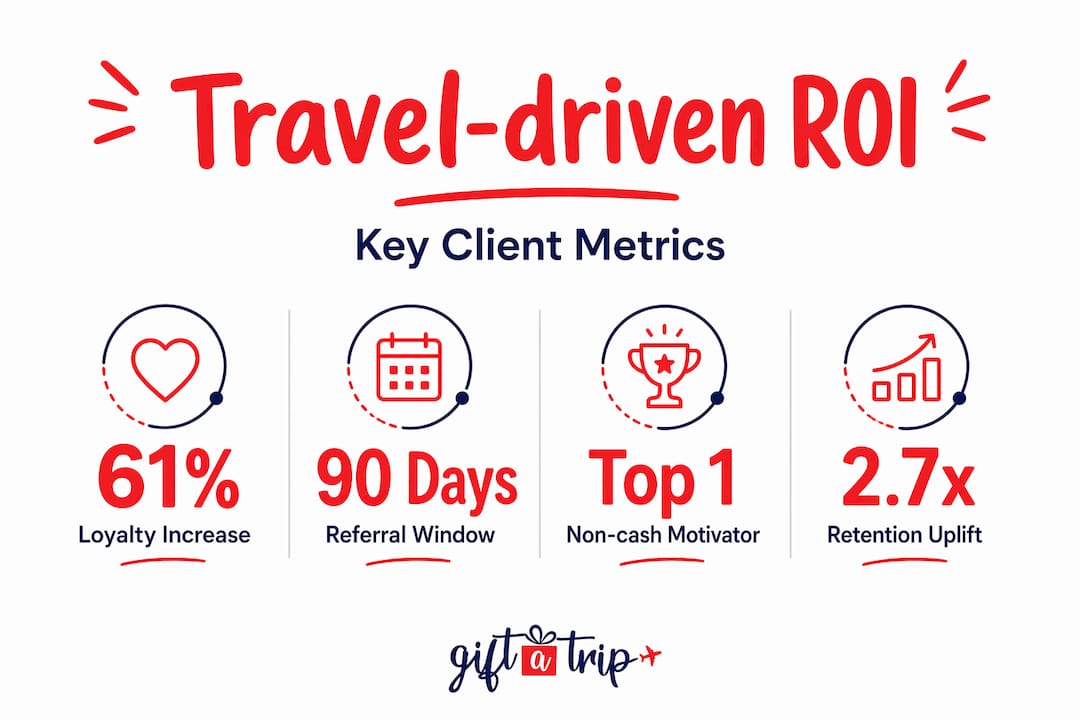
The loyalty numbers are equally striking. Incentive travel ranks as the top non-cash motivator, with 61% of recipients describing individual travel as extremely motivating. That’s well ahead of cash bonuses and gift cards, which feel impersonal the moment they’re spent. And 89% of travelers report stronger loyalty and motivation after an incentive trip. For corporate leaders evaluating where to invest client appreciation budgets, those numbers represent a structural advantage.
Travel experiences for client loyalty work for a straightforward reason. Shared stories create shared identity. When a client tells a colleague about the beachside dinner your company arranged, they are also telling a story about you. Experiences form bonds that physical gifts cannot replicate, and those bonds naturally convert into word-of-mouth marketing that no advertising budget can buy.
Designing client trips that actually mean something
Knowing why travel works is only half the equation. How you design the experience determines whether it resonates or falls flat. Effective client appreciation trips are not about spending the most money. They are about spending it on the right things for the right people.
Here is a proven framework for building trips that land:
- Start with client intelligence. Before any itinerary is finalized, conduct pre-trip preference surveys. Ask clients whether they prefer adventure or relaxation, international destinations or domestic, group events or independent exploration. Personalized itineraries drive 85% higher motivation for future engagement compared to generic formats. That data point alone should make preference surveys non-negotiable.
- Align the trip with your brand identity. A financial services firm taking clients to a curated private island weekend communicates exclusivity. A technology company organizing a retreat focused on creative collaboration communicates values. Strategic alignment between the travel experience and your brand culture builds trust that generic luxury cannot manufacture.
- Choose the right format. Group client appreciation trips create shared moments and facilitate peer-to-peer relationship building among your clients. Individual travel gifts, like personalized travel certificates redeemable at the client’s convenience, add flexibility and feel deeply personal. Many companies benefit from offering both depending on the client tier.
- Design the ending deliberately. Because of the Peak-End Rule, the final moment of a trip carries disproportionate weight. A hand-written note at checkout, a personalized gift waiting at the hotel, or a curated farewell experience will be remembered long after the rest of the itinerary fades.
Pro Tip: Send a short preference questionnaire 6 to 8 weeks before any client trip. Even a five-question form signals that you paid attention, and that signal alone increases emotional connection before anyone boards a flight.
The importance of travel in client relations also shows up in retention metrics. Companies that integrate travel into a recurring relationship architecture achieve 71% repeat client rates compared to just 23% for those using one-off trips. The difference is not the travel itself. It’s the intention behind how the travel is structured and repeated.

Common mistakes that undercut travel programs
Using travel as a client thank-you is a powerful strategy, but the execution errors are surprisingly consistent across industries. Most of them share a common root: treating the trip as the destination rather than the beginning.
The most damaging mistake corporate leaders make is assuming the trip closes the loop. It does not. The trip is the beginning of an ongoing relationship, not the conclusion. Clients who return from a great experience are emotionally open. That window for deeper engagement closes quickly if your team goes silent for three weeks afterward.
Other common pitfalls worth knowing:
- Generic experiences that signal minimal effort. Booking the same five-star hotel package for every client communicates volume, not value. Clients notice when a trip could have been sent to anyone.
- Ignoring generational differences. Younger decision-makers often prioritize sustainability, local culture, and unique access over traditional luxury markers. A trip to a remote eco-lodge may resonate more than a five-star urban hotel, depending on who you’re hosting.
- Measuring success only by the trip itself. If your only metric is “Did they have fun?”, you’re missing the business case. Track referrals generated, contract renewals, and post-trip engagement rates.
- One-and-done thinking. Travel as a client loyalty strategy requires rhythm. A single trip five years ago does not sustain a relationship through competitive pressure.
Pro Tip: Block time in your calendar for post-trip touchpoints within 72 hours of a client returning home. A brief, personal check-in referencing a specific moment from the trip transforms a good experience into a lasting business memory.
You also need to account for the fact that modern travel trends are evolving. Clients’ expectations of what constitutes a meaningful travel experience shift year over year. Programs built on 2019 assumptions need a refresh.
Building a client travel program that delivers ROI
Getting started does not require a six-figure budget or a dedicated events team. What it requires is a clear process and the right tools. Here is how to build or improve a travel-based client appreciation program from the ground up.
| Program stage | Key action | Success metric |
|---|---|---|
| Research and segmentation | Survey clients on travel preferences and tier them by relationship depth | Completion rate of preference forms |
| Design and personalization | Build itineraries or select certificates that reflect individual client profiles | Client satisfaction score post-trip |
| Execution | Deliver experiences with clear communication and personalized touches at each touchpoint | Net Promoter Score shift |
| Post-trip engagement | Follow up within 72 hours with a personal message referencing the trip | Response rate and meeting bookings |
| Program review | Measure referrals, renewals, and revenue attributed to appreciation travel | Year-over-year client retention rate |
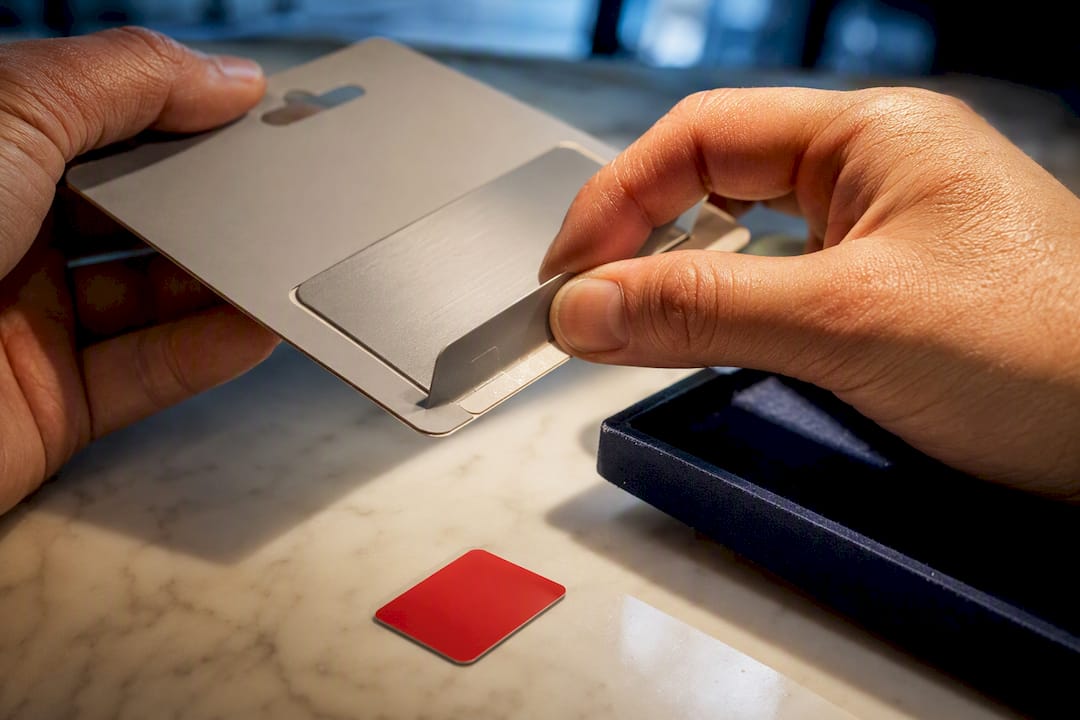
Digital travel certificates have made this process significantly more accessible. Instead of coordinating complex group trips for every client, corporate teams can issue personalized travel certificates redeemable at major resorts, hotels, and cruise lines. The client chooses their timing, destination, and travel style. The business delivers the gift with a customized message and branded packaging. It’s a model that gift vouchers for corporate programs have made scalable without sacrificing the personal feel.
For measuring ROI, track referrals made within 90 days post-trip, renewal rates among clients who received travel appreciation versus those who did not, and net promoter scores before and after. These three data points will tell you more about the real value of your travel program than any single-trip satisfaction survey. Companies that structure travel intentionally and measure it correctly regularly see it become their highest-performing retention tool.
My perspective: travel is the only gift that changes the relationship
I’ve spent years watching companies pour money into client appreciation that gets forgotten before the invoice for it is even paid. The wine basket sits on a counter. The branded merchandise goes into a drawer. The dinner reservation becomes a blur of polite conversation.
What I’ve found consistently is that travel does something those gestures simply cannot. It removes both parties from the professional context entirely. A client who has experienced a resort stay your company gifted them does not think of you the same way the following Monday. The power dynamic softens. The relationship deepens. That is not sentiment. It is a documented behavioral outcome.
In my experience, the corporate leaders who resist travel-based appreciation usually cite two reasons: cost and complexity. Both are real concerns, and both are solvable. The cost objection dissolves when you measure travel against the lifetime value of the clients it retains. The complexity objection dissolves when you use tools like digital travel certificates, which handle the logistics while preserving the personal feel. What I’ve learned is that the leaders who figure this out early tend to look back and wonder why they waited.
The other thing I’d push back on is the assumption that travel appreciation is only for top-tier clients. Some of the most powerful relationship shifts I’ve seen happen with mid-tier clients who were surprised by the gesture. Expectation management is part of the strategy.
— Donovan
Ready to send your clients somewhere they’ll remember
If you’ve been looking for a client appreciation approach that actually moves the needle, travel certificates are the most practical place to start. They remove logistical friction, allow clients to travel on their own schedule, and still deliver the emotional weight of a genuinely thoughtful gift.
Giftatrip offers a full range of corporate travel gift ideas designed specifically for client appreciation programs. From resort stays to cruise certificates, each option includes taxes and resort fees, minimal blackout dates, and personalized digital delivery. For teams managing larger programs, smart corporate reward solutions with bulk ordering and customizable gift boxes make scaling effortless. The goal is simple: make it easy for you to give clients something they will genuinely talk about.
FAQ
Why is travel more effective than cash gifts for client appreciation?
Travel creates emotional memories that clients associate directly with your business, while cash gifts are spent and forgotten. 89% of recipients report stronger loyalty after an incentive trip, a result cash rewards rarely produce.
How do travel certificates work for corporate client gifting?
Travel certificates are digital gifts redeemable at hotels, resorts, or cruise lines of the recipient’s choice. They give clients flexibility in timing and destination while allowing the business to personalize the message and packaging.
What is the Peak-End Rule and why does it matter for client trips?
The Peak-End Rule is a behavioral principle showing that people judge an experience by its emotional high point and its final moments, not the whole duration. Designing a strong emotional peak and a memorable ending makes client appreciation trips far more impactful than maximizing total spend.
How do I measure the ROI of a client travel appreciation program?
Track three metrics: referrals generated within 90 days of a trip, renewal rates among clients who received travel gifts versus those who did not, and net promoter score changes. These give you a clear picture of the business value beyond the trip itself.
Can smaller businesses use travel for client appreciation?
Absolutely. Digital travel certificates make travel appreciation scalable at almost any budget level. A single resort stay certificate can deliver the same emotional impact as a large group trip, particularly when paired with personalized messaging and a thoughtful follow-up.