Jump to Section:
TL;DR:
- Effective travel gift programs require clear objectives, practical items, and well-managed logistics for maximum impact.
- Prioritizing utility, consistency, and personalized presentation enhances brand visibility and client relationships over time.
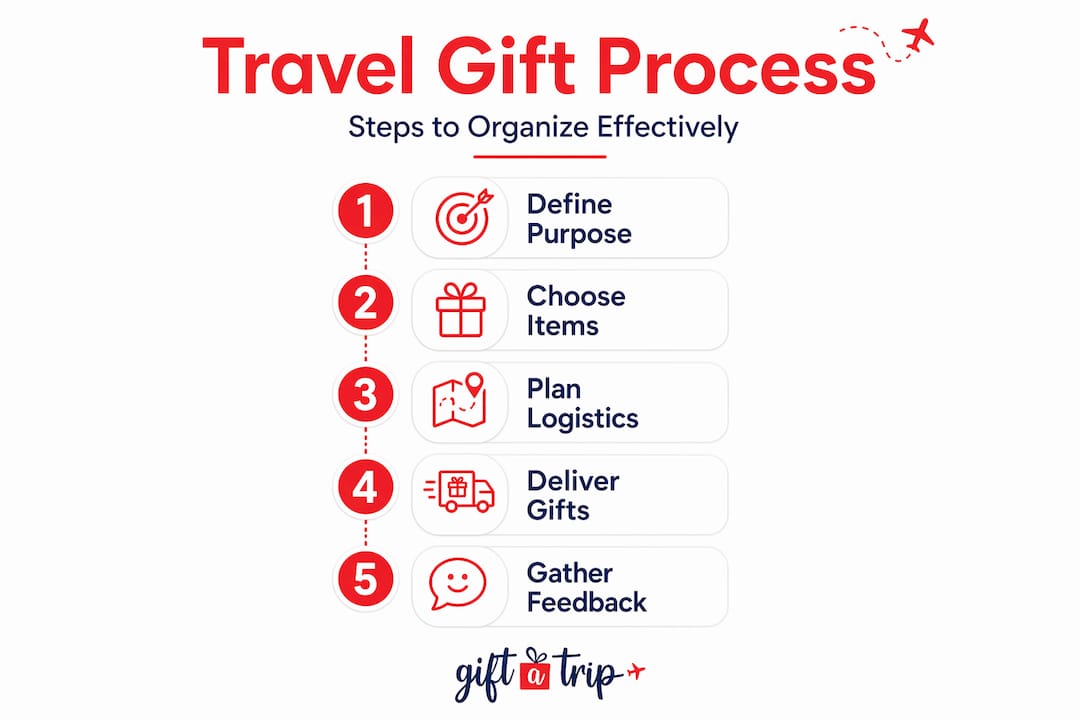
When you need to organize travel gifts for clients, the process looks deceptively simple until you’re staring at 50 inconsistent packages, a spreadsheet full of unanswered budget questions, and a deadline two weeks away. Corporate professionals and event organizers face this exact wall regularly. The stakes are real. A thoughtfully curated travel gift reinforces a client relationship for months. A poorly organized one signals carelessness. This guide walks you through every stage of the process, from setting objectives and selecting the right items to managing group logistics and measuring impact.
Table of Contents
- Key takeaways
- How to organize travel gifts for clients effectively
- Selecting the right travel gift items
- Managing group gifting logistics and budgets
- Common pitfalls when organizing travel gifts
- Verifying success and improving future programs
- My honest take on what actually works
- Let Giftatrip simplify your corporate travel gifting
- FAQ
Key takeaways
| Point | Details |
|---|---|
| Start with clear program goals | Define whether you’re rewarding loyalty, incentivizing sales, or celebrating milestones before selecting any gift. |
| Prioritize utility over novelty | High-use travel items deliver longer brand visibility and client appreciation than flashy one-time products. |
| Keep group gifting small | Limit group coordination to 4 to 8 contributors for efficient communication and smoother budget management. |
| Compliance protects your program | Verify airline and shipping restrictions for electronics and other items before finalizing your gift selection. |
| Measure and refine each cycle | Collect recipient feedback after each gifting round to sharpen selections and improve future program ROI. |
How to organize travel gifts for clients effectively
Before you pick a single item, you need to know why you’re gifting in the first place. A gift sent without a clear purpose behind it rarely lands well, regardless of quality or price. The gifting program’s goal shapes every decision that follows.
Are you trying to retain a long-term client? Recognize a top-performing employee after a demanding quarter? Create buzz around a corporate incentive trip? Each scenario calls for a different tone, budget range, and level of personalization. Get specific.
Once the purpose is defined, set your three operational anchors:
- Budget per recipient: This determines whether you’re working with a single high-impact item or a curated kit of smaller pieces. Be realistic and build in a 10% buffer for shipping, packaging, and customization.
- Timeline: Work backward from your delivery date. If shipping internationally or sourcing branded items, add at least three to four weeks for production and logistics.
- Recipient profiles: Frequent flyers have different needs than occasional business travelers. Gathering basic travel habits through a short internal survey or account manager notes pays off significantly at selection time.
You also need to account for compliance. Electronics must meet safety standards for both shipping and air travel, particularly power banks and devices over 100Wh. Some companies also have internal policies restricting the value of gifts employees can accept. Confirm these thresholds before you finalize anything.
Pro Tip: Create a one-page gifting brief for each program that captures the purpose, budget, recipient count, delivery window, and compliance notes. It takes 20 minutes to build and saves hours of back-and-forth later.
Selecting the right travel gift items
The best business travel client gifts share three traits: usefulness, polish, and versatility suited to professional settings. That framework cuts through the noise quickly when you’re evaluating options.
Corporate gifting trends in 2026 have shifted decisively away from low-retention novelty items toward high-utility products that clients will actually use day to day. Travel accessories sit right at the intersection of practicality and brand visibility.
Here are the categories worth prioritizing when selecting unique gifts for travelers:
- Passport holders and document organizers: Leather options around $29.50 offer a premium feel at a controlled cost. These are used on every international trip.
- Portable luggage scales: Luggage scales around $7.99 are genuinely appreciated by frequent travelers who regularly manage airline weight limits.
- Tech accessories: Cable organizers, wireless chargers, and compact adapters fall into the low-friction electronics category dominating 2026 corporate gifting programs.
- Sustainable textiles: Travel pouches, eco-friendly tote bags, and packing cubes made from recycled materials check both the quality and values-alignment boxes.
- Noise-canceling earbuds or sleep kits: Higher-budget options that resonate strongly with executives logging frequent long-haul flights.
When your budget is tight, kitting is your best tool. Combining multiple travel essentials into a curated gift box increases perceived value without requiring a bigger spend per item. A passport holder, luggage scale, and branded cable organizer packaged together in a clean box feels like a $70 gift even when the total cost is closer to $45.
| Gift item | Approx. cost | Best for |
|---|---|---|
| Leather passport holder | $29.50 | All traveling clients |
| Portable luggage scale | $7.99 | Frequent flyers |
| Cable organizer pouch | $12 to $18 | Tech-forward executives |
| Packing cube set | $20 to $30 | Long-haul travelers |
| Travel certificate | $50 to $500+ | Premium client rewards |
Pro Tip: When adding branded items to a kit, choose one signature piece to carry your logo rather than branding every item. A single well-placed logo on a quality passport holder reads as confident and professional. Branding everything reads as promotional.
For clients where a physical kit feels insufficient, corporate travel gift certificates offer complete flexibility. Recipients choose their own experience, which removes the guesswork entirely.
Managing group gifting logistics and budgets
Knowing how to organize group travel gifts efficiently comes down to three things: the right team size, clear financial tracking, and communication that leaves no room for ambiguity.

The recommended group size for smooth coordination is 4 to 8 contributors. Beyond 8 people, response times slow down, budget conversations get messy, and someone always drops out last minute. If your program involves more participants, break it into smaller coordinating units and designate a point person for each.
Here is a step-by-step process that works at scale:
- Designate a coordinator. This person owns the timeline, collects contributions, manages vendor communication, and handles delivery. Without a single owner, details fall through the cracks.
- Set the total budget before asking for contributions. Work out the gift cost, packaging, shipping, and any customization fees first. Then divide by contributor count. Asking people for a number before knowing what it covers causes friction.
- Use a digital collection tool. Platforms like group payment apps or even a shared spreadsheet with payment confirmation columns keep contribution tracking transparent and reduce follow-up time dramatically.
- Send one clear communication with a hard deadline. Ambiguous timelines produce late contributions. State the exact date contributions are due and what happens if the deadline is missed.
- Order with a two-week buffer. Branded or custom items almost always take longer than vendors quote. Build the extra time in before you need it.
- Plan the presentation moment. Thoughtful delivery and packaging reinforce the relationship more than the item’s price tag. Whether that means a handwritten note, a branded gift box, or a personal handoff at an event, the moment of giving matters.
For large-scale programs, explore experiential reward strategies that replace physical kits with digital travel rewards, which eliminate shipping logistics entirely.
Common pitfalls when organizing travel gifts
Even well-intentioned gifting programs run into problems. Most of them are preventable once you know where to look.
- Choosing novelty over utility. A clever gadget that gets used once creates a moment of amusement and nothing more. Practical branded items like cable organizers stay in rotation for years and keep your brand visible far longer.
- Ignoring shipping and airline restrictions. Power banks and electronics must comply with specific wattage and lithium battery standards. Sending a non-compliant item creates a headache for the recipient and reflects poorly on the gifting program.
- Ordering too close to the deadline. Custom items, bulk orders, and international shipping all require more lead time than standard retail. A rushed order almost always means compromised quality or missed delivery windows.
- Letting contribution shortfalls derail group orders. Build a contingency plan into group gifting budgets. Either designate a backup contributor, lower the per-item cost threshold, or have a fallback item ready at a lower price point.
- Inconsistent branding and packaging. When some kits arrive beautifully packaged and others come in plain boxes, recipients notice. Standardize packaging instructions with your vendor before the first order ships.
- Skipping personalization entirely. A handwritten card, a note referencing a shared project, or even a personalized message sleeve on the gift box costs almost nothing and transforms the perception of the gift. For tips on building a complete gifting program, the guide to gifting employee travel covers both personalization and compliance in detail.
Verifying success and improving future programs
Sending the gifts is not the end of the process. The data you gather afterward is what separates a one-time gesture from a repeatable program that delivers real business value.
Start by collecting recipient feedback within two to three weeks of delivery. A simple three-question survey works well: Did you receive your gift? How useful do you find it? Would you like to share any feedback? Keep it short enough that people actually respond.
Track gift usage when possible. For physical items, this is harder to measure, but account managers can note whether clients mention their travel kit in conversations. For digital travel certificates, redemption rates tell you directly how engaged recipients are. Platforms built for corporate reward programs often include usage dashboards that make this easy.
Assess brand visibility and relationship impact by looking at retention rates, referral activity, and upsell conversations in the quarter following a gifting cycle. Correlation is not causation, but patterns emerge over multiple cycles.
Use what you learn to adjust your next selection. Maybe the luggage scales were universally loved and the tech pouches went unopened. That’s a clear signal to double down on practical travel tools and skip the accessories. Over two or three gifting cycles, your program becomes noticeably sharper, and the investment produces measurably better results.
My honest take on what actually works
I’ve worked with dozens of corporate gifting programs, and the single biggest mistake I see is spending too much time on the product and not enough on the moment of giving. A $15 passport holder delivered with a personal note, perfect timing, and clean packaging will outperform a $100 tech gadget dropped in a plain mailer almost every time. Timing and presentation often matter more than the item itself.
The second thing I’d push back on is the instinct to buy one impressive item per recipient. In my experience, a well-assembled kit of three or four smaller practical pieces consistently gets better reactions. It feels considered. It feels like someone thought about the recipient’s life, not just their budget category.
And if you want to skip the physical gifting process entirely without sacrificing impact, digital travel certificates are genuinely underutilized in corporate settings. Recipients get to choose their own experience, the logistics are minimal, and the perceived value is often higher than a physical gift at the same price point. Worth considering seriously if you’re managing a large program.
— Donovan
Let Giftatrip simplify your corporate travel gifting
If you’re looking for the best travel gifts for clients without the complexity of sourcing, kitting, and shipping physical items, Giftatrip offers a better path.
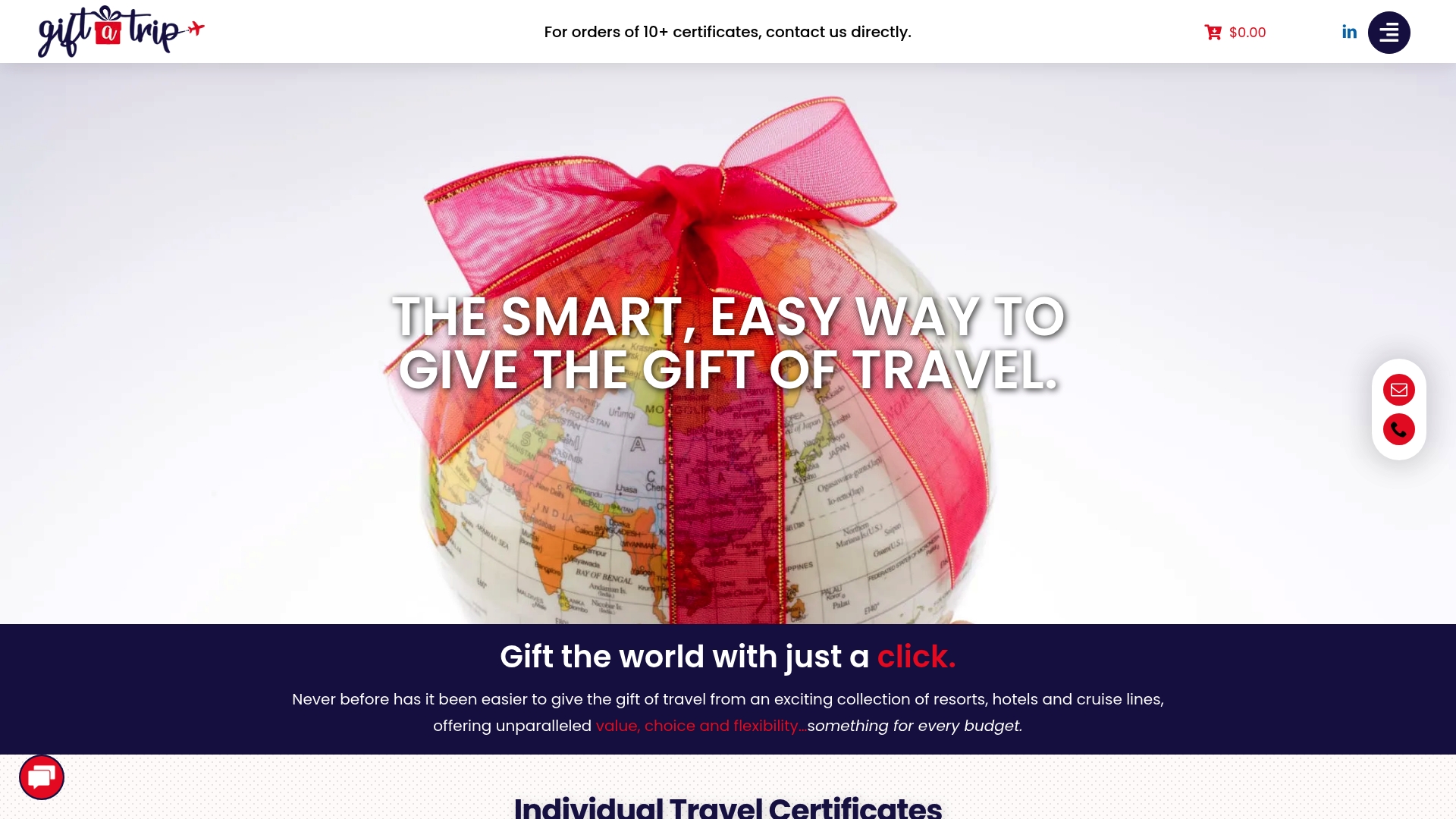
Giftatrip’s corporate travel gift certificates are redeemable at major hotel brands, resort chains, and cruise lines including Virgin Voyages and Crystal Cruises. Certificates are delivered digitally, cover taxes and resort fees, and come with minimal blackout dates, making them genuinely flexible for recipients. Bulk orders include customizable gift boxes and personalized messaging, so the presentation feels premium without the logistics overhead. Whether you’re rewarding a key client, recognizing a top performer, or building a loyalty program, Giftatrip makes the process direct and professional. Explore your options at giftatrip.com/how-to-give-a-trip-as-a-gift-2026-strategies to see which certificate fits your program.
FAQ
What are the best travel gifts for corporate clients?
The best travel gifts for clients combine utility, polish, and brand suitability. Top choices include leather passport holders, portable luggage scales, cable organizers, and digital travel gift certificates redeemable at major hotel and cruise brands.
How many people should be in a corporate group gifting program?
The optimal group size for coordination is 4 to 8 contributors. Larger groups slow down communication and make budget tracking significantly harder.
What compliance issues apply to shipping travel gifts?
Power banks and electronics must meet airline-approved battery standards, typically under 100Wh. Always verify both shipping carrier and airline regulations before including tech accessories in corporate gift kits.
Is kitting multiple items better than one large gift?
Yes. Curated travel gift boxes combining several practical items consistently deliver higher perceived value than a single item at the same total cost, making them a smart choice for budget-conscious programs.
How do you measure the success of a client gifting program?
Track recipient feedback, redemption rates for digital gifts, and business relationship metrics like retention and referral activity in the quarter following each gifting cycle. Refine your selections based on what recipients actually use.