Jump to Section:
TL;DR:
- Experience gifts create lasting memories and integrate into the recipient’s identity.
- Matching the gift to interests, schedule, and preferences ensures relevance and use.
- Thoughtful delivery, presentation, and flexible options enhance the impact of experience gifts.
Most gifts end up in a drawer, a closet, or a donation bin within a year. You’ve felt that sting before, either as the giver watching someone force a smile or as the recipient wondering what to do with yet another candle set. Experience gifts flip that script entirely by offering activities, events, or outings that create memories instead of clutter. This guide walks you through exactly what makes an experience gift land, how to match the right experience to the right person, how to deliver it with flair, and how to avoid the traps that catch most givers off guard.
Table of Contents
- What makes an experience gift great?
- How to match the perfect experience to any recipient
- Step-by-step: How to deliver an experience gift
- Common pitfalls and how to maximize impact
- The real joy of experience gifting: More than memories
- Ready to give memories that last? Take the next step
- Frequently asked questions
Key Takeaways
| Point | Details |
|---|---|
| Experience over clutter | Experience gifts build memories and meaning, not unwanted items. |
| Personalization is key | Matching the gift to the recipient’s interests and lifestyle creates real impact. |
| Anticipation boosts happiness | Building up excitement enhances the joy and memorability of any experience gift. |
| Avoid voucher pitfalls | Choose bookings or flexible certificates with clear terms to sidestep common issues. |
What makes an experience gift great?
Not all experience gifts are created equal. A cooking class for someone who hates kitchens, or a skydiving voucher for a homebody, misses the mark just as badly as a generic gift card. The best experience gifts share a few qualities that separate them from forgettable outings.
First, they align with the recipient’s real interests, not what you imagine they might enjoy. Second, they carry emotional weight, meaning they feel chosen, not convenient. Third, they build anticipation. The excitement of looking forward to something is itself a form of happiness, which is why a well-presented experience gift keeps giving before it’s even redeemed.
Research from Clemson University adds a surprising twist: ongoing activity purchases like memberships actually generate more lasting happiness than one-off experiences or material items. The reason is that repeated engagement lets experiences weave into a person’s identity. A single concert is fun. A year of cooking classes becomes part of who you are.
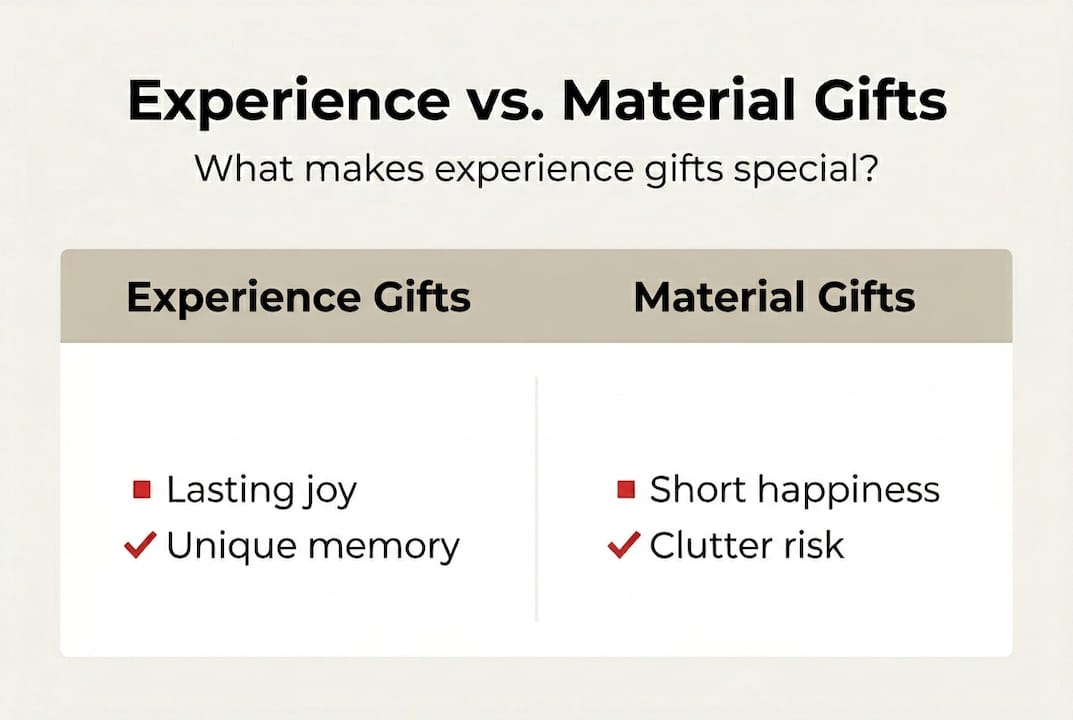
Here’s a quick comparison to put this in perspective:
| Factor | Experience gift | Material gift |
|---|---|---|
| Lasting happiness | High | Fades quickly |
| Clutter created | None | Often significant |
| Personal connection | Strong | Variable |
| Anticipation value | Built-in | Minimal |
| Identity integration | Possible | Rare |
The most memorable experience gifts also layer multiple elements together. Think skills plus sentiment plus access. A private wine tasting at a vineyard isn’t just wine, it’s learning, atmosphere, and exclusivity combined. When you stack those layers, you create something the recipient will tell stories about.
For corporate settings, experience-based rewards follow the same logic. Employees remember a travel reward or group adventure far longer than a bonus check they spent on groceries.
Key qualities of a great experience gift:
- Aligned with the recipient’s genuine interests and lifestyle
- Offers anticipation, not just a one-time moment
- Involves some element of discovery, skill, or exclusive access
- Flexible enough to fit the recipient’s schedule
- Presented in a way that builds excitement before the event
Pro Tip: Don’t just hand over a voucher in an envelope. Build anticipation by revealing clues over a few days, or present a small teaser gift that hints at the experience to come. The reveal itself becomes part of the memory.
How to match the perfect experience to any recipient
Once you understand what makes an experience gift exceptional, the next challenge is matching the right gift to the right person. This is where most givers stumble, defaulting to what sounds impressive rather than what actually fits.
Start with a simple assessment. Think about the recipient’s hobbies, values, and how they spend their free time. Do they prefer solo adventures or group activities? Are they outdoorsy or more inclined toward culture and food? Do they have scheduling flexibility, or are they juggling family and work commitments? Assessing interests, lifestyle, and schedule flexibility before choosing an experience dramatically reduces the risk of giving something that never gets used.
Step-by-step gift selection process:
- List three things the recipient genuinely loves doing in their free time.
- Note any physical, logistical, or scheduling constraints (young kids, travel limitations, health).
- Decide whether they prefer solo, partner, or group experiences.
- Set a realistic budget that covers the full experience, not just the entry cost.
- Choose between a specific booking or an open-dated option based on their flexibility.
- Plan the presentation so the reveal matches the excitement level of the gift itself.
When you’re unsure, giving options is almost always the right move. Gift travel certificates solve this elegantly because the recipient picks their destination and timing, removing the pressure of guessing perfectly.
Here’s a quick reference for matching gift types to common recipient profiles:
| Recipient profile | Best experience type | Example |
|---|---|---|
| Adventure seeker | Outdoor or physical | Hiking trip, kayaking tour |
| Culture lover | Arts or culinary | Cooking class, museum tour |
| Busy professional | Flexible or open-dated | Travel certificate, spa voucher |
| Couple or newlyweds | Shared romantic experience | Resort stay, cruise package |
| Corporate team | Group or milestone reward | Group travel, team retreat |
For corporate occasions, tips for impactful recognition suggest pairing experiences with a personal note that explains why the recipient was chosen. That context transforms a nice gift into a meaningful one. And if you want to go beyond the expected, unique travel gift ideas can inspire options that feel genuinely special rather than off-the-shelf.
Step-by-step: How to deliver an experience gift
You’ve chosen the perfect experience, but the delivery is just as important to make it special. A poorly presented gift, even a spectacular one, can fall flat. The reveal and the logistics around it deserve as much thought as the experience itself.
How to deliver an experience gift from start to finish:
- Book or purchase early. Secure the booking or buy the certificate well before the occasion so you’re not scrambling at the last minute.
- Choose your format. Decide between a specific booking with a set date, an open-dated voucher, or a digital certificate the recipient can redeem on their own timeline.
- Prepare the reveal. Write a personal letter, create a small puzzle, or assemble a themed gift box with items that hint at the experience.
- Time the moment. Present the gift at a meaningful point during the celebration, not as an afterthought at the end.
- Provide clear instructions. Include all redemption details, contact information, and any deadlines so the recipient knows exactly what to do next.
- Follow up with excitement. Check in a few days later to share in the anticipation and offer help if they have questions about booking.
For personal occasions, shared activities and slow experiences like classes, memory-lane outings, or adventure funds work especially well when paired with a partner or family member for added bonding. The gift becomes a shared story, not just a solo activity.
Digital delivery has made this process significantly smoother. A beautifully designed digital certificate sent directly to the recipient’s inbox removes the awkwardness of physical packaging while still feeling intentional. The gift a trip guide covers the full process from purchase to personalized delivery for travel-based experiences specifically.

Pro Tip: For maximum impact, pair the reveal with a countdown. Send a teaser message two days before the celebration that says something is coming. By the time they open the actual gift, they’re already emotionally invested.
Common pitfalls and how to maximize impact
Executing a great experience gift means avoiding common snags and enhancing the impact for both personal and corporate situations. Even well-intentioned givers run into problems that could have been prevented with a little foresight.
Nearly two-thirds of consumers have experienced problems with experience vouchers, including hidden fees, expiry dates, peak-time blackouts, and booking difficulties. The fix is simpler than most people realize: choose direct bookings, long validity windows, and flexible redemption options.
Most common experience gift mistakes:
- Buying vouchers with short expiry dates or heavy peak-season restrictions
- Choosing an experience without confirming the recipient’s physical or logistical ability to use it
- Delivering the gift impersonally, with no context or emotional framing
- Forgetting to account for travel time, childcare, or scheduling conflicts
- Selecting an experience based on what you’d enjoy rather than what they would
The fix for most of these is straightforward. Opt for give a trip strategies that prioritize flexible redemption windows and minimal blackout dates. When booking through a reputable platform, look for certificates that cover taxes and resort fees upfront so there are no surprise costs at checkout.
For corporate and fundraising contexts, experience gifts carry extra weight. A travel certificate used as a charity auction item or an employee reward creates a tangible, aspirational prize that drives participation and emotional connection to the cause or brand. The key is to frame the experience as a story, not just a prize. Tell people what the winner will see, feel, and remember. That narrative is what drives bids and motivates teams.
When giving in bulk for employee programs or CSR initiatives, customizable gift boxes with personalized messaging make each recipient feel seen, even in a group setting. That personal touch is what separates a forgettable perk from a genuine recognition moment.
The real joy of experience gifting: More than memories
Most guides stop at “experiences create memories.” That’s true, but it undersells what’s really happening when you give someone an experience worth talking about.
The Clemson research mentioned earlier is worth sitting with: ongoing experiences like memberships and recurring activities outperform single events in terms of lasting happiness because they become part of how a person sees themselves. A one-time spa day is a treat. A year of weekend hiking trips becomes a core part of someone’s identity.
For givers, this means the most impactful choice isn’t always the most dramatic one. A thoughtful, repeatable experience often beats a flashy single event. Anticipation also matters more than most people give it credit for. The period between receiving an experience gift and actually using it is filled with planning, daydreaming, and excitement. That window is part of the gift itself.
For brands and organizations using strategic corporate gifting, experience gifts do something physical rewards never can: they shape how people feel about the organization that gave them. A travel reward tied to a company milestone becomes part of an employee’s personal story. A charity auction trip becomes a memory the winner associates with the cause forever. That’s brand building through generosity, and it’s far more powerful than a logo on a mug.
Our take: pair personal experiences with social or charitable impact whenever possible. A gift that benefits both the recipient and a cause they care about creates multi-layered meaning that no physical item can replicate.
Ready to give memories that last? Take the next step
You now have a clear, practical framework for choosing, personalizing, and delivering experience gifts that actually resonate. The next step is putting it into action.
Gift A Trip makes it easy to send digital travel gifts that cover everything from resort stays and cruises to vacation packages, with taxes and resort fees included and minimal blackout dates. Whether you’re rewarding a top employee, celebrating an anniversary, or sourcing prizes for a fundraising auction, you can buy travel certificates that arrive securely, look stunning, and give recipients the freedom to choose when and where they go. Browse the full catalog and send your first experience gift today.
Frequently asked questions
What are examples of experience gifts for coworkers or employees?
Popular options include adventure outings, travel certificates, virtual classes, and group charitable experiences aligned with corporate social responsibility goals. Travel certificates work especially well because they feel aspirational and give recipients full flexibility.
How can I avoid problems with experience gift vouchers?
Choose direct bookings or vouchers with long validity, clear redemption instructions, and flexible dates. Two-thirds of consumers have faced issues like expiry or hidden fees, so prioritizing platforms with transparent terms is essential.
What makes experience gifts more meaningful than physical gifts?
Experiences create shared memories and integrate into personal identity, providing lasting happiness that material items rarely match. Ongoing experiences like memberships or travel rewards have the highest long-term impact.
How do I give an experience gift to someone with a busy or unpredictable schedule?
Offer open-dated vouchers, memberships, or options where the recipient chooses their own timing. Matching to lifestyle and flexibility ensures the gift gets used and genuinely fits their life rather than adding pressure.