Jump to Section:
TL;DR:
- Flexible gifting offers recipients choice, reducing waste and increasing satisfaction beyond traditional fixed presents.
- Understanding different formats, legal protections, and fee transparency ensures valuable, personalized, and practical gift experiences.
Gifting used to be simple: pick something, wrap it, hand it over. But that model breaks down fast when you’re buying for someone across the country, managing a corporate rewards program for 500 employees, or trying to mark a milestone without guessing wrong on size, taste, or preference. Explaining flexible gifting solutions matters now more than ever because the category has expanded far beyond generic gift cards. Today it includes digital certificates, recipient-choice programs, travel experiences, and open-loop payment tools. Each one serves a different purpose, and knowing which fits your situation saves time, money, and the awkward “receipt included” moment.
Key takeaways
| Point | Details |
|---|---|
| Flexible gifting vs. traditional | Flexible options give recipients choice, reducing waste and improving satisfaction rates significantly. |
| Know your card type | Open-loop cards offer broad use but may carry fees; closed-loop cards are fee-free but limited to one retailer. |
| Legal protections matter | Federal law mandates a five-year minimum validity on gift cards; state rules can be even stricter. |
| Corporate programs need tech | Scalable recipient-choice programs require platform features like analytics and branding to prove ROI. |
| Travel certificates lead the way | Travel-based certificates combine personalization, flexibility, and memorable value in a single gift. |
What flexible gifting solutions actually mean
The industry term for this category is “recipient-centered gifting,” though most people encounter it as flexible gifting. The core idea is simple: instead of choosing a specific item for someone, you give them the means and the freedom to choose for themselves. That shift sounds small, but it changes everything about how gifts are received and used.
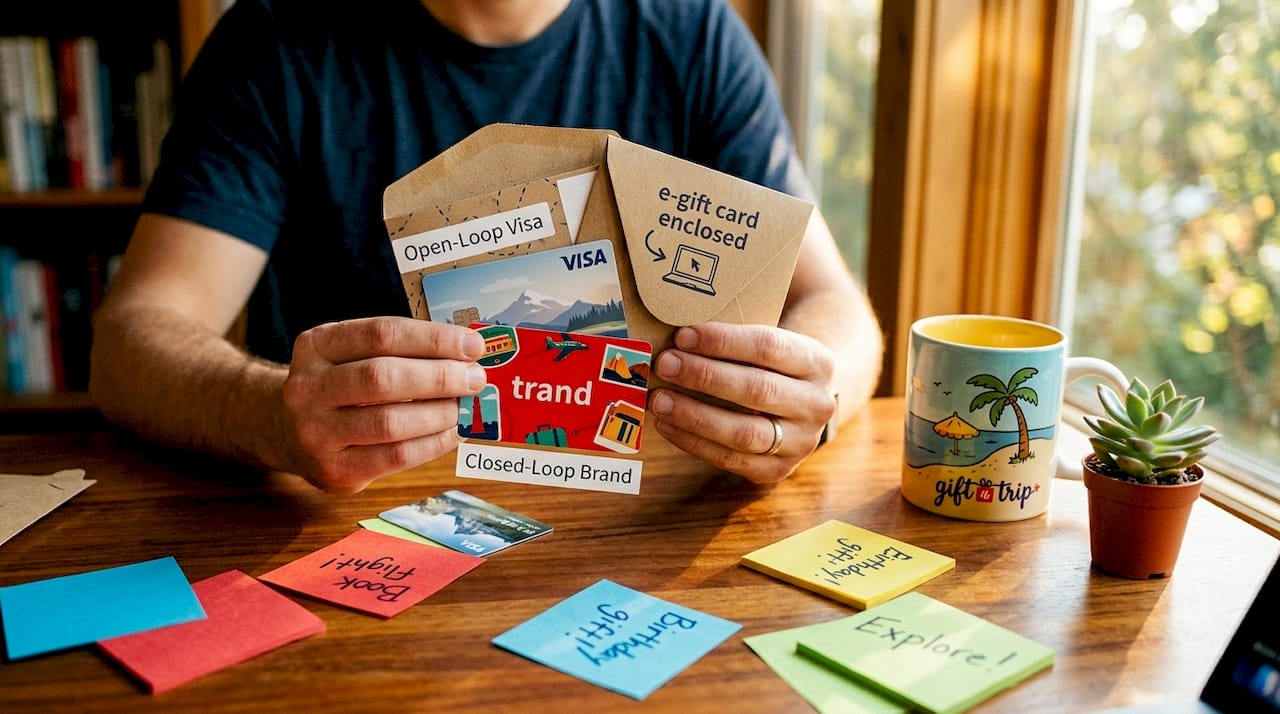
Flexible gifting comes in several distinct forms. Understanding the differences helps you pick the right tool for the right moment.
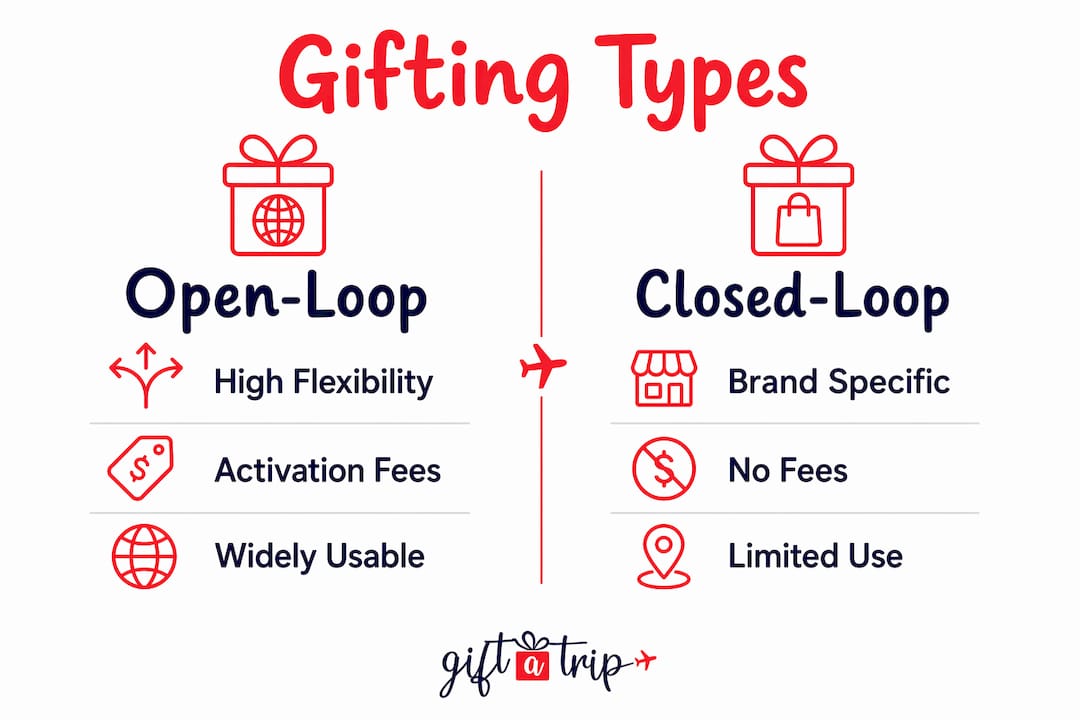
Open-loop gift cards function like prepaid debit cards. They carry a Visa, Mastercard, or Amex logo and work wherever that network is accepted. The upside is obvious: almost unlimited spending options. The downside is that open-loop cards often carry fees, including activation fees and inactivity fees that chip away at the card’s face value over time.
Closed-loop gift cards are tied to a specific retailer or brand. A bookstore card, a restaurant card, a hotel brand card. These are usually fee-free and straightforward, but they limit the recipient to one ecosystem.
Digital e-gift cards sit in either category but are delivered electronically. Digital cards arrive by email or text, support personalized messages, and can be sent instantly, which makes them the go-to for last-minute gifting or remote recipients.
Recipient-choice programs take flexibility the furthest. The giver sets a budget; the recipient browses a curated catalog and picks what they actually want. This format dominates corporate recognition programs.
Travel certificates represent a specialized form of recipient-choice gifting. Rather than a physical product, they deliver an experience with built-in flexibility on dates, destinations, and travel companions. Giftatrip’s travel gift cards explained page is a solid starting point for understanding how these work in practice.
| Type | Flexibility | Typical fees | Best for |
|---|---|---|---|
| Open-loop card | Very high | Activation, inactivity | General use, broad audiences |
| Closed-loop card | Moderate | Usually none | Loyal customers, brand fans |
| Digital e-gift card | High | Varies | Remote and last-minute gifting |
| Recipient-choice program | Very high | Platform fee (corporate) | Employee recognition, incentives |
| Travel certificate | High | Often none (taxes included) | Experiences, milestones, luxury gifts |
Why the benefits go deeper than convenience
The most commonly cited reason why opt for flexible gifting solutions is convenience. That’s true, but it undersells the case. The real benefits are structural.
Recipient satisfaction goes up because waste goes down. When someone receives a gift they don’t want, it rarely gets used. Recipient-choice programs report 45% higher redemption rates compared to traditional gifts. Higher redemption means the gift actually reaches its intended purpose, which is making someone feel valued.
Here are the benefits that matter most for both individuals and organizations:
- Budget control. You set the amount upfront. There’s no guessing whether a physical item falls short or overshoots what feels appropriate.
- Reduced gift waste. Unused physical gifts are both a financial and environmental loss. Digital and choice-based gifts largely eliminate this problem.
- Timing flexibility. You can send a digital certificate the morning of someone’s birthday or schedule it weeks in advance.
- Better corporate engagement. Employees who choose their own rewards feel more recognized than those who receive a generic item. That distinction matters for retention and morale.
- Personalized delivery. Most platforms support custom messages, branded packaging, and in some cases custom gift boxes for bulk orders.
The one area where flexible gifting can trip people up is fee transparency. Not all platforms or card types are upfront about inactivity charges or expiration conditions.
Pro Tip: Before purchasing any gift card or certificate, read the fee schedule carefully. Inactivity fees and activation costs can quietly reduce the value your recipient actually receives. Look for programs that state “no hidden fees” explicitly.
For travel-based gifts specifically, fee transparency extends to resort fees and taxes. Giftatrip covers resort fees in travel gifts as part of its certificates, which is a meaningful differentiator from platforms that quote a base price and add costs later.
How laws and fees affect your gift card choices
This is the section most gifting guides skip, and it’s the one that actually affects whether your gift holds its value.
Federal law under the CARD Act requires that gift cards maintain validity for five years from the date of purchase or the last load. Issuers also cannot charge inactivity fees until the card has gone unused for 12 consecutive months, and they can only charge one fee per month. These are federal floors. Many states go further.
| Jurisdiction | Rule |
|---|---|
| Federal (CARD Act) | Minimum 5-year validity; inactivity fees only after 12 months of no use |
| California | No expiration on most gift cards; cash back required on balances under $15 (starting 2026) |
| Colorado | Cash redemption required on small balances |
| Several other states | Outright ban on expiration dates and fees for store-issued cards |
Jurisdictional differences materially affect flexibility because a card purchased in one state and used in another may fall under different rules. For corporate programs spanning multiple states or countries, this complexity multiplies quickly.
Cash redemption laws exist in roughly a dozen states, allowing recipients to cash out small remaining balances rather than letting them go to waste. California’s threshold rises to $15 in 2026, the highest in the country.
One overlooked risk: if a retailer closes or files for bankruptcy, closed-loop card balances may be lost entirely. Open-loop cards backed by major payment networks carry no such risk. For corporate buyers issuing large quantities, this distinction deserves real attention.
Flexible gifting strategies in practice
Theory is one thing. Here’s how flexible gifting actually works when you sit down to implement it for a real occasion or program.
For individuals:
- Start with what you know about the recipient. Do they travel frequently? A travel certificate from Giftatrip offers far more emotional impact than a generic retail card.
- Match the format to the occasion. Birthdays and anniversaries call for something with perceived value and personalization. A branded gift box with a custom message adds weight to a digital certificate.
- Set a clear budget before browsing. Flexible gifting options exist at almost every price point, from $25 digital cards to multi-night resort certificates.
- Check the delivery timeline. Digital gifting with flexible delivery timing is perfect for last-minute situations, but some travel certificates require lead time to set up properly.
- Read the redemption terms. Understand blackout dates, expiration windows, and whether taxes and fees are included.
For corporate buyers:
The stakes and the scale are both higher. Effective recipient-choice programs integrate branding, analytics, and often HRIS systems to run efficiently. A few principles apply regardless of platform:
- Match the gift tier to the achievement. A five-year service award and a quarterly sales win should not look identical.
- Use platforms with reporting features. You need to track redemption rates to evaluate whether your program is working.
- Consider global fulfillment if your team is distributed. Some platforms handle this natively; others require workarounds.
- Prioritize branding. A gift that arrives in your company’s visual identity reinforces the recognition moment in a way that a generic card cannot.
Giftatrip’s corporate travel incentives offering covers most of these boxes, with bulk ordering, personalized messaging, and certificates redeemable at major hotel and cruise brands.
Pro Tip: When running a large corporate gifting program, pilot with a small group first. Test redemption rates, gather feedback on the experience, and adjust your certificate tiers before rolling out at scale.
Flexible gifting vs. traditional gifts
If you’ve ever watched someone politely smile at a gift they’ll never use, you already understand the core problem with traditional gifting. But it’s worth being precise about where the differences actually live.
| Factor | Traditional gift | Flexible gift |
|---|---|---|
| Personalization | Giver’s choice | Recipient’s choice |
| Convenience | Requires shopping time | Can be purchased in minutes |
| Recipient satisfaction | Unpredictable | Consistently higher |
| Cost efficiency | Risk of overspending | Budget is set in advance |
| Environmental impact | Packaging and returns waste | Minimal waste |
| Emotional resonance | Can be high with effort | High when experience-based |
Traditional gifts still win in specific situations. A handmade or deeply personal item carries meaning that no certificate can replicate. A gift that demonstrates specific knowledge about someone (“I remembered you said you wanted this exact book”) can land harder than any amount of choice. The point isn’t that traditional gifting is wrong. It’s that flexible gifting removes the risk of getting it wrong when you aren’t certain.
For organizations, the calculus is even clearer. Sending 200 employees the same branded item optimizes for simplicity, not impact. Giving each person the ability to choose an experience within a set budget optimizes for the thing that actually matters: making each person feel seen.
My honest take on flexible gifting
I’ve watched gifting programs of all sizes come together and fall apart. What I’ve learned is that the biggest mistake isn’t choosing the wrong gift. It’s overcomplicating the decision.
Most people know flexible gifting makes sense in theory, but they hesitate because they think it feels impersonal. That’s a real tension worth addressing. In my experience, the solution isn’t to choose between flexibility and personal touch. It’s to build the personal touch into the delivery. A thoughtfully written message, a well-designed digital gift box, a certificate tied to an experience the recipient has mentioned wanting. These details are what make a flexible gift feel intentional rather than lazy.
The other thing I’d push back on is the idea that flexible gifting is mainly a corporate tool. I’ve seen resort gifting experiences given as wedding gifts, graduation presents, and milestone anniversary surprises. The reaction is almost always the same: the recipient is more excited than they would have been by a physical item, because the anticipation of an experience compounds the gift’s emotional weight.
In remote and hybrid work contexts specifically, flexible gifting has become the only practical option for many teams. Shipping physical items internationally is expensive, slow, and prone to customs issues. A digital travel certificate sidesteps all of that entirely.
My honest advice: stop treating flexibility as a fallback for when you don’t know what to get. Start treating it as the default, with personal touches layered on top.
— Donovan
Giftatrip makes flexible gifting simple
Giftatrip takes the principles covered in this article and builds them into a platform designed for both individuals and organizations. Its travel certificates are redeemable at major resorts, hotels, and cruise lines including Virgin Voyages, with taxes and resort fees included so the recipient knows exactly what they’re getting. Digital delivery means the certificate reaches anyone, anywhere, immediately. For corporate buyers, bulk ordering with custom branding and personalized messaging turns a certificate into a recognition moment rather than a transactional reward. Browse the full selection at Giftatrip and find a certificate that fits your occasion, your budget, and your recipient.
FAQ
What are flexible gifting solutions?
Flexible gifting solutions are gift formats that give recipients choice or timing freedom, including digital gift cards, recipient-choice programs, and travel certificates. They reduce waste and improve satisfaction compared to fixed traditional gifts.
Why opt for flexible gifting solutions over traditional gifts?
Recipient-choice programs report 45% higher redemption rates than traditional gifts, which means the gift actually gets used. Flexible options also save time and remove the risk of choosing something the recipient doesn’t want.
Do gift cards expire?
Federal law requires gift cards to remain valid for a minimum of five years, and inactivity fees can only apply after 12 months of no use. Some states ban expiration entirely or require cash back on small remaining balances.
Are open-loop or closed-loop gift cards better?
It depends on your goal. Open-loop cards offer broad usability but may include fees; closed-loop cards are fee-free but limited to one retailer. For maximum flexibility without restrictions, travel certificates often deliver the best balance.
How do travel certificates work as gifts?
Travel certificates are prepaid vouchers redeemable for hotel stays, resort bookings, or cruises. Platforms like Giftatrip include taxes and fees in the certificate value and offer digital delivery with personalized messaging, making them one of the most practical versatile gift ideas available today.