Jump to Section:
Wellness travel incentives are company-funded travel rewards designed to improve employee wellbeing, recognition, and retention by combining meaningful destination experiences with health-focused programming. The evidence is clear: organizations that tie these programs to measurable HR outcomes see stronger engagement and lower turnover than those treating them as perks. Before you book anything, three things need to be in place.
- Core objective: Define whether you’re targeting wellbeing, recognition, retention, or a combination, and set a measurable baseline (eNPS score, retention rate, or sales lift) before the trip.
- Qualification criteria: Decide who qualifies, how selection is communicated, and how you’ll prevent eligibility bias.
- First action: Set your KPI baseline now. Programs that skip this step cannot prove ROI later.
For teams that need a fast, flexible reward mechanism without heavy vendor procurement, Giftatrip’s travel certificates offer digital and physical options redeemable at major resorts, hotels, and cruise lines, with bulk ordering and minimal blackout dates.
Key Takeaways
Wellness travel incentives deliver measurable HR outcomes when programs are built around clear KPIs, a structured measurement cadence, and itineraries designed to protect recovery time rather than fill every hour.
| Point | Details |
|---|---|
| Set KPI baselines first | Capture eNPS and retention data before any program announcement, or post-trip data has no reference point. |
| Choose the right format | Match the program format (resort, Slow MICE, cruise, day retreat) to your audience’s demographics and your budget tier. |
| Reserve spa inventory early | Book 60–70% of spa capacity at contract stage; treat spa slots like meeting-room inventory to prevent bottlenecks. |
| Measure across three horizons | Run a 7–14 day pulse, 30/60/90-day follow-ups, and a 6–12 month retention check to build a defensible ROI case. |
| Giftatrip for flexible distribution | Giftatrip’s digital travel certificates support bulk ordering and spot recognition without heavy vendor procurement. |
Table of Contents
- Why wellness travel incentives are growing in 2026
- What formats do wellness travel incentive programs actually look like?
- How do you design a wellness travel incentive program step by step?
- Logistics, budgeting, and U.S. legal considerations
- How do you measure the impact of a wellness travel incentive program?
- Giftatrip makes wellness travel incentives faster to deploy
- Sources
- FAQ
Why wellness travel incentives are growing in 2026
The business case has moved well past “employees like vacations.” The IRF 2026 Trends Report documents that top-performing companies explicitly link incentive travel to HR strategy by embedding pre- and post-trip engagement metrics like eNPS, and that programs with built-in measurement deliver higher ROI than those without. That gap between measurement-enabled programs and ad hoc trips is where most corporate wellness retreats either justify their budget or get cut.
Replacing one employee typically costs 50%–200% of that person’s annual salary. A well-designed retreat, even at a premium per-person cost, often clears what JournoHQ calls the “Retreat Payback Test”: if the program retains even one employee who would otherwise have left, it pays for itself. That framing works in budget conversations with CFOs who are skeptical of soft-benefit claims.
Wellness-first design also changes what participants actually experience. Slower itineraries, recovery-focused scheduling, and health-oriented amenities shift the perceived value of a trip from “company party” to genuine restoration. That shift matters for engagement: employees who return feeling recovered are more likely to attribute the improvement to the organization, which feeds directly into eNPS scores.
Key stat: Cashel Travel’s measurement framework, drawing on IRF and SITE benchmarks, shows that incentive travel programs with embedded measurement consistently outperform those without on both ROI and participant engagement scores.
The benefits of wellness travel extend beyond individual participants. Teams that share a restorative experience tend to report stronger peer relationships and higher psychological safety, two factors that show up in engagement surveys months after the trip.
Pro Tip: When presenting the budget ask internally, frame it as the “Retreat Payback Test”: calculate what one voluntary departure costs in recruiting and onboarding, then compare it to the per-person program cost. The math usually surprises finance teams.
What formats do wellness travel incentive programs actually look like?
The Global Wellness Institute defines wellness tourism as travel focused on health promotion, prevention, and lifestyle enhancement rather than medical treatment. In a corporate context, that translates into several distinct program formats, each suited to different audiences, budgets, and objectives.
-
Wellness resorts and multi-day retreats: Full-immersion programs at dedicated wellness properties. These combine evidence-informed practices with immersive environments, supporting behavior change and recovery. Corporate Wellness Magazine notes that the immersive setting is what drives sustained impact, not any single activity. Best for top-performer recognition and senior leadership groups.
-
Spa and resort stays: A more accessible format. Participants stay at a full-service resort with spa access, fitness programming, and nutrition-focused dining built into the schedule. Works well as a mid-tier qualifier reward and adapts easily to groups of varying fitness levels.
-
Slow MICE multi-day programs: The fastest-growing format in 2026. Overview DMC documents the Slow MICE trend as fewer activities per day, more intentional downtime, and wellness woven into the daily rhythm rather than delivered as a single labeled session. A coastal walk before breakfast, communal meals with local ingredients, and an afternoon with no scheduled programming are the hallmarks. Broad audience appeal.
-
Active and adventure with wellness framing: Guided hikes, paddleboarding, cycling tours, or yoga on a clifftop, positioned around physical restoration rather than competition. Pairs well with a spa day to balance exertion and recovery. Fits teams with younger demographics or outdoor-oriented cultures.
-
Day retreats and local programs: A half-day or full-day experience at a nearby spa, nature venue, or wellness center. Lower cost, easier logistics, and a practical option for teams that can’t travel internationally. Also useful as a supplementary reward for runners-up in a larger program.
-
Cruises with wellness programming: Lines like Virgin Voyages and Crystal Cruises have built wellness into their core product, with fitness classes, spa treatments, and nutrition-focused menus as standard. A Virgin Voyages cruise certificate or Crystal Cruises certificate works well as an individual incentive travel reward for top performers who prefer self-directed experiences.
On inclusivity: every format should offer a dual-track option. Not every participant wants a 6 AM yoga session. Offering a restorative alternative (a guided meditation, a slow breakfast walk, or simply unstructured time) alongside more active programming prevents the program from feeling coercive and broadens participation.
How do you design a wellness travel incentive program step by step?
A structured planning process is what separates programs that generate measurable HR outcomes from those that generate nice photos. Work through these steps in order.
-
Define objectives and set baselines. Choose two or three KPIs: eNPS, 12-month retention rate, sales lift for qualifying participants, or engagement survey delta. Capture baseline scores before any program communication goes out. Without a baseline, post-trip data is meaningless.
-
Set qualification rules. Write clear, objective eligibility criteria and communicate them before the performance period begins. Ambiguous rules create perception of favoritism, which undermines the engagement benefit you’re trying to build.
-
Design the experience around pace. Uniqueworld’s 2026 guidance recommends later start times, longer breaks between activities, and keeping the main programming onsite to reduce transfers. Fewer logistics touchpoints also mean fewer failure points.
-
Build the activity mix. Include mindfulness sessions, spa therapies, guided movement (hikes, yoga, swimming), nutrition-focused dining, and at least one sleep-support element (blackout curtains, magnesium menus, no-phone rooms). Make every activity optional or offer an equivalent alternative.
-
Select vendors against specific criteria. Look for: verified spa capacity relative to group size, documented wellbeing credentials (trained therapists, evidence-based programming), measurement support (on-site data capture or post-trip survey integration), and clear duty-of-care policies. Ask for references from comparable group sizes.
-
Build the operational checklist. Confirm room blocks, pre-trip health and dietary communications, medical and emergency protocols, on-site staff roles, and a single point of contact for participant questions.
Pro Tip: Reserve 60–70% of the resort’s spa inventory for your group and plan for at least one 50-minute treatment per guest. Treat spa slots exactly like meeting-room inventory: book them at contract stage, not two weeks before arrival. Also sync housekeeping and F&B schedules to the program’s slower rhythm so room service and cleaning cycles don’t interrupt quiet time.
Logistics, budgeting, and U.S. legal considerations
What drives the cost of a wellness incentive program?
The major cost drivers, roughly in order of impact, are: per-person airfare (especially for international destinations), lodging tier and room-block minimums, on-site programming fees (spa, instructors, private dining), destination management company (DMC) or local supplier fees, travel insurance and duty-of-care coverage, and a contingency reserve of 10–15% for last-minute changes.
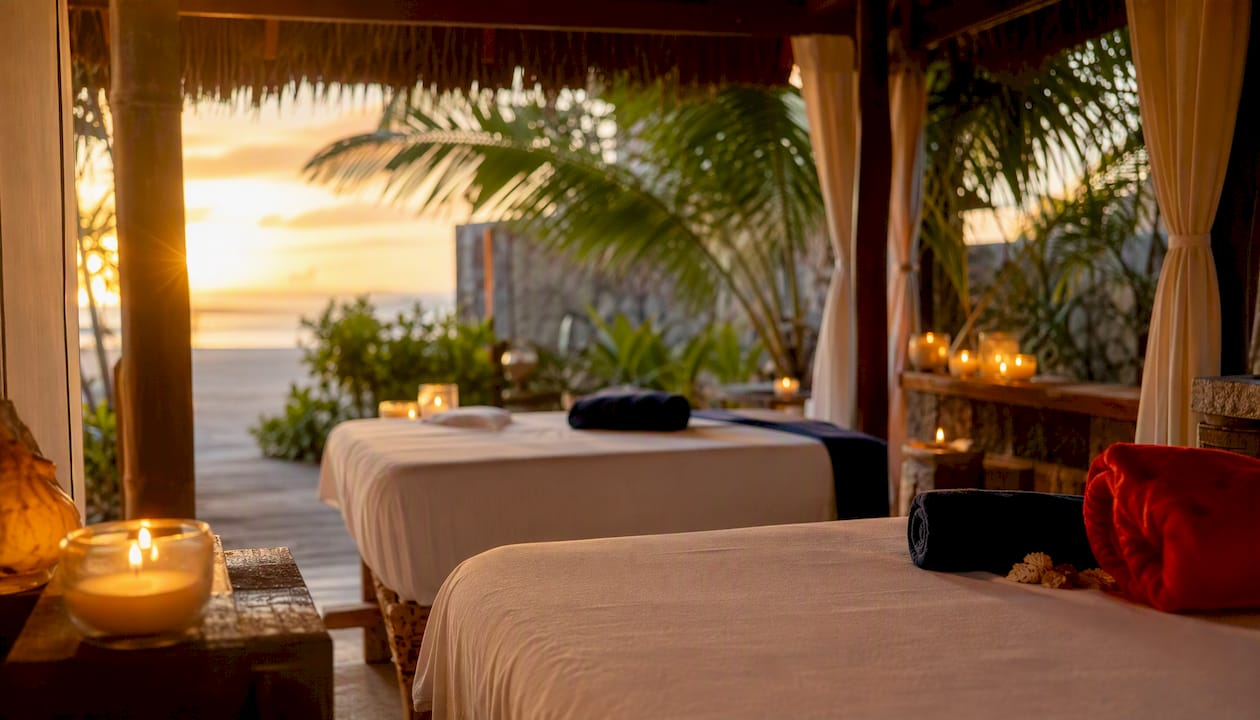
Corporate travel discount strategies can reduce per-person airfare and hotel costs meaningfully when negotiated at the group level, particularly for programs with 20 or more participants.
Sample planning timeline
| Phase | Timing Before Trip | Key Actions |
|---|---|---|
| Strategy and sourcing | 12 months | Set KPI baselines, issue RFPs, shortlist venues |
| Contracting | 6 months | Sign venue, DMC, insurance; confirm spa blocks |
| Pre-trip communications | 6 weeks | Send itinerary, health/dietary forms, packing guidance |
| Final logistics | 2–3 weeks | Confirm room blocks, F&B menus, on-site staff briefings |
| Arrivals and program | Trip dates | Execute program, capture on-site pulse data |
| Post-trip measurement | 7–90 days | Run eNPS pulse, 30/60/90-day follow-up surveys |
| Retention check | 6–12 months | Pull retention and engagement data against baseline |
U.S. tax and legal considerations
Under IRS rules, employer-provided travel rewards are generally treated as taxable fringe benefits for employees unless a specific exclusion applies. The fair market value of a trip is typically included in the employee’s gross income and subject to income and payroll taxes. This applies to both domestic and international programs. Eligibility rules, how awards are structured, and whether the trip has a business purpose all affect the tax treatment. Discuss the specifics with your tax advisor and employment counsel before finalizing program design.
For international programs, confirm visa and entry requirements for all participant nationalities at least 90 days out. Require travel insurance that covers medical evacuation and trip interruption. Document your duty-of-care protocol, including emergency contacts, nearest medical facilities, and an on-site staff member with first-aid certification.
How do you measure the impact of a wellness travel incentive program?
Measurement is where most programs fail, not in design or execution. Cashel Travel’s ROI framework, drawing on IRF and SITE data, recommends a structured cadence: baseline before the program, a short pulse immediately after, and longer-term tracking at 30, 60, and 90 days, followed by 6- and 12-month retention checks.
-
Capture the baseline. Run an eNPS survey and pull current retention and engagement scores before any program announcement. This is your control point.
-
Post-trip pulse (7–14 days). A short 3–5 question survey measuring immediate sentiment, perceived recognition, and intent to stay. Keep it brief; response rates drop fast after two weeks.
-
30/60/90-day follow-ups. Track engagement survey deltas, absenteeism changes, and for sales roles, pipeline and closed-revenue movement among qualifying participants versus non-qualifiers.
-
6- and 12-month retention check. Pull voluntary departure rates for program participants versus a matched control group. This is the number that closes the budget loop for the following year.
-
Build the business case. Compare the cost-per-participant against the retention delta. If participants leave at a lower rate than the control group, calculate the avoided replacement cost (using the 50%–200% of salary benchmark) and present it as program ROI.
Measurement note: The IRF 2026 Trends Report is explicit that top-performing companies embed these metrics into the program lifecycle from the start, not as an afterthought. Programs that measure from day one consistently secure stronger repeat budgets.
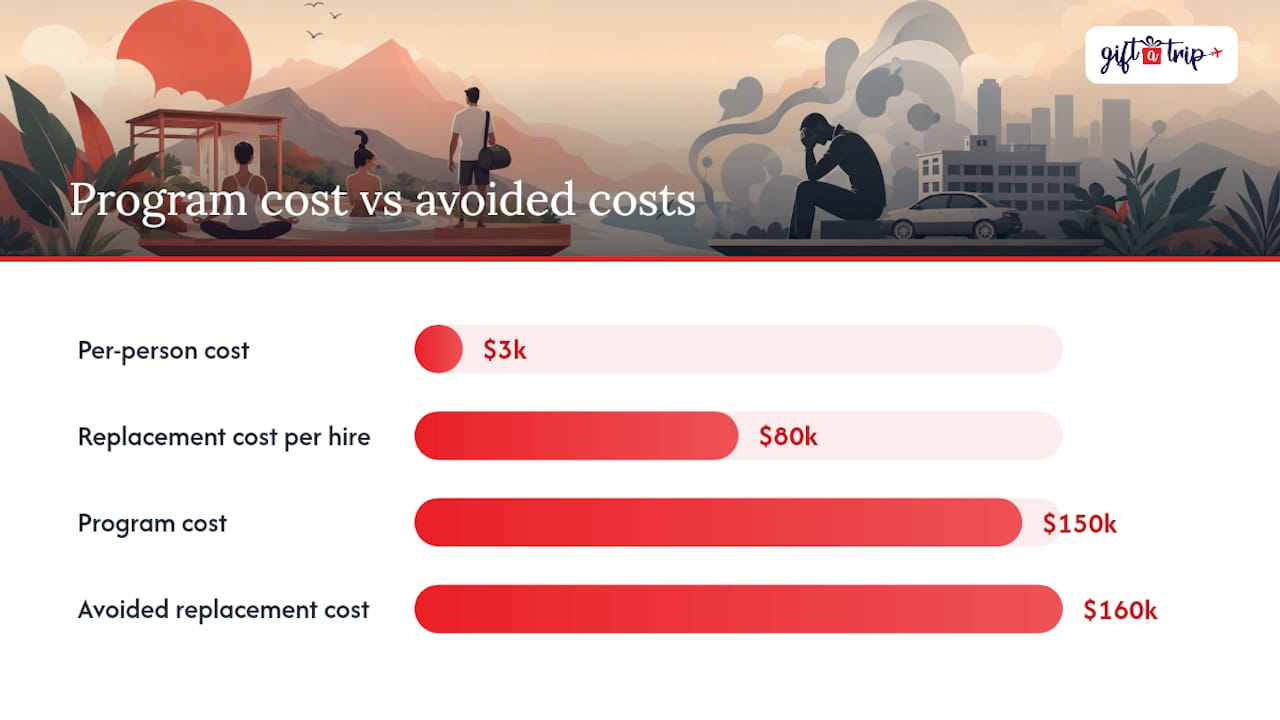
A practical example: a 50-person sales incentive program with a $3,000 per-person cost totals $150,000. If the 12-month retention check shows two fewer voluntary departures among participants than the control group, and each replacement costs $80,000, the program generated $160,000 in avoided costs against a $150,000 investment. That’s the number you bring to the next budget cycle.
DMC partners and platforms with on-site data capture can simplify this process significantly. Build measurement support into your vendor selection criteria from the start.
The part of wellness programs most planners get wrong
Most wellness incentive programs fail not because the destination was wrong or the spa was mediocre. They fail because no one was assigned to protect the downtime.
Someone on the planning team, or a designated “disconnect owner” on-site, needs to actively guard the unstructured time in the schedule. That means pushing back when a sponsor wants to add a product presentation at 4 PM, declining the hotel’s offer to fill the free afternoon with optional excursions, and making sure the F&B team isn’t running a noisy setup during the morning quiet hour. The wellness benefit lives in the white space on the itinerary. Fill it, and you’ve built an expensive conference with better food.
The other thing planners underestimate: the communication before the trip matters as much as the trip itself. Participants who understand why they were selected, what the program is designed to do for them, and what they can expect to feel differently about afterward arrive in a different headspace than those who just got a calendar invite. That pre-trip framing is free, and it materially affects how participants attribute the experience to the organization.
For teams that need to move quickly without a full vendor procurement cycle, Giftatrip’s travel certificate distribution guide offers a practical starting point for deploying individual rewards at scale.
Giftatrip makes wellness travel incentives faster to deploy
Skip the six-month vendor RFP for individual rewards. Giftatrip’s digital travel certificates are redeemable at major resorts, hotels, and cruise lines, with taxes and resort fees included and minimal blackout dates. That means your top performers get a real, flexible travel reward without your team managing room blocks, airline negotiations, or redemption logistics.
For HR and event teams, the practical use cases are straightforward: spot recognition for mid-year performance, qualification-based rewards for annual programs, last-minute substitutions when a group-trip participant can’t travel, and hybrid program top-ups for remote employees who can’t attend an in-person retreat. Bulk ordering with customizable packaging and personalized messaging means you can deploy 10 certificates or 500 with the same workflow. Review Giftatrip’s bulk order guide for corporate planners to see how distribution works at scale, then request sample certificates to evaluate the product before your next program cycle.
Sources
- The IRF 2026 Trends Report
- Wellness Tourism
- Incentive Travel Trends 2026: Why Corporate Groups Are Choosing Slower, More Purposeful Trips – Overview DMC
- How to Measure Incentive Travel ROI – Cashel Travel
- Why wellness resorts deliver transformational travel experiences
- Slow incentive itineraries: how the wellness shift reshapes resort group block design
- Corporate Wellness Retreat: The New Holiday Party
FAQ
What are wellness travel incentives?
Wellness travel incentives are employer-funded travel rewards that combine destination experiences with health-focused programming, designed to improve employee wellbeing, recognition, and retention. They differ from standard incentive trips by prioritizing recovery, mindfulness, and physical health over entertainment or sightseeing.
How do you measure the ROI of a corporate wellness retreat?
Capture eNPS and retention baselines before the program, run a short pulse survey 7–14 days after the trip, and pull 6- and 12-month retention data for participants versus a control group. Cashel Travel’s framework, drawing on IRF and SITE benchmarks, recommends this multi-horizon approach for accurate ROI calculation.
Are wellness travel incentives taxable for employees in the U.S.?
Generally yes. Under IRS rules, employer-provided travel rewards are typically treated as taxable fringe benefits, with the fair market value included in the employee’s gross income. Consult your tax advisor and employment counsel to confirm treatment based on your program’s specific structure.
What is Slow MICE and why does it matter for wellness programs?
Slow MICE is a 2026 incentive travel trend characterized by fewer scheduled activities per day, more intentional downtime, and wellness integrated into the daily rhythm rather than delivered as a single labeled session. Overview DMC documents that this approach increases perceived value and restorative impact compared to activity-dense itineraries.
How can Giftatrip support a wellness travel incentive program?
Giftatrip offers digital and physical travel certificates redeemable at major resorts, hotels, and cruise lines, with taxes and fees included. HR and event teams can use them for spot recognition, qualification-based rewards, or hybrid program top-ups, with bulk ordering and customizable packaging available for large-scale deployments.