
Run lots of instant digital rewards alongside one or two aspirational experiential grand prizes, and tie every one of them to a gamified action like leaderboard rank or points earned. This mix works because low-friction rewards keep casual attendees participating while the big-ticket prize gives your most engaged people a reason to climb. Deliver everything digitally so nobody waits, and nothing gets stuck in fulfillment limbo.
TL;DR:
- Instant rewards like gift cards and digital badges should be paired with immediate delivery triggers to maximize participation.
- Use tiered prizes—small digital rewards, mid-value items, and high-end experiential prizes—to motivate different levels of engagement.
- Limit the complexity and friction of prize redemption processes to prevent unclaimed rewards and ensure quick digital delivery.
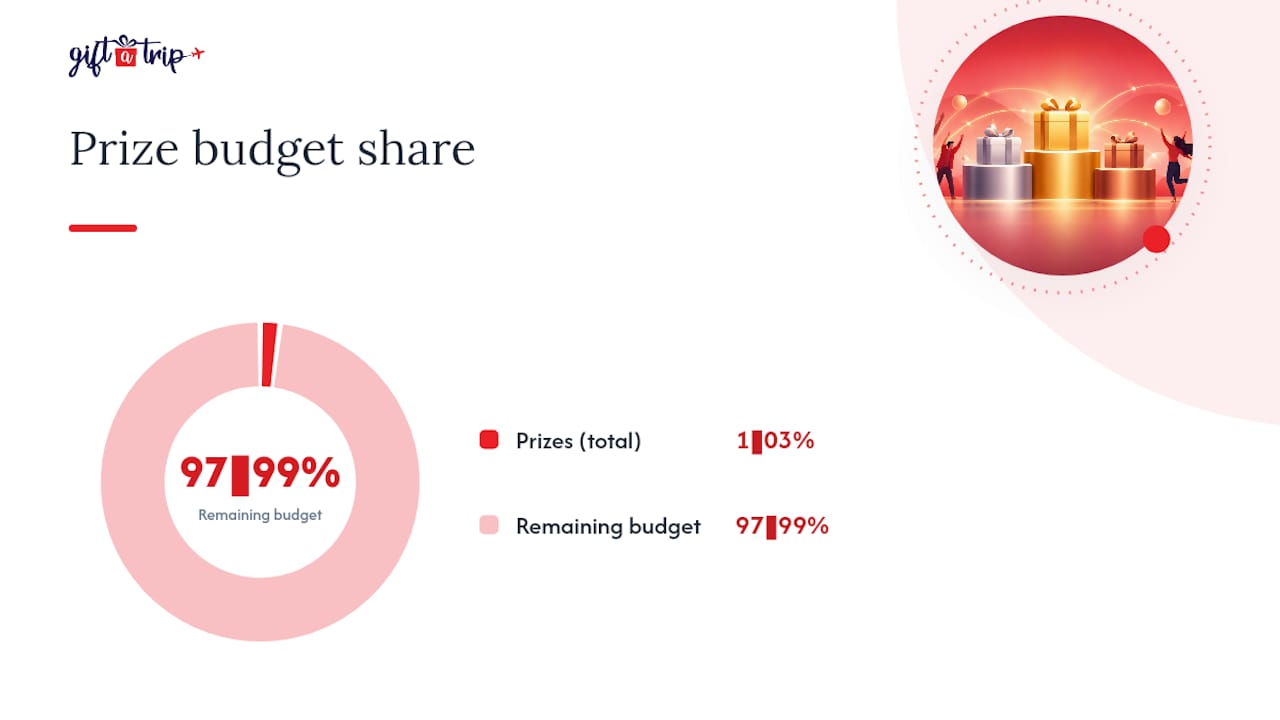
- Allocate 1 to 3 percent of your event budget for prizes, with most of the money reserved for one or two buzzworthy grand prizes.
- Incorporate sponsor-branded or co-branded prizes to demonstrate ROI, while tracking booth visits and content downloads to justify sponsorship value.
Table of Contents
- Best Virtual Event Prizes by Budget and Use Case
- How to Choose Virtual Event Prizes That Move the Needle
- Delivering Virtual Event Prizes Without the Fulfillment Headaches
- Sponsor-Funded Prizes and How to Prove Their ROI
- Why Travel Certificates Work as Virtual Event Grand Prizes
- What I’d Tell Any Planner Building This From Scratch
- Gift A Trip: Turnkey Travel Certificates for Event Grand Prizes
- Sources
- FAQ
Best Virtual Event Prizes by Budget and Use Case
Not every attendee needs the same incentive, and pretending otherwise wastes budget. The smartest programs stack three tiers, so a first-time poll voter and your top scorer both walk away with something worth logging in for.
Tier A: instant, low-friction rewards. These cost little and can be delivered the second someone completes an action.
- E-gift cards for coffee shops or streaming services, sent automatically after a poll or quiz.
- Free trials of software or subscription boxes, ideal for webinar sign-ins.
- Digital badges or unlockable content, which cost nothing but still register as a reward.
Tier B: mid-value prizes. These work well as milestone rewards for attendees who complete multiple actions, like visiting three sponsor booths.
- Branded swag kits mailed after the event, timed to a specific point threshold.
- Premium subscription upgrades (a full year instead of a trial).
- Tech accessories: wireless earbuds, portable chargers, smart home gadgets.
Tier C: aspirational, high-value prizes. Reserve these for your grand prize or top-of-leaderboard slot.
- Experiential travel certificates redeemable for resort stays, cruises, or vacation packages.
- VIP meet-and-greets with a keynote speaker or executive.
- Free passes to next year’s flagship event, which also drives early registration.
Special categories round out the mix: charitable donations made in a winner’s name, exclusive behind-the-scenes content, and recognition-based awards like “Most Engaged Attendee” that cost nothing but a shout-out on the closing slide. PheedLoop’s guidance on gamification and prizes for virtual events points to swag kits, gift cards, and level-based reward systems as reliable ways to keep motivation up without inflating your budget.
Pro Tip: Pair every Tier A reward with an immediate digital delivery trigger. The moment someone claims a gift card is the moment they’re most likely to keep participating, so don’t make them wait for an email that arrives the next morning.
A useful budgeting reference comes from event-gamification guides that recommend setting aside 1 to 3% of your total event budget for prizes, reserving the larger share for the one or two prizes that generate real buzz.
How to Choose Virtual Event Prizes That Move the Needle
Start by mapping the prize to the exact behavior you want. A gift card for “logging in” barely moves engagement. A gift card for “answering all five poll questions during the keynote” does, because it rewards a specific, measurable action tied to your event goals.
From there, run every prize idea through this checklist:
- Audience fit. A prize that thrills a sales team might fall flat with a nonprofit donor audience. Match the prize to who’s actually in the room.
- Redemption friction. If claiming the prize takes more than two clicks or requires a phone call, expect a chunk of winners to never redeem it.
- Inclusivity. Games and prize-entry forms need to work for attendees using screen readers or limited bandwidth, per WCAG 2.1 accessibility guidance.
- Eligibility rules. Decide upfront who qualifies (employees, one entry per person, geographic restrictions) and publish it.
- Fraud safeguards. Cap entries per account and verify identity before releasing anything above a modest dollar threshold.
Gamification tactics like points and leaderboards work because they turn a passive Zoom audience into people actively chasing a rank, but only if the prize at the top is worth chasing.
Delivering Virtual Event Prizes Without the Fulfillment Headaches
Digital delivery beats physical shipping every time speed matters. An e-gift card or travel certificate can land in an inbox within minutes; a mailed item can take weeks and often arrives after the post-event excitement has faded.
Build these habits into your fulfillment process:
- Keep one shared redemption log with timestamps for every prize claimed, so nobody wins twice by accident.
- Automate reminder emails for unredeemed prizes at the 7-day and 30-day marks.
- Verify winner identity before releasing anything above a set dollar amount, especially with high-value experiential prizes.
- Publish a simple prize terms page covering deadlines, substitutions, and what happens if a prize goes unclaimed.
Platform best-practice guides recommend awarding multiple prize tiers rather than a single grand prize, using leaderboard exports to recognize runners-up beyond just the top scorer. That single habit keeps more of your audience engaged through the final minutes of the event.
One more thing worth a sentence: tax and reporting obligations on prizes vary by value and jurisdiction, so loop in your finance or legal team before you announce anything above a modest dollar amount.
Sponsor-Funded Prizes and How to Prove Their ROI
Sponsors rarely want to just write a check for a gift card. They want a reason attendees interacted with their brand, and gated prizes deliver exactly that.
- Offer a branded prize tier where the sponsor’s logo appears on the wheel spin or the leaderboard reward card.
- Build co-branded experiential prizes, pairing a sponsor’s product with an event-branded travel certificate.
- Run a sponsored mystery drop that unlocks only after attendees visit a virtual booth or download a resource.
Gating prize eligibility to booth visits or content downloads, as outlined in gamification and promotions guidance for online events, captures lead data at the moment of redemption. Report back to sponsors with booth traffic, qualified leads, impressions, and social mentions tied directly to the prize mechanic.
Why Travel Certificates Work as Virtual Event Grand Prizes

Travel certificates hit differently than a gift card. A wellbeing challenge platform used leaderboards and prize drawings including multi-night resort stays to sustain engagement well beyond the event window, because winners kept talking about the trip long after the event ended.
To operationalize one:
- Set a redemption window generous enough to account for travel planning, typically several months out.
- Choose certificates with fees and taxes already included to avoid surprise costs for winners.
- Add personalized messaging so the prize feels like it came from your brand, not a third party.
- Pair the top leaderboard slot with a travel certificate grand prize, then offer smaller certificate denominations as runner-up raffle entries.
What I’d Tell Any Planner Building This From Scratch
The trade-off nobody talks about: instant prizes drive participation volume, but they rarely get mentioned in the recap email six months later. A well-chosen experiential prize does. Keep the instant rewards flowing for volume, but hold back budget for one prize people will still be telling coworkers about at the next conference. Having sourced travel prizes for corporate incentive programs, I’ve watched the certificate-as-grand-prize model consistently outlast the swag kit in attendee memory.
— Donovan
Gift A Trip: Turnkey Travel Certificates for Event Grand Prizes
Sourcing a grand prize shouldn’t mean weeks of vendor calls and blackout-date headaches. Digital travel certificates are available for bulk orders, custom branding, and fast digital delivery, so your grand prize is ready before your event microsite even launches.
Planners choose certificates because fees and gratuities are often covered, blackout dates are minimal, and messaging can be personalized to match your event’s tone. For a leaderboard grand prize, the Flex Trip Collections give winners the flexibility to pick a resort, cruise, or golf getaway that actually fits their schedule instead of forcing a fixed date. If you’re running a bulk order across sponsor tiers or department teams, the corporate gifting programs handle custom trip selection sites and branded gift box delivery so nothing lands in a winner’s inbox looking generic.
Ready to lock in a grand prize before your next event goes live? Browse the certificate options and get a bulk quote through Giftatrip’s corporate gifting page.
Sources
- Virtual Event Gamification Ideas — Bizzabo
- How Heka Health’s gamified wellbeing challenges spur connection and revenue — PCMA
- Game best practices — Socio / Webex Events
FAQ
What Is a Prize That Everyone Wants?
There’s no single universal prize, but flexible options like e-gift cards and travel certificates come closest because winners choose how to use them. A travel certificate works especially well as a grand prize since it lets the winner pick the destination and dates instead of receiving a fixed item.
What Are Some Good Ideas for Virtual Events?
Mix instant rewards like e-gift cards and subscription trials with a small number of aspirational prizes tied to leaderboard performance. Adding simple gamified features like polls, quizzes, and prize wheels boosts participation without heavy production effort.
What Are Some Good Prizes for Online Games?
Points-based and level-based rewards work well for online games because they reward incremental progress, not just the final winner. Consider tech accessories or branded swag for mid-tier winners, and reserve a bigger reward, like a travel certificate, for whoever tops the final leaderboard.
What Are Some Good Prizes in General?
Good prizes match the effort required to win them. A five-second poll deserves a small digital reward, while a multi-session scavenger hunt or leaderboard win justifies something bigger, like an experiential travel prize or a premium tech gadget.
How Much Should I Budget for Virtual Event Prizes?
A common guideline is setting aside 1 to 3% of your total event budget for prizes. Weight that budget toward one or two standout prizes rather than spreading it evenly across dozens of small rewards.