
Jump to Section:
TL;DR:
- Nearly half of travel gift cards remain unused, often due to complexity and restrictions.
- Open-loop cards offer greater flexibility, while closed-loop ones provide brand-specific benefits.
- Ease of redemption and digital delivery significantly increase the likelihood of gift card utilization.
Nearly half of all travel gift cards purchased never get redeemed. That single fact should give every gift-giver pause. Gift card sales hit $2.5B in 2023, and travel-focused cards are among the fastest-growing categories, yet 47% of consumers still have unused cards sitting in a drawer. Whether you’re shopping for a birthday, planning a holiday surprise, or running a corporate rewards program, understanding how travel gift cards actually work is the difference between giving something memorable and giving something that collects dust.
Table of Contents
- What is a travel gift card?
- Benefits and drawbacks of travel gift cards
- How to choose and use travel gift cards wisely
- Travel gift cards for employee rewards and business gifting
- A smarter way to give travel: What most people miss
- Find the perfect travel gift card for any occasion
- Frequently asked questions
Key Takeaways
| Point | Details |
|---|---|
| Travel gift card basics | They are prepaid cards used to book travel but come with conditions you must understand before using. |
| Pros and cons | Travel gift cards are flexible and popular, but restrictions and fees can limit their usefulness. |
| Smart selection tips | Check for no-fee, no-expiry, and brand flexibility to reduce the chance of value being lost. |
| Corporate advantage | Businesses see higher redemption rates and ROI when using travel gift cards for employee rewards. |
| Practical application | Choose digital delivery and nudge recipients to redeem quickly to avoid unused balances. |
What is a travel gift card?
A travel gift card is a prepaid card loaded with a set dollar amount, redeemable specifically for travel-related expenses. Think hotel stays, resort packages, cruises, flights, or vacation bundles. Unlike a general-purpose gift card you’d use at a grocery store, travel gift cards are purpose-built for booking experiences.
There are two main types you’ll encounter:
- Closed-loop cards: Tied to a specific brand or platform. You can only redeem the value with that one company, such as a Marriott gift card or a cruise line voucher.
- Open-loop cards: Issued by payment networks like Visa or Mastercard. These work wherever the network is accepted, giving recipients far more flexibility.
The benefits of travel gift cards go beyond simple convenience. They make gifting travel tangible, especially for people who would never splurge on a vacation themselves.
Here’s a quick comparison of the two card types:
| Feature | Closed-loop | Open-loop |
|---|---|---|
| Brand restriction | Yes | No |
| Flexibility | Low | High |
| Typical fees | Varies | Often has fees |
| Best for | Brand loyalists | General travelers |
One concept worth knowing is breakage, which refers to the percentage of gift card value that is never redeemed. Breakage rates remain high across the industry, and issuers actually benefit financially when cards go unused. For consumers and corporate buyers, that’s value evaporating. A travel rewards card overview from Investopedia confirms that while the market is growing fast, the fine print often catches buyers off guard. Typical gifting occasions include birthdays, anniversaries, employee milestones, and holiday bonuses, making travel cards one of the most versatile options available.
Benefits and drawbacks of travel gift cards
Now that you know what travel gift cards are, it’s essential to examine their advantages and disadvantages before making a purchase.
Travel gift cards exploded in popularity post-pandemic, when people craved experiences over things. They’re broadly appealing because almost everyone wants to travel, and they remove the guesswork of picking a specific destination or date for someone else.
Top advantages:
- Flexible gifting for nearly any occasion
- Broad appeal across age groups and preferences
- Easy digital delivery for last-minute needs
- Covers real travel costs like hotels, resorts, and packages
- Works well for both personal and corporate gifting
But there are real pitfalls. Restrictions, expirations, and limited freedom are the most common complaints. Closed-loop cards lock recipients into one brand, which becomes a problem if that brand doesn’t serve their preferred destination. Some cards charge inactivity fees after a set period, quietly draining the balance.
“The best travel gift card is the one your recipient will actually use. A card tied to a brand they’ve never heard of is just a pretty piece of plastic.”
Open-loop cards solve the flexibility problem but often come with their own fees and may not cover travel-specific perks like resort credits or complimentary upgrades. Closed-loop cards, on the other hand, can unlock brand-specific benefits that open-loop cards simply can’t match.

Pro Tip: Before buying, always check the card’s expiration policy, inactivity fees, and whether the recipient’s preferred travel brands are covered. Reviewing the best travel gift cards for your specific use case saves real money and avoids gifting regret.
The bottom line is that the right card depends entirely on who you’re buying for and how they travel.
How to choose and use travel gift cards wisely
Given their trade-offs, how do you select a travel gift card that won’t go unused and delivers real value?
Start with a simple checklist before you buy:
- Brand coverage: Does the card work with hotels, resorts, or airlines your recipient actually uses?
- Destination reach: Is the card accepted globally or only domestically?
- Fees: Are there purchase fees, activation fees, or inactivity fees?
- Expiration: Does the card expire, and if so, when?
- Delivery format: Digital or physical? Digital cards are faster and easier to track.
Digital cards redeem 15% faster than physical ones, which means less chance of the card getting lost or forgotten. For corporate buyers managing bulk orders, digital delivery is especially efficient.
For recipients, the smart move is to combine the card with existing loyalty points. Many hotel and airline programs let you stack a gift card payment with points for a better redemption. Always check your balance right after receiving the card, and set a calendar reminder to use it well before any expiration date.
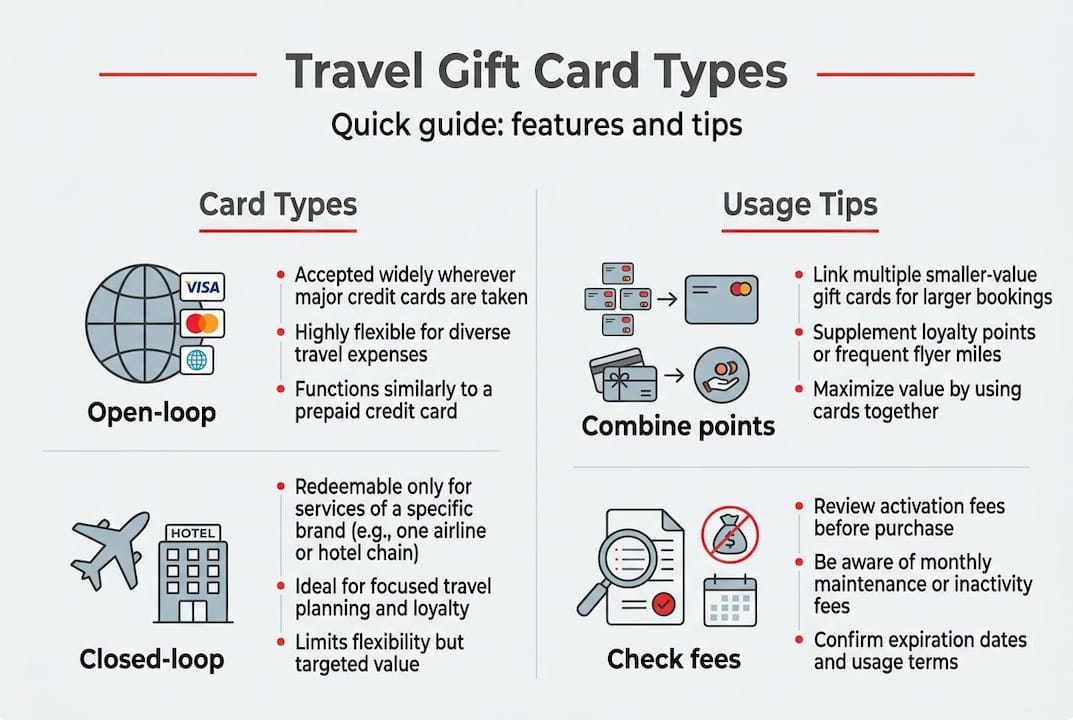
Pro Tip: Prioritize cards with no fees and no expiration date. They offer the best value and the least risk of breakage. If you’re buying for international travelers, confirm global acceptance before purchasing.
Some additional tips for smart use:
- Register the card online as soon as it’s received to protect the balance
- Screenshot or save the confirmation email for digital cards
- Use the card for a specific trip rather than leaving it as a vague “someday” plan
Staying current on corporate gift card trends and strategies for elevating employee recognition can also help managers build smarter, higher-impact programs.
Travel gift cards for employee rewards and business gifting
Beyond personal gifts, travel gift cards are shaking up how businesses reward and recognize talent.
Companies have discovered that travel rewards carry a motivational weight that cash bonuses often don’t. A $500 bonus disappears into a checking account. A $500 travel certificate creates a memory. That emotional difference matters enormously for retention and engagement.
Corporate redemption rates are 20% higher than consumer rates, which means employees actually use these rewards. That’s a strong ROI argument for any HR manager or team leader.
Here’s how the numbers compare:
| Reward type | Average redemption rate | Emotional impact |
|---|---|---|
| Cash bonus | Moderate | Low |
| Consumer gift card | ~53% | Medium |
| Corporate travel card | ~73% | High |
For HR teams and managers launching a travel reward program, here’s a practical starting point:
- Define the performance milestones that trigger a reward
- Choose cards with broad destination coverage and no expiration
- Personalize the delivery with a message tied to the achievement
- Communicate clearly how to redeem the card
- Track redemption rates to measure program effectiveness
Pro Tip: Use travel rewards for peak performance incentives, not just annual reviews. Timely recognition tied to a specific win has a far stronger retention effect than a year-end bonus.
Explore corporate gifting with travel certificates to see how major brands structure their programs. The employee travel incentives guide and the guide to corporate travel rewards are both solid resources for building a program from scratch.
A smarter way to give travel: What most people miss
Here’s what years of working in travel gifting have taught us: most people focus entirely on the price of the card and almost nothing on the mechanics of redemption. That’s backwards.
The single biggest predictor of whether a travel gift card gets used is how easy it is to redeem. Cards with complicated booking portals, narrow destination lists, or confusing terms create friction. Friction kills follow-through. Choosing brand-agnostic, open-loop options dramatically increases the chance your gift actually becomes a vacation.
Digital delivery matters more than most buyers realize. Digital cards outperform physical ones in redemption, and the reason is simple: they’re harder to lose and easier to act on immediately. When you send a physical card, it competes with every other piece of mail and physical clutter in someone’s life.
Breakage is not an accident. It’s a built-in feature of the gift card business model. Issuers profit when cards go unredeemed. That means the burden is on you, the giver, to choose cards with transparent terms and to actively nudge recipients to use them. A follow-up message two weeks after gifting, reminding someone to book their trip, is one of the most underrated moves in thoughtful gifting.
For a practical framework on creating memorable travel rewards, look beyond the card itself and think about the full gifting experience, from delivery to redemption.
Find the perfect travel gift card for any occasion
Travel gift cards work because they give people the freedom to choose their own adventure, whether that’s a beach resort, a city hotel, or a cruise. But the best results come from choosing the right card for the right person.
At Gift A Trip, you’ll find flexible travel certificates redeemable at resorts, hotels, cruise lines, and vacation packages from major brands, with taxes and resort fees covered and minimal blackout dates. For businesses, the corporate travel rewards guide walks you through building a recognition program that employees actually get excited about. Whether you’re gifting one person or rewarding an entire sales team, Gift A Trip makes it simple, personal, and genuinely valuable.
Frequently asked questions
How do travel gift cards work?
Travel gift cards are prepaid cards with restrictions that let you book travel experiences like hotels, resorts, or vacation packages, though specific terms vary by issuer.
Do travel gift cards expire or have fees?
Many travel gift cards carry expiration dates or inactivity fees, so always check no-fee terms before purchasing to avoid losing value.
What’s the difference between open-loop and closed-loop travel cards?
Open-loop cards offer freedom to spend almost anywhere, while closed-loop cards restrict redemption to a single brand or travel platform.
How can companies use travel gift cards for employee rewards?
Businesses use travel cards to recognize performance and build loyalty, and corporate redemption is 20% higher than the typical consumer rate, making them a strong ROI tool.
Can travel gift cards be combined with loyalty points?
Yes, many travel programs let you stack cards with loyalty points, which increases the total value and makes redemption more rewarding for the recipient.