
Jump to Section:
TL;DR:
- Blackout dates are specific periods when travel rewards cannot be redeemed, often during peak holidays and high-demand seasons. Understanding these restrictions before purchasing is essential, especially for vacation clubs that may effectively block 20 to 40% of the calendar year with hidden limitations. Choosing travel certificates with explicit “no blackout dates” policies and requesting written blackout calendars helps ensure a seamless gifting experience.
A blackout date is a predefined period when travel gifts, such as vouchers, certificates, or reward miles, cannot be redeemed for bookings due to restrictions imposed by airlines, hotels, cruise lines, or vacation clubs. Explaining blackout dates in travel gifts matters because these restrictions directly affect when and how a recipient can use what you’ve given them. Providers like major airlines, Marriott Bonvoy, and Royal Caribbean all apply some form of blackout policy to their rewards and certificates. Understanding travel gift restrictions before you buy protects both your investment and the recipient’s experience. This article breaks down why blackout dates exist, how they vary across gift types, and exactly what you can do to avoid unpleasant surprises.
What are blackout dates in travel gifts and why do they exist?
Blackout dates restrict use of airline miles, vouchers, or rewards on specific dates, typically major holidays or peak travel periods. The logic is straightforward: providers earn more revenue by selling seats, rooms, or cabins at full price during high-demand windows than by honoring discounted or complimentary redemptions. Blocking reward usage during those windows protects their profit margins.
Typical blackout periods include:
- Major federal holidays such as Thanksgiving, Christmas, and New Year’s Eve
- School vacation windows including spring break and summer break
- Local or regional events such as major sporting championships or music festivals
- Long weekends created by Presidents’ Day, Memorial Day, and Labor Day
Blackout dates typically coincide with high-demand periods, restricting use of rewards and discounts precisely when recipients most want to travel. That timing creates a frustrating paradox: the person who receives a travel gift for Christmas often cannot use it during the holiday season itself.
Blackout dates are among the most misunderstood aspects of travel rewards and gifts, causing real financial and emotional disappointment. A gift buyer who spends several hundred dollars on a resort certificate may not realize the recipient cannot book the one week they have off work. That gap between expectation and reality is the core problem explaining blackout dates in travel gifting is designed to solve.
“The most common complaint we see is not that blackout dates exist, but that nobody told the buyer about them before purchase.” — Travel Club Review
Pro Tip: Before buying any travel gift certificate, ask the provider directly: “What dates are blacked out for this property in the next 12 months?” If they cannot answer immediately, that is a red flag.
How blackout date policies differ across travel gift types
Travel gift blackout date policies are not uniform. They vary significantly depending on whether the gift involves airline miles, hotel certificates, cruise vouchers, or vacation club points. Understanding those differences helps you choose the right gift for the right person.

| Gift Type | Typical Blackout Severity | Disclosure Practice |
|---|---|---|
| Airline miles | Moderate. Blocks peak holiday flights. | Usually published in fare rules online. |
| Hotel certificates | Moderate. Blocks peak weekends and holidays. | Disclosed in certificate terms, sometimes buried. |
| Cruise vouchers | Low to moderate. Fewer hard blackouts, but capacity limits apply. | Generally disclosed at booking. |
| Vacation club points | High. Can block 20 to 40% of the calendar year. | Often hidden in supplementary guides after purchase. |
| Travel certificates (no-blackout) | Minimal or none. | Explicitly stated upfront by provider. |
Vacation clubs represent the most restrictive category. Vacation club blackout dates can block access to 20 to 40% of the calendar year, limiting usability despite ownership. That figure is striking because many buyers purchase vacation club memberships specifically for flexibility. What makes this worse is that contracts permit annual modifications to blackout periods, which means restrictions can expand after you have already purchased the gift.
Hotel certificates from major brands like Hilton, Hyatt, and IHG typically block peak holiday weekends and local event dates. The restrictions are real but usually predictable. Airline miles programs from carriers like Delta, United, and American Airlines publish award availability calendars, so blackout windows are at least visible if you know where to look.
The most gift-friendly option is a travel certificate that explicitly excludes blackout dates to increase appeal and usability. These certificates are designed specifically for gifting, where the buyer cannot predict when the recipient will want to travel.
Pro Tip: When comparing travel gift options, look for the phrase “no blackout dates” in the certificate terms. If the terms only say “subject to availability,” that is not the same thing. Availability restrictions can function exactly like blackout dates in practice.
How to identify, verify, and navigate travel gift dates
Knowing blackout dates exist is only half the battle. The practical challenge is finding out exactly which dates are restricted before you commit to a purchase, and then helping the recipient book successfully around them.
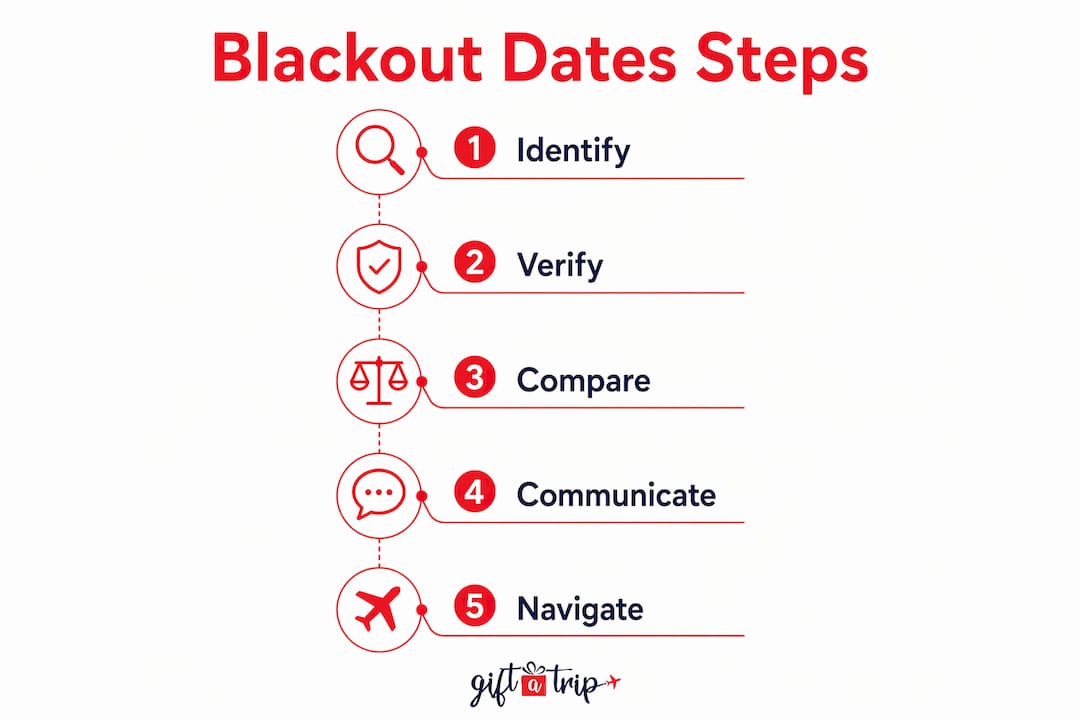
Follow these steps to protect yourself and the gift recipient:
-
Request a written blackout calendar before purchase. Asking for annual blackout calendars for each property is the single most effective way to avoid surprises. A reputable provider will supply this without hesitation.
-
Read the fine print in supplementary documents. Blackout dates are often buried in Usage Rules or Points Guides provided after signing, not in the primary contract. Request all supplementary documents before finalizing any purchase.
-
Verify restrictions for the specific property. Blackout dates can vary by location even within the same brand. A Marriott certificate may be unrestricted at one property and fully blacked out at another during the same week. Always confirm at the property level.
-
Choose certificates with transparent, upfront policies. Providers who advertise flexible travel certificates with clear terms are far easier to work with than those who bury restrictions in supplementary guides.
-
Advise the recipient to book early. Even certificates with minimal blackout dates are subject to availability. Booking 60 to 90 days in advance dramatically improves the recipient’s chances of securing preferred dates.
-
Understand related costs alongside blackout dates. Resort fees and other hidden travel gift costs can compound the frustration of restricted dates. A complete picture of the gift’s terms prevents multiple layers of disappointment.
Pro Tip: If you are giving a travel certificate as a holiday gift, include a printed note explaining the blackout dates alongside the gift. Recipients who know the restrictions upfront plan better and feel more in control of the experience.
How blackout dates affect popular gifting occasions
The timing problem with blackout dates becomes most acute during the occasions when people most often give travel gifts. Birthdays, anniversaries, honeymoons, and holiday celebrations are the top gifting moments, and they frequently overlap with peak travel periods.
Major holidays and school vacations overlap with blackout dates, limiting a gift recipient’s booking options at exactly the wrong moment. Consider a few concrete scenarios:
- A couple receives a resort certificate as a wedding anniversary gift in December. They want to celebrate New Year’s Eve at the property. That date is blacked out.
- Parents give their college student a cruise voucher for spring break. Spring break is one of the most commonly blacked-out periods across cruise lines.
- A corporate team receives vacation package certificates as a year-end reward. The entire holiday window from late December through early January is restricted.
These are not edge cases. They are the default outcome when travel gift restrictions are not checked before purchase. The gift giver’s intention is generous, but the recipient’s experience becomes a lesson in fine print.
The solution is not to avoid travel gifts. It is to choose gifts with transparent seasonal travel gift limitations and to communicate those limitations clearly. A recipient who knows they cannot book during spring break but can book any other week of the year will still value the gift. A recipient who discovers the restriction only when trying to book feels deceived, regardless of the giver’s intent. Choosing a digital travel gift with clearly stated terms gives recipients the information they need to plan confidently.
Key takeaways
Blackout dates in travel gifts are predictable, manageable restrictions that only become problems when buyers and recipients are not informed about them before purchase.
| Point | Details |
|---|---|
| Definition is clear | Blackout dates block redemption of travel rewards or certificates during peak demand periods. |
| Vacation clubs are highest risk | Vacation club blackout dates can block 20 to 40% of the calendar year, often disclosed only after purchase. |
| Request written calendars | Always ask for a written blackout calendar for each property before buying any travel gift. |
| No-blackout certificates exist | Some travel certificates explicitly exclude blackout dates, making them the safest gifting choice. |
| Communicate restrictions upfront | Telling recipients about date limitations at the time of gifting prevents frustration and improves planning. |
Why I think most travel gift buyers are set up to fail
I have spent years watching people give genuinely thoughtful travel gifts that land badly, not because the gift was wrong, but because nobody explained the rules. The travel industry is not designed to make blackout date policies easy to find. Vacation clubs bury them in supplementary guides. Airlines publish them in fare rule tables that require industry knowledge to read. Hotels disclose them in certificate terms that most people skim.
The uncomfortable truth is that the burden of understanding travel gift date policies falls entirely on the buyer, even though providers have every incentive to obscure restrictions until after the sale. I have seen vacation club members discover that their “year-round access” membership blocks the exact weeks they want to travel, every single year.
My honest recommendation: prioritize travel certificates that advertise no blackout dates explicitly, not just “subject to availability.” That phrase is a soft blackout in disguise. When a provider is proud of their flexibility, they say so plainly. When they are not, they hide behind availability language.
The best travel gifts I have seen given are ones where the giver did 20 minutes of research, confirmed the restrictions, and included a clear note with the gift explaining what the recipient can and cannot book. That small act of transparency turns a potentially frustrating gift into a genuinely exciting one.
— Donovan
Give travel gifts that actually work with Giftatrip

Giftatrip specializes in travel certificates designed to make gifting straightforward, not stressful. The platform offers certificates redeemable at resorts, hotels, and cruise lines from major brands, with transparent terms and minimal date restrictions built in. If you have been frustrated by the complexity of travel gift date policies, Giftatrip’s approach is worth exploring. Browse the full range of flexible travel certificates to find options that match your occasion and your recipient’s schedule. For cruise lovers, options like Virgin Voyages cruise certificates offer clear terms without the guesswork. Giftatrip covers taxes and resort fees, so the gift you give is the gift they receive.
FAQ
What are blackout dates for travel gifts?
Blackout dates are specific periods when travel certificates, reward miles, or vouchers cannot be redeemed for bookings. They most commonly fall on major holidays, school vacation windows, and peak travel seasons.
How do I find out if a travel gift has blackout dates?
Request a written blackout calendar from the provider before purchasing. Reputable providers supply this upfront. If the terms only reference “availability,” ask specifically which dates are restricted for the property you have in mind.
Can vacation club blackout dates change after I buy a gift?
Yes. Vacation club contracts typically permit annual modifications to blackout periods, meaning restrictions can expand after purchase without requiring approval from the buyer or member.
Are there travel certificates with no blackout dates?
Yes. Certain providers, including Giftatrip, advertise travel certificates with no blackout dates. These are specifically designed for gifting situations where the buyer cannot predict when the recipient will want to travel.
What is the difference between blackout dates and availability restrictions?
Blackout dates are hard blocks where redemption is not permitted regardless of inventory. Availability restrictions mean redemption is allowed but inventory may be limited. In practice, low availability during peak periods can function similarly to a blackout, so both terms deserve scrutiny before purchase.