TL;DR:
- Successful auction items are those that donors desire, cannot be easily priced online, and offer clear value with simple redemption. Travel experiences, exclusive access, and curated bundles outperform retail goods by creating scarcity and emotional appeal that drive higher bids. A focused, high-quality catalog with well-presented items and transparent details maximizes fundraising potential.
A good auction item is one your donors genuinely want, can’t easily price-check online, and comes with clear value and frictionless redemption. Full stop. If an item fails any of those four tests, it will underperform no matter how well you promote it.
The top item types to prioritize right now:
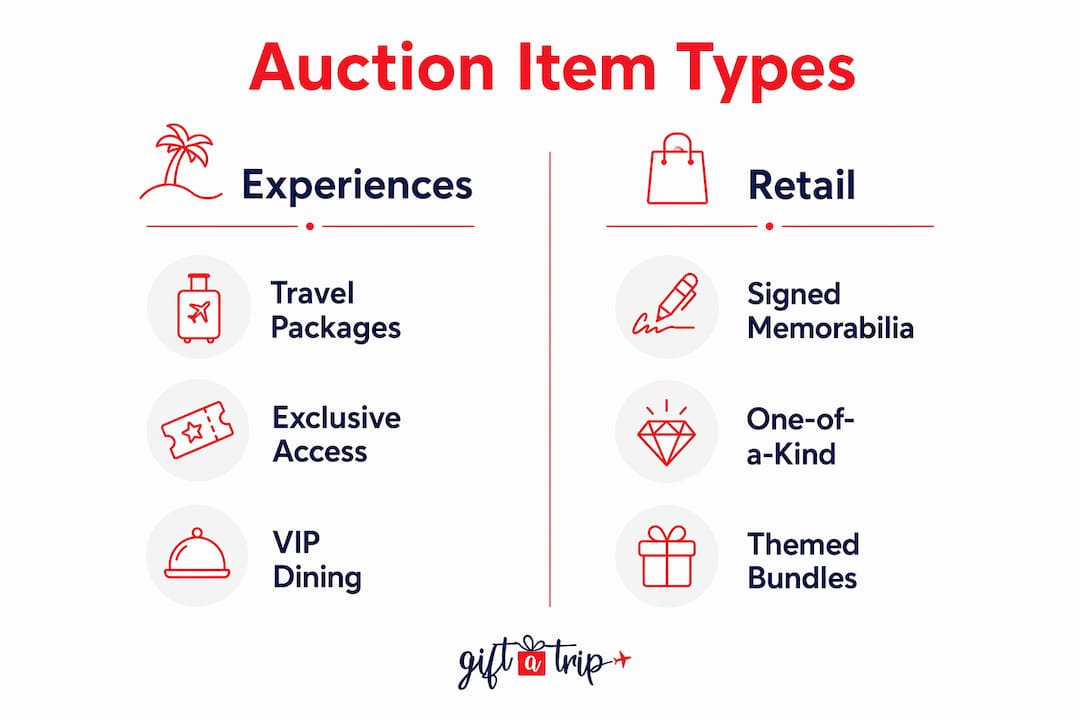
- Experiences and travel packages — resort stays, cruises, adventure trips
- Exclusive access — behind-the-scenes tours, VIP meet-and-greets, private dinners
- Curated themed bundles — spa weekends, wine-country escapes, foodie nights out
- Signed memorabilia — athlete-signed gear, framed artwork, one-of-a-kind collectibles
- Donor-created items — handcrafted pieces, private lessons, hosted events
- Mission-aligned gift packages — items tied directly to your organization’s cause
Pro Tip: Resist the urge to fill your catalog. Fewer, higher-quality items concentrate bidder energy and drive up per-item revenue. A tight list of 10 exceptional items will almost always outperform 40 mediocre ones.
Table of Contents
- Top auction item ideas that consistently drive bids in 2026
- How many items to include and how to source them
- How to present auction items so bidders instantly understand value
- How to set starting bids and bid increments
- Why experiences and travel outperform retail: the data and psychology behind it
- Key Takeaways
- The catalog mistake most fundraisers keep making
- Giftatrip makes travel auction items easy to source and deliver
- Useful sources and resources for further reading
- FAQ
Top auction item ideas that consistently drive bids in 2026
Experiences and travel packages sit at the top of every high-performing catalog, and the reason is simple: you can’t Google the price of a private sunset sail or a four-night resort stay the way you can a blender. That price ambiguity, combined with emotional appeal, is exactly what drives competitive bidding.

Experiences and travel packages
Travel is the single strongest category at charity auctions. Mission-aligned items sell for roughly 150%–200% of fair market value at well-run events, and travel packages routinely hit the top of that range. A Caribbean resort stay, a cruise certificate, or a ski-lodge weekend creates an aspirational moment that retail goods simply can’t match.
Procurement: Contact local travel agencies, resort sales reps, or use a platform like Giftatrip to source digital travel certificates redeemable for hotels, resorts, and cruise lines. Giftatrip certificates cover taxes and resort fees and carry minimal blackout dates, which removes the two most common sources of bidder hesitation.
Bid behavior: Expect strong competition and final bids that exceed face value when the package is well-presented and restrictions are clearly stated.
Exclusive access and behind-the-scenes experiences
A backstage tour, a private cooking class with a local chef, or a round of golf with a board member — these items have zero retail equivalent. That scarcity is the whole point. Scarcity and FOMO are primary psychological drivers of record-breaking bids, and exclusive-access items trigger both.
Procurement: Ask board members and major donors first. A personal ask from leadership converts far better than a generic donation request. Frame it as a chance to be part of the event’s highlight, not just a line item on a wish list.
Bid behavior: Highly variable, but ceiling is high. Items with a named, recognizable host (a local celebrity chef, a prominent athlete) consistently outperform anonymous equivalents.
Signed memorabilia and one-of-a-kind items
Authenticity is everything here. A signed jersey from a local sports team, a framed print from a regional artist, or a custom piece created specifically for your event carries provenance that mass-produced goods never will. The “one-of-a-kind” label is not marketing copy — it’s the actual reason people bid.
Procurement: Reach out to local professional sports teams, artists, and musicians directly. Many have community-giving programs. Always obtain a certificate of authenticity and document the fair market value at procurement.
Bid behavior: Sells well above FMV when the donor base has a strong connection to the person or brand behind the item. Underperforms with audiences who don’t recognize the name.
Curated themed bundles
A single bottle of wine rarely excites anyone. A “Napa Valley Weekend” package — two nights at a wine-country inn, a private tasting for two, and a curated wine selection — is a different story entirely. Bundling low-value donations into themed packages raises perceived value and attracts competitive bidding that individual items rarely receive on their own.
Procurement: Combine donated items from multiple sources into a single cohesive theme. A spa basket (robe, candles, gift card, massage appointment) assembled from four separate donations can easily command three times the sum of its parts. For travel bundles, consider pairing a Giftatrip certificate with a restaurant gift card and a packing accessory for a complete bundled travel experience.
Bid behavior: Mid-to-high range. Perceived value often exceeds actual cost, which is exactly what you want.
Local dining and VIP tables
A private dinner for eight at a top local restaurant, a reserved table at a sold-out event, or a chef’s-table experience hits a sweet spot: it’s local (so the audience knows the brand), exclusive (limited availability), and experiential (memorable rather than consumable). These items tend to perform especially well at galas where the audience already values dining and social experiences.
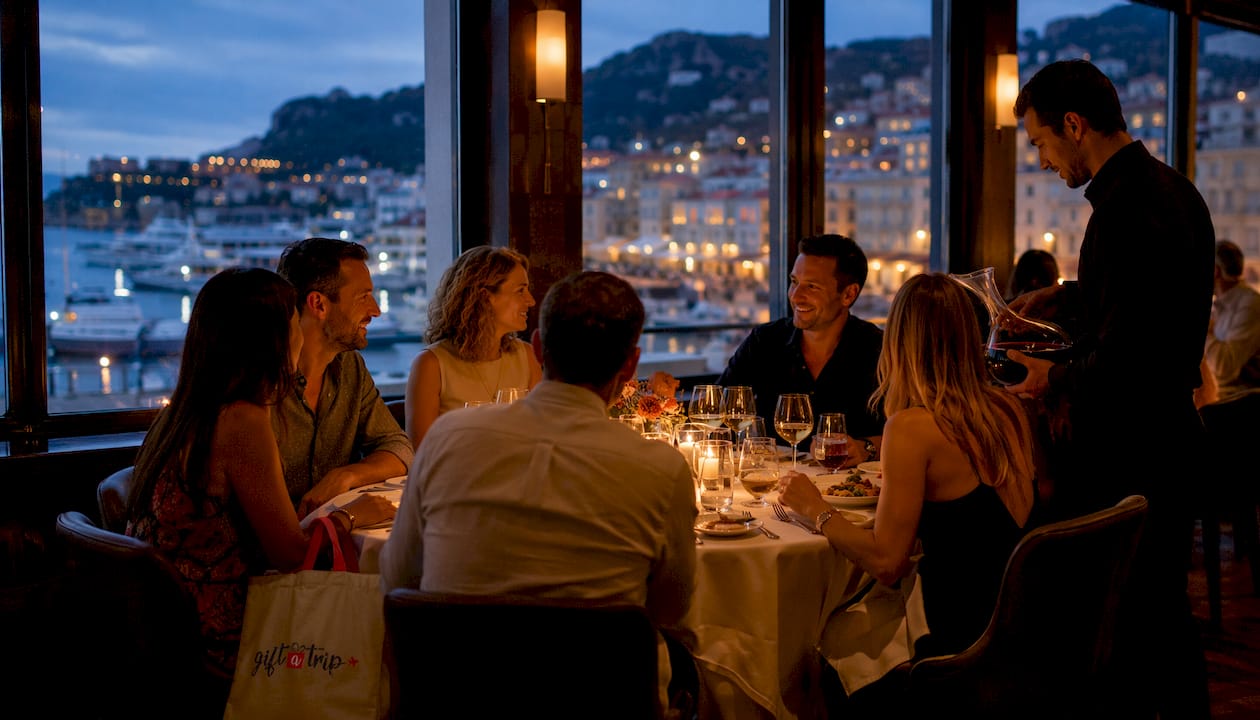
Procurement: Approach restaurant owners and event venues directly with a sponsorship letter that outlines the audience profile and the marketing exposure they’ll receive. Most upscale restaurants will participate when the ask is specific and the audience is a match.
Bid behavior: Reliable mid-range performer. Rarely the top item, but consistently sells and rarely goes home unsold.
Experiences consistently sell above fair market value while tangible retail goods rarely do, which is the clearest argument for building your catalog around them.
How many items to include and how to source them
Catalog size is one of the most consequential decisions you’ll make, and most organizers get it wrong by going too big. The Association of Fundraising Professionals puts it plainly: too many items produce lower bids, low energy, and no bidding wars.
The right item counts
Live auction: Keep it to 6–15 premium items. A live auction generates roughly two-thirds of your fundraising revenue, so every slot needs to earn its place. Ten exceptional items will outperform fifteen average ones every time.
Silent auction: Plan on approximately one item per several attendees (or one item per a few couples as a buying unit). For a 200-person event, that means a moderate number of items adequate to create competition without diluting bidder attention. The American Fundraising Foundation’s formula targets four couples competing per item — that level of competition is what creates bidding wars.
If you end up with more donated items than the formula allows, bundle them into themed packages rather than expanding the catalog. Bundling keeps competition concentrated and turns low-value donations into high-perceived-value packages.
Sourcing hierarchy
Work through this order when building your catalog:
- Board members and major donors — personal relationships produce the best items and the highest FMV. Ask specifically, not generally.
- Local businesses with mission fit — restaurants, spas, fitness studios, and entertainment venues that share your audience.
- Experience providers and travel platforms — Giftatrip and similar services for travel certificates; local tour operators for day experiences.
- Curated bundles — assemble donated items into themed packages to hit your target item count without adding catalog clutter.
- Purchased items — only when budget allows and the expected return clearly justifies the cost.
Donor outreach template
Here’s a copy-ready snippet you can adapt for email or phone outreach:
The key is specificity. Asking for “a donation” gets a gift card. Asking for “a private dinner for four” gets a private dinner for four.
Procurement checklist
- Set a hard deadline for item submissions (at least three weeks before the event).
- Collect item name, description, fair market value, restrictions, and redemption contact for every item.
- Send a written donor acknowledgment letter within 30 days of receiving the item.
- Document FMV with a receipt, published price list, or comparable market data.
- Store redemption certificates and vouchers securely; assign one person as the single point of contact.
How to present auction items so bidders instantly understand value
Presentation is where auctions are won or lost. A premium travel package with a vague description will underperform a mid-range item with a clear, compelling display card. Bidders make fast decisions, and confusion kills bids.
The display card template
Every item needs these six fields, in this order:
- Headline (5–8 words): who, what, and the emotional hook — “Four Nights in the Florida Keys for Two”
- Short description (2–3 sentences): what’s included, who it’s for, and why it’s special
- Fair market value: stated clearly — “Valued at $1,200”
- Starting bid: visible and inviting — “Opening bid: $600”
- Restrictions: blackout dates, expiration, party-size limits — stated plainly, not buried
- Redemption contact: a QR code, email, or phone number to book or claim
Before and after: copy that actually works
Before (retail-sounding, flat):
“Two-night hotel stay. Includes breakfast. Expires December 2026.”
After (experience-focused, compelling):
“Wake up to ocean views at a beachfront resort in Clearwater, Florida — two nights for two, breakfast included, taxes and resort fees covered. Book any open date through December 2026.”
Same item. The second version tells a story, removes anxiety about hidden costs, and gives the bidder a mental picture. That picture is what drives the bid.
Photography and visual presentation
For online catalogs and event programs, one clean hero image beats a collage every time. Show the experience in use: a couple on a resort balcony, a table set for a private dinner, a golfer mid-swing at a scenic course. Lifestyle imagery outperforms product shots because it sells the feeling, not the object.
For in-person display cards, print at a readable size (at least 5×7), use a legible font, and place the FMV and starting bid where the eye lands first.
Pro Tip: Always state blackout dates and redemption restrictions up front, in plain language. Ambiguous terms are the single biggest reason premium items underperform. A bidder who has to ask a question before bidding often just doesn’t bid.
How to set starting bids and bid increments
Pricing is a psychology exercise as much as a math one. Set the starting bid too high and you freeze out early bidders; set it too low and you leave money on the table. The goal is to invite competition, not to anchor the final price.
Starting bid guidelines
A starting bid of 25–40% of fair market value works well for premium experiential items. It creates enough room for competitive bidding while signaling that the item is worth pursuing. For retail goods or items with easy price comparisons, start closer to 50% of FMV to avoid the item selling below cost.
| Item category | FMV range | Suggested starting bid | Expected final bid |
|---|---|---|---|
| Travel / resort package | — | 25% of FMV | 100–200% of FMV |
| Exclusive experience | — | 30–40% of FMV | 150%–200% of FMV |
| Signed memorabilia | $200–$1,000 | 35% of FMV | 150%–200% of FMV |
| Curated bundle | $150–$600 | 40–50% of FMV | — |
| Retail / tangible goods | $50–$500 | — | — |
Bid increment examples
- Under $100: $5–$10 increments
- $100–$500: $25 increments
- $500–$1,000: $50 increments
- $1,000 and above: $100–$250 increments
Increments that are too small drag out bidding and reduce urgency. Too large and you lose bidders who would have gone one more step. The ranges above keep momentum moving.
“Buy it now” pricing
A fixed “buy it now” option works well for travel packages and experiences where the FMV is clear and the item has broad appeal. Set it at 120–150% of FMV. Some bidders will pay a premium to guarantee the win rather than risk losing in the final minutes. That certainty has real value to them, and you capture it.
Reserve vs. no-reserve
For most charity auctions, a no-reserve approach builds more trust and excitement. Reserves can create awkward situations if an item doesn’t meet the threshold. If you must set a reserve, keep it at or below your starting bid and disclose it clearly on the display card.
Emotional drivers and presentation context significantly affect final prices, which means your pricing strategy and your display strategy are inseparable. A well-priced item in a poorly lit corner with a confusing description will still underperform.
Auctions with mission-aligned items see 150%–200% of fair market value at well-run events, which is the clearest data point for why item selection and pricing work together.
Why experiences and travel outperform retail: the data and psychology behind it
The gap between experiential and retail items at charity auctions isn’t a matter of taste. It’s structural, and the psychology behind it is well-documented.
The scarcity and FOMO effect
Professional auctioneers have long understood that scarcity and regret aversion push bidders past their self-imposed limits. When an item is genuinely one-of-a-kind or available in limited quantity, the cost of losing feels higher than the cost of overpaying. That asymmetry is what produces bids above FMV.
Travel and experience packages trigger this response more reliably than retail goods because they can’t be restocked. A bidder who loses a signed jersey can find another one on eBay. A bidder who loses the only private chef’s dinner for eight at a local landmark cannot.
What the data shows
Mission-aligned experiential items at well-run charity auctions routinely sell for 150%–200% of fair market value, while comparable retail goods rarely exceed FMV. The gap widens when the item is exclusive, the description is clear, and the audience has a personal connection to the cause.
That pattern holds across event types and audience sizes. The common thread is always the same: items that feel personal, scarce, and experiential outperform items that feel purchasable.
How Giftatrip travel certificates reduce redemption friction
The most common reason travel packages underperform is not the item itself. It’s the fine print. Hidden resort fees, narrow booking windows, and complicated redemption processes create doubt at exactly the moment a bidder is deciding whether to raise their paddle.
Giftatrip’s digital travel certificates address this directly. Certificates cover taxes and resort fees, carry minimal blackout dates, and come with secure digital delivery so the winner receives their certificate cleanly after the event. For fundraisers, that means less post-event administration and fewer winner complaints. For bidders, it means the item does exactly what the display card says it will.
The creative auction item ideas that consistently top fundraising catalogs share one trait: the winner knows exactly what they’re getting and how to get it. Travel certificates from Giftatrip are built around that principle.
Key Takeaways
The best auction catalogs are built around mission-aligned experiences, curated to the right size, priced to invite competition, and presented with enough clarity that bidders never have to ask a question before raising their paddle.
| Point | Details |
|---|---|
| Prioritize experiences over retail | Mission-aligned experiential items sell for 150%–200% of FMV; retail goods rarely exceed it. |
| Size the catalog to your audience | Keep live auction item counts limited to a small number of premium items; silent auctions should include one item per several attendees to maintain competition. |
| Set starting bids to invite action | Start premium experiences at 25–40% of FMV to encourage early bidding and drive the price up. |
| Present with total clarity | State FMV, starting bid, inclusions, and restrictions on every display card — ambiguity kills bids. |
| Use Giftatrip for travel items | Giftatrip travel certificates cover taxes and fees, minimize blackout dates, and reduce redemption friction for auction winners. |
The catalog mistake most fundraisers keep making
The conventional wisdom in auction planning is “get as many donations as you can.” More items, more options, more revenue. It sounds logical. It’s wrong.
A cluttered catalog doesn’t give bidders more to choose from. It gives them permission to walk past things. When every item has four competitors on the same table, nothing feels special. The scarcity that drives competitive bidding disappears, and you end up with a room full of people who browsed but didn’t really commit.
The organizers who consistently hit or exceed their revenue goals do the opposite. They curate ruthlessly. They bundle the mediocre donations into themed packages so the catalog stays tight. They say no to items that don’t fit the audience, even when the donor is enthusiastic. That discipline is uncomfortable in the moment and profitable on event night.
Travel and experience packages earn their place at the top of every catalog not just because they’re aspirational, but because they’re genuinely hard to price-compare. A bidder standing in front of a display card for a four-night resort stay doesn’t know what that trip would cost to book independently, and that uncertainty works in your favor. Retail items don’t give you that. A $200 spa gift card is worth exactly $200 to every person in the room.
The one move that changes the math more than any other: replace your three lowest-performing retail items with one well-packaged travel experience. The revenue difference is usually not close.
Giftatrip makes travel auction items easy to source and deliver
Sourcing a compelling travel package used to mean cold-calling resorts, negotiating terms, and hoping the winner didn’t run into a wall of blackout dates six months later. Giftatrip is built to remove all of that.
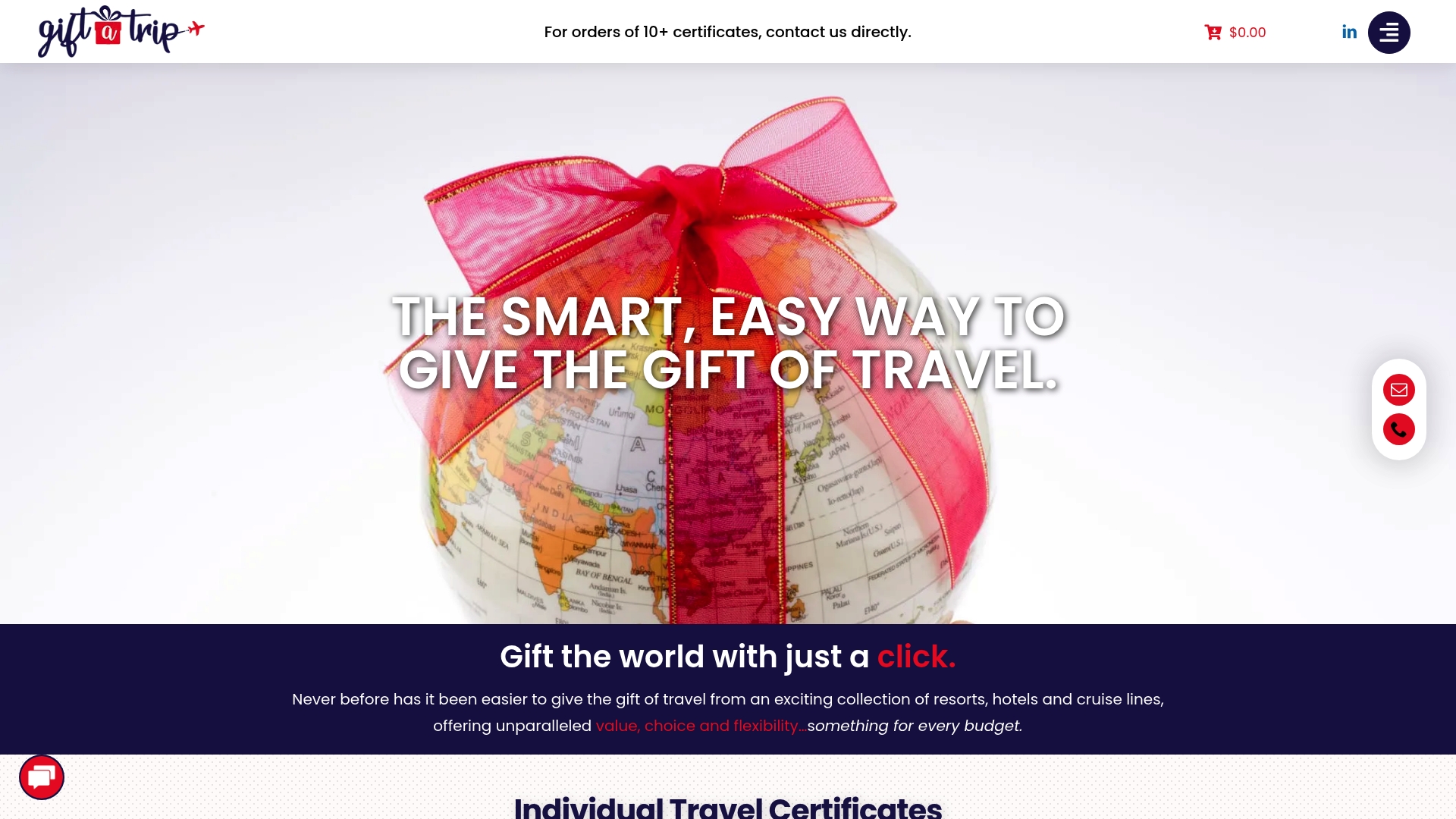
Giftatrip offers digital travel certificates redeemable for resort stays, hotel packages, cruise lines, and vacation bundles from major travel brands. For fundraisers, that means you can add a premium travel item to your catalog without negotiating directly with a resort or managing redemption logistics yourself. Certificates are delivered digitally and securely, taxes and resort fees are covered, and blackout dates are minimal — the three details bidders ask about most.
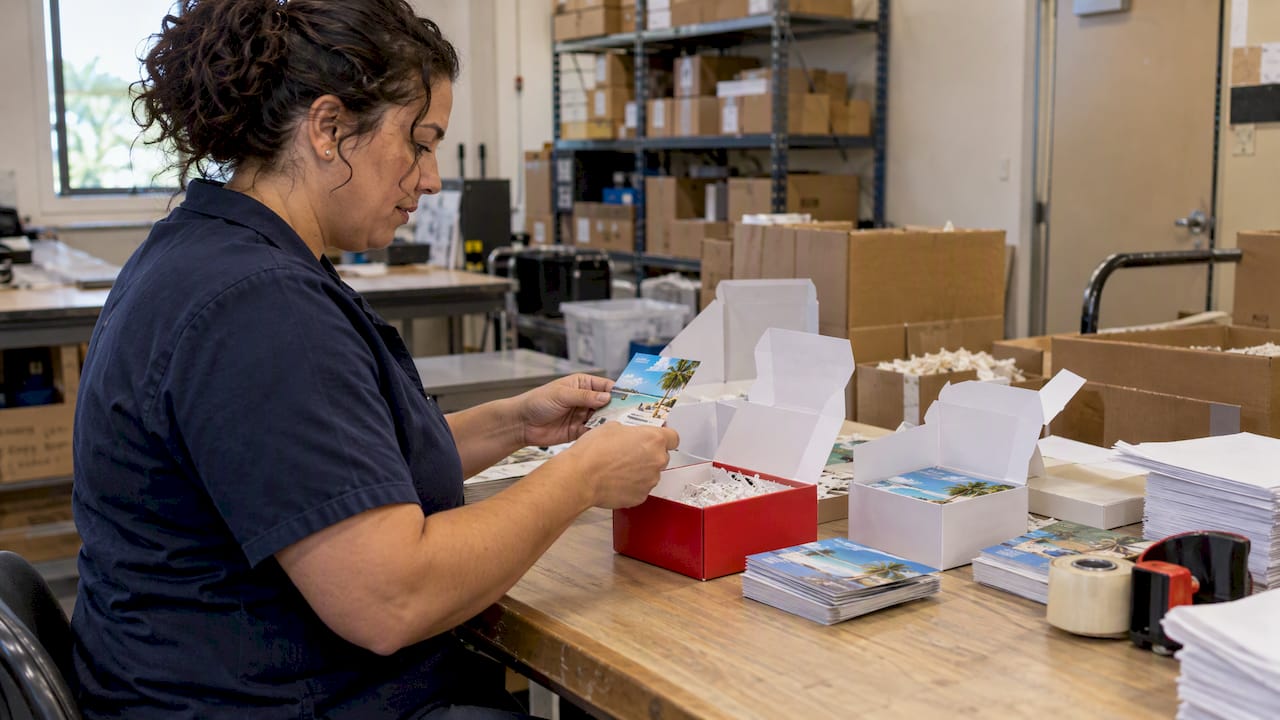
For organizations running bulk orders or multi-item catalogs, Giftatrip supports customizable packaging and personalized messaging, so the certificate looks polished on your display table and in your event program. The travel certificate distribution guide walks through exactly how to present and fulfill certificates at events.
Browse available certificates at Giftatrip.com and find the package that fits your audience and your fundraising goal.
Useful sources and resources for further reading
- American Fundraising Foundation — Silent Auction Item Formula
- Association of Fundraising Professionals — Right Number of Items for Your Fundraiser
- CharityAuctions.com — Great Auction Items for Fundraisers
- CharityAuctions.com — How to Source Auction Items
- Giddings Consulting — Best Silent Auction Items
- NeuroLaunch — Psychology of Auctions
- Psychology Today — Surprise Spending: Why You Behave Differently at an Auction
- Giftatrip — Charitable Auction Travel Workflow: Your 2026 Guide
- Giftatrip — Step-by-Step Charity Auction Gift Certificates Guide
- Giftatrip — Travel Certificate Distribution Guide for HR and Events
For FMV documentation guidance, the IRS Publication 561 covers how to determine the fair market value of donated property for tax and acknowledgment purposes.
FAQ
What makes a good auction item for a charity fundraiser?
A good auction item combines donor relevance, exclusivity, clear perceived value, and easy redemption. Experiential items like travel packages and exclusive access consistently outperform retail goods because they can’t be price-compared easily.
How many items should a silent auction have?
Plan on roughly one item per four to five attendees, or one item per four couples as a buying unit. For a 200-person event, that’s approximately 25–50 items — enough to create competition without diluting bidder attention.
What sells best at charity auctions?
Travel and experience packages are the top performers, routinely selling for 150%–200% of fair market value at well-run events. Exclusive access items, signed memorabilia, and curated themed bundles also perform well when the audience has a strong connection to the item.
How should I set the starting bid for an auction item?
Start premium experiential items at 25–40% of fair market value to encourage early bidding and allow the price to climb competitively. Retail goods with easy price comparisons should start closer to 50% of FMV.
Where can I source travel packages for a charity auction?
Giftatrip offers digital travel certificates redeemable for resorts, hotels, and cruise lines, with taxes and fees included and minimal blackout dates. They support bulk orders and customizable packaging, making them a practical option for fundraisers who want a polished travel item without managing redemption logistics directly.