
TL;DR:
- Personalizing employee rewards boosts engagement, retention, and trust through meaningful recognition. Travel gift certificates offer a scalable way to deliver personalized rewards that employees value and remember.
Personalizing employee rewards drives measurably higher engagement, stronger retention, and a recognition culture employees actually trust. The Snappy 2026 Workforce Study found that personalization ranked as the #1 driver of meaningful recognition, with many employees citing it as the quality that makes appreciation feel real. Gallup and Workhuman research links strong, personalized recognition to higher wellbeing and lower churn. For HR teams ready to act on that evidence, travel-based gift certificates from Giftatrip offer a scalable, high-perceived-value option that lets recipients choose the experience that fits their life.
Table of Contents
- Why personalize employee rewards? The research is clear
- What business results does tailored recognition actually deliver?
- What does personalization actually look like in practice?
- How to implement a personalized rewards program step by step
- How do you measure whether the program is working?
- What are the most common pitfalls, and how do you avoid them?
- Why do travel-based rewards work, and how do you use them?
- How Giftatrip supports personalized travel rewards for HR programs
- Key Takeaways
- The case for stopping generic gifting now
- Giftatrip makes travel rewards easy for HR teams
- Useful sources
- FAQ
Why personalize employee rewards? The research is clear
Recognition that feels personal activates something generic gifting never does: it signals that the organization actually sees the individual, not just the role. That distinction matters psychologically. Field experiments by Tinbergen researchers show that a personal touch combined with a gift significantly increases reciprocation and effort, while impersonal combinations can actively backfire. The mechanism is social, not transactional. When employees sense that a reward was chosen with them in mind, it triggers reciprocity and a sense of belonging rather than a simple exchange.
“Employees can tell the difference between recognition that feels personal and intentional versus recognition that feels generic or transactional.” — Snappy 2026 Workforce Study
Psychology Today’s review of workplace recognition science confirms that consistent, specific, and authentic recognition improves motivation, morale, and performance. Peer recognition often carries outsized effects precisely because it feels genuine rather than procedural. The implication for HR is direct: the delivery method and the message matter as much as the reward itself.
According to Gallup and Workhuman, personalization is one of five pillars of strategic recognition, and employees who experience it report higher wellbeing and stronger intent to stay.
What business results does tailored recognition actually deliver?
The case for customizing employee incentives goes beyond morale. The outcomes HR leaders care about most are all measurable:
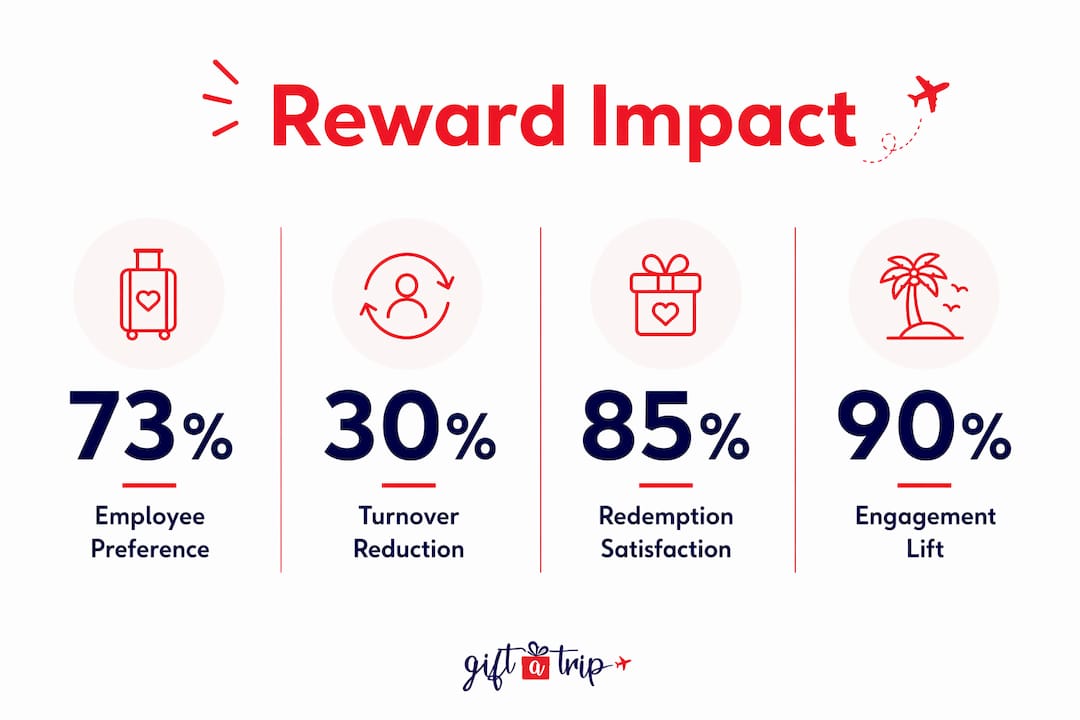
- Higher engagement scores. Snappy’s data shows many employees say gifts increase engagement and collaboration.
- Lower turnover risk. Many employees say anniversary gifts would make them more likely to stay at their company, per the same study.
- Stronger employer brand. Employees who feel appreciated and connected are more likely to recommend their employer.
- Higher productivity. Research reviews consistently link personalized recognition to reduced turnover risk and improved engagement versus generic rewards.
The ROI logic is straightforward. Replacing a mid-level employee typically costs a significant portion of their annual salary in recruiting, onboarding, and lost productivity. A well-designed personalized rewards program costs a fraction of that. The metrics HR should track from day one: engagement survey scores, 90-day and annual turnover rates, redemption satisfaction, and program NPS.
What does personalization actually look like in practice?
The most effective personalization approaches give employees a meaningful degree of choice rather than guessing what they want. Three formats work at scale:
Recipient-choice catalogs let employees select from a curated set of options, which removes the guesswork and increases perceived value. A travel certificate covering resort stays, cruises, or vacation packages covers a wide range of preferences without requiring HR to profile every individual.

Life-stage and milestone alignment ties the reward to the moment. A five-year tenure award lands differently than a quarterly performance bonus. A new parent values a weekend getaway differently than a recent graduate. Timing and context shape how meaningful the reward feels.
Message tailoring is the most underused lever. A certificate delivered with a generic “thanks for your service” note reads like a form letter. The same certificate with a two-sentence note naming the specific contribution it recognizes reads like genuine appreciation.
Pro Tip: Offer a curated set of three to five travel experiences rather than an open catalog. Too many choices create decision friction; too few feel restrictive. A short, well-chosen menu signals thoughtfulness and keeps redemption rates high.
How to implement a personalized rewards program step by step
The implementation arc is: define goals, run a small pilot, then scale with measurement. Here is the operational sequence:
- Set objectives and KPIs. Decide whether the primary goal is retention, engagement, or culture reinforcement. Name the metrics you will track before you spend a dollar.
- Set a per-employee budget. Establish a per-head spend for each reward tier (milestone, performance, tenure) so the program is equitable and forecastable.
- Choose reward types. For travel certificates, decide which certificate categories fit your workforce: resort stays, hotel nights, cruises, or vacation packages.
- Define eligibility rules. Document who qualifies, under what criteria, and how often. Equity in access is as important as the reward itself.
- Configure messaging and delivery. Write message templates for each reward occasion. Set up digital delivery so certificates reach recipients promptly.
- Run a 30-day pilot. Start with one team or one reward occasion. Collect redemption data and qualitative feedback before rolling out broadly.
- Iterate and scale. Use pilot data to adjust denominations, messaging, and cadence before the full launch.
Tax and compliance note: In the United States, most non-cash employee rewards are treated as taxable wages. Consult your payroll or tax counsel to confirm proper reporting and withholding obligations before distributing certificates.
How do you measure whether the program is working?
Three KPIs tell the clearest story: engagement score change, turnover/retention delta, and redemption satisfaction or program NPS. Track them on a defined cadence rather than waiting for the annual review.
| Checkpoint | What to measure | What a positive signal looks like |
|---|---|---|
| 30 days | Redemption rate, initial feedback | — |
| 90 days | Engagement pulse score | Measurable uptick vs. pre-program baseline |
| 180 days | Turnover rate, program NPS | Retention improvement in rewarded cohort; NPS above neutral |
For year-one benchmarks, use your pre-program engagement and turnover data as the baseline. Industry signals suggest that programs with strong personalization outperform generic gifting on both engagement and retention, but your own baseline is the only honest comparison point.
What are the most common pitfalls, and how do you avoid them?
Four risks derail most programs before they gain traction:
- Perceived insincerity. A reward with a generic note feels like an HR checkbox. Fix: use message templates that name the specific behavior or contribution being recognized.
- Unequal access. If only certain teams or managers participate, the program creates resentment rather than cohesion. Fix: publish clear eligibility criteria and audit participation quarterly.
- Administrative complexity. Manual tracking and individual ordering at scale burns HR hours. Fix: use a platform that supports bulk ordering and digital delivery so one order covers an entire cohort.
- Mixing signals with cash. Cash rewards are appreciated but quickly forgotten and often feel transactional. Reward Gateway research recommends pairing experiential rewards with personal acknowledgment to reinforce intrinsic motivation rather than replacing it with a transaction.
Why do travel-based rewards work, and how do you use them?
Travel rewards consistently deliver higher perceived value than cash or generic merchandise because they create memories rather than depreciating assets. An employee who redeems a resort certificate for a weekend with their family remembers that experience, and the company that made it possible, long after a gift card balance is spent.
Operationally, travel gift certificates address several common HR pain points. Digital delivery eliminates shipping logistics. Certificates that include taxes and resort fees remove the unpleasant surprise of hidden costs at redemption. Minimal blackout dates mean recipients can actually use the reward when it fits their schedule, which matters for business travelers and employees with demanding calendars.
Operational checklist for travel certificates:
- Select certificate denominations that match your reward tiers (milestone vs. performance vs. tenure).
- Confirm that taxes and resort fees are included so recipients face no out-of-pocket surprise.
- Verify blackout-date policies before communicating redemption windows to employees.
- Prepare a short communication template for each occasion (see example below).
- Confirm bulk ordering and digital delivery options with your provider before the pilot.
| Certificate type | Best use case | Key feature to confirm |
|---|---|---|
| Resort stay | Milestone or tenure award | Taxes and fees included |
| Hotel night | Performance recognition | Flexible redemption dates |
| Cruise certificate | Annual top-performer award | Blackout-date policy |
| Vacation package | Team or department reward | Bulk ordering available |
Sample message HR can adapt: “[Name], your work on [specific project/contribution] made a real difference this quarter. As a thank-you, here is a travel certificate for a stay at [resort/hotel/cruise] — we hope you get to use it for something you’ll remember.”
How Giftatrip supports personalized travel rewards for HR programs
Giftatrip’s digital travel certificates are built for exactly the operational needs described above. The platform offers bulk ordering for corporate programs, customizable messaging for each certificate, secure digital delivery, and certificates that include taxes and resort fees so recipients have no hidden costs at redemption.
Core features relevant to HR programs:
- Digital delivery with customizable gift boxes and personalized messaging per recipient.
- Bulk order tools for distributing certificates across large teams or multiple departments.
- Included taxes and resort fees on certificates, removing redemption friction.
- Minimal blackout dates so employees can redeem when it suits them.
- Flexible redemption across resorts, hotels, cruise lines, and vacation packages from major brands.
Quick use cases: milestone recognition (five-year tenure, promotion), sales incentive awards, remote-worker appreciation, annual top-performer trips, and team-wide celebration rewards. HR can explore employee recognition ideas to match certificate types to specific occasions.
Key Takeaways
Personalizing employee rewards drives engagement, retention, and a recognition culture employees trust, and travel-based gift certificates are one of the most scalable, high-impact ways to deliver that personalization at scale.
| Point | Details |
|---|---|
| Personalization is the #1 driver | Snappy’s 2026 Workforce Study found 73% of employees cite personalization as what makes recognition feel meaningful. |
| Retention impact is measurable | 72% of employees say anniversary gifts would make them more likely to stay, per Snappy’s data. |
| Recipient choice increases value | Curated travel options let employees pick what fits their life, raising perceived value without adding HR guesswork. |
| Measure at 30, 90, and 180 days | Track redemption rate, engagement pulse, and turnover delta to confirm program impact before scaling. |
| Giftatrip for HR programs | Giftatrip offers bulk digital travel certificates with included fees, customizable messaging, and flexible redemption for corporate reward programs. |
The case for stopping generic gifting now
Most HR leaders already know that the year-end gift card to everyone is not working. The Snappy data makes it explicit: a minority of employees say companies consistently get appreciation right. The gap is not budget. It is design. Generic programs treat recognition as a transaction; personalized ones treat it as a relationship signal.
What gets overlooked is how low the bar actually is to do this well. You do not need a complex points platform or a six-month implementation. A curated set of travel certificates, a message template that names the specific contribution, and a clear eligibility policy gets you most of the way there. The employees who receive a resort certificate with a note that says why they earned it will remember it. The ones who get a gift card with no context will not.
Travel rewards work because they force a pause. An employee has to plan, anticipate, and then experience something outside of work. That pause is where the memory forms, and the memory is what connects the reward to the company that gave it.
Giftatrip makes travel rewards easy for HR teams
Skip the logistics headache. Giftatrip handles bulk digital delivery, covers taxes and resort fees in the certificate price, and gives HR teams customizable messaging tools so every reward feels personal, not mass-produced.
Request a corporate quote, order a sample certificate to review the redemption experience firsthand, or download the Travel Certificate Distribution Guide for HR and Events to see exactly how distribution works at scale. Ready to send your first batch? Browse travel certificates and configure your order today.
Useful sources
- Snappy 2026 Workforce Study: Personalization as the #1 driver of meaningful recognition
- Gallup and Workhuman: From ‘Thank You’ to Thriving — recognition, wellbeing, and retention
- Tinbergen Institute: The Magic of the Personal Touch — field experimental evidence on gifts and appreciation
- Psychology Today: Giving thanks at work — the science and power of recognition
- CIPD: Employee recognition and non-financial rewards — evidence review
- Reward Gateway: The importance of personalized employee recognition
- Forbes HR Council: Connection is a philosophy, not a feature
- Giftatrip: Travel Certificate Distribution Guide for HR and Events
- Giftatrip: How to send digital travel gifts and create lasting memories
This article is general information, not legal or tax advice. Confirm current IRS reporting requirements and taxable-wage treatment with a qualified payroll or tax professional for your specific situation.
FAQ
Why does personalizing employee rewards increase retention?
Personalized recognition makes employees feel seen as individuals rather than interchangeable headcount. Snappy’s 2026 Workforce Study found many employees say anniversary gifts would make them more likely to stay at their company.
What is the most effective type of personalized reward?
Recipient-choice rewards, where employees select from a curated set of options, consistently score higher on perceived value than employer-chosen gifts. Travel certificates covering resorts, hotels, and cruises offer meaningful choice without requiring HR to profile each recipient.
How do travel gift certificates work for employee rewards programs?
HR purchases digital certificates in bulk, configures personalized messaging, and delivers them securely to recipients. Certificates like those from Giftatrip include taxes and resort fees, so employees face no hidden costs when they redeem.
When should HR measure the impact of a new rewards program?
Track redemption rates at 30 days, engagement pulse scores at 90 days, and turnover delta at 180 days. These three checkpoints give a clear picture of whether the program is landing before you commit to full-scale rollout.
Are employee travel gift certificates taxable in the United States?
Generally yes. Most non-cash employee rewards, including gift certificates, are treated as taxable wages under IRS rules. Consult your payroll or tax counsel to confirm proper reporting and withholding for your specific program.