
TL;DR:
- Effective travel certificate distribution requires careful planning, choosing the right format, and consistent communication to maximize redemption rates.
- Both physical and digital certificates serve different purposes, with physical options offering a tangible experience and digital options providing speed and lower costs.
- Proactive tracking, clear instructions, and multiple touchpoints help prevent fraud, misdelivery, and low redemption, ensuring a successful program.
Travel certificate distribution is the process of delivering travel gift certificates securely and efficiently to recipients, whether for corporate rewards, event prizes, or personal gifting. Done right, it creates a memorable experience. Done poorly, it generates confusion, fraud risk, and wasted budget. This travel certificate distribution guide covers every step you need, from choosing the right delivery format to tracking redemption, so your program lands exactly as intended.
What are the types of travel certificates and delivery options?
Travel certificates come in two primary formats: physical cards and digital certificates. Each format serves different audiences and distribution contexts. Knowing which to use before you start saves time, money, and headaches.

Physical travel certificates are printed cards that use encoding technologies including magstripe, EMV chip, NFC, and QR code to store value and activation data. Platforms like adivaha offer end-to-end card distribution covering design, printing, encoding, and global shipping with tracking. Physical cards work well for gala events, executive gifts, and situations where the unboxing moment matters.
Digital travel certificates simplify delivery and enable instant activation, but they require secure platforms and clear user instructions. They eliminate shipping delays and theft risks entirely. The tradeoff is that recipients with low digital literacy may need extra support during redemption.
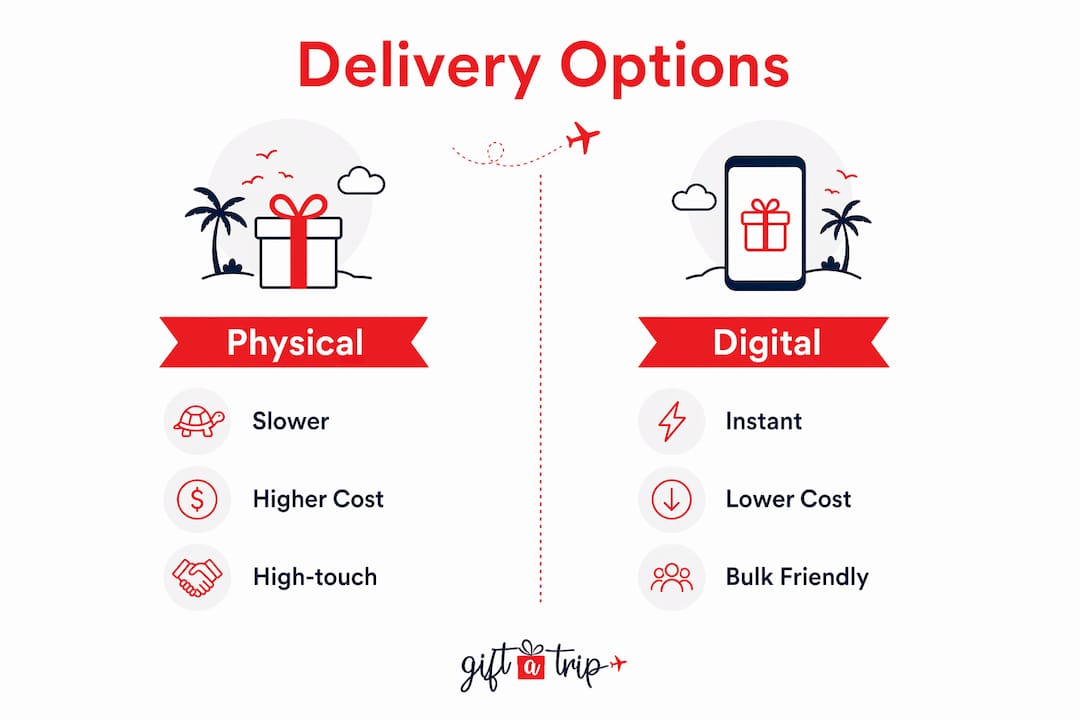
Here is a side-by-side comparison to help you decide:
| Factor | Physical certificates | Digital certificates |
|---|---|---|
| Delivery speed | Days to weeks | Instant |
| Fraud risk | Higher (theft, loss) | Lower (secure link) |
| Personalization | High (packaging, inserts) | Moderate (email design) |
| Cost | Higher (print, ship) | Lower |
| Best use case | Events, executive gifts | Remote teams, bulk rewards |
| Activation | At point of sale or online | Immediate via email or app |
For bulk corporate programs, digital delivery is the clear winner on cost and speed. For high-touch gifting like sales incentives or charity auctions, physical certificates with custom packaging carry more perceived value.
Pro Tip: Mix both formats in a single program. Send a physical card to top performers and digital certificates to the broader team. You get the prestige of a tangible gift where it counts most, without blowing your budget.
What do you need to prepare before distributing travel certificates?
Preparation is where most distribution programs fail. Skipping setup steps creates fraud exposure, inventory chaos, and compliance gaps. Work through this checklist before a single certificate leaves your hands.
-
Define your design and security specifications. Physical cards need security elements baked in at the design stage. Activation logic and inventory tracking are non-negotiable for managing distributed certificates securely. Decide on encoding type, card dimensions, and branding before going to print.
-
Set up activation and fraud controls. Every certificate needs a unique identifier tied to your loyalty or HR platform. Certificates without activation controls are open invitations to duplicate use and fraud. Integrate your certificate system with your existing HR software or loyalty backend before distribution begins.
-
Build your inventory tracking system. You need to know exactly how many certificates exist, where they are, and which have been redeemed. A spreadsheet works for small batches. For programs over 100 certificates, use dedicated gift card management software or a platform with built-in tracking.
-
Confirm compliance requirements. ICAO guidance requires notifying service providers at least 21 days before travel document changes to avoid confusion at border control. While this applies specifically to official travel documents, the principle holds for corporate programs too. Notify your distribution partner of any program changes well in advance.
-
Prepare recipient communication templates. Write your activation instructions, redemption terms, and support contact information before you distribute. Clear communication reduces support inquiries and improves redemption rates.
-
Audit your tax handling. Corporate travel certificates have tax implications that vary by jurisdiction. Review tax handling for travel certificates before your program goes live to avoid surprises at year end.
Pro Tip: Involve HR leadership in the planning phase, not just the approval phase. Involving HR early in distribution planning measurably improves program success and reduces last-minute changes.
How to execute the travel certificate distribution step by step
Execution is where planning meets reality. Follow this workflow to keep your distribution on track from start to finish.
-
Segment your recipient list. Group recipients by delivery method, location, and certificate type. A remote employee in Seattle and an executive in New York may need different formats and different messaging. Segmenting upfront prevents batch errors later.
-
Handle physical shipping logistics. For physical cards, use multi-region production facilities to cut customs costs and transit times. Adivaha operates facilities in India, the EU, the US, and Singapore for region-specific warehousing. Ship with tracking on every package. Never send bulk certificates without a chain of custody record.
-
Set up digital delivery. For digital certificates, configure your email delivery platform to send from a recognized domain to avoid spam filters. Include the certificate code, redemption URL, expiration date, and a direct support contact in every message. Test the full redemption flow before sending to your full list.
-
Activate certificates at the right moment. Do not activate physical certificates until they are in transit or at the point of delivery. Pre-activating creates unnecessary fraud exposure. For digital certificates, trigger activation at the moment of send.
-
Communicate proactively with recipients. Effective communication improves redemption rates and reduces support inquiries. Send a delivery confirmation, a reminder at the 30-day mark, and a final notice before expiration. Three touchpoints is the minimum for a well-run program.
-
Track and troubleshoot. Monitor your tracking dashboard daily during the first week of distribution. Flag any undelivered physical certificates immediately and resend digital certificates to recipients who report non-receipt. Document every exception for your post-program audit.
Here is a timeline reference for a typical corporate distribution program:
| Phase | Timeline | Key action |
|---|---|---|
| Planning and setup | 4–6 weeks before | Finalize design, recipient list, and compliance |
| Production | 2–3 weeks before | Print, encode, and package physical cards |
| Distribution | Launch day | Ship physical, send digital |
| Follow-up communication | Days 7, 30, 60 | Reminders and redemption support |
| Program close | After expiration | Audit redemption rates and unredeemed value |
What are common challenges in travel certificate distribution and how to avoid them?
Even well-planned programs hit obstacles. Knowing the most common failure points lets you build defenses before they become problems.
-
Fraud and duplicate use. Certificates without unique identifiers are vulnerable to duplication. Certificate misuse and security breaches are among the top challenges in bulk distribution. Use one-time-use codes and tie every certificate to a specific recipient record.
-
Delivery delays and misdelivery. Physical certificates sent without tracking regularly go missing. Digital certificates land in spam folders when sent from unrecognized domains. Always use tracked shipping for physical cards and authenticate your sending domain for email delivery.
-
Confusion over redemption terms. Recipients who do not understand blackout dates, eligible properties, or expiration windows call support or simply never redeem. Write your terms in plain language and include them in every communication touchpoint.
-
Bulk shipping security gaps. A box of 500 unactivated gift cards is a theft target. Use tamper-evident packaging and activate cards only after confirmed delivery.
-
Poor recipient communication. Programs that send one email and go silent see redemption rates drop sharply. Proactive communication builds trust and keeps your program top of mind.
The single biggest driver of low redemption is not certificate quality. It is the gap between delivery and clear instructions. Recipients who receive a certificate without knowing exactly how to use it will set it aside and forget it.
Key takeaways
Effective travel certificate distribution requires structured planning, the right delivery format, and consistent recipient communication to maximize redemption and minimize fraud.
| Point | Details |
|---|---|
| Choose the right format | Match physical or digital certificates to your audience, budget, and gifting context. |
| Prepare before you distribute | Set up activation controls, inventory tracking, and compliance checks before launch. |
| Follow a step-by-step workflow | Segment recipients, manage logistics, activate at the right moment, and track every certificate. |
| Communicate at least three times | Send delivery confirmation, a midpoint reminder, and a pre-expiration notice to every recipient. |
| Address challenges proactively | Build fraud controls, use tracked shipping, and write redemption terms in plain language. |
What I have learned from running travel certificate programs
The most underestimated variable in any travel certificate program is the gap between delivery and redemption. I have seen corporate HR teams spend weeks selecting the perfect certificate, only to send it with a two-line email and no follow-up. The result is a redemption rate that makes the whole program look like a failure, even when the certificates themselves were excellent.
The fix is not complicated. It is a communication calendar. Three emails, timed at delivery, 30 days out, and 30 days before expiration, will do more for your redemption rate than any upgrade to the certificate itself. Corporate gifting programs consistently see higher ROI when travel certificates are delivered with personalized messaging, not just a generic notification.
I also want to push back on the assumption that digital certificates feel less premium than physical ones. That perception is entirely a function of presentation. A well-designed email with a branded certificate image, a personal note from leadership, and a clear redemption link feels just as intentional as a physical card. The format matters less than the care behind it.
Finally, do not skip the post-program audit. Unredeemed certificates represent real budget that did not deliver value. Tracking which certificates went unused, and why, gives you the data to improve your next program. That data is worth more than any single distribution decision you make upfront.
— Donovan
How Giftatrip makes travel certificate distribution simpler
Giftatrip is built for exactly the kind of programs this article describes. Whether you are an HR manager rewarding a sales team, an event planner sourcing auction prizes, or an individual sending a honeymoon gift, Giftatrip handles the complexity so you do not have to.

Every certificate on the platform covers taxes and resort fees, with minimal blackout dates and options for personalized messaging. Giftatrip offers digital travel certificates with secure delivery and bulk order options for corporate programs. You can explore flexible gift solutions across resorts, hotels, cruise lines including Virgin Voyages and Crystal Cruises, and vacation packages. The platform is designed to make distribution straightforward, from a single anniversary gift to a company-wide rewards rollout.
FAQ
What is a travel certificate distribution guide?
A travel certificate distribution guide is a structured process for delivering travel gift certificates to recipients securely and efficiently. It covers format selection, logistics, activation, communication, and fraud prevention.
How do I choose between physical and digital travel certificates?
Choose physical certificates for high-touch gifting like executive rewards or event prizes, and digital certificates for remote teams or large-scale bulk programs where speed and cost matter most.
What are the biggest risks in travel certificate distribution?
The top risks are fraud from duplicate use, delivery delays, and low redemption caused by unclear instructions. Unique activation codes, tracked shipping, and proactive recipient communication address all three.
How many times should I communicate with recipients after distribution?
Send at least three communications: a delivery confirmation, a reminder at 30 days, and a notice before the certificate expires. Clear activation instructions in every message reduce support inquiries and improve redemption rates.
Do travel certificates have tax implications for corporate programs?
Yes. Corporate travel certificates are often treated as taxable compensation depending on jurisdiction and program structure. Review your program’s tax handling before distribution to stay compliant.