
TL;DR:
- Travel vouchers create memorable experiences that outperform cash in emotional and long-term value.
- Proper presentation and flexible terms are essential for maximizing a travel voucher’s impact.
- The ideal voucher value range is between $1,500 and $3,000 for optimal motivation.
Cash feels like a safe bet. But 65% of employees prefer travel rewards over a simple cash bonus, according to research from the Incentive Research Foundation (IRF). That single number flips the conventional wisdom on its head. Travel vouchers, which are pre-paid certificates redeemable for flights, hotel stays, cruises, or full vacation packages, offer something cash simply cannot: an experience people remember for years. This guide breaks down exactly how travel vouchers work, why they consistently outperform cash and gift cards, what to watch out for when you shop, and creative ways to present them for maximum impact.
Table of Contents
- What is a travel voucher and how does it work?
- Why travel vouchers outperform cash and gift cards
- What to look for when buying travel vouchers
- Creative ways to gift travel vouchers for every occasion
- Why travel vouchers are the most undervalued gift and what most people get wrong
- Make your next gift unforgettable with Gift A Trip
- Frequently asked questions
Key Takeaways
| Point | Details |
|---|---|
| Preferred over cash | Most people and employees value travel vouchers higher than cash for memorable rewards. |
| Check the fine print | Always review expiration dates, blackout periods, and redemption terms to avoid disappointing gifts. |
| Ideal value for impact | A well-chosen voucher in the $1500-3000 range provides the highest satisfaction and reward motivation. |
| Personalization matters | Personal touches and creative presentation boost the emotional value of travel vouchers as gifts. |
| Flexible for any occasion | Travel vouchers are a smart, flexible choice for everything from birthdays to employee appreciation. |
What is a travel voucher and how does it work?
A travel voucher is a pre-paid, flexible certificate that gives the recipient the freedom to book a travel experience of their choosing. Think of it as a permission slip for adventure. Instead of handing someone a check or a generic store gift card, you’re giving them access to a real vacation at a resort, on a cruise ship, or at a hotel from a trusted brand.
Travel vouchers work for a surprisingly wide range of situations:
- Milestone birthdays (40th, 50th, retirement)
- Anniversaries and honeymoons where an experience beats any physical gift
- Wedding gifts that stand out from the mountain of blenders and serving platters
- Corporate rewards for top sales performers or long-service employees
- Holiday bonuses that feel genuinely generous rather than transactional
- Charity auction prizes that attract higher bids than cash equivalents
Digital delivery makes travel vouchers especially practical. A certificate can arrive in someone’s inbox within minutes, which solves the last-minute gifting problem without sacrificing quality. For corporate clients buying in bulk, this speed and scalability is a major operational advantage. You can send 500 vouchers to a sales team across five time zones without a single trip to the post office.
The core advantage over cash is what researchers call the “trophy value” of non-cash rewards. Non-cash incentives yield 31% ROI compared to negative 20% for cash incentives, according to IRF data. Cash gets absorbed into everyday spending. A travel certificate gets redeemed for a memory. If you want to understand how employee travel vouchers fit into a broader incentive strategy, the distinction matters enormously.
Pro Tip: Before you buy any travel voucher, walk through the redemption process yourself. Can you easily find what’s covered? Are fees spelled out clearly? A confusing or fee-laden redemption experience will frustrate your recipient before the trip even starts.
Why travel vouchers outperform cash and gift cards
Let’s put the options side by side and see what the data actually shows.
| Gift type | Perceived value | Emotional impact | Flexibility | Long-term recall |
|---|---|---|---|---|
| Cash | Face value only | Low | High | Very low |
| Gift card (retail) | Below face value | Low to medium | Limited | Low |
| Travel voucher | Above face value | Very high | High | Very high |
The table tells a story: perceived value matters as much as dollar value. A $500 travel voucher at a well-known resort feels worth more than a $500 check because of the mental picture it creates. Your recipient isn’t thinking about rent. They’re thinking about a beach in the Caribbean.

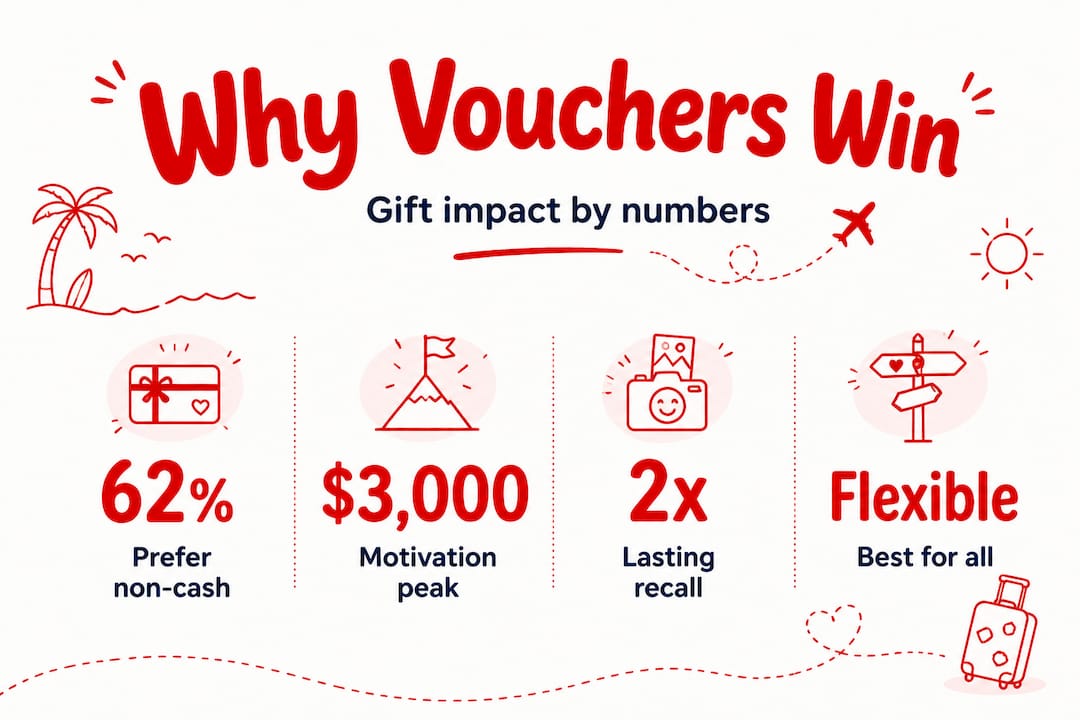
The research backs this up conclusively. 65% of employees prefer travel rewards over cash, and that preference extends to how recipients talk about their gifts afterward. Non-cash rewards generate what researchers call “social currency” since they give people stories to share. Cash gifts generate almost none.
The generational angle is equally compelling. Research shows that Gen Z favors experiences at a rate of 54 to 63 percent, meaning the next wave of employees and consumers will push demand for experience-based rewards even higher. If you’re building a rewards program today, you’re building it for an audience that genuinely values travel over stuff.
“Non-cash rewards, particularly travel, consistently outperform cash in long-term motivational impact because they create lasting emotional memories tied to the reward itself.” — Incentive Research Foundation
How exactly does that emotional engagement happen? Here’s the process:
- Anticipation builds excitement. The moment a recipient receives a travel voucher, they start imagining their trip. That anticipation is a reward in itself.
- Planning creates ownership. Choosing their destination, dates, and room type makes the experience feel personal and earned.
- The trip becomes a memory. Unlike cash spent on utilities, a vacation becomes a story they’ll tell for years.
- The brand or giver is associated with that memory. This is where corporate gifting pays dividends beyond a simple bonus.
- Recipients share experiences publicly. Social posts, office conversations, and family stories all reinforce the positive association.
Understanding these travel voucher benefits helps you make a much stronger case internally if you’re pitching a travel-based incentive program. And for companies building out a full corporate travel rewards strategy, this emotional engagement loop is exactly what drives long-term loyalty and performance.
What to look for when buying travel vouchers
Knowing that travel vouchers are worth it is one thing. Knowing how to buy the right one is another. There are real pitfalls in this market, and a poorly chosen voucher can do more damage to your relationship with a recipient than no gift at all.
Here’s your essential checklist before you buy:
- Expiration dates: Some vouchers expire in 12 months. That’s not enough time for many people to plan a real trip. Look for vouchers with 18 to 24 months of validity.
- Blackout dates: Peak travel periods like summer and major holidays should not be entirely off-limits. Minimal or no blackout dates are a strong sign of a trustworthy provider.
- Fee transparency: Hidden resort fees, processing charges, or taxes paid at booking crush perceived value fast. The best vouchers cover these up front.
- Redemption flexibility: Can your recipient choose from multiple destinations and dates? More flexibility means a better experience.
- Brand reputation: Is the provider working with recognized hotel chains, cruise lines, and resorts? Quality partnerships signal a quality product.
- Digital delivery options: Secure, immediate delivery matters both for last-minute gifting and for corporate programs sending at scale.
Research from the IRF specifically identifies that scrutinizing voucher terms to avoid pitfalls like expirations and blackout dates is essential to protecting the perceived value of any non-cash reward. A voucher that looks generous on the surface but restricts the recipient at every turn quickly loses its luster.
| Voucher value | Best for | Motivation impact |
|---|---|---|
| Under $500 | Casual recognition, team rewards | Moderate |
| $500 to $1,500 | Milestone celebrations, manager-level rewards | High |
| $1,500 to $3,000 | Top performer incentives, major personal gifts | Very high |
| Above $3,000 | Executive rewards, major life milestones | High but with diminishing returns |
The optimal value range of $1,500 to $3,000 represents the sweet spot where motivation is at its peak. Below that range, recipients may feel the gift is underpowered for the occasion. Above it, the incremental motivational impact starts to flatten out. For practical travel voucher implementation tips, this data point alone can save a corporate rewards manager significant budget waste.
When you’re comparing specific products, looking at top travel gift cards for employees can help you benchmark what a strong offer looks like before committing.
Pro Tip: When in doubt, prioritize flexibility over denomination. A slightly lower-value voucher with zero blackout dates and full fee transparency will be received better than a higher-value voucher surrounded by restrictions.
Creative ways to gift travel vouchers for every occasion
A great travel voucher presented poorly still falls flat. Presentation, context, and personalization are what transform a certificate code into an unforgettable moment. Here are five proven ways to deliver maximum impact.
- Milestone reveal moment. Present the voucher at the birthday dinner or retirement party, not mailed afterward. A physical card holder or branded gift box paired with the digital certificate creates a real unboxing experience that gets talked about.
- Virtual unwrapping for remote teams. For distributed workforces, schedule a short video call where the recipient opens their digital gift live. The shared experience amplifies the emotional moment even across screens.
- Bundled add-ons for extra delight. Pair the travel voucher with a luggage tag, a travel journal, a passport holder, or a curated local experience at the destination. The bundle signals thought and effort, not just spending.
- Story-driven personalization. Write a short note explaining why you chose a particular destination category, or reference a shared memory. “I know you’ve always talked about seeing the Pacific coast, so this is your chance” hits differently than a generic certificate email.
- Countdown gifting. For an anniversary or honeymoon, send a small gift each week in the month before departure, building to the travel voucher as the final reveal. The anticipation becomes part of the experience.
For corporate gifting, gift voucher ideas range well beyond the standard year-end bonus envelope. Consider these scenarios:
- Sales contest prizes where top performers earn resort stays instead of plaques
- Work anniversary rewards that scale with years of service
- Team celebration trips for groups hitting quarterly targets
- Onboarding welcome gifts that signal your company’s culture from day one
- Family reunion organizer gifts that reward the person who made the planning possible
Research shows that 62% of people prefer non-cash gifts when they feel thoughtfully chosen, and they assign higher perceived value to bundled experiences. That’s the insight behind pairing a hotel voucher with local experiences at the destination, turning a single gift into a full itinerary starter.
For ideas on presenting travel vouchers as gifts in personal and professional contexts, the framing and delivery are almost as important as the value on the certificate itself.
Why travel vouchers are the most undervalued gift and what most people get wrong
Here’s the uncomfortable truth: most people buying travel vouchers focus entirely on the dollar amount and stop there. They find a voucher, check the price, and send it. That’s the bare minimum, and it often results in a mediocre recipient experience despite real money spent.
The single biggest mistake buyers make is ignoring the fine print. A voucher worth $2,000 that comes with a 12-month expiration, a blackout list covering every school holiday, and a murky fee structure at checkout is not a $2,000 gift. It’s a source of frustration. Scrutinizing voucher terms before purchase isn’t just due diligence; it’s the difference between a gift that thrills and one that disappoints.
The second mistake is treating the voucher as self-explanatory. People assume the gift speaks for itself. It doesn’t. A handwritten note, a personalized message, or even a quick explanation of why you chose this particular travel experience dramatically increases how the gift lands emotionally. That story is what the recipient repeats when they tell someone about the gift.
Consider this scenario: a manager gives two top performers gifts of equal value. One gets a cash bonus deposited quietly into their paycheck. The other gets a resort stay certificate delivered in a branded gift box with a personal note referencing a goal they crushed that year, along with a link to help them start planning. Six months later, guess which employee is still talking about it. Guess which one feels more genuinely valued.
The modern travel rewards guide principle is simple: the best travel gift is one where every decision, from the amount to the terms to the presentation, was made with the recipient in mind. That level of care is what elevates a voucher from a transaction to a memory.
Make your next gift unforgettable with Gift A Trip
Ready to skip the guesswork and actually put this into practice?
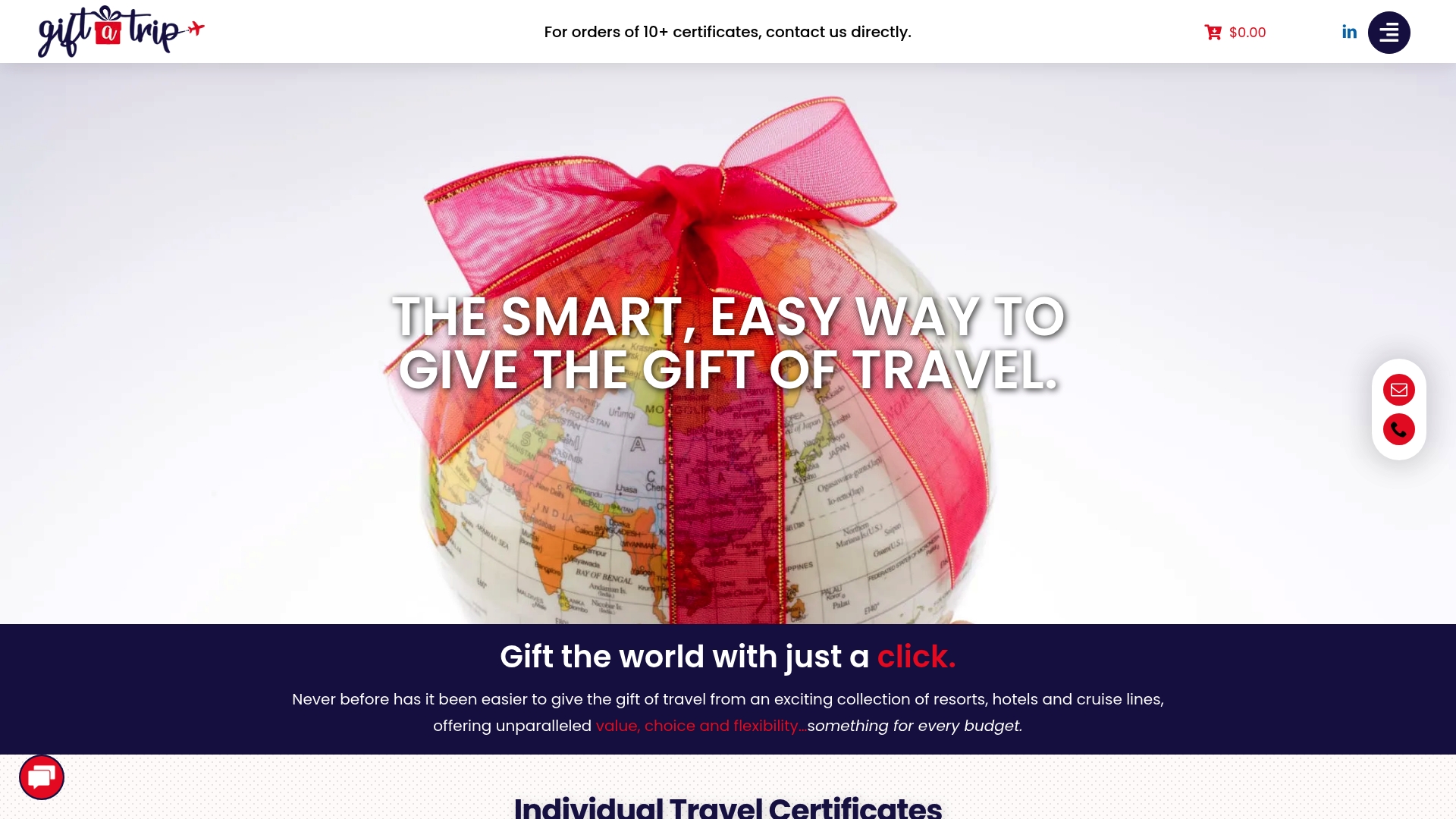
Gift A Trip offers a curated selection of travel certificates you can buy travel vouchers from in minutes, with secure digital delivery and options for personalized messaging that make every gift feel intentional. Whether you’re rewarding your top sales team, celebrating a big life milestone, or searching for top corporate travel gift ideas that employees will actually remember, the platform covers resorts, hotels, cruises, and vacation packages from major brands. Taxes and resort fees are built in, blackout dates are minimal, and bulk orders come with customizable gift boxes. You can even send travel gifts digitally instantly, making last-minute gifting genuinely effortless without sacrificing quality.
Frequently asked questions
What can you redeem a travel voucher for?
Most travel vouchers can be redeemed for flights, hotel stays, cruises, and vacation packages, depending on the provider. The best platforms offer access to multiple major brands and destination types so recipients have real choice.
Do travel vouchers have expiration dates or blackout restrictions?
Yes, many travel vouchers have expiration dates and blackout periods, so always check terms before purchasing. Scrutinizing these terms is the most important step in protecting the perceived value of the gift for your recipient.
Are travel vouchers better for personal or corporate gifts?
Travel vouchers are highly valued for both corporate rewards and personal occasions thanks to their flexibility and emotional impact. Research consistently shows that employees prefer travel rewards over cash, and personal gift recipients report stronger long-term satisfaction with experience-based gifts.
What’s the ideal amount for a travel voucher gift?
A value of $1,500 to $3,000 typically delivers the highest motivation and satisfaction without diminishing returns. According to IRF research, this optimal value range is where recipients feel the gift is genuinely meaningful and exciting to use.
Can travel vouchers be personalized?
Yes, many providers let you personalize travel vouchers with custom messages, experience bundles, and flexible delivery options. Adding a personal note or pairing the voucher with destination-specific extras significantly increases both the emotional impact and the recipient’s perceived value of the gift.