Jump to Section:
TL;DR:
- Travel-based rewards generate higher emotional impact and longer-lasting memories than traditional gifts.
- Personalizing travel gifts to employee demographics and motivations enhances motivation and retention.
- Measuring program impact through metrics like retention and engagement ensures gifting aligns with business goals.
Choosing employee gifts that actually move the needle on motivation and retention is harder than it looks. Cash bonuses fade fast, branded merchandise collects dust, and generic gift cards feel like an afterthought. The companies consistently winning at workforce engagement are using a different playbook. Incentive travel yields 3x revenue growth and boosts individual performance by 22%. That is a compelling reason to rethink your rewards strategy from the ground up. This article walks you through real criteria, specific examples, and a clear comparison framework so your next gifting program actually sticks.
Table of Contents
- Key criteria for impactful employee gifts
- Top 5 travel-based employee gifting ideas
- Comparison: Travel gifts vs. traditional employee rewards
- Tailoring gifts to team culture and business goals
- What most companies get wrong about employee gifting
- Elevate your employee gifting with flexible travel rewards
- Frequently asked questions
Key Takeaways
| Point | Details |
|---|---|
| Travel rewards boost ROI | Experience-based gifts like travel deliver significantly higher employee engagement and business performance. |
| Evidence-based gifting works | Aligning gifts with company values, goals, and employee preferences enhances both impact and retention. |
| Personalization is key | Tailor gifting initiatives to reflect individual and team achievements for memorable recognition. |
| Measure for results | Track program impact using relevant business metrics to ensure sustained program success. |
Key criteria for impactful employee gifts
Once you know why impactful gifting matters, it is crucial to define how you will choose the right option. Not all gifts carry equal weight in the eyes of your team. A $100 Amazon gift card and a weekend resort stay might cost roughly the same, but they create vastly different emotional responses, stories, and long-term associations with your brand as an employer.
What truly makes a gift meaningful?
The single biggest differentiator between forgettable and memorable employee gifts is personal relevance. A gift that speaks to who your employee is, what they value, and what they aspire to do feels like recognition. A generic gift feels like an obligation met. Research on top-performing companies consistently shows that the most effective programs align gifts with company values, secure executive buy-in, and measure impact before and after implementation.
Here are the core criteria that HR and sales managers should evaluate before selecting any gifting solution:
- Alignment with company values. If your organization promotes work-life balance, a travel reward reinforces that culture in a tangible way.
- Relevance to employee demographics. Younger employees often crave experiences over objects. Senior employees may prefer flexibility and premium comfort.
- Clear link to achievement. Gifts feel meaningful when employees understand exactly what behavior or milestone earned them.
- Scalability for volume orders. Corporate programs need solutions that work whether you are rewarding 10 people or 500.
- Measurable business outcome. Great gifting programs set a baseline and track what changes, whether that is retention, sales quota attainment, or engagement survey scores.
- Executive sponsorship. Programs with visible leadership support generate significantly more buy-in across departments.
One often-overlooked factor is simply asking employees what they want. Studies show that 54% of employees prefer travel rewards over any other incentive type. That preference data alone makes a powerful case for shifting your gifting strategy in a new direction. You can also build better programs by reviewing a complete corporate travel reward guide to understand the landscape before you commit to a specific format.
Pro Tip: Send a short, anonymous survey before launching a new gifting program. Ask three questions: What type of reward motivates you most? What destination or experience is on your bucket list? How do you prefer to receive recognition? The answers will shape a far more effective program than assumptions ever could.
The bottom line here is simple. Thoughtful, values-aligned gifts do not just feel better; they perform better across every metric you care about as an HR or sales leader.
Top 5 travel-based employee gifting ideas
With evaluation criteria set, let us explore the most effective travel-based gifting options available today. Each of the five options below addresses a different workforce need, budget level, or recognition scenario.
“Travel rewards are not a perk; they are a performance accelerator. When employees know an extraordinary trip is on the line, discretionary effort goes up measurably.” — Corporate incentive program research
54% of employees prefer travel rewards over other incentive types, which means that every time you hand out a generic gift card instead, you are leaving motivation on the table.
-
Flexible vacation package certificates. These are the most versatile option for large or diverse teams. A digital vacation certificate gives employees the freedom to choose their destination, dates, and travel style. No one feels locked into a trip they do not want. Certificates redeemable for resort stays, hotels, and bundled packages let recipients plan something they will genuinely look forward to. Reviewing a detailed travel vouchers gift guide can help you select the right tier for your reward level. Best for: year-end recognition, top performer awards, and service milestones.
-
Cruise gift certificates. Cruises offer an all-encompassing experience that feels genuinely luxurious, even at moderate price points. Cruise certificates are especially popular with employees who want a “set it and forget it” vacation where dining, entertainment, and accommodation are bundled. The perceived value of a cruise gift is typically much higher than the actual cost, which maximizes your gifting budget. Best for: sales contest winners, team performance bonuses, and executive recognition.
-
All-inclusive resort vouchers. For employees who want total relaxation without planning stress, an all-inclusive resort voucher delivers immediate appeal. These work particularly well for burned-out teams or individuals who have navigated a high-pressure quarter. When taxes and resort fees are covered, recipients feel genuinely taken care of rather than surprised by hidden costs. Best for: employee wellness initiatives, retention bonuses, and performance recognition.
-
Group experience retreats. Not all gifting is individual. Funding a group travel experience for a high-performing team builds camaraderie and collective memory simultaneously. Think a sailing day, a culinary tour, or a team trip to a nearby destination. These shared experiences create stories that live on in team culture long after the trip ends. Best for: department-level recognition and new team formation events.
-
Hotel and airline gift certificates. For employees who already have a destination in mind, hotel or airline certificates remove the financial barrier to a trip they were already planning. These are a great match for employees who travel frequently for personal reasons. You can learn more about how hotel gift certificates specifically elevate recognition programs and what to look for when choosing a provider. Travel incentive vouchers more broadly can also be layered into ongoing reward structures rather than used as one-time events. Best for: frequent traveler profiles, milestone anniversaries, and personal achievement rewards.
Pro Tip: Pair any travel certificate with a brief handwritten note from direct leadership explaining exactly what the employee did to earn it. That personalization transforms a gift into a story the recipient will tell for years.
Comparison: Travel gifts vs. traditional employee rewards
But how do these modern travel gifts stack up to traditional approaches? The data is telling. Non-cash incentives including travel generate 3x revenue growth and deliver a $4 productivity return for every $1 spent. That is a return profile that no merchandise catalog or cash bonus program consistently matches.
Here is a side-by-side look at how travel-based gifts compare to common alternatives:
| Criteria | Travel gifts | Cash bonuses | Gift cards | Branded merchandise |
|---|---|---|---|---|
| Employee preference | Very high (54%) | Moderate | Low to moderate | Low |
| Emotional impact | Very high | Low | Low | Low to moderate |
| Recall after 6 months | Very high | Very low | Very low | Low |
| Perceived value vs. cost | High | At face value | Below face value | Low |
| Retention impact | Strong | Minimal | Minimal | Minimal |
| Productivity return | $4 per $1 spent | Inconsistent | Inconsistent | Negligible |
| Scalability | High (digital certs) | High | High | Moderate |
The numbers expose a pattern that many HR teams already sense intuitively. Cash gets spent on bills and immediately forgotten. Gift cards carry a mental discount because recipients often feel they are worth less than their stated value. Branded merchandise rarely travels home with excitement.
Travel gifts, by contrast, create anticipation before the trip and memories after it. Both of those emotional states are associated with your organization in the mind of your employee. That positive association builds loyalty in a way that a cash deposit simply cannot. You can explore more about how travel gifts elevate recognition programs in practice and what specific design choices make the difference.
The practical drawbacks of cash and generic gifts go beyond just preference data:
- Cash bonuses are often taxed at a higher rate, reducing their actual impact.
- Generic gift cards can feel impersonal and suggest minimal effort from leadership.
- Merchandise requires logistics, storage, and often creates waste when items go unused.
- None of these alternatives generate the word-of-mouth buzz internally that a great trip does.
When employees talk about a trip they earned at work, those conversations become organic employer branding. That effect is genuinely hard to price.
Tailoring gifts to team culture and business goals
After reviewing the options, the final step is customizing your approach for maximum impact. Selecting the right travel gift is not a one-size decision. The same resort certificate that excites a 32-year-old sales rep may mean far less to a 55-year-old operations manager whose priorities are entirely different.

Matching gift type to your workforce requires a clear-eyed look at three variables: demographics, motivations, and organizational goals. Here is a practical framework:
| Employee profile | Recommended travel gift | Business goal alignment |
|---|---|---|
| High-performing sales reps | Cruise or all-inclusive voucher | Drive quota attainment and competitive spirit |
| Long-tenured employees | Flexible vacation package | Retention and loyalty recognition |
| Remote or global workers | Digital hotel or airline certificate | Inclusive recognition regardless of location |
| High-burnout roles (e.g., healthcare, support) | All-inclusive resort with spa | Wellness and mental health investment |
| Team-level achievement | Group retreat or experience package | Team cohesion and collective motivation |
Top companies align gifting with business goals and measure impact before and after implementation. That means setting a baseline before your program launches and revisiting specific metrics at 90 days and six months post-reward.
Metrics worth tracking include:
- Employee retention rates within recognized cohorts versus those who were not recognized.
- Sales quota attainment in periods before and after a travel incentive campaign.
- Employee engagement survey scores comparing rewarded versus non-rewarded groups.
- Internal referral rates, which often spike when employees feel genuinely valued.
- Voluntary turnover in high-pressure roles where burnout risk is elevated.
A resource like a dedicated employee travel gifting tips guide can also walk you through the logistics of delivery, tax considerations, and how to communicate the reward in a way that maximizes its emotional impact.
Provider partnerships matter here too. Working with a platform that handles digital delivery, personalized messaging, and bulk order customization removes the operational burden from your HR team. That efficiency means your gifting program scales without requiring proportionally more internal resources.
What most companies get wrong about employee gifting
Here is an uncomfortable truth that well-intentioned HR teams rarely say out loud: most employee gifting programs fail not because the budget was too small, but because the story was missing.
A travel certificate handed out in a group email carries a fraction of the emotional weight of the same certificate presented publicly with a specific acknowledgment of what that employee did and why it mattered. The gift itself is just a prop. The recognition is the point.
Companies routinely treat gifting as a logistics problem, focusing on procurement, delivery, and timing. Those things matter, but they are table stakes. The deeper work is connecting the gift to an employee’s identity and contribution. When someone receives a resort stay with a note that says “because you led your team through the toughest quarter we have had in five years,” that trip becomes a defining career memory.
The other persistent mistake is defaulting to uniformity out of fairness concerns. Giving everyone the same gift regardless of contribution actually demotivates high performers. The solution is not to be secretive, but to be transparent about what behaviors earn which rewards. Tiered gifting programs, where top performers receive premium travel and broader recognition comes in other forms, resolve this tension effectively. Explore enhancing employee rewards through travel to see how tiered structures work in practice and what makes them resonate with diverse workforces.
Elevate your employee gifting with flexible travel rewards
If these ideas are already reshaping how you think about your recognition program, Gift A Trip makes the next step straightforward. The platform offers a wide range of digital travel certificates redeemable at resorts, hotels, cruise lines, and vacation packages from top brands, all with taxes and resort fees covered and minimal blackout dates.
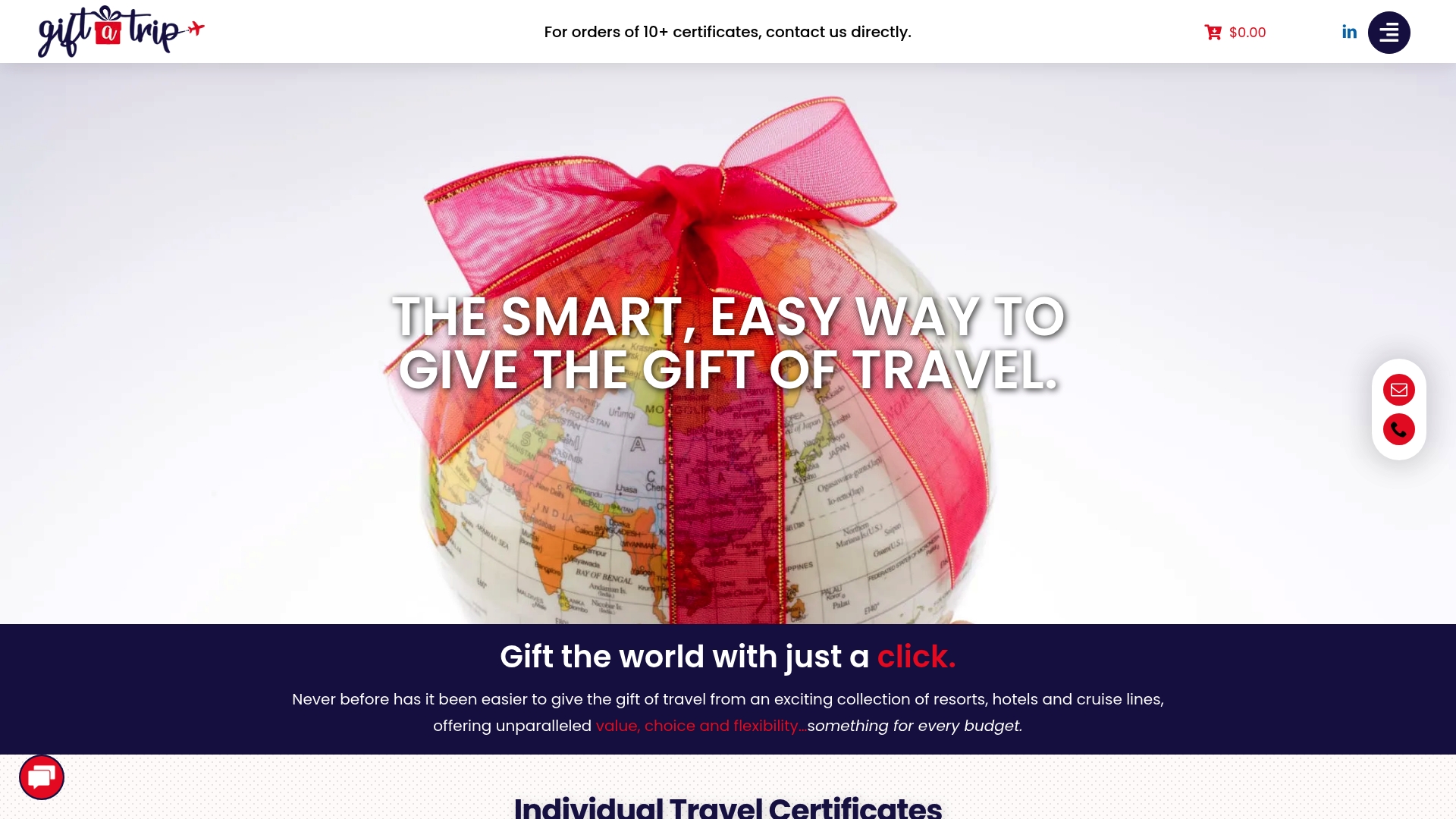
Whether you want to review the full vacation gift certificates ROI case for your leadership team, browse top travel gift ideas by occasion and budget, or simply buy travel certificates in bulk with personalized messaging for your next awards cycle, the platform handles the complexity so your team can focus on the recognition moment itself. Corporate bulk orders, secure digital delivery, and customizable gift boxes are all available in one streamlined solution.
Frequently asked questions
Why are travel experiences more effective than traditional employee gifts?
Travel rewards create lasting memories that employees associate with your organization, generating 3x revenue growth and 9% lower turnover compared to cash or generic gift alternatives.
What types of employee travel gifts work best for teams?
Flexible vacation certificates, cruise vouchers, and curated group experiences work across diverse teams because 54% of employees prefer travel rewards and certificates can be tailored to individual or collective achievements.
How can companies measure the impact of their employee gifting programs?
Set a pre-program baseline and track retention, engagement scores, and sales performance at 90-day intervals, following best practices used by top-performing companies that measure pre and post-program metrics.
Are travel gifts suitable for remote or global teams?
Absolutely. Digital travel gift certificates are delivered securely online, making them a perfect fit for remote and international employees who may be spread across time zones and geographies.
What is the best way to ensure corporate gifting aligns with company values?
Involve leadership in the selection process from the start and align gifts directly with organizational goals and the behaviors you want to reinforce across your workforce.